
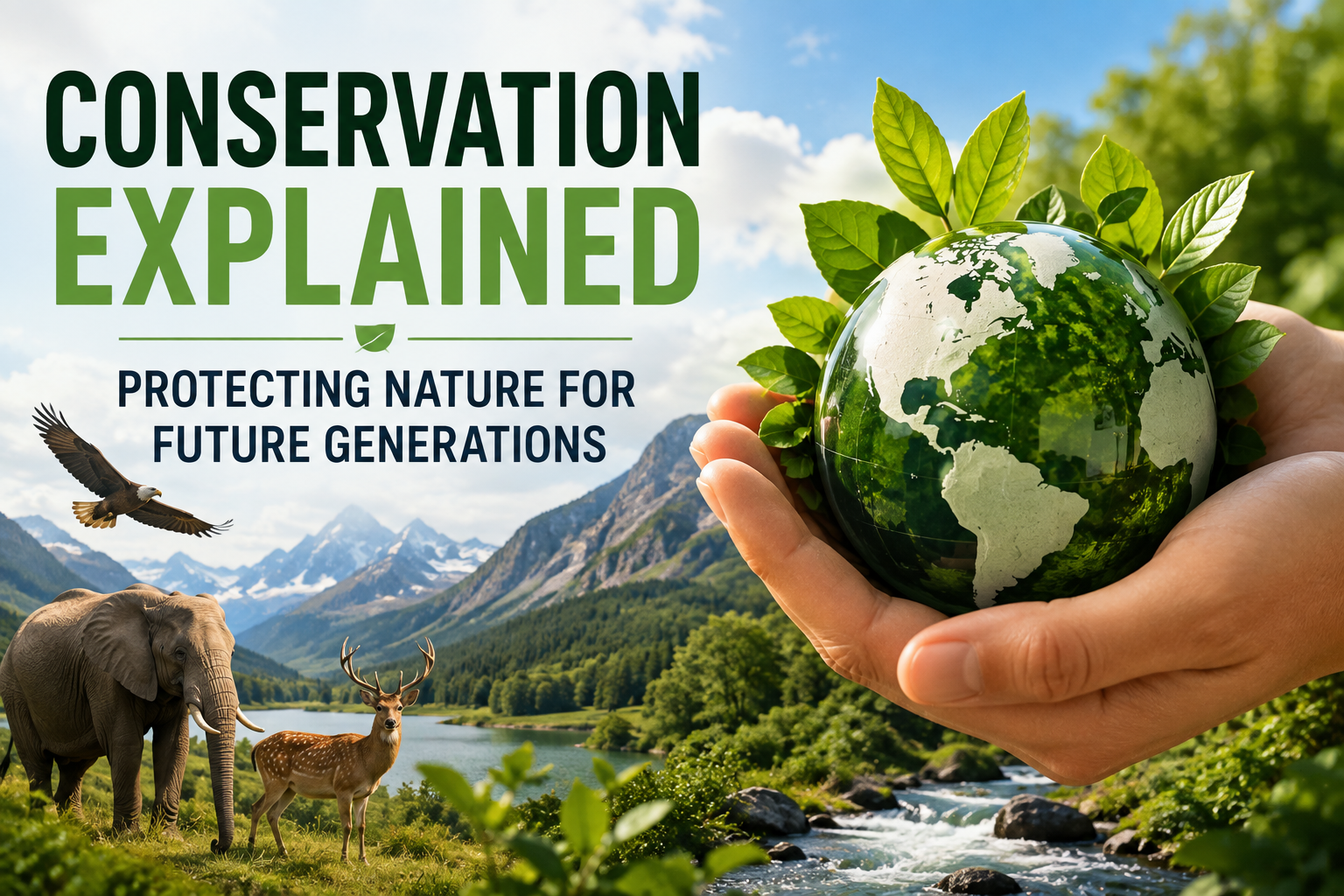
Conservation Explained: Protecting Nature for Future Generations
Nature provides the foundation for human life. The air people breathe, the water communities depend on, the food systems that sustain populations and the ecosystems that support countless species are all connected to a healthy natural environment.
Yet forests are being cleared, habitats are being fragmented, wildlife populations are under pressure and ecosystems are facing increasing disruption. Conservation has therefore become an important part of protecting both biodiversity and the resources that future generations will depend on.
But what exactly does conservation mean, and why does it matter?
What Is Conservation?
Conservation is the practice of protecting, managing and restoring nature and natural resources so they can continue to support life over the long term.
It can involve protecting forests and wetlands, restoring damaged ecosystems, managing wildlife populations, reducing pollution and using natural resources responsibly.
Conservation does not necessarily mean keeping humans completely out of natural environments. In many cases, effective conservation involves finding sustainable ways for people and nature to coexist.
The central idea is simple: natural resources should be managed in a way that protects their long-term health rather than exhausting them for short-term benefit.
Why Is Conservation Important?
Healthy ecosystems perform services that are essential to human societies.
Forests, for example, provide habitat for wildlife, help regulate water cycles and store carbon. Wetlands can help filter water and reduce the effects of flooding. Healthy soils support agriculture, while oceans provide food and support millions of livelihoods.
Biodiversity also makes ecosystems more resilient. When a wide variety of plants, animals and microorganisms interact within an ecosystem, those relationships can help natural systems adapt to changing conditions.
Protecting nature is therefore not only about preserving beautiful landscapes or rare animals. It is also about maintaining the systems that make human life possible.
Protecting Biodiversity
One of the major goals of conservation is protecting biodiversity.
Biodiversity refers to the variety of living organisms found on Earth, including plants, animals, fungi and microorganisms, as well as the ecosystems and genetic diversity they represent.
Every species plays a role within its environment. Some pollinate plants, others disperse seeds, recycle nutrients, control populations of other organisms or provide food for different species.
When species disappear, those relationships can also be disrupted.
Conservation programs can help protect biodiversity by preserving habitats, establishing protected areas, restoring ecosystems and addressing threats such as illegal wildlife trade and habitat destruction.
The Importance of Habitat Protection
Wildlife cannot survive without suitable habitat.
Habitat loss occurs when natural environments are destroyed, degraded or divided into smaller areas. Agriculture, infrastructure development, mining, urban expansion and other human activities can all contribute to habitat changes.
Habitat fragmentation can be particularly challenging because even when some natural areas remain, wildlife may struggle to move between them.
Conservationists therefore increasingly focus not only on protecting individual species but also on protecting the landscapes and ecological connections those species need.
Wildlife corridors, protected areas and restoration projects can help reconnect fragmented habitats.
Forest Conservation
Forests are among the world’s most important ecosystems.
They provide homes for a significant share of terrestrial species while supporting communities that depend on forest resources. Forests also influence rainfall, water quality, soil stability and the global carbon cycle.
Forest conservation can take many forms.
These include protecting intact forests, restoring degraded land, improving sustainable forestry practices and reducing unnecessary destruction of forest ecosystems.
Community participation is also important. People who live in and around forests often have detailed knowledge of local ecosystems and may depend directly on them for food, materials and income.
Conservation efforts are more likely to succeed when local communities have meaningful opportunities to participate in decisions about natural resources.
Protecting Oceans and Marine Ecosystems
Conservation extends far beyond land.
Oceans cover most of Earth’s surface and contain enormously diverse ecosystems, from coral reefs and mangroves to deep-sea environments.
Marine ecosystems face pressures including overfishing, pollution, habitat destruction and rising environmental stress.
Marine conservation can include establishing protected areas, improving fisheries management, reducing plastic and chemical pollution and protecting important coastal habitats.
Healthy oceans are important not only for marine species but also for people. Coastal communities around the world depend on marine ecosystems for food, employment and economic activity.
Wildlife Conservation
Wildlife conservation focuses on protecting animals and the ecosystems they depend on.
Some species face particularly severe risks because of habitat loss, illegal hunting, pollution, invasive species or changes in their environment.
Conservation strategies can include habitat protection, anti-poaching measures, wildlife monitoring, breeding programs and efforts to reduce conflict between people and animals.
However, successful wildlife conservation is rarely about protecting a single species in isolation.
A species needs food, shelter, breeding opportunities and sufficient habitat. Protecting those conditions often requires protecting an entire ecosystem.
What Is Ecosystem Restoration?
Conservation is not limited to protecting ecosystems that remain healthy.
Ecosystem restoration involves helping damaged or degraded natural environments recover.
Restoration projects can include replanting native vegetation, restoring wetlands, rehabilitating damaged land, removing invasive species and improving river or coastal ecosystems.
The goal is not always to return an ecosystem to an exact historical condition. Instead, restoration often aims to recover important ecological functions and create healthier, more resilient environments.
Restoration can also provide benefits for communities by improving water quality, reducing erosion and creating opportunities for recreation and sustainable livelihoods.
Conservation and Sustainable Resource Use
People depend on natural resources, including water, forests, soil, fisheries and minerals.
The challenge is ensuring that these resources are used without undermining the ecosystems that produce or support them.
Sustainable resource management seeks to balance human needs with the long-term health of natural systems.
In agriculture, for example, practices that protect soil health can help maintain productivity over time. In fisheries, responsible management can help prevent stocks from being depleted. In forestry, carefully managed harvesting can reduce pressure on natural forests.
Conservation and development do not always have to be opposing goals. Effective planning can allow communities to benefit from natural resources while maintaining the ecological systems that support those resources.
The Role of Protected Areas
Protected areas are an important tool for conservation.
National parks, wildlife reserves, marine protected areas and other conservation zones can provide places where ecosystems and species receive additional protection.
Protected areas can preserve important habitats, safeguard threatened species and provide opportunities for scientific research and environmental education.
However, simply creating a protected area does not automatically guarantee successful conservation.
Effective management, adequate resources, community involvement, monitoring and enforcement can all influence whether a protected area achieves its goals.
Why Local Communities Matter
Conservation is ultimately carried out in real landscapes where people live and work.
For that reason, local communities can play a crucial role in protecting ecosystems.
Communities may possess generations of knowledge about wildlife, plants, water sources, weather patterns and land management. They can also become important partners in monitoring ecosystems and preventing environmental damage.
Conservation programs that overlook local needs can face resistance or fail to address the realities of the people expected to live alongside protected ecosystems.
Including communities in planning and decision-making can help create conservation approaches that are both environmentally effective and socially sustainable.
How Technology Is Changing Conservation
Modern technology is giving researchers new ways to understand and protect nature.
Satellite imagery can help scientists monitor changes in forests, wetlands and other landscapes. Camera traps can document wildlife without requiring researchers to constantly be present. Acoustic monitoring can detect animals through their calls, while geographic information systems can help researchers map habitats and identify environmental changes.
Artificial intelligence and data analysis are also being used to process large amounts of environmental information.
These technologies do not replace conservation workers or local knowledge, but they can provide additional information that helps researchers make better decisions.
What Can Individuals Do?
Conservation is not only the responsibility of governments, scientists and environmental organizations.
Individuals can also make choices that reduce pressure on natural systems.
People can help by reducing unnecessary waste, using water responsibly, avoiding products linked to illegal wildlife trade, supporting responsible environmental organizations and learning about local ecosystems.
Planting appropriate native vegetation, protecting wildlife habitats around homes and participating in community environmental projects can also contribute to local conservation.
Perhaps most importantly, people can become more aware of how everyday consumption affects natural resources.
Small decisions made by millions of people can influence demand for products, energy, food and materials.
Education Is Part of Conservation
Long-term conservation depends partly on knowledge.
People are more likely to protect something when they understand its value and recognize the consequences of losing it.
Environmental education can introduce children and adults to local ecosystems, biodiversity and responsible resource use. Schools, museums, parks, community organizations and conservation groups can all contribute.
Education can also help people distinguish between environmental claims that are well supported and those that are misleading.
An informed public is better positioned to participate in environmental decisions and hold institutions accountable for conservation commitments.
The Economic Value of Healthy Ecosystems
Nature also has significant economic importance.
Agriculture depends on healthy soils, pollination and reliable water supplies. Fisheries depend on productive aquatic ecosystems. Tourism can depend heavily on wildlife and natural landscapes.
When ecosystems are degraded, communities can face costs associated with declining resources, pollution, erosion, flooding and reduced economic opportunities.
Conservation can therefore be viewed not simply as an expense but as an investment in natural infrastructure.
Protecting an ecosystem before it becomes severely degraded can sometimes be considerably more effective than attempting to rebuild it after major damage has occurred.
Conservation Requires Long-Term Thinking
One of the greatest challenges in conservation is the difference between short-term decisions and long-term environmental consequences.
A forest can take decades or centuries to develop. Wildlife populations can require years to recover. Damaged ecosystems may need generations to regain ecological complexity.
That makes conservation fundamentally a long-term effort.
Successful strategies need to consider not only today’s environmental conditions but also what ecosystems and communities will need decades from now.
This is particularly important as environmental pressures change and conservation strategies must adapt to new conditions.
Protecting Nature Is a Shared Responsibility
Conservation is ultimately about maintaining the relationship between people and the natural world.
Governments can establish environmental laws and protected areas. Scientists can study ecosystems and develop conservation strategies. Communities can manage local resources and protect important habitats. Businesses can reduce environmental impacts and invest in more sustainable practices. Individuals can make informed choices about consumption and waste.
No single approach is sufficient on its own.
The strongest conservation efforts combine scientific knowledge, local experience, effective policies, responsible resource management and long-term public commitment.
Building a Future Where Nature Can Thrive
Protecting nature for future generations requires more than preserving isolated parks or saving individual species. It means maintaining functioning ecosystems, protecting biodiversity, restoring damaged environments and using natural resources responsibly.
The decisions made today will influence what kinds of forests, rivers, oceans and wildlife future generations inherit.
Conservation is therefore not simply about looking backward at what has already been lost. It is about making deliberate choices now so that healthy natural systems remain part of the future.


2 Comments
Micle harison
June 7, 2019Lorem ipsum dolor sit amet, usu ut perfecto postulant deterruisset, libris causae volutpat at est, ius id modus laoreet urbanitas. Mel ei delenit dolores.
John Doe
June 7, 2019Some consultants are employed indirectly by the client via a consultancy staffing company.