
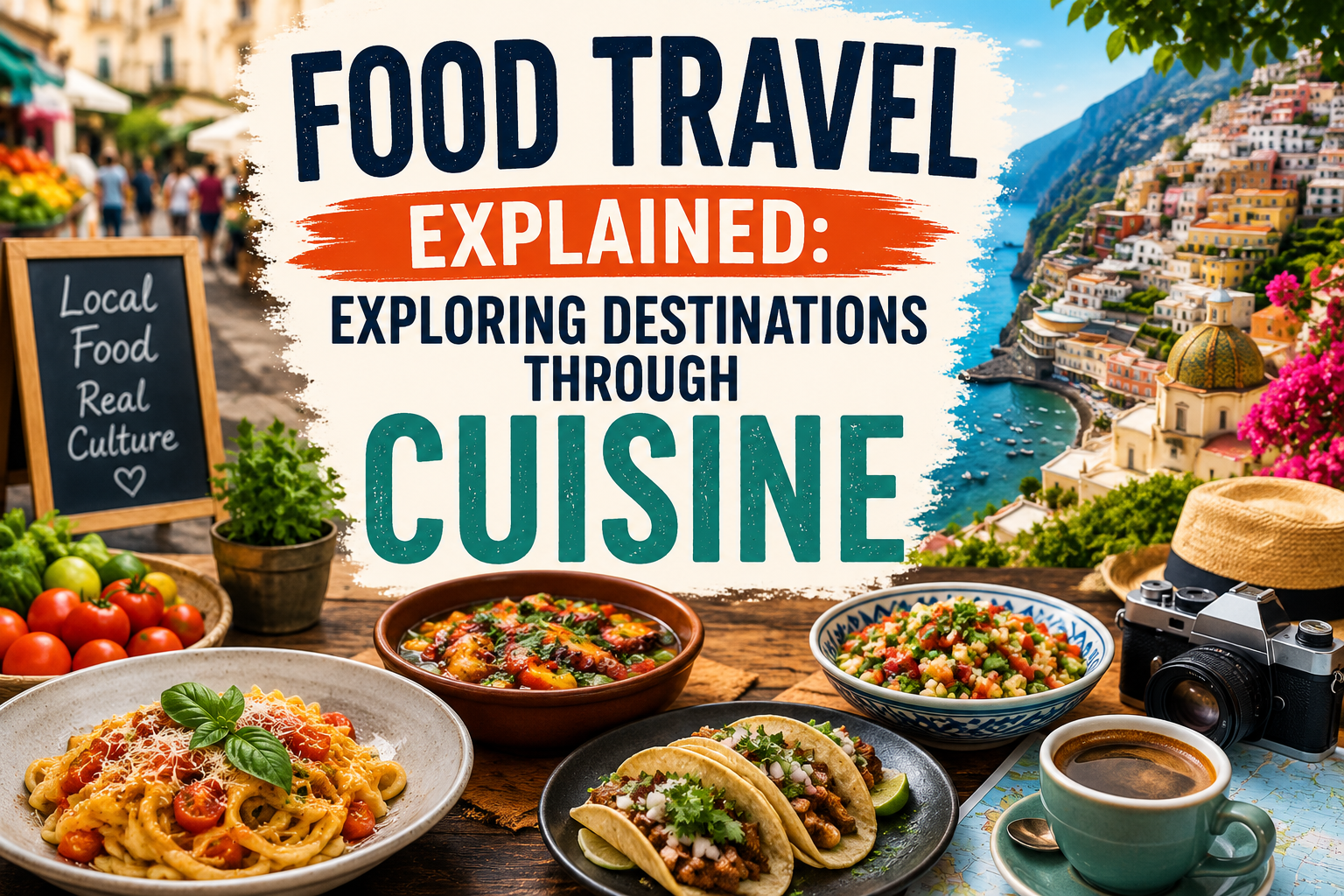
Food Travel Explained: Exploring Destinations Through Cuisine
Travel is often described through landmarks, landscapes, museums, beaches, and historic sites. But for many travelers, some of the strongest memories begin with a meal.
A bowl of noodles from a crowded market, freshly baked bread from a neighborhood bakery, grilled seafood beside the coast, or a family recipe shared around a table can reveal something about a destination that a sightseeing tour cannot fully capture.
Food travel, sometimes called culinary tourism, is the practice of exploring destinations through their food, cooking traditions, ingredients, markets, restaurants, and local food culture. It can be as simple as trying regional dishes during a vacation or as immersive as visiting farms, taking cooking classes, exploring food markets, and planning an entire trip around a particular cuisine.
More than simply finding something delicious to eat, food travel offers travelers a way to understand how geography, history, agriculture, migration, religion, trade, and cultural traditions have shaped communities.
What Is Food Travel?
Food travel involves making food and culinary experiences an important part of exploring a destination.
A traveler does not necessarily need to visit expensive restaurants or famous food destinations. Culinary experiences can include:
- Visiting local markets
- Trying traditional dishes
- Eating at family-owned restaurants
- Taking cooking classes
- Visiting farms and food producers
- Exploring bakeries and specialty shops
- Learning about regional ingredients
- Attending food-focused cultural events
- Sampling street food
- Visiting wineries, breweries, or other producers where appropriate
- Speaking with local cooks and food vendors
The key distinction is intentionality. Food becomes part of the travel experience rather than simply something that happens between sightseeing activities.
Why Food Reveals So Much About a Destination
Cuisine is closely connected to the environment in which people live.
Climate influences which crops can grow. Geography affects access to seafood, livestock, grains, fruits, and spices. Historical trade routes introduce new ingredients and cooking techniques. Migration brings culinary traditions from one region to another.
Even seemingly simple dishes can contain layers of history.
A regional stew, for example, may reflect local agriculture, available cooking equipment, economic conditions, and generations of adaptation. A popular street snack might reveal the influence of migration or colonial-era trade.
This makes food a useful lens through which travelers can explore culture.
The Connection Between Food and Geography
Local ingredients are often shaped by the physical environment.
Coastal communities may have strong seafood traditions, while agricultural regions may develop cuisines around particular grains, vegetables, livestock, or fruits.
Mountainous areas can develop distinctive preservation methods because communities historically needed ways to store food for longer periods. Tropical regions may feature ingredients that thrive in warm, humid climates.
Travelers can therefore learn about a place simply by asking:
What grows here, and how do people traditionally use it?
That question can lead beyond individual dishes toward a deeper understanding of the destination.
Food Markets Offer a Different View of Local Life
Markets can be among the most informative places for food-focused travelers.
Unlike restaurants, which are designed primarily for serving customers, markets often reveal ingredients in their everyday context.
A local market may show:
- What fruits and vegetables are widely available
- Which fish or meats are commonly consumed
- How ingredients are priced
- Which spices are important
- How food is preserved
- What local producers sell
- How residents shop for everyday meals
Markets can also reveal how food connects different parts of the economy, from farmers and fishermen to vendors, transporters, cooks, and consumers.
For travelers, visiting a market early in the day can provide a particularly useful glimpse into local food culture.
Street Food Can Tell Important Stories
Street food is often associated with affordability and convenience, but it can also be an important expression of culinary identity.
Street vendors frequently specialize in dishes that have been refined over generations. Their menus may reflect local tastes, available ingredients, working lifestyles, and regional traditions.
Trying street food can therefore provide travelers with a different perspective from eating exclusively in hotels or international restaurant chains.
However, travelers should still use common-sense food safety practices. Choosing busy vendors with high customer turnover, observing food-handling practices, and ensuring that food is properly cooked can reduce unnecessary risks.
People with allergies or specific dietary restrictions should also communicate those requirements clearly.
Cooking Classes Turn Travelers Into Participants
Eating a local dish provides one kind of experience. Learning how to prepare it provides another.
Cooking classes allow travelers to understand ingredients, techniques, and cultural traditions more directly.
A good cooking class might involve:
- Selecting ingredients at a market.
- Learning how ingredients are traditionally prepared.
- Preparing a regional dish.
- Understanding the history behind the recipe.
- Sharing the finished meal with other participants.
The experience can also continue after the trip. Travelers can recreate the dish at home, allowing a culinary memory to become part of everyday life.
Restaurants Can Provide Cultural Context
Restaurants range from simple neighborhood establishments to highly sophisticated dining rooms, and each can contribute something different to a food-focused trip.
A small family restaurant may preserve recipes associated with a particular community. A contemporary restaurant might reinterpret traditional ingredients through modern techniques.
The most useful approach is not necessarily to search only for the highest-rated restaurants. Travelers can benefit from exploring different types of establishments.
Consider including:
- Neighborhood restaurants
- Traditional eateries
- Market stalls
- Bakeries
- Cafés
- Specialty food shops
- Contemporary restaurants
- Restaurants specializing in regional cuisine
This creates a more complete picture of the destination’s food culture.
How History Shapes Local Cuisine
Cuisine rarely develops in isolation.
Trade, migration, conflict, colonization, religion, technological change, and cultural exchange can all influence what people eat.
Ingredients that seem completely ordinary today may once have been foreign imports. Cooking techniques can travel across borders. Communities may adapt recipes brought by migrants to locally available ingredients.
Understanding these historical connections makes food travel more meaningful.
Instead of simply asking, “What is this dish?” travelers can ask:
Where did it come from, and how did it become part of this culture?
That question often leads to much more interesting stories.
Food Traditions Can Preserve Cultural Identity
Food can serve as an important form of cultural continuity.
Families and communities often preserve recipes, preparation techniques, celebrations, and eating customs across generations. In some cases, traditional foods remain closely connected to religious ceremonies, holidays, family gatherings, or community events.
For travelers, learning about these traditions can provide insight into cultural identity.
It is also important to approach such traditions respectfully. Not every cultural food practice is designed for tourism, and travelers should avoid treating deeply meaningful customs as mere entertainment.
Responsible food travel begins with curiosity and respect.
Food Travel Is Not Only About Luxury Dining
One misconception about culinary tourism is that it requires expensive restaurants.
In reality, some of the most memorable food experiences can be inexpensive.
A traveler might discover a remarkable dish at:
- A neighborhood bakery
- A roadside stall
- A public market
- A small family restaurant
- A local café
- A community food cooperative
The value of the experience comes from authenticity, context, quality, and connection—not simply price.
A carefully prepared inexpensive meal can tell a traveler more about everyday life than an elaborate dining experience designed primarily for visitors.
How to Plan a Food-Focused Trip
Planning does not mean creating a rigid schedule around every meal.
Instead, travelers can identify several culinary experiences that provide different perspectives.
Research the Regional Cuisine
Start by understanding the major foods associated with the destination.
Look beyond famous dishes and investigate:
- Regional specialties
- Common ingredients
- Traditional cooking methods
- Local markets
- Food-producing areas
- Historic dishes
- Influences from neighboring cultures
Explore Beyond Tourist Areas
Popular tourist districts can contain excellent restaurants, but they may also feature menus designed primarily for international visitors.
Exploring residential neighborhoods can reveal more everyday food traditions.
Travelers should still prioritize safety and respect local customs when visiting unfamiliar areas.
Ask Locals for Recommendations
Hotel staff, guides, shopkeepers, cooks, and residents can offer suggestions that may not appear prominently in travel rankings.
Instead of asking only, “Where is the best restaurant?” consider asking:
“Where would you go for a meal that represents local food?”
The answers can be surprisingly different.
Leave Room for Discovery
Overplanning every meal can eliminate the spontaneity that makes food travel enjoyable.
Leave some meals unplanned. Walk through a market. Follow an interesting smell. Try something unfamiliar. Ask a vendor what locals commonly order.
Some of the best culinary experiences are discovered rather than scheduled.
Dietary Restrictions Do Not Have to End Food Exploration
Travelers with dietary restrictions can still participate in culinary experiences, but preparation is important.
Before traveling, learn a few phrases explaining relevant restrictions in the local language. Research common ingredients and understand how dishes are typically prepared.
It can also help to distinguish between:
- An ingredient allergy
- A dietary preference
- A religious restriction
- A medical requirement
- A food intolerance
The more clearly a traveler can explain the requirement, the easier it may be for restaurants and vendors to respond appropriately.
Travelers with serious allergies should take additional precautions rather than assuming that a dish is safe based solely on its name or appearance.
Responsible Food Travel Matters
Culinary tourism can support local economies, but travelers should think carefully about how their spending affects communities.
Whenever practical, consider supporting businesses that:
- Employ local workers
- Purchase ingredients from local producers
- Preserve regional culinary traditions
- Operate transparently
- Treat workers fairly
- Respect local communities
Travelers should also be cautious about experiences involving endangered wildlife, illegal products, or practices that cause unnecessary environmental harm.
Being curious about local food should not come at the expense of people, animals, or ecosystems.
Food Waste Is Another Travel Consideration
Food tourism can generate waste through restaurants, markets, packaged products, and oversized portions.
Travelers can reduce their impact by:
- Ordering reasonable portions
- Sharing larger dishes
- Carrying reusable utensils or containers where practical
- Avoiding unnecessary single-use packaging
- Choosing locally produced foods when appropriate
- Respecting restaurant portion sizes rather than ordering excessively
Small choices become more meaningful when repeated throughout a trip.
How Technology Has Changed Food Travel
Technology has made it easier than ever to discover culinary experiences.
Travelers can use maps, review platforms, social networks, restaurant websites, digital menus, translation tools, and travel communities to research destinations.
But digital recommendations should be treated as starting points rather than absolute authorities.
A restaurant with thousands of online reviews may be excellent, but a small establishment with little online visibility may also offer an outstanding experience.
Combining online research with local recommendations can produce a more balanced approach.
Food Travel Can Create Stronger Travel Memories
Sightseeing memories can sometimes blur together after a trip. Food memories often remain unusually vivid because taste and smell are strongly connected to memory.
A particular spice, bread, sauce, coffee, or cooking technique can instantly bring back a place years later.
That makes food more than a practical necessity during travel.
It becomes part of the emotional record of a journey.
A meal shared with new friends, a conversation with a local cook, or the discovery of an unfamiliar ingredient can become one of the defining moments of a trip.
The Future of Culinary Exploration
Food travel is increasingly about participation rather than simply consumption.
Travelers are looking for opportunities to understand where food comes from, meet producers, learn traditional techniques, discover regional ingredients, and experience everyday culinary culture.
That shift creates opportunities for destinations and local businesses to present food stories in more meaningful ways.
The strongest culinary experiences may ultimately be those that connect several elements at once: place, people, history, ingredients, preparation, and shared experience.
Let the Meal Become Part of the Journey
Food can transform the way travelers understand a destination.
A dish can reveal its geography. An ingredient can reveal its agricultural history. A market can show how communities live. A recipe can preserve family traditions. A restaurant can introduce travelers to a local perspective.
That is what makes food travel so powerful: it turns eating from a routine part of a trip into an opportunity to explore culture.
Instead of simply asking what attractions are worth visiting, travelers can also ask what foods, markets, cooking traditions, and local stories are worth discovering. Often, the answer can lead to a deeper and more memorable experience of the destination.





2 Comments
Micle harison
June 7, 2019Lorem ipsum dolor sit amet, usu ut perfecto postulant deterruisset, libris causae volutpat at est, ius id modus laoreet urbanitas. Mel ei delenit dolores.
John Doe
June 7, 2019Some consultants are employed indirectly by the client via a consultancy staffing company.