
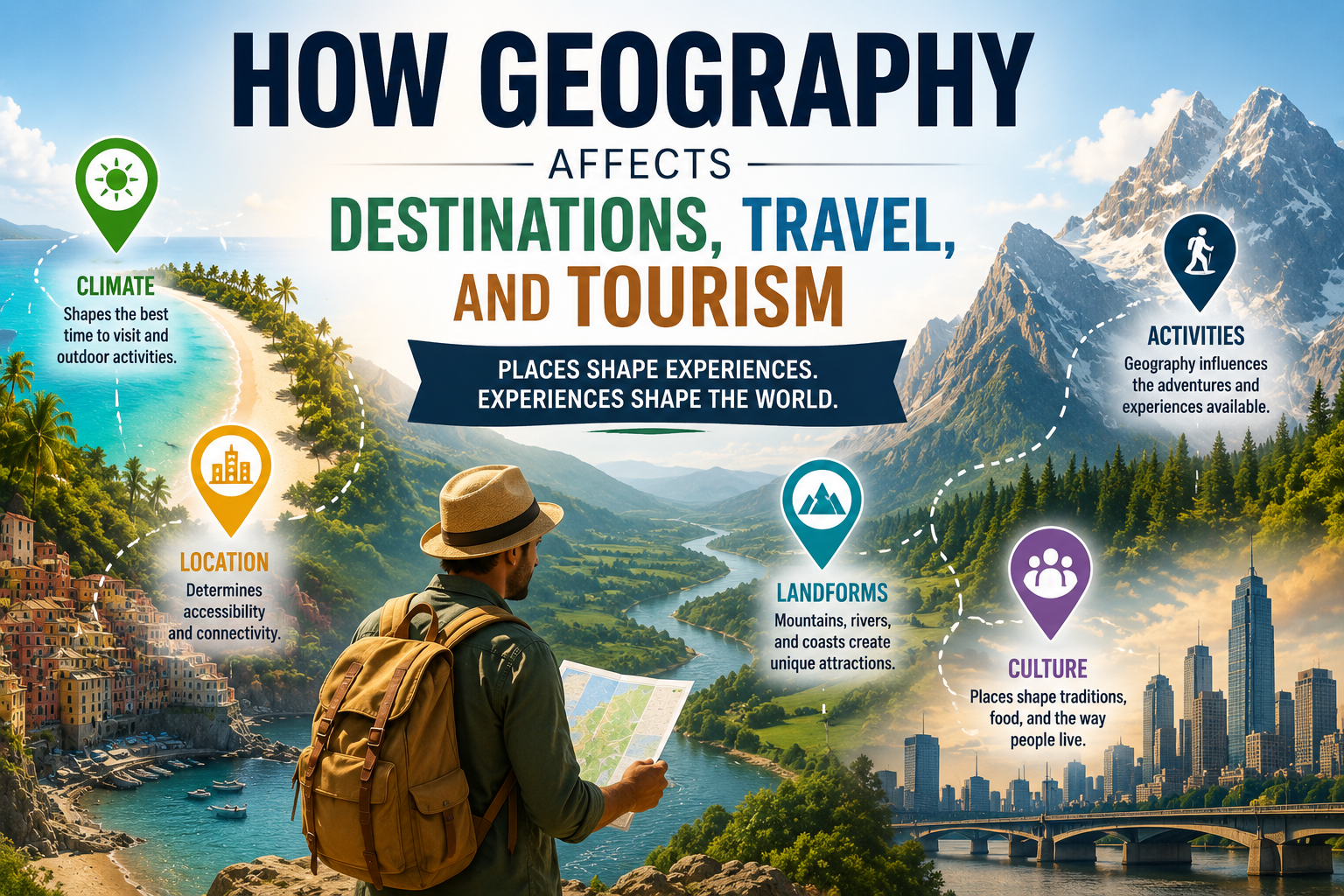
How Geography Affects Destinations, Travel, and Tourism
Geography shapes travel in ways that are easy to overlook.
Before travelers choose where to go, geography has already influenced what makes a destination attractive, how people reach it, what activities are possible, where hotels are built, what food visitors encounter, and even when the destination is busiest.
Mountains can create skiing and hiking destinations. Tropical coastlines can support beach tourism. Rivers can encourage cities, trade, cruises, and cultural tourism. Deserts can attract travelers looking for dramatic landscapes and adventure. Climate can determine whether a destination is comfortable to visit throughout the year or experiences strong seasonal peaks.
For tourism businesses and destination planners, geography is therefore more than a physical characteristic. It is one of the foundations on which the entire visitor economy is built.
What Is the Relationship Between Geography and Tourism?
Geography is the study of places, physical environments, people, and the relationships between them.
Tourism is closely connected to geography because travel involves moving between places and experiencing the characteristics that make those places different.
Geography influences tourism through factors such as:
- Location
- Climate
- Landforms
- Coastlines
- Rivers and lakes
- Vegetation
- Wildlife
- Natural resources
- Accessibility
- Population distribution
- Culture
- Urban development
- Political boundaries
These factors can create both opportunities and limitations.
A destination’s location might give it beautiful scenery but make it difficult to reach. A remote island may have exceptional beaches but limited transportation and accommodation capacity. A major city may have fewer natural attractions but benefit from airports, roads, hotels, restaurants, museums, and entertainment.
Tourism develops from the interaction between these characteristics.
Location Determines Who Can Reach a Destination
One of the most fundamental geographic influences on tourism is location.
A destination close to major population centers can potentially attract large numbers of visitors because transportation is relatively convenient.
Destinations that are farther away may require longer flights, multiple connections, expensive transportation, or specialized travel arrangements.
This does not necessarily make remote destinations unsuccessful.
In some cases, isolation becomes part of the attraction.
Travelers may deliberately seek remote islands, wilderness areas, mountain villages, or sparsely populated regions because they offer experiences that are difficult to find in heavily developed destinations.
Location therefore affects both accessibility and appeal.
Accessibility Can Transform Tourism
A beautiful destination may struggle to attract visitors if reaching it is difficult, expensive, or unreliable.
Transportation infrastructure can dramatically change this situation.
The development of:
- Airports
- Highways
- Railways
- Bridges
- Ports
- Public transportation
- Ferry services
can make previously difficult-to-reach destinations much more accessible.
Improved accessibility can lead to increased tourism, investment, employment, and business activity.
However, accessibility can also create challenges.
A destination that suddenly becomes easy to reach may experience rapid growth that puts pressure on housing, infrastructure, natural resources, and local communities.
Mountains Create Distinct Tourism Opportunities
Mountains are among the most recognizable geographic features associated with tourism.
Their elevation, scenery, climate, vegetation, and terrain create opportunities for a wide range of activities.
Mountain destinations can attract visitors interested in:
- Hiking
- Trekking
- Mountaineering
- Skiing
- Snowboarding
- Wildlife viewing
- Photography
- Camping
- Scenic drives
- Cultural experiences
Mountains also influence the development of settlements and transportation.
Steep terrain can make road and railway construction expensive, limiting accessibility. At the same time, mountain landscapes can become powerful tourism assets precisely because they differ so dramatically from urban and lowland environments.
Beaches and Coastlines Drive Mass Tourism
Coastal geography has played a major role in the development of global tourism.
Warm beaches, clear water, islands, coral reefs, coastal cliffs, and marine ecosystems attract millions of travelers seeking recreation and relaxation.
Coastal destinations often support activities such as:
- Swimming
- Surfing
- Sailing
- Fishing
- Diving
- Snorkeling
- Boating
- Beach recreation
- Marine wildlife tours
Coastal areas can also support large tourism economies because they combine natural attractions with relatively high visitor capacity.
Hotels, restaurants, resorts, entertainment venues, ports, and transportation networks can develop around popular coastal areas.
However, coastal tourism is also particularly exposed to environmental pressures, including erosion, pollution, habitat degradation, and extreme weather.
Climate Influences When People Travel
Climate is one of geography’s strongest influences on tourism.
Travelers often choose destinations partly because of expected weather conditions.
Warm climates can encourage beach tourism and outdoor recreation, while colder climates can create opportunities for winter sports and seasonal experiences.
Climate influences:
- When tourists visit
- What activities they pursue
- What clothing they need
- How long they stay
- What infrastructure destinations require
- How much businesses can charge during peak periods
This creates seasonality, one of the most important concepts in tourism.
A destination may receive large numbers of visitors during a particular season and considerably fewer during the rest of the year.
Seasonality Shapes Tourism Businesses
Tourism businesses must often plan around predictable geographic and climatic patterns.
A ski resort may experience its busiest period during the winter season.
A beach destination may attract the greatest demand during warm, dry months.
A wildlife destination may have peak visitation when animals are easier to observe or when environmental conditions are especially favorable.
Seasonality affects:
- Hotel occupancy
- Restaurant demand
- Employment
- Transportation
- Tour prices
- Business revenue
- Infrastructure use
Some destinations attempt to reduce seasonal dependence by developing attractions and events that encourage visitors during traditionally quieter periods.
Rivers Influence the Development of Destinations
Rivers have historically influenced where people settle, trade, and build cities.
Many major urban destinations developed around rivers because waterways provided transportation, water resources, trade opportunities, and economic connections.
Today, rivers can also become tourism attractions.
Visitors may participate in:
- River cruises
- Kayaking
- Fishing
- Scenic tours
- Waterfront recreation
- Cultural tourism
- Wildlife experiences
Riverfront districts in major cities can also become centers for restaurants, entertainment, public spaces, museums, and hotels.
In this way, geography can influence both the original development of a destination and its later tourism economy.
Lakes Can Create Tourism Hubs
Large lakes can provide many of the same recreational opportunities associated with coastal destinations.
Depending on their climate and landscape, lakes can support:
- Boating
- Fishing
- Swimming
- Water sports
- Camping
- Hiking
- Wildlife viewing
- Waterfront resorts
Lakes can also contribute to destination identity.
A city located beside a large, scenic lake may incorporate the waterfront into its public spaces, cultural attractions, hospitality industry, and tourism marketing.
Deserts Offer a Different Kind of Tourism
Deserts demonstrate that tourism does not depend on lush vegetation or abundant water.
Their dramatic landscapes, extreme environments, geological formations, and distinctive cultures can attract travelers seeking unusual experiences.
Desert tourism can include:
- 4x4 excursions
- Camel or horseback experiences
- Hiking
- Stargazing
- Photography
- Cultural tours
- Camping
- Geological exploration
The harsh environment itself can become the attraction.
At the same time, desert destinations face practical limitations involving water availability, extreme temperatures, transportation, and environmental sustainability.
Forests Support Nature and Adventure Tourism
Forested environments provide habitat for wildlife and create opportunities for outdoor recreation.
Visitors may travel to forest destinations for:
- Hiking
- Birdwatching
- Wildlife photography
- Camping
- Ecotourism
- Educational experiences
- Scenic exploration
Forests can also support rural tourism by connecting visitors with local communities, agriculture, traditional crafts, and cultural landscapes.
Protecting these ecosystems is particularly important because the natural environment may be the primary reason tourists visit in the first place.
Wildlife Geography Creates Unique Destinations
The geographic distribution of animals influences where wildlife tourism develops.
Some species live only in particular ecosystems or regions. As a result, travelers may cross continents to see animals in their natural habitats.
Wildlife tourism can generate revenue for:
- National parks
- Conservation programs
- Local communities
- Guides
- Hotels
- Transportation providers
- Restaurants
- Tour operators
When managed responsibly, tourism can create an economic incentive to protect ecosystems.
Poorly managed tourism, however, can disturb animals, damage habitats, and place excessive pressure on fragile environments.
Geography Shapes Cultural Tourism
Geography does not only influence natural attractions.
It also affects human cultures.
Mountain communities, island populations, coastal societies, desert communities, river civilizations, and agricultural regions can develop distinct traditions based partly on their environments.
Geography can influence:
- Food
- Architecture
- Clothing
- Agriculture
- Transportation
- Festivals
- Crafts
- Settlement patterns
- Religious practices
- Traditional occupations
These cultural characteristics can become important tourism attractions.
Visitors increasingly travel not only to see famous landmarks but also to experience how people live in different environments.
Food Tourism Is Connected to Geography
Many regional cuisines are closely connected to local geography.
Coastal communities may have strong seafood traditions.
Agricultural regions may develop cuisines around locally grown grains, fruits, vegetables, spices, or livestock.
Mountain communities may rely on foods suited to high-altitude environments and local agricultural conditions.
Climate also affects what can be grown and preserved.
This creates a connection between geography, agriculture, food culture, and tourism.
Restaurants, markets, cooking classes, farms, food festivals, and culinary tours can all transform local geography into tourism experiences.
Urban Geography Shapes City Tourism
Tourism is not limited to natural landscapes.
Cities themselves are geographic environments.
Urban geography influences where attractions, hotels, transportation hubs, shopping districts, restaurants, parks, museums, and entertainment venues develop.
Large cities often attract travelers because they concentrate many experiences within relatively small areas.
Visitors can attend:
- Cultural events
- Business conferences
- Sporting events
- Concerts
- Museums
- Theater performances
- Restaurants
- Shopping districts
- Historical attractions
The physical layout of a city can influence how tourists move through it and which neighborhoods benefit economically from tourism.
Historical Geography Creates Heritage Destinations
The location of ancient civilizations, historic settlements, battlefields, trade routes, religious sites, and archaeological remains can turn geographic locations into heritage destinations.
Some places attract visitors because of structures that survived for centuries.
Others become important because of events that happened there.
Historical geography helps explain why tourism clusters around particular locations even when those places may not have obvious natural attractions.
The landscape becomes part of the story.
Political Geography Influences Travel
International borders are also geographic features with major implications for tourism.
Travel between countries can be affected by:
- Visa requirements
- Border controls
- Immigration policies
- International relations
- Security conditions
- Currency differences
- Travel documentation
A destination may be geographically close to another country but still be difficult to access because of political boundaries.
Conversely, regional agreements that simplify border crossings can encourage tourism by making international travel easier.
Geography Influences Tourism Infrastructure
Hotels, airports, roads, restaurants, attractions, and other tourism infrastructure cannot be built anywhere without considering the physical environment.
Construction may be easier on flat land than on steep mountain slopes.
Coastal development must account for flooding and erosion.
Desert destinations need reliable water and energy supplies.
Island destinations may have limited space for expansion.
Protected natural areas may restrict construction altogether.
Geography therefore influences not only where tourists want to go but also where tourism businesses can realistically operate.
Islands Face Unique Tourism Challenges
Island destinations can be extremely attractive because of their beaches, marine environments, isolation, and distinctive cultures.
But islands also face geographic constraints.
They may have:
- Limited land
- Limited freshwater
- High transportation costs
- Dependence on imported goods
- Small labor markets
- Vulnerability to storms
- Limited waste-management capacity
Tourism can therefore produce substantial economic benefits while simultaneously putting pressure on resources.
Managing tourism demand becomes especially important when an island has a small physical and environmental capacity.
Geography and Overtourism
Popular destinations can become victims of their own success.
Overtourism occurs when visitor numbers or tourism activity create unacceptable pressure on destinations, residents, infrastructure, or the environment.
Geographic concentration can make this problem worse.
A city may have millions of visitors but only a small historic district capable of accommodating them comfortably.
A national park may contain enormous territory but have only a few accessible trails or viewpoints.
A beach may attract thousands of visitors even though its ecosystem can tolerate far fewer people.
Managing tourism therefore requires understanding the physical capacity of specific places.
Geography and Sustainable Tourism
Sustainable tourism seeks to balance the economic benefits of travel with the protection of environmental and social resources.
Geography is central to this effort because every destination has physical limits.
Sustainable tourism strategies can include:
- Visitor limits
- Protected areas
- Sustainable transportation
- Waste reduction
- Water conservation
- Ecosystem restoration
- Responsible wildlife tourism
- Community involvement
- Low-impact accommodation
- Dispersing visitors across multiple attractions
The goal is to ensure that tourism does not destroy the resources that attract visitors in the first place.
Climate Change Is Changing Tourism Geography
Climate change is increasingly affecting destinations and travel patterns.
Changes in temperature, precipitation, sea levels, snow conditions, wildfire risk, storms, and ecosystems can influence where and when people travel.
Some destinations may become less comfortable or accessible during traditional peak seasons.
Others may experience changing demand as travelers seek different climates or activities.
Mountain tourism, coastal tourism, wildlife tourism, agriculture-based tourism, and outdoor recreation can all be affected by environmental changes.
This means destination planners increasingly need to consider long-term geographic and climatic trends rather than relying exclusively on historical tourism patterns.
Geography Can Create New Tourism Opportunities
Geographic change does not only create risks.
It can also create new opportunities.
Previously overlooked regions can become attractive when transportation improves, infrastructure develops, or travelers become more interested in alternative experiences.
Remote destinations can benefit from growing interest in:
- Adventure travel
- Ecotourism
- Wellness tourism
- Cultural tourism
- Nature travel
- Rural tourism
- Digital detox experiences
Technology can also make it easier for travelers to discover destinations that were previously outside mainstream tourism routes.
Digital Geography Is Changing Destination Discovery
The internet has added another dimension to tourism geography.
Travelers can now discover places through:
- Search engines
- Social media
- Online reviews
- Travel blogs
- Digital maps
- Video platforms
- Online booking platforms
A destination does not necessarily need to be famous for decades before attracting international attention.
A particular landscape, restaurant, hiking trail, or cultural experience can suddenly receive global exposure online.
This can produce rapid changes in visitor numbers.
For destination managers, digital visibility has therefore become an important component of modern tourism geography.
Geography Helps Explain Why Destinations Become Famous
The world’s most popular destinations often combine several geographic advantages.
They may offer:
- Attractive natural landscapes
- Favorable climates
- Distinctive cultures
- Historical significance
- Convenient transportation
- Strong infrastructure
- Diverse activities
But there is no universal formula.
A remote destination can become famous because its isolation is precisely what visitors value.
A major city can become globally important because its geographic position supports commerce, culture, transportation, and international connections.
A small mountain community can become a major tourism center because its landscape supports a particular outdoor activity.
Geography provides the foundation, but tourism development determines how that foundation is used.
How Businesses Use Geography to Compete
Tourism businesses must understand the geographic characteristics of their target markets.
A hotel near an airport competes on convenience.
A resort near a beach competes partly on access to the coastline.
A mountain lodge may compete on scenery and proximity to outdoor activities.
A city-center hotel may attract visitors because it is close to museums, restaurants, transportation, and business districts.
Location can therefore become part of a company’s value proposition.
In tourism, the phrase “location, location, location” has genuine economic significance.
Geography Influences Travel Costs
Distance and physical accessibility also affect the cost of travel.
Longer distances generally require more transportation resources.
Remote locations may involve:
- More expensive flights
- Multiple transfers
- Specialized vehicles
- Ferry connections
- Longer travel times
- Higher logistics costs
These costs can influence who visits a destination and how long they stay.
At the same time, travelers may accept higher costs when the destination offers experiences they cannot easily find elsewhere.
The Future of Travel Will Remain Closely Tied to Geography
Technology may change how people plan trips, book accommodation, navigate destinations, and communicate while traveling.
But it cannot eliminate geography.
Mountains will continue to shape mountain tourism. Coastlines will continue to attract travelers. Climate will continue to influence seasons. Distance will continue to affect transportation. Ecosystems will continue to determine where wildlife can be found.
Even as travel becomes increasingly digital, the fundamental appeal of tourism remains physical: people travel to experience places.
Geography Is the Foundation Behind the Travel Experience
From the climate of a destination to the shape of its landscape, geography influences almost every stage of tourism.
It affects where people live, how they travel, what they eat, what activities they enjoy, which businesses develop, and how destinations respond to environmental pressures.
For travelers, geography helps explain why one place feels completely different from another.
For tourism businesses, it provides clues about demand, infrastructure, competition, seasonality, and opportunities for growth.
And for destination planners, understanding geography is essential to ensuring that tourism remains economically valuable without undermining the natural and cultural resources that make places worth visiting.
Ultimately, every journey begins with a place—and the geography of that place helps determine the story travelers experience when they arrive.




2 Comments
Micle harison
June 7, 2019Lorem ipsum dolor sit amet, usu ut perfecto postulant deterruisset, libris causae volutpat at est, ius id modus laoreet urbanitas. Mel ei delenit dolores.
John Doe
June 7, 2019Some consultants are employed indirectly by the client via a consultancy staffing company.