

How Household Routines Make Everyday Home Life Easier
A comfortable home is not necessarily a home where everything is perfect. In many cases, it is simply a home where everyday tasks have a predictable rhythm.
Household routines can make a significant difference in how a home feels and functions. Knowing when laundry gets done, where frequently used items belong, when meals are planned, and how cleaning is divided can reduce the amount of decision-making required throughout the day.
Routines are not about turning home life into a rigid schedule. Instead, they create simple patterns that make ordinary responsibilities easier to manage.
What Is a Household Routine?
A household routine is a repeated pattern of activities that helps manage everyday life at home.
Some routines happen daily, while others take place weekly or monthly. They can be as simple as making the bed each morning or as structured as having a particular day for grocery shopping and laundry.
Common household routines include:
- Morning and evening routines
- Cleaning schedules
- Laundry days
- Meal planning
- Grocery shopping
- Dishwashing
- Decluttering
- Home maintenance
- Bill and household administration
- Preparing for the next day
The best routines are usually practical rather than complicated. A routine should make an activity easier to remember and complete, not create another source of stress.
Why Routines Reduce Everyday Decision-Making
One of the biggest benefits of a household routine is that it reduces the number of small decisions people have to make.
Without a routine, ordinary questions can appear repeatedly:
When should I clean the bathroom? Should I do laundry today? What should we have for dinner? Where should this item go? When should I buy groceries?
None of these decisions is particularly difficult, but dozens of small decisions can accumulate during a busy week.
A routine provides a default answer.
If Saturday morning is normally used for grocery shopping, there is less need to decide when to go. If towels are washed every Wednesday, there is less uncertainty about when laundry needs attention.
This creates a sense of predictability without requiring every minute of the day to be planned.
Routines Help Prevent Household Tasks From Piling Up
Small household tasks can become much more difficult when they are repeatedly postponed.
A few dishes can become a full sink. A small amount of laundry can become several overflowing baskets. A few items left out can eventually make an entire room feel cluttered.
Regular routines interrupt this cycle.
Instead of waiting until a problem becomes overwhelming, household members deal with smaller amounts of work more frequently.
This is one reason short, consistent cleaning sessions can often feel easier than occasional marathon cleaning days.
The objective is not to clean constantly. It is to prevent ordinary messes from becoming large projects.
Morning Routines Can Create a Smoother Start
The beginning of the day often involves several competing tasks.
People may need to prepare breakfast, get dressed, organize belongings, pack lunches, feed pets, prepare children for school, or leave for work.
A simple morning routine can make these activities more predictable.
For example, a household might establish a pattern in which:
- Beds are made after getting up.
- Breakfast is prepared.
- Dishes are placed in the dishwasher or washed.
- Bags and essential items are collected.
- Frequently needed areas are given a quick check before everyone leaves.
The exact routine will differ from household to household.
What matters is creating a sequence that reduces unnecessary searching, rushing, and repeated decisions.
Evening Routines Can Prepare the Home for Tomorrow
Evening routines can be equally useful.
A few minutes spent preparing for the next day can eliminate several sources of morning stress.
A household might use the evening to:
- Put away items that were used during the day
- Prepare clothing
- Pack bags
- Check the next day’s schedule
- Prepare breakfast ingredients
- Load or unload the dishwasher
- Take out rubbish when necessary
- Reset frequently used rooms
The purpose is not to make the house spotless before bedtime.
Instead, the goal is to leave the most important areas ready for the next morning.
Cleaning Becomes Easier When It Has a Rhythm
Cleaning is one of the household responsibilities that can become overwhelming when there is no established system.
A routine can divide cleaning into manageable categories.
For example, daily tasks might include wiping kitchen surfaces and dealing with dishes, while weekly tasks could include vacuuming, mopping, bathroom cleaning, and changing bed linens.
Less frequent tasks can be assigned to monthly or seasonal periods.
This approach prevents every cleaning task from competing for attention at the same time.
It also makes it easier to identify what actually needs to be done.
A Simple Cleaning Routine Can Be Enough
There is no universal cleaning schedule that every household should follow.
A small apartment occupied by one person will have different needs from a large family home with children and pets.
A practical system might divide tasks into three levels:
Daily Tasks
These are activities that keep the home functioning normally.
Examples include:
- Washing dishes
- Wiping kitchen surfaces
- Putting frequently used items away
- Managing obvious rubbish
- Doing a quick reset of the main living areas
Weekly Tasks
These require more time but usually do not need to happen every day.
Examples include:
- Vacuuming and mopping
- Cleaning bathrooms
- Changing bed linens
- Dusting
- Cleaning kitchen appliances
- Washing towels
Occasional Tasks
These can be scheduled less frequently.
Examples include:
- Cleaning windows
- Deep-cleaning appliances
- Decluttering cupboards
- Cleaning behind furniture
- Checking storage areas
- Performing seasonal maintenance
This structure keeps routine cleaning from turning into an endless list.
Household Routines Can Improve Organization
Organization becomes easier when objects have predictable homes.
If keys always go in the same place, they are less likely to disappear. If cleaning supplies are stored together, cleaning becomes faster. If school or work bags have a designated location, they are easier to find when needed.
A household routine therefore works best when it is combined with simple organization.
The principle is straightforward:
Make the easiest action the right action.
If laundry baskets are placed where clothes are normally removed, people are more likely to use them. If rubbish bins are conveniently located, waste is less likely to accumulate on counters.
Good organization reduces friction.
Meal Planning Can Simplify the Kitchen
Food preparation is another area where routines can save time.
Without some form of planning, households may repeatedly have to answer the question, “What are we eating tonight?”
Meal planning does not require creating a complicated menu for every meal.
A household could simply decide on several meals before going grocery shopping and keep a list of frequently used ingredients.
A basic weekly pattern might include:
- A few familiar weekday meals
- One or two flexible meals using leftovers
- A convenient meal for particularly busy days
- A planned grocery-shopping period
This can reduce unnecessary shopping trips and make it easier to use food before it goes to waste.
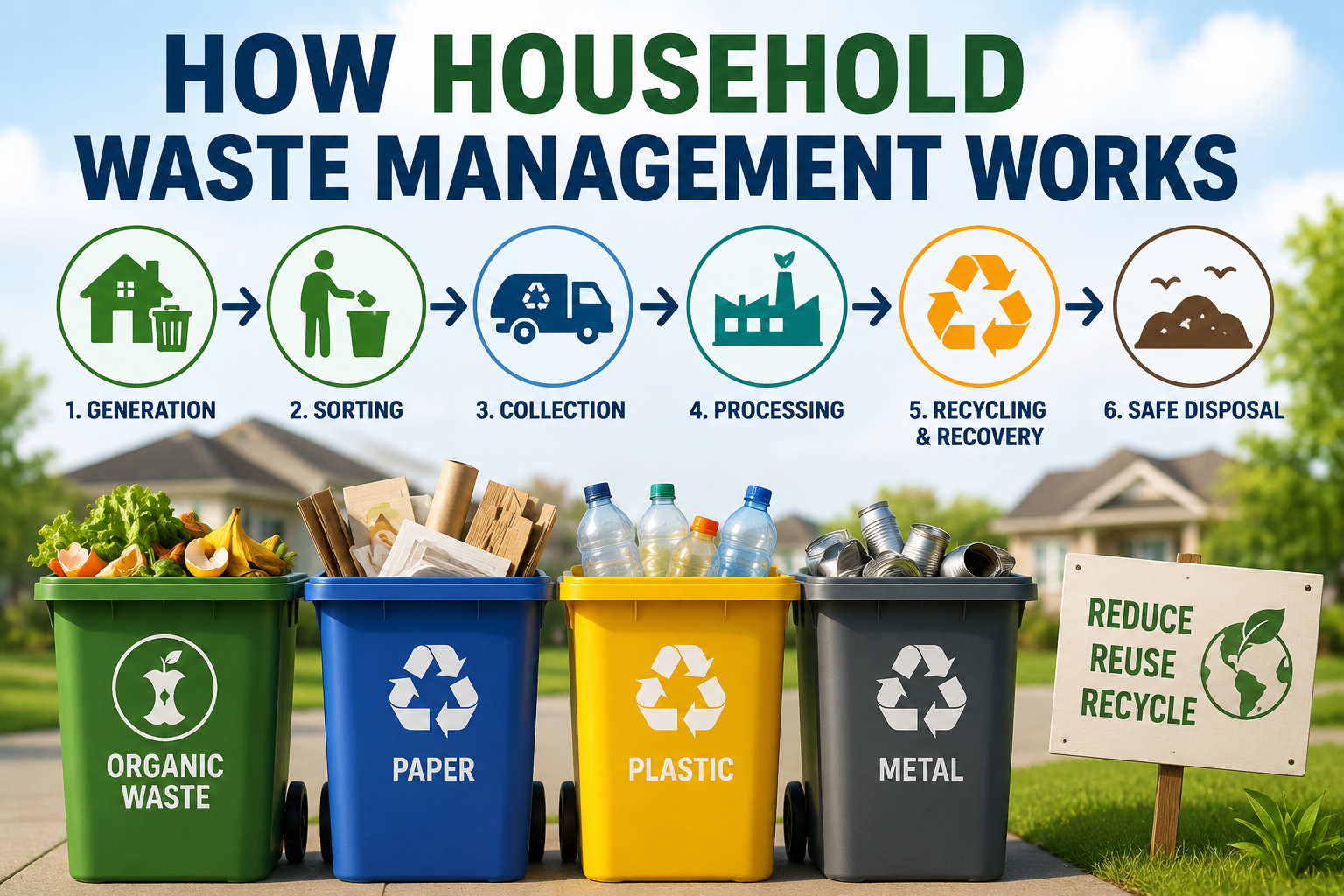
Routines Can Help Reduce Household Waste
Predictable household habits can also contribute to more efficient use of resources.
When people plan meals, they may be less likely to buy food they will not use. When laundry is organized, washing machines may be run with fuller loads rather than repeatedly using small loads.
Regular maintenance can also extend the useful life of appliances, furniture, clothing, and household equipment.
Simple habits such as repairing items, reusing containers, organizing leftovers, and maintaining appliances can reduce unnecessary consumption.
The environmental benefit of a routine may be small on any single day, but repeated habits can have a meaningful cumulative effect.
Laundry Becomes More Manageable With a System
Laundry can easily become a recurring source of clutter.
A household routine can make the process more predictable by separating clothes according to household needs rather than allowing everything to accumulate indefinitely.
Depending on the size of the household, a routine might involve designated days for:
- Everyday clothing
- Towels
- Bedding
- Work or school clothing
- Delicate items
The exact arrangement is less important than having a system that fits the household.
A laundry routine can also include the steps that often cause clothes to pile up after washing: drying, folding, hanging, and putting everything away.
A completed laundry cycle is not really complete if clean clothes remain in baskets for days.
Routines Make Shared Responsibilities Clearer
In a shared home, household responsibilities can become a source of frustration when everyone assumes someone else will handle them.
A simple division of responsibilities can make expectations clearer.
Different household members might take responsibility for specific tasks, such as:
- Cooking
- Dishes
- Laundry
- Cleaning bathrooms
- Taking out rubbish
- Grocery shopping
- Pet care
- Household maintenance
Responsibilities can also rotate.
The important point is that the system should feel reasonably fair and should reflect each person’s available time and abilities.
Children Can Learn Through Household Routines
Household routines can also help children develop practical skills.
Age-appropriate responsibilities can teach children that maintaining a home is a shared responsibility rather than something that happens automatically.
Simple tasks might include putting toys away, making a bed, placing dirty clothes in a laundry basket, helping set the table, or organizing school belongings.
As children grow, responsibilities can become more complex.
The objective is not perfection. It is helping young people develop habits of organization, responsibility, and independence.
Routines Can Reduce Visual Clutter
Clutter is often less about the total number of possessions than about how frequently objects remain out of place.
A five-minute evening reset can make a significant difference.
Instead of attempting to reorganize an entire home, household members can return frequently used items to their designated places.
This might involve:
- Returning books to shelves
- Putting shoes away
- Clearing kitchen counters
- Folding blankets
- Returning electronics to charging areas
- Putting toys into storage
- Removing rubbish
Small resets prevent clutter from accumulating into a larger project.
Home Maintenance Should Be Part of the Routine
Household routines should not focus exclusively on cleaning.
Maintenance is equally important.
Small problems can become expensive when they are ignored. A leaking tap, damaged seal, blocked drain, unusual appliance noise, or deteriorating paint may become more difficult to address if it is left unattended.
A basic maintenance routine can include periodic checks of:
- Plumbing fixtures
- Electrical equipment
- Smoke and carbon monoxide alarms where applicable
- Roof and gutter conditions
- Doors and windows
- Appliances
- Outdoor areas
- Heating and cooling systems
The exact requirements depend on the property and local conditions.
The broader principle is simple: regular attention can prevent small problems from becoming major ones.
Routines Should Be Flexible
One of the biggest mistakes people make when creating household routines is making them too rigid.
Life changes.
Work schedules change. Children become sick. Guests arrive. Travel happens. Unexpected repairs become necessary.
A routine that cannot adapt to ordinary disruptions is unlikely to last.
It is better to create a flexible framework than a schedule that demands perfect compliance.
For example, if Wednesday is normally laundry day but something unexpected happens, the routine can simply move to Thursday.
The routine exists to serve the household—not the other way around.
Start With the Tasks That Cause the Most Stress
A household does not need to create a complete routine overnight.
A better approach is to identify the recurring tasks that create the most frustration.
Perhaps mornings are chaotic because essential items are constantly misplaced. Perhaps laundry is always overflowing. Perhaps meals become stressful because nobody knows what to prepare.
Start there.
Solve one recurring problem with one simple routine.
Once that habit becomes established, another can be added.
This gradual approach is usually easier to maintain than attempting to redesign the entire household at once.
Keep Routines Visible When Necessary
Some routines are easy to remember, while others benefit from a visible reminder.
A family calendar, shared digital schedule, whiteboard, or simple checklist can help household members understand what needs to happen and when.
This can be particularly useful for:
- School activities
- Appointments
- Grocery shopping
- Cleaning responsibilities
- Household maintenance
- Bills
- Events
- Important deadlines
The system does not have to be elaborate.
Its purpose is simply to move important information out of people’s heads and into a place where everyone can access it.
The Best Routine Is One People Can Actually Maintain
A routine can look excellent on paper and still fail in real life.
If a household creates a schedule that requires several hours of daily cleaning, complicated meal preparation, and perfectly organized storage, it may quickly become unsustainable.
A useful routine should account for the reality of the people living in the home.
That means considering work schedules, school, energy levels, health, household size, available storage, budget, and personal preferences.
Simple and consistent usually beats complicated and abandoned.
Turning Repetition Into a More Comfortable Home
Household routines may seem ordinary, but their value comes from repetition.
Washing dishes after meals, putting belongings away, planning groceries, preparing for tomorrow, and maintaining important parts of the home may not feel significant individually. Together, however, these habits can reduce clutter, save time, prevent tasks from accumulating, and make everyday life more predictable.
The goal is not to create a perfectly managed home.
It is to create a home that works with less unnecessary effort.
When recurring responsibilities have a natural place in the rhythm of the week, people can spend less time wondering what needs to be done and more time enjoying the space they have created.




2 Comments
Micle harison
June 7, 2019Lorem ipsum dolor sit amet, usu ut perfecto postulant deterruisset, libris causae volutpat at est, ius id modus laoreet urbanitas. Mel ei delenit dolores.
John Doe
June 7, 2019Some consultants are employed indirectly by the client via a consultancy staffing company.