
How to Use Lighting Effectively Throughout a Home
Lighting is one of the most important elements of a comfortable home, yet it is often treated as an afterthought. The right lighting can make a room feel larger, warmer and more inviting, while poorly planned lighting can leave spaces feeling dark, harsh or impractical.
Effective home lighting is not simply about adding more lamps or installing brighter bulbs. It involves combining different types of light, choosing appropriate fixtures, considering how rooms are used and making the most of natural daylight.
From kitchens and living rooms to bedrooms, bathrooms and hallways, every part of a home has different lighting requirements. Understanding those differences makes it easier to create spaces that are both functional and visually appealing.
What Makes Home Lighting Effective?
Good lighting balances function, atmosphere and visual comfort.
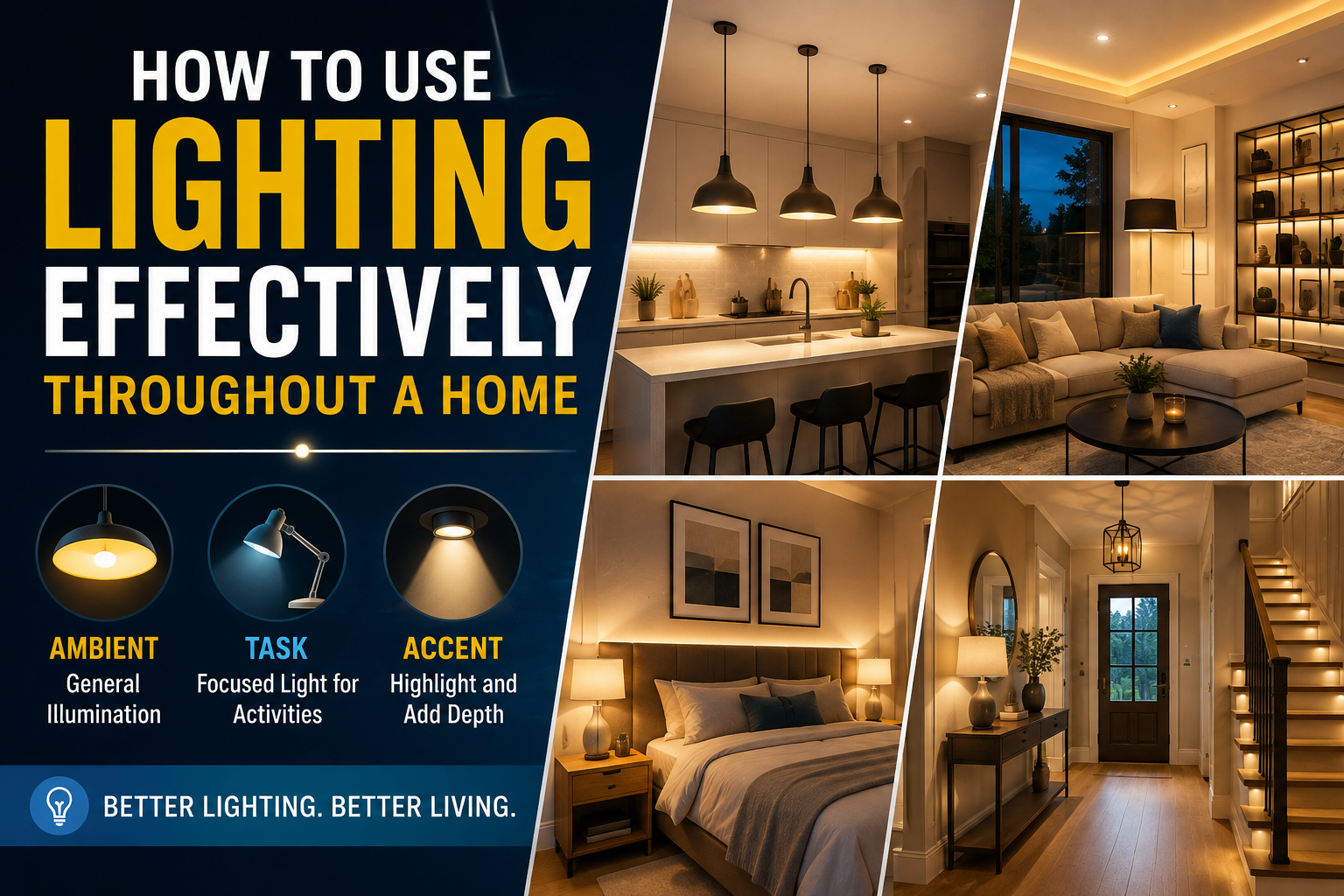
A well-lit home usually combines three basic types of lighting:
- Ambient lighting provides general illumination throughout a room.
- Task lighting focuses light where specific activities take place.
- Accent lighting highlights architectural features, artwork, furniture or decorative objects.
Using all three allows a room to adapt to different activities and times of day.
For example, a kitchen might use ceiling lights for general illumination, under-cabinet lighting for food preparation and pendant fixtures above an island for both task lighting and visual interest.
Start With Natural Light
Before adding artificial lighting, consider how much natural light each room already receives.
Windows, skylights, glass doors and the orientation of a room can significantly affect its brightness throughout the day.
Natural light can make a space feel more open and connected to the outdoors. It can also reduce the need for artificial lighting during daylight hours.
Furniture placement matters as well. A large cabinet or tall piece of furniture positioned directly beside a window can block some of the available daylight.
Light-colored walls and ceilings can also help distribute daylight by reflecting it deeper into a room.
Avoid Blocking Valuable Daylight
Window treatments should provide privacy and control glare without unnecessarily preventing natural light from entering.
Sheer curtains, adjustable blinds and layered window treatments can offer more flexibility than heavy coverings that remain closed throughout the day.
Mirrors can also help distribute light by reflecting daylight into darker areas, although they work best when positioned thoughtfully rather than simply covering every available wall.
Use Ambient Lighting for General Illumination
Ambient lighting is the foundation of a room’s artificial lighting scheme.
It provides enough general illumination for people to move around comfortably and perform basic activities.
Common sources include:
- Ceiling fixtures
- Recessed lights
- Flush-mount fixtures
- Chandeliers
- Wall-mounted fixtures
- Track lighting
- Large floor lamps
The goal is to avoid creating large areas of darkness while also preventing excessive brightness.
A single ceiling fixture can illuminate a room, but relying on it exclusively can produce a flat lighting effect. Combining ceiling lighting with lamps and wall fixtures generally creates a more flexible environment.
Add Task Lighting Where Work Happens
Task lighting is designed for activities that require concentrated illumination.
It is particularly important in rooms where people cook, read, work, study, groom themselves or perform detailed tasks.
Examples include:
- Desk lamps
- Reading lamps
- Under-cabinet kitchen lights
- Bathroom vanity lighting
- Bedside lamps
- Workshop lighting
- Pendant lights over work surfaces
Task lighting should be positioned so that the light falls on the work area without creating distracting shadows or glare.
For example, under-cabinet lighting can illuminate a kitchen countertop without relying entirely on overhead fixtures.
Create Atmosphere With Accent Lighting
Accent lighting adds visual depth and draws attention to particular features.
It can be used to highlight:
- Artwork
- Bookshelves
- Architectural details
- Plants
- Textured walls
- Collections
- Fireplace surrounds
- Decorative furniture
Accent lighting generally works best when it is subtle.
Instead of illuminating every decorative object, choose a few features that deserve attention. This creates visual hierarchy and prevents a room from becoming unnecessarily bright.
How to Light the Living Room
The living room usually needs to accommodate several different activities, making layered lighting particularly useful.
A combination of ceiling lighting, floor lamps, table lamps and accent lighting can provide flexibility.
For example, overhead lighting can provide general illumination when cleaning or entertaining, while table lamps can create a softer atmosphere during the evening.
A floor lamp positioned beside a reading chair can provide dedicated task lighting without illuminating the entire room.
Wall lighting can also add warmth while drawing attention to architectural features or artwork.
Avoid Overusing One Bright Ceiling Light
A single powerful ceiling fixture can make a living room technically bright but visually uncomfortable.
It can also create strong shadows and make the room feel less inviting.
Multiple lower-intensity light sources distributed around the room tend to create a more balanced environment.
How to Light a Kitchen Properly
The kitchen requires particularly careful lighting because it combines general movement with detailed tasks.
A useful kitchen lighting plan can include:
- Ambient lighting for general visibility.
- Task lighting over countertops and food-preparation areas.
- Accent lighting for cabinets, shelves or architectural details.
Under-cabinet lights are particularly useful because upper cabinets can cast shadows onto countertops.
Pendant lights above a kitchen island can also provide focused illumination while becoming an important design feature.
The placement of lights should be considered alongside the kitchen layout. A beautiful fixture that casts a shadow directly over the main preparation area is not particularly useful.
Make Dining Areas Feel Comfortable
Dining rooms and dining areas benefit from lighting that creates a comfortable atmosphere while providing enough illumination for eating and conversation.
A pendant or chandelier centered above the dining table is a common solution.
The fixture should be appropriately sized for the table and positioned so that it provides useful light without obstructing people’s view across the table.
Dimmers are especially useful in dining areas because the same space may need brighter illumination during daytime meals and softer lighting during evening dinners.
Use Bedroom Lighting for Relaxation
Bedrooms generally benefit from softer, layered lighting.
A practical setup can include:
- Gentle ambient lighting
- Bedside lamps
- Reading lights
- Accent lighting
- Closet or wardrobe lighting
Bedside lighting should be easy to operate from the bed. Adjustable reading fixtures can be especially useful when two people have different lighting preferences.
Bright overhead lighting can still be useful when cleaning or organizing the room, but softer sources are usually more comfortable during the evening.
Light the Bathroom for Function and Comfort
Bathrooms require sufficient illumination for activities such as shaving, applying makeup, grooming and cleaning.
Lighting around the mirror is particularly important.
A light source positioned directly above a mirror can sometimes create shadows across the face. Additional lighting positioned near the sides of the mirror can provide more even illumination.
General ceiling lighting can handle overall visibility, while focused lighting near the vanity provides task illumination.
Because bathrooms contain moisture, fixtures should be selected and installed according to the requirements appropriate for their location and electrical safety regulations.
Improve Home Office Lighting
Home offices require lighting that supports concentration and reduces unnecessary glare.
A combination of natural daylight, ambient lighting and task lighting can work well.
Positioning a desk near a window can provide useful daylight, but the screen should be positioned carefully to avoid reflections.
A desk lamp can provide additional illumination for reading documents and writing.
The position of the light source matters. If you are right-handed, for example, placing a desk lamp to your left can reduce shadows across writing surfaces. Left-handed users may find the opposite arrangement more convenient.
Make Hallways and Entryways Safer
Hallways are often overlooked when planning lighting.
These spaces need enough illumination for safe movement, particularly around stairs, corners and changes in floor level.
Wall sconces, ceiling fixtures and strategically positioned recessed lights can provide effective illumination without requiring excessive brightness.
Entryways can also benefit from layered lighting. A ceiling fixture can provide general illumination while a table lamp or wall light can create a welcoming atmosphere.
Use Stair Lighting Carefully
Stairs deserve special attention because poor visibility can increase the risk of trips and falls.
Lighting should make each step clearly visible without producing strong glare.
Options include:
- Wall-mounted lights
- Recessed step lights
- Ceiling fixtures
- Handrail lighting
- Low-level LED lighting
The objective is consistent illumination rather than dramatic darkness-and-light contrasts.
Choose the Right Light Color
The color appearance of a light source can dramatically affect how a room feels.
Light sources are commonly described using color temperature, measured in Kelvin (K).
Generally:
- Warmer light creates a softer, more relaxed atmosphere.
- Neutral light provides a balanced appearance.
- Cooler light can feel more crisp and energizing.
Warm lighting is often suitable for bedrooms, living rooms and dining areas.
Neutral or cooler lighting may be useful in kitchens, bathrooms, garages and work areas, depending on the activity and personal preference.
There is no single color temperature that works for every room.
Think About Color Rendering
Color temperature is not the only characteristic that matters.
Color rendering describes how accurately a light source reveals the colors of objects.
This can be particularly important in kitchens, bathrooms, dressing areas and spaces containing artwork.
A light source with good color rendering can make food, clothing, skin tones and decorative materials appear more natural.
When selecting bulbs or integrated fixtures, checking the manufacturer’s color-rendering information can help you make a more informed choice.
Install Dimmers Where Possible
Dimmers can make lighting significantly more versatile.
A single fixture can provide bright illumination when needed and softer light when a more relaxed atmosphere is preferred.
Dimmers can be particularly useful in:
- Living rooms
- Bedrooms
- Dining rooms
- Kitchens
- Home theaters
- Entryways
Not every bulb or fixture is compatible with every dimmer, so compatibility should be checked before installation.
Consider Energy Efficiency
Modern lighting can provide substantial illumination without requiring large amounts of electricity.
LED lighting has become a common choice because LED products generally use less energy and can last considerably longer than traditional incandescent bulbs.
Energy efficiency is not only about the bulb itself. It also involves how lighting is used.
Motion sensors, timers and smart controls can reduce unnecessary operating time in areas such as hallways, garages, outdoor spaces and utility rooms.
Use Smart Lighting Strategically
Smart lighting systems can provide additional control through apps, voice assistants, schedules and automated routines.
For example, homeowners can create different lighting scenes for:
- Morning routines
- Evening relaxation
- Reading
- Entertaining
- Movie watching
- Nighttime movement
Smart lighting can be useful, but it does not automatically make a lighting design better.
The foundation should still be good fixture placement, appropriate brightness and a sensible combination of ambient, task and accent lighting.
Avoid Common Lighting Mistakes
Even expensive fixtures can produce disappointing results when they are poorly positioned.
Relying Entirely on Overhead Lighting
One ceiling fixture rarely provides the flexibility required for an entire room.
Installing Lights Without Considering Furniture
Lighting should be planned around how the room will actually be used.
Creating Excessive Glare
Bright bulbs aimed directly toward people’s eyes or reflective surfaces can make a room uncomfortable.
Ignoring Shadows
A light source positioned behind someone working at a counter or desk can cast shadows onto the task area.
Using Identical Lighting Everywhere
Different rooms have different purposes. A bedroom does not need the same lighting strategy as a kitchen or workshop.
Installing Too Many Recessed Lights
Recessed lighting can be useful, but covering a ceiling with fixtures can produce unnecessary brightness and reduce visual interest.
Plan Lighting Before Renovating
Lighting is easier to install and position when it is considered during the design or renovation stage.
Before finalizing electrical work, consider:
- Furniture placement
- Ceiling height
- Window locations
- Work surfaces
- Artwork
- Walkways
- Storage areas
- Switch locations
- Dimming requirements
This can prevent situations where a light switch is inconveniently located or where a key work surface is left in shadow.
Build a Home Around Layers of Light
Effective home lighting is ultimately about creating flexibility.
A well-designed room should not depend on a single source of illumination. Instead, several layers can work together to provide the right amount and type of light for different situations.
Natural daylight can establish the basic brightness of a room. Ambient lighting can provide general illumination after dark. Task lighting can support specific activities, while accent lighting can add depth and highlight important design features.
The result is a home that does more than simply stay bright. It becomes easier to work, relax, entertain, move around and enjoy each space because the lighting responds to how the home is actually lived in.





2 Comments
Micle harison
June 7, 2019Lorem ipsum dolor sit amet, usu ut perfecto postulant deterruisset, libris causae volutpat at est, ius id modus laoreet urbanitas. Mel ei delenit dolores.
John Doe
June 7, 2019Some consultants are employed indirectly by the client via a consultancy staffing company.