
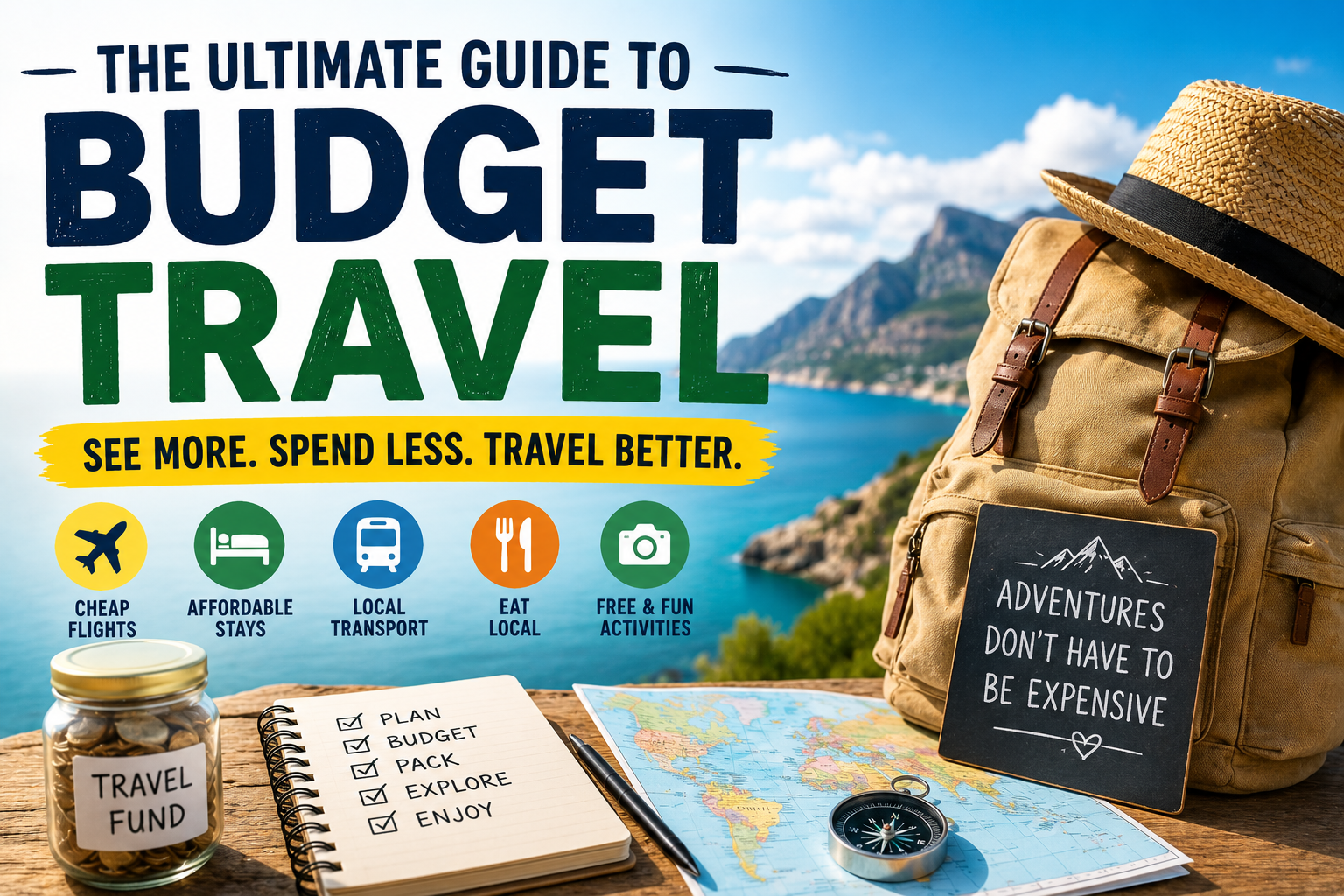
The Ultimate Guide to Budget Travel
Traveling the world doesn’t have to come with an expensive price tag. With thoughtful planning, smart spending, and a little flexibility, it’s possible to explore new destinations while staying within your budget. Budget travel isn’t about sacrificing experiences—it’s about making informed choices that help you get the most value from every dollar you spend.
Whether you’re planning your first weekend getaway or dreaming of a months-long adventure, understanding the principles of budget travel can help you travel farther, stay longer, and enjoy unforgettable experiences without overspending.
This guide covers everything you need to know to become a smarter, more confident budget traveler.
What Is Budget Travel?
Budget travel is the practice of minimizing travel expenses while still enjoying meaningful experiences.
It focuses on making cost-effective choices regarding:
- Transportation
- Accommodation
- Food
- Activities
- Travel insurance
- Packing
- Destination planning
The goal is not simply to spend less, but to maximize value and make travel accessible without unnecessary financial strain.
Why Choose Budget Travel?
Traveling on a budget offers several advantages beyond saving money.
Benefits include:
- More frequent trips
- Longer vacations
- Less financial stress
- Greater flexibility
- Opportunities to experience local culture
- Better financial planning
- Increased confidence as a traveler
For many people, spending wisely makes travel more sustainable over the long term.
Choose Affordable Destinations
Where you travel has one of the biggest impacts on your overall budget.
When researching destinations, consider:
- Local cost of living
- Exchange rates
- Transportation costs
- Accommodation prices
- Food affordability
- Seasonal demand
Some destinations naturally offer better value than others, allowing your travel budget to stretch much further.
Travel During the Off-Season
Peak travel seasons often bring higher prices for flights, hotels, and attractions.
Traveling during shoulder or off-peak seasons can offer:
- Lower airfare
- Reduced hotel rates
- Smaller crowds
- Better availability
- More relaxed experiences
Before booking, research the weather and local events to ensure the destination still meets your expectations.
Save Money on Flights
Airfare is often one of the largest travel expenses.
Ways to reduce flight costs include:
- Booking well in advance
- Being flexible with travel dates
- Comparing airlines
- Traveling midweek when possible
- Flying into nearby airports
- Packing light to avoid baggage fees
- Setting fare alerts
A little flexibility can often lead to significant savings.
Find Affordable Accommodation
Accommodation options have expanded far beyond traditional hotels.
Budget-friendly choices may include:
- Hostels
- Guesthouses
- Vacation rentals
- Budget hotels
- Camping
- University accommodations (seasonally)
- Homestays
When comparing options, consider location, transportation costs, safety, and included amenities.
Use Public Transportation
Public transportation is often one of the most economical ways to explore a destination.
Options may include:
- Buses
- Trains
- Subways
- Trams
- Ferries
- Shared transportation
Walking or cycling can also help reduce costs while allowing you to experience neighborhoods more closely.
Eat Like a Local
Food can be both a memorable part of travel and a significant expense.
To save money:
- Visit local markets.
- Try neighborhood restaurants.
- Cook some meals if your accommodation allows.
- Carry reusable water bottles where safe and appropriate.
- Limit dining in heavily tourist-focused areas.
Local eateries often provide authentic experiences at more reasonable prices.
Pack Smart
Packing efficiently helps avoid unnecessary purchases during your trip.
Essentials may include:
- Comfortable clothing
- Weather-appropriate layers
- Reusable water bottle
- Portable charger
- Travel adapter
- Basic medications
- Toiletries
- Copies of important documents
Packing light can also reduce airline baggage fees.
Create a Travel Budget
A realistic travel budget provides greater financial control.
Consider allocating funds for:
Transportation
- Flights
- Trains
- Buses
- Rental vehicles
Accommodation
- Hotels
- Hostels
- Rentals
Food
- Restaurants
- Groceries
- Snacks
Activities
- Museums
- Tours
- Attractions
Miscellaneous
- Souvenirs
- Tips
- Emergency expenses
Tracking expenses during your trip helps prevent overspending.
Look for Free Activities
Many destinations offer enjoyable experiences at little or no cost.
Examples include:
- Parks
- Beaches
- Hiking trails
- Walking tours
- Museums with free admission days
- Local festivals
- Scenic viewpoints
- Public gardens
Researching free attractions before arrival can significantly reduce travel expenses.
Travel Insurance Matters
While it may seem like an extra expense, travel insurance can provide valuable financial protection against unexpected situations such as:
- Medical emergencies
- Trip cancellations
- Lost baggage
- Travel delays
- Emergency evacuations
Review policy coverage carefully to ensure it matches your travel plans.
Stay Safe While Traveling
Budget travel should never compromise personal safety.
Good safety practices include:
- Keeping valuables secure
- Researching neighborhoods
- Using reputable transportation
- Staying aware of local laws
- Sharing your itinerary with trusted contacts
- Keeping digital copies of important documents
Preparation contributes to a safer and more enjoyable journey.
Sustainable Budget Travel
Traveling responsibly benefits both destinations and future travelers.
Simple ways to reduce your environmental impact include:
- Carry reusable shopping bags
- Bring refillable water bottles
- Support local businesses
- Respect wildlife
- Minimize waste
- Use public transportation when possible
Responsible travel often aligns naturally with budget-conscious choices.
Common Budget Travel Mistakes
Avoiding these mistakes can save both money and stress.
Common pitfalls include:
- Booking without comparing prices
- Overpacking
- Ignoring hidden fees
- Failing to budget for emergencies
- Exchanging currency at poor rates
- Overscheduling expensive activities
- Not researching local transportation
Careful planning helps maximize both savings and enjoyment.
Looking Ahead
Budget travel continues to grow in popularity as travelers seek meaningful experiences without unnecessary spending. Advances in technology, flexible booking options, and the availability of affordable accommodations have made exploring the world more accessible than ever.
By planning ahead, prioritizing value over luxury, and remaining flexible, travelers can create memorable adventures while maintaining financial stability. Ultimately, successful budget travel is not about spending as little as possible—it’s about spending wisely so that every journey delivers lasting value.
Frequently Asked Questions
Is budget travel only for backpackers?
No. Families, couples, solo travelers, and retirees can all benefit from budget-friendly travel strategies.
How far in advance should I plan a budget trip?
Planning several months ahead often provides more options and competitive prices, especially for flights and accommodation.
Is travel insurance worth the cost?
Travel insurance can offer financial protection against unexpected events such as medical emergencies, trip cancellations, or lost luggage.
Can I enjoy luxury experiences on a budget?
Yes. Careful planning, traveling during off-peak periods, and prioritizing experiences can allow travelers to enjoy occasional premium activities without exceeding their budget.
What’s the biggest mistake budget travelers make?
Many travelers underestimate total trip costs by overlooking transportation, local taxes, baggage fees, or emergency expenses.
Key Takeaways
- Budget travel focuses on maximizing value rather than simply minimizing spending.
- Choosing affordable destinations and traveling during off-peak seasons can significantly reduce costs.
- Careful budgeting helps manage transportation, accommodation, food, and activities.
- Public transportation, local dining, and free attractions can stretch your travel budget further.
- Smart packing and advance planning help avoid unnecessary expenses.
- Responsible, well-planned budget travel makes exploring the world more accessible and financially sustainable.




2 Comments
Micle harison
June 7, 2019Lorem ipsum dolor sit amet, usu ut perfecto postulant deterruisset, libris causae volutpat at est, ius id modus laoreet urbanitas. Mel ei delenit dolores.
John Doe
June 7, 2019Some consultants are employed indirectly by the client via a consultancy staffing company.