
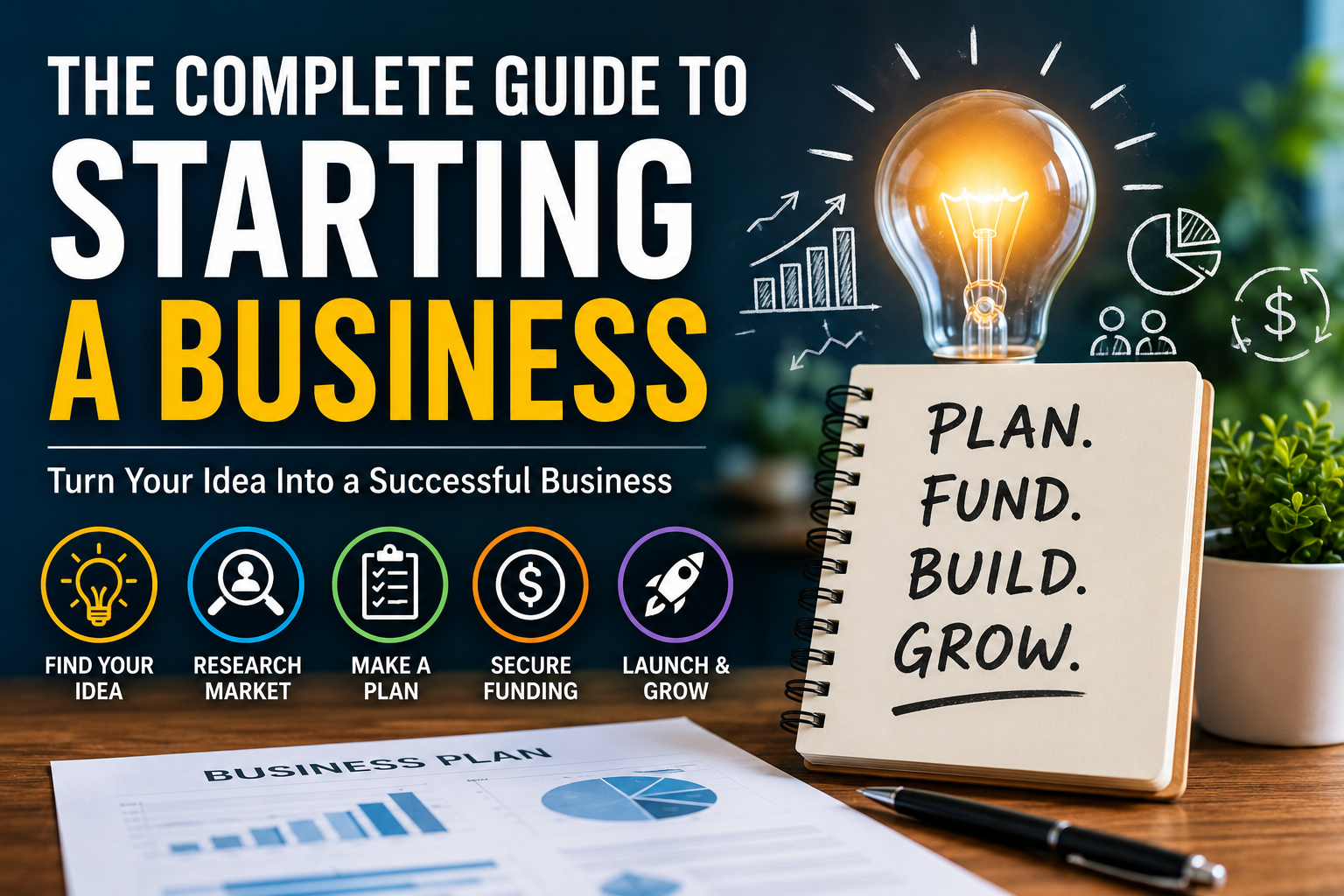
The Complete Guide to Starting a Business
Starting a business is one of the most rewarding ways to turn an idea into a source of income and long-term growth. Whether you dream of opening a local shop, launching an online business, offering professional services, or building the next innovative startup, entrepreneurship provides opportunities to create value while pursuing financial independence.
However, building a successful business requires more than a great idea. Careful planning, market research, financial management, and adaptability all play important roles in turning a vision into a sustainable enterprise.
This guide explains the key steps involved in starting a business, helping aspiring entrepreneurs understand what it takes to move from concept to launch and beyond.
What Is a Business?
A business is an organization or individual that provides products or services to customers in exchange for payment.
Businesses can range from:
- Sole proprietorships
- Freelance operations
- Small family-owned companies
- Online stores
- Service providers
- Large multinational corporations
Regardless of size, every successful business exists to solve a problem or fulfill a customer need.
Why Start a Business?
People choose entrepreneurship for many reasons.
Common motivations include:
- Financial independence
- Flexible working hours
- Pursuing a passion
- Creating jobs
- Building wealth
- Solving real-world problems
- Making a positive impact
- Achieving personal fulfillment
While entrepreneurship offers exciting opportunities, it also involves responsibility, risk, and continuous learning.
Step 1: Identify a Business Idea
Every successful business begins with an idea.
Good business ideas often solve a specific problem or improve an existing solution.
Ask yourself:
- What skills do I have?
- What problems can I solve?
- What products or services are in demand?
- What industries interest me?
- Is there a gap in the market?
The best ideas combine customer demand with your expertise and long-term interest.
Step 2: Conduct Market Research
Market research helps determine whether people are willing to buy your product or service.
Research should include:
- Target customers
- Competitors
- Industry trends
- Customer preferences
- Pricing expectations
- Market size
Understanding your market reduces uncertainty and helps shape better business decisions.
Step 3: Create a Business Plan
A business plan serves as your roadmap.
It typically includes:
Executive Summary
An overview of your business concept.
Products or Services
What you will sell and how it solves customer problems.
Market Analysis
Information about customers and competitors.
Marketing Strategy
How you will attract and retain customers.
Operations Plan
How the business will function on a daily basis.
Financial Plan
Expected expenses, revenue, and profitability.
A well-prepared business plan can also help secure funding.
Step 4: Choose a Business Structure
Business structures vary depending on local laws.
Common options include:
- Sole proprietorship
- Partnership
- Limited liability company (LLC) or equivalent
- Corporation
Each structure has different legal, tax, and liability implications.
Consulting a legal or financial professional can help determine the most appropriate choice.
Step 5: Register Your Business
Most businesses must complete certain registration requirements before operating.
These may include:
- Registering a business name
- Obtaining licenses or permits
- Registering for taxes
- Opening a business bank account
- Meeting local regulatory requirements
Requirements vary depending on your country, state, or municipality.
Step 6: Understand Your Finances
Financial planning is essential for long-term success.
Important financial considerations include:
- Startup costs
- Operating expenses
- Cash flow
- Pricing strategy
- Break-even analysis
- Taxes
- Emergency reserves
Tracking finances from the beginning makes it easier to monitor business performance.
Step 7: Secure Funding
Some businesses can be launched with minimal investment, while others require substantial capital.
Common funding options include:
- Personal savings
- Business loans
- Investors
- Grants
- Crowdfunding
- Friends and family
The right funding strategy depends on your business model and growth plans.
Step 8: Build Your Brand
A strong brand helps customers recognize and trust your business.
Your brand includes:
- Business name
- Logo
- Color palette
- Website
- Brand voice
- Customer experience
- Mission statement
Consistency across all customer interactions strengthens brand recognition.
Step 9: Develop a Marketing Strategy
Marketing helps potential customers discover your business.
Effective marketing channels include:
- Search engine optimization (SEO)
- Content marketing
- Social media
- Email marketing
- Paid advertising
- Networking
- Referral programs
- Public relations
Understanding where your customers spend time allows you to focus marketing efforts more effectively.
Step 10: Focus on Customer Service
Exceptional customer service often becomes a competitive advantage.
Satisfied customers are more likely to:
- Make repeat purchases
- Recommend your business
- Leave positive reviews
- Increase brand loyalty
Listening to customer feedback helps improve products and services over time.
Common Challenges New Businesses Face
Nearly every entrepreneur encounters obstacles.
Common challenges include:
- Limited funding
- Finding customers
- Managing cash flow
- Hiring employees
- Competition
- Time management
- Regulatory compliance
- Economic uncertainty
Preparation and adaptability help businesses navigate these challenges more effectively.
Keys to Long-Term Success
Building a sustainable business requires ongoing improvement.
Successful entrepreneurs often focus on:
- Continuous learning
- Innovation
- Strong customer relationships
- Financial discipline
- Adaptability
- Team development
- Data-driven decision-making
- Long-term planning
Businesses that respond effectively to changing market conditions are often better positioned for growth.
Technology and Modern Business
Technology has transformed entrepreneurship.
Today’s businesses benefit from tools such as:
- Cloud computing
- E-commerce platforms
- Customer relationship management (CRM) software
- Accounting software
- Artificial intelligence
- Digital marketing platforms
- Online payment systems
- Data analytics
These technologies help improve efficiency and customer experiences.
Looking Ahead
Entrepreneurship continues to evolve as technology, consumer behavior, and global markets change.
Businesses that prioritize innovation, customer value, and operational excellence are more likely to remain competitive in the years ahead.
Whether you’re launching a side hustle, opening a local business, or building a scalable startup, careful planning and consistent execution provide a strong foundation for long-term success.
Frequently Asked Questions
How much money do I need to start a business?
Startup costs vary widely depending on the type of business. Some online service businesses require relatively little capital, while retail, manufacturing, or technology ventures may require substantial investment.
Do I need a business plan?
While not always legally required, a business plan helps clarify goals, guide decision-making, and may be necessary when seeking loans or investors.
Can I start a business while working full-time?
Yes. Many entrepreneurs begin by operating a business part-time before transitioning to full-time once it becomes financially sustainable.
What’s the biggest mistake new entrepreneurs make?
Common mistakes include inadequate market research, poor financial planning, underestimating startup costs, and failing to understand customer needs.
How long does it take for a business to become profitable?
The timeline varies depending on the industry, business model, operating costs, and market demand. Some businesses generate profits within months, while others may take several years.
Key Takeaways
- Every successful business starts by solving a real customer problem.
- Market research and business planning reduce uncertainty before launch.
- Choosing the appropriate legal structure and managing finances are essential foundations.
- Strong branding, effective marketing, and excellent customer service drive long-term growth.
- Technology enables businesses to operate more efficiently and reach wider audiences.
- Entrepreneurship is a continuous learning process that rewards preparation, resilience, and adaptability.



2 Comments
Micle harison
June 7, 2019Lorem ipsum dolor sit amet, usu ut perfecto postulant deterruisset, libris causae volutpat at est, ius id modus laoreet urbanitas. Mel ei delenit dolores.
John Doe
June 7, 2019Some consultants are employed indirectly by the client via a consultancy staffing company.