
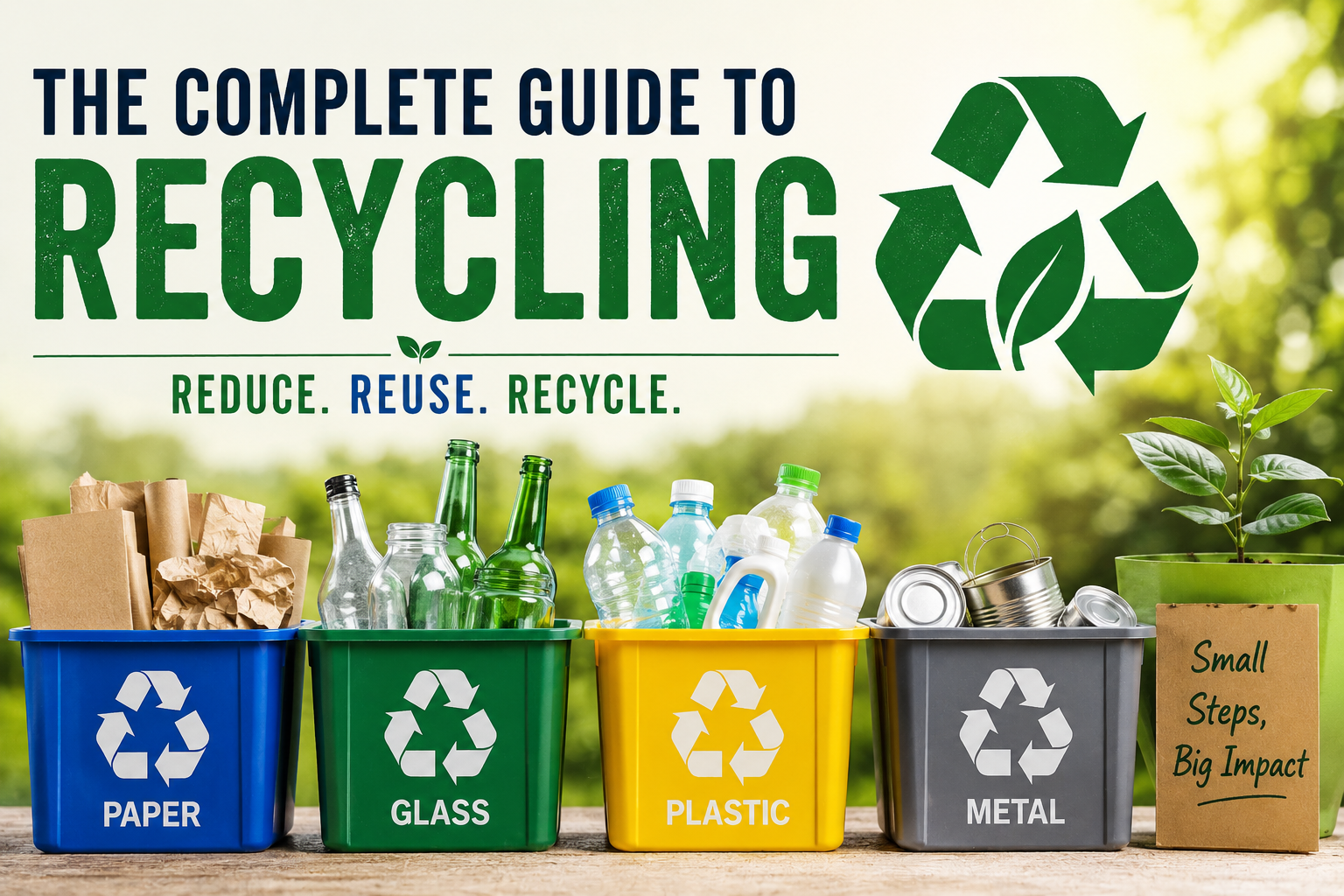
The Complete Guide to Recycling
Recycling has become one of the most effective ways individuals and communities can reduce waste, conserve natural resources, and help protect the environment. Every year, billions of tons of waste are generated worldwide, much of which could be reused or recycled instead of ending up in landfills or polluting oceans, rivers, and forests.
Understanding how recycling works—and recycling correctly—can make a significant difference. While recycling alone is not enough to solve global environmental challenges, it remains an essential part of building a more sustainable future.
This guide explains everything you need to know about recycling, from the different materials that can be recycled to common misconceptions and practical tips for reducing household waste.
What Is Recycling?
Recycling is the process of collecting, processing, and transforming used materials into new products instead of disposing of them as waste.
Rather than extracting new raw materials, recycling allows valuable resources to be used again, reducing energy consumption, pollution, and the need for additional mining, logging, or manufacturing.
The recycling process generally includes:
- Collection
- Sorting
- Cleaning
- Processing
- Manufacturing new products
- Purchasing recycled products
This creates what’s often called a circular economy, where materials stay in use for as long as possible.
Why Recycling Matters
Proper recycling benefits both the environment and the economy.
Some of its biggest advantages include:
- Reducing landfill waste
- Conserving natural resources
- Saving energy
- Lowering greenhouse gas emissions
- Protecting wildlife habitats
- Reducing pollution
- Supporting green industries
- Creating recycling-related jobs
Every recycled product helps reduce demand for newly extracted raw materials.
The Most Common Recyclable Materials
Paper
Paper remains one of the easiest materials to recycle.
Examples include:
- Newspapers
- Office paper
- Cardboard
- Paper bags
- Magazines
Recycled paper is commonly turned into:
- Packaging
- Tissue paper
- Cardboard
- Writing paper
- Egg cartons
Plastic
Plastic recycling is more complex because different plastics require different processing methods.
Common recyclable plastics include:
- Water bottles
- Milk jugs
- Detergent bottles
- Food containers
- Shampoo bottles
Some plastics are difficult or uneconomical to recycle, making proper sorting especially important.
Glass
Glass can often be recycled repeatedly without losing quality.
Common recyclable glass includes:
- Beverage bottles
- Food jars
- Glass containers
However, materials such as mirrors, ceramics, and heat-resistant glass usually require different disposal methods.
Metal
Metal recycling conserves significant amounts of energy.
Frequently recycled metals include:
- Aluminum cans
- Steel food cans
- Beverage containers
- Metal lids
- Foil (if clean)
Aluminum is particularly valuable because it can be recycled many times with relatively little energy compared to producing new aluminum.
Electronics
Electronic waste contains valuable materials including:
- Copper
- Gold
- Silver
- Aluminum
- Rare earth metals
Old computers, phones, tablets, and televisions should be taken to certified e-waste recycling programs rather than thrown away.
How the Recycling Process Works
Although recycling systems vary by region, the process generally follows several steps.
1. Collection
Materials are collected through curbside bins, recycling centers, or community drop-off locations.
2. Sorting
Facilities separate materials into categories such as:
- Paper
- Plastic
- Glass
- Aluminum
- Steel
Modern recycling centers often use automated equipment alongside manual inspection.
3. Cleaning
Contaminants like food residue, labels, and liquids are removed before processing.
4. Processing
Materials are shredded, melted, crushed, or pulped depending on their type.
5. Manufacturing
Recycled materials become raw ingredients for new products.
6. Consumer Purchase
Buying products made from recycled materials completes the recycling loop.
Common Recycling Mistakes
Many well-intentioned recyclers accidentally contaminate recycling streams.
Common mistakes include:
- Recycling greasy pizza boxes
- Placing food-contaminated containers in bins
- Recycling plastic bags where curbside collection doesn’t accept them
- Including broken ceramics
- Mixing hazardous waste with recyclables
- Not rinsing bottles and cans
Contamination increases processing costs and may cause entire batches to be discarded.
The Recycling Symbols Explained
Many products display recycling symbols to indicate material types.
For plastics, the numbers inside the recycling symbol identify the type of plastic resin used.
These numbers help recycling facilities sort materials appropriately, although acceptance varies by local recycling programs.
Always check local recycling guidelines before disposing of items.
Reduce, Reuse, Then Recycle
Environmental experts often emphasize that recycling is only one part of sustainable waste management.
The preferred order is:
Reduce
Use fewer disposable products and avoid unnecessary packaging.
Examples include:
- Carry reusable shopping bags
- Buy durable products
- Avoid single-use plastics
Reuse
Extend the life of products whenever possible.
Ideas include:
- Repair broken items
- Donate clothing
- Refill containers
- Repurpose household items
Recycle
Recycle materials that can no longer be reused.
Following this hierarchy helps reduce overall waste generation.
Recycling Around the World
Recycling systems differ significantly between countries and even between neighboring cities.
Some regions offer:
- Single-stream recycling
- Separate recycling bins
- Deposit-return systems
- Electronic waste collection
- Composting programs
Understanding local guidelines ensures recyclable materials are processed correctly.
Challenges Facing Recycling
Despite its benefits, recycling faces several obstacles.
These include:
- Contaminated recycling streams
- Fluctuating markets for recycled materials
- Difficult-to-recycle plastics
- Public confusion
- Collection costs
- Inconsistent recycling rules
Improving product design and consumer education can help overcome many of these challenges.
Simple Ways to Recycle More Effectively
Small daily habits can make recycling easier.
Consider these practical tips:
- Learn your local recycling rules.
- Rinse containers before recycling.
- Flatten cardboard boxes.
- Separate recyclable materials properly.
- Compost food scraps where possible.
- Recycle electronics responsibly.
- Choose products made from recycled materials.
- Reduce unnecessary packaging when shopping.
The Future of Recycling
Innovation continues to improve recycling technologies.
Emerging developments include:
- AI-powered sorting systems
- Chemical recycling for difficult plastics
- Smart waste collection
- Improved packaging design
- Circular manufacturing systems
- Advanced biodegradable materials
Governments, businesses, and consumers all play an important role in creating a more sustainable recycling economy.
Final Thoughts
Recycling is one of the simplest yet most impactful actions individuals can take to reduce environmental harm. While it is not a complete solution to pollution or climate change, it conserves valuable resources, reduces landfill waste, and supports a more circular economy.
The greatest environmental benefits come from combining recycling with reducing waste, reusing products whenever possible, and making informed purchasing decisions. By understanding how recycling works and following local guidelines, every household can contribute to cleaner communities and a healthier planet.
Frequently Asked Questions
What materials can usually be recycled?
Paper, cardboard, glass bottles, aluminum cans, steel cans, and many plastic containers are commonly recyclable, although local programs may vary.
Why should recyclable containers be cleaned?
Food residue can contaminate recyclable materials, making them more difficult or expensive to process.
Can plastic bags go in curbside recycling bins?
Many curbside programs do not accept plastic bags because they can damage sorting equipment. Many grocery stores offer dedicated collection points instead.
Is recycling enough to protect the environment?
No. Recycling is most effective when combined with reducing consumption, reusing products, conserving energy, and supporting sustainable practices.
What is the circular economy?
A circular economy keeps products and materials in use for as long as possible through reuse, repair, recycling, and responsible manufacturing.
Key Takeaways
- Recycling helps conserve natural resources and reduces landfill waste.
- Paper, glass, metals, and many plastics can often be recycled.
- Proper sorting and cleaning improve recycling efficiency.
- Reducing and reusing products are even more effective than recycling alone.
- Supporting products made from recycled materials strengthens the recycling system.
- Individual actions, combined with effective recycling infrastructure, contribute to a more sustainable future.




2 Comments
Micle harison
June 7, 2019Lorem ipsum dolor sit amet, usu ut perfecto postulant deterruisset, libris causae volutpat at est, ius id modus laoreet urbanitas. Mel ei delenit dolores.
John Doe
June 7, 2019Some consultants are employed indirectly by the client via a consultancy staffing company.