
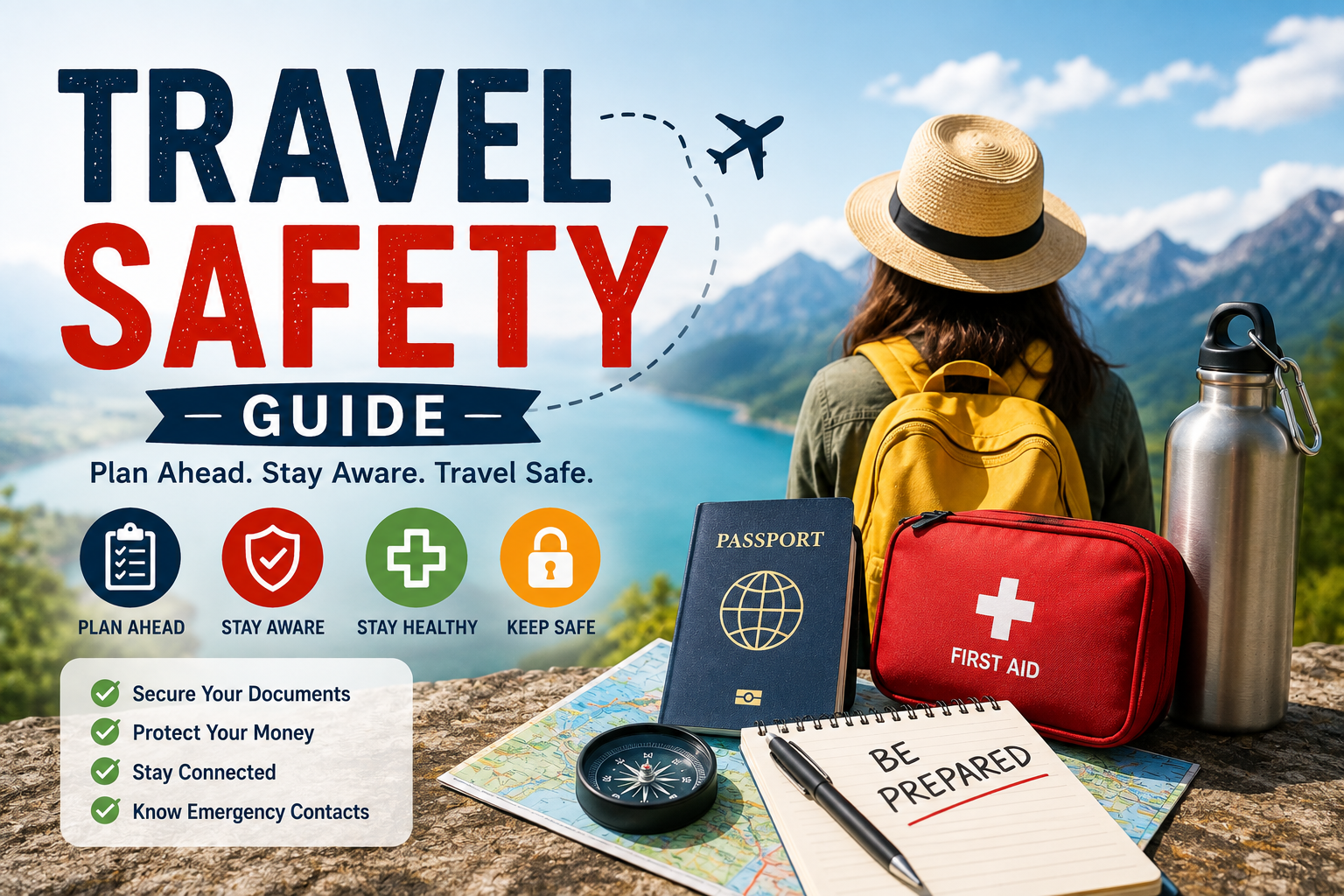
Travel Safety Guide
Travel opens the door to new cultures, unforgettable experiences, and lifelong memories. Whether you’re taking a weekend road trip, flying abroad, or exploring a new city, traveling safely helps ensure your journey is enjoyable from start to finish. While most trips go smoothly, unexpected situations such as lost belongings, health emergencies, severe weather, scams, or transportation disruptions can quickly turn a vacation into a stressful experience.
Fortunately, many travel-related risks can be minimized through careful planning and informed decision-making. From researching your destination and protecting important documents to staying aware of your surroundings, simple precautions can significantly improve your safety while traveling.
This guide explains what travel safety is, why it matters, common travel risks, and practical tips for staying safe before, during, and after your trip.
What Is Travel Safety?
Travel safety refers to the practices and precautions that help protect travelers from health risks, accidents, crime, fraud, and other unexpected situations while away from home.
Travel safety includes:
- Personal security
- Health protection
- Transportation safety
- Digital security
- Financial protection
- Emergency preparedness
- Safe accommodation
- Responsible travel practices
Being prepared helps travelers respond more confidently to changing situations.
Why Travel Safety Matters
No matter the destination, unexpected challenges can arise.
Practicing good travel safety helps:
- Reduce the risk of theft
- Prevent travel scams
- Protect personal information
- Avoid health issues
- Improve emergency preparedness
- Increase confidence while traveling
- Minimize travel disruptions
- Enhance overall travel enjoyment
Preparation often makes the difference between a minor inconvenience and a major problem.
Research Your Destination
Learning about your destination before traveling helps you make informed decisions.
Research topics include:
- Local laws
- Weather conditions
- Cultural customs
- Transportation options
- Emergency services
- Health recommendations
- Currency
- Popular tourist areas
Understanding local expectations can improve both safety and overall travel experience.
Keep Important Documents Secure
Travel documents are among your most valuable belongings.
Important items include:
- Passport
- Identification card
- Driver’s license
- Travel insurance documents
- Flight tickets
- Hotel confirmations
- Emergency contact information
- Copies of important documents
Store originals securely and keep digital or printed copies in a separate location.
Purchase Travel Insurance
Travel insurance can provide financial protection if unexpected events occur.
Policies may cover:
- Medical emergencies
- Trip cancellations
- Lost luggage
- Flight delays
- Emergency evacuation
- Travel interruptions
Review policy details carefully to understand what is and isn’t covered.
Protect Your Health While Traveling
Staying healthy is an important part of safe travel.
Helpful practices include:
- Stay hydrated
- Eat safely prepared food
- Wash your hands regularly
- Get enough rest
- Pack essential medications
- Follow recommended vaccinations
- Use sunscreen
- Practice good hygiene
Consult a healthcare professional before traveling if your destination requires specific health precautions.
Stay Aware of Your Surroundings
Situational awareness can help reduce many common travel risks.
Pay attention to:
- Crowded areas
- Unfamiliar neighborhoods
- Public transportation
- Personal belongings
- Local safety advice
- Emergency exits
- Weather changes
- Trusted navigation routes
Remaining alert can help you avoid potential problems before they develop.
Protect Your Money
Managing finances wisely reduces the risk of theft or fraud.
Helpful tips include:
- Carry multiple payment methods
- Avoid displaying large amounts of cash
- Use secure ATMs
- Monitor bank accounts
- Notify your bank before international travel
- Keep emergency funds separate
- Store valuables securely
- Use contactless payments when available
Diversifying payment options provides backup if one method becomes unavailable.
Stay Safe Online
Travelers often rely on public Wi-Fi, which may present security risks.
To improve digital safety:
- Avoid accessing sensitive accounts on unsecured networks
- Use strong passwords
- Enable two-factor authentication
- Update devices before traveling
- Lock your phone and laptop
- Back up important data
- Avoid suspicious links
- Turn off automatic Wi-Fi connections
Protecting your digital information is just as important as protecting physical belongings.
Transportation Safety
Whether driving, flying, or using public transportation, safe travel habits matter.
Recommendations include:
- Wear seat belts
- Follow local traffic laws
- Choose licensed transportation providers
- Confirm ride-share details before entering vehicles
- Keep valuables close
- Arrive early for departures
- Monitor travel updates
- Plan routes in advance
Reliable transportation planning reduces unnecessary stress.
Hotel and Accommodation Safety
Choose accommodations with a strong reputation for cleanliness and security.
Upon arrival:
- Check emergency exits
- Lock doors and windows
- Use room safes when available
- Avoid sharing your room number publicly
- Keep valuables out of sight
- Verify visitors before opening the door
Simple precautions help improve personal security during your stay.
Avoid Common Travel Scams
Scams can target travelers in many destinations.
Common examples include:
- Fake taxi services
- Counterfeit tickets
- Overpriced currency exchanges
- Distraction theft
- Fake accommodation listings
- Unofficial tour guides
- Card skimming
- Fraudulent booking websites
Researching common scams before traveling helps you recognize warning signs.
Emergency Preparedness
Preparing for emergencies provides peace of mind.
Consider carrying:
- Emergency contact numbers
- Local emergency service information
- Portable phone charger
- First aid kit
- Flashlight
- Copies of important documents
- Prescription medications
- Travel insurance details
Having a basic emergency plan can reduce stress during unexpected situations.
Traveling Solo Safely
Solo travel can be rewarding when approached thoughtfully.
Helpful practices include:
- Share your itinerary with trusted contacts
- Stay in well-reviewed accommodations
- Avoid isolated areas at night
- Trust your instincts
- Keep your phone charged
- Stay connected with family or friends
- Limit sharing your real-time location on social media
- Learn basic local emergency phrases if traveling abroad
Confidence and awareness contribute to a safer solo travel experience.
Family Travel Safety
Families may benefit from additional planning.
Helpful ideas include:
- Carry identification for children
- Establish meeting points
- Pack snacks and water
- Bring entertainment for long journeys
- Keep emergency contacts accessible
- Teach children basic safety rules
- Use appropriate child safety equipment
- Review travel plans together
Preparation can make family trips smoother and less stressful.
Common Travel Safety Myths
Several misconceptions can lead travelers to underestimate risks.
Myth: Tourist Areas Are Always Safe
Popular destinations can still experience theft, scams, or other incidents.
Myth: Travel Insurance Is Unnecessary
Unexpected medical issues or cancellations can become expensive without adequate coverage.
Myth: Only International Travel Requires Planning
Domestic trips can also involve weather disruptions, accidents, or unexpected emergencies.
Myth: Expensive Gear Guarantees Safety
Good preparation and awareness are often more valuable than costly equipment.
Tips for Safer Travel
Build safer travel habits by:
- Planning ahead.
- Researching destinations thoroughly.
- Keeping valuables secure.
- Staying aware of your surroundings.
- Following local laws and customs.
- Maintaining digital security.
- Carrying emergency contacts.
- Monitoring weather forecasts.
- Trusting your instincts.
- Remaining flexible if plans change.
Thoughtful preparation makes travel both safer and more enjoyable.
The Future of Travel Safety
Technology continues improving how people travel safely.
Emerging developments include:
- AI-powered travel alerts
- Smart luggage tracking
- Biometric airport security
- Digital travel documents
- Real-time translation apps
- Emergency notification systems
- Wearable health monitoring
- Advanced navigation tools
These innovations are making travel more convenient while helping travelers respond quickly to changing conditions.
Final Thoughts
Travel safety is about preparation, awareness, and making informed decisions before and during every journey. While no trip is entirely free from risk, taking practical precautions—such as researching your destination, protecting important documents, practicing good digital security, and staying alert—can significantly reduce potential problems.
Whether you’re exploring a nearby city or traveling across the world, good travel habits help create a safer, more enjoyable experience. With thoughtful planning and a willingness to adapt, travelers can focus less on unexpected challenges and more on discovering new places, cultures, and unforgettable experiences.




2 Comments
Micle harison
June 7, 2019Lorem ipsum dolor sit amet, usu ut perfecto postulant deterruisset, libris causae volutpat at est, ius id modus laoreet urbanitas. Mel ei delenit dolores.
John Doe
June 7, 2019Some consultants are employed indirectly by the client via a consultancy staffing company.