
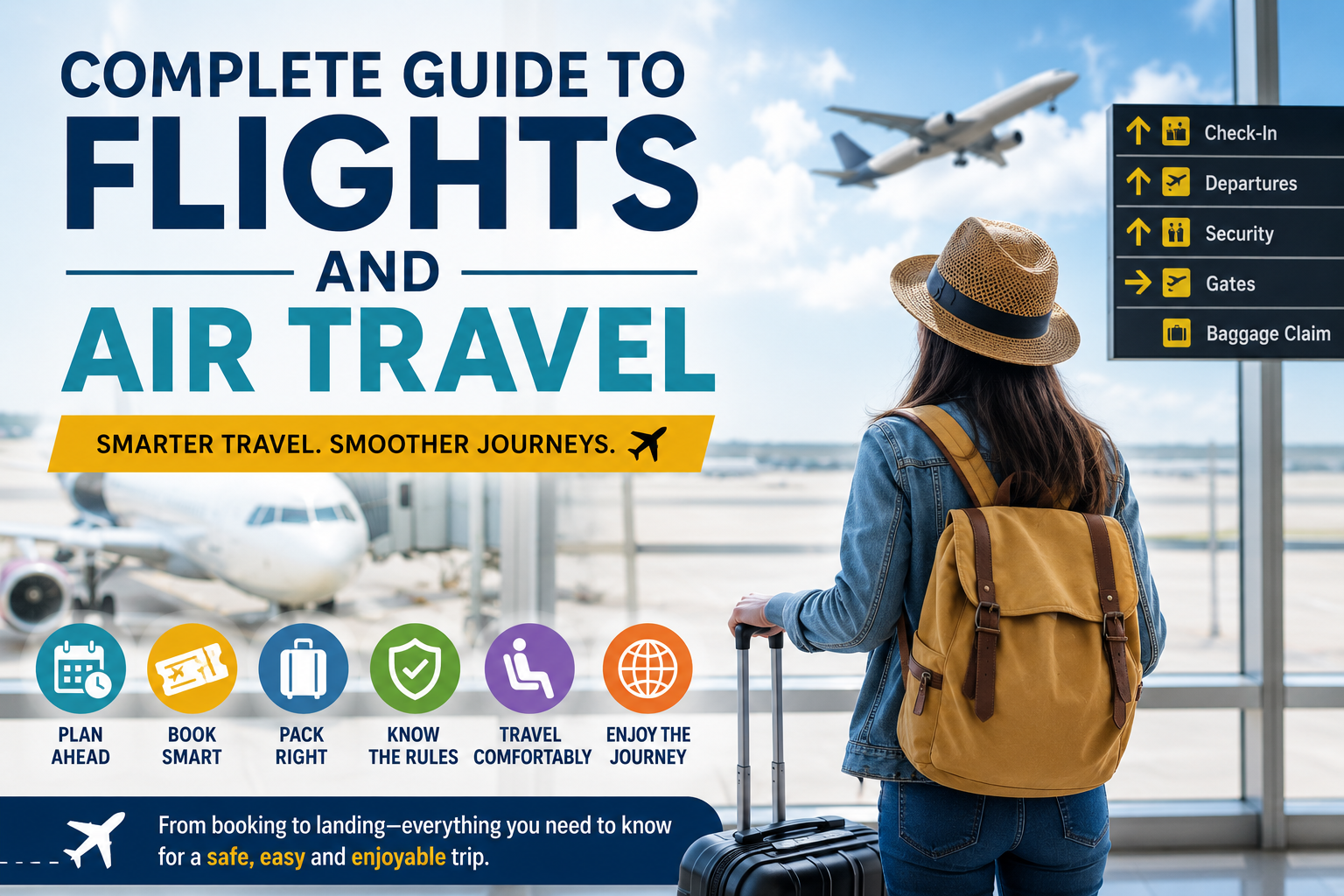
Complete Guide to Flights and Air Travel
Flying has become one of the most practical ways to travel long distances, whether you are taking your first flight, planning an international holiday, traveling for work, or connecting to another destination.
Yet air travel can feel complicated. From choosing a flight and understanding baggage rules to navigating airports, boarding procedures, connections, and arrival requirements, there are many details that can affect the experience.
This complete guide to flights and air travel explains the process from planning your trip to arriving at your destination. It also covers common mistakes, practical airport tips, and ways to make flying more comfortable and predictable.
What Is Air Travel?
Air travel is the transportation of passengers from one location to another by aircraft. Commercial airlines operate scheduled and sometimes chartered flights between airports within the same country and across international borders.
A typical air journey may involve several stages:
- Planning the trip
- Searching for flights
- Booking a ticket
- Preparing travel documents
- Checking in
- Arriving at the airport
- Passing through security
- Finding the departure gate
- Boarding the aircraft
- Completing the flight
- Collecting baggage after landing
- Passing through immigration and customs when required
Understanding each stage can make the entire experience easier, particularly for first-time travelers.
How Flights Work
A commercial flight generally connects a departure airport with an arrival airport according to a scheduled itinerary.
Some flights are nonstop, meaning the aircraft travels directly between the two airports without stopping. Others are direct flights that may make a technical or operational stop while remaining under the same flight number.
A connecting flight requires passengers to change aircraft, and sometimes airlines, at an intermediate airport.
For example, a journey might look like:
Nairobi → Doha → London
In this case, Doha is the connecting airport.
The type of itinerary you choose can affect travel time, price, convenience, and the risk of missing a connection.
Types of Flights You Should Know
Domestic Flights
Domestic flights operate within the same country. They are often shorter and may have simpler documentation requirements than international journeys.
However, passengers still need valid identification and must follow the airline and airport’s requirements.
International Flights
International flights cross national borders and generally involve additional documentation.
Depending on the destination, travelers may need:
- A valid passport
- A visa or electronic travel authorization
- Proof of onward or return travel
- Accommodation information
- Vaccination documentation where applicable
- Other destination-specific documents
Requirements vary by country, so travelers should check official requirements before departure.
Nonstop Flights
A nonstop flight takes passengers from the departure airport to the destination without stopping at another airport.
These flights are often attractive because they reduce travel time and eliminate the need to change aircraft.
Connecting Flights
Connecting flights involve one or more stops where passengers continue their journey on another flight.
They can sometimes be cheaper than nonstop flights, but travelers need to pay attention to connection times and airport layouts.
Charter Flights
Charter flights are arranged for specific groups, organizations, tour operators, or other purposes rather than operating entirely as part of a regular scheduled service.
They are commonly associated with organized travel and special-purpose transportation.
How To Choose the Right Flight
The cheapest flight is not necessarily the best flight.
When comparing options, consider the entire journey rather than the advertised ticket price alone.
Important factors include:
- Total travel time
- Number of connections
- Length of layovers
- Departure and arrival times
- Baggage allowance
- Airport location
- Change and cancellation conditions
- Seat selection fees
- Meal availability
- Airline reputation
- Connection requirements
A slightly more expensive nonstop flight may be better value if it saves several hours and eliminates a complicated connection.
Understanding Flight Tickets and Fares
Airline tickets can contain numerous conditions that are easy to overlook during booking.
A fare may specify whether it includes:
- Carry-on baggage
- Checked baggage
- Seat selection
- Meals
- Flight changes
- Refunds
- Priority boarding
Two tickets on the same flight can therefore have very different conditions.
Before paying, review the complete fare rules rather than relying only on the headline price.
What Is a Flight Number?
A flight number is an identifier assigned to a particular airline service.
For example, an itinerary may show:
Flight ABC123
The flight number helps passengers, airports, airlines, and tracking systems identify a specific scheduled service.
Your boarding pass and itinerary normally display the flight number alongside other important information such as the departure time and airport.
What Is a Layover?
A layover is the period between flights when a traveler must wait at an intermediate airport.
Layovers can range from relatively short periods to several hours.
A short layover may reduce overall travel time but provide less flexibility if the first flight is delayed. A longer layover gives you more time to reach the next gate but increases the total journey duration.
When booking a connecting itinerary, the ideal connection time depends on factors such as:
- Airport size
- Whether you must change terminals
- Whether you must clear security again
- Whether you need to collect and recheck baggage
- Immigration requirements
- Whether both flights are on the same ticket
How To Prepare for a Flight
Good preparation can prevent many common travel problems.
Before leaving for the airport, confirm:
- Your flight number
- Departure time
- Airport and terminal
- Baggage allowance
- Passport validity
- Visa requirements
- Check-in status
- Transportation to the airport
- Accommodation details
- Important travel documents
Keep essential documents and valuables somewhere accessible but secure.
It is also useful to keep digital copies of important documents while retaining the originals when required.
How Online Check-In Works
Many airlines allow passengers to check in online before arriving at the airport.
During online check-in, travelers may be able to:
- Confirm passenger information
- Select or change seats
- Add baggage
- Download a boarding pass
- Review flight details
Online check-in can save time at the airport, particularly for passengers traveling with only carry-on luggage.
However, some journeys still require passengers to visit an airline counter for document verification or other procedures.
What To Expect at the Airport
Airports can be confusing if you do not know what to expect.
A typical departure process looks like this:
Airport arrival → Airline check-in → Baggage drop → Security → Departure area → Gate → Boarding → Flight
International travel may include additional immigration procedures.
The exact sequence varies by airport and destination.
How Early Should You Arrive at the Airport?
The appropriate arrival time depends on the airport, airline, destination, and whether you are checking baggage.
International flights generally require more preparation time because travelers may need to complete additional documentation and border-control procedures.
Rather than arriving at the last possible moment, allow enough time for:
- Traffic or transportation delays
- Check-in queues
- Baggage drop
- Security screening
- Immigration
- Finding your gate
- Unexpected airport delays
Large airports can require considerable walking time between terminals and gates.
Understanding Airport Security
Security screening is designed to protect passengers, aircraft, airport personnel, and other travelers.
Passengers may be asked to place certain belongings into screening trays and follow instructions regarding electronics, liquids, clothing, and other items.
Security rules differ between airports and countries.
To make the process smoother:
- Keep travel documents accessible
- Follow staff instructions
- Avoid packing prohibited items
- Organize your carry-on carefully
- Allow enough time for screening
Checking the airport or airline’s current security guidance before traveling can prevent unnecessary delays.
Carry-On Baggage Explained
Carry-on baggage is luggage that passengers are permitted to take into the aircraft cabin, subject to airline restrictions.
Airlines can impose limits on:
- Size
- Weight
- Number of bags
- Personal items
Rules differ considerably between airlines and fare classes.
A practical carry-on should contain essential items that you may need during the journey, such as:
- Travel documents
- Medication when applicable
- Phone
- Chargers
- Valuables
- Basic toiletries
- Important personal items
Do not assume that another airline will have the same baggage rules as one you have used previously.
Checked Baggage Explained
Checked baggage is handed to the airline before departure and transported in the aircraft’s baggage compartment.
Your baggage allowance may depend on your ticket type, route, airline, frequent-flyer status, or additional baggage purchased during booking.
Before packing, check the specific airline’s:
- Weight limits
- Size limits
- Number of permitted bags
- Restricted items
- Excess baggage charges
A luggage scale can help prevent unexpected fees at the airport.
How Boarding Works
When boarding begins, passengers are normally called according to the airline’s boarding system.
Your boarding pass will identify the gate and flight information.
Before boarding, verify that:
- The flight number is correct
- The destination is correct
- The gate has not changed
- You have your passport and boarding pass
Once onboard, locate your seat and store your belongings according to the crew’s instructions.
Choosing an Airplane Seat
Seat preferences vary from traveler to traveler.
Window Seats
Window seats can provide a view and allow passengers to lean against the aircraft wall when resting.
Aisle Seats
Aisle seats provide easier access to the restroom and allow passengers to get up without asking other travelers to move.
Middle Seats
Middle seats are often less popular, particularly on longer flights, although they can be useful when traveling with family or friends.
Exit-Row Seats
Exit-row seating may offer additional legroom, but passengers seated there may have specific eligibility requirements and responsibilities.
The best seat ultimately depends on your priorities, including comfort, mobility, sleep, and proximity to the exit.
How To Make Long Flights More Comfortable
Long flights can be physically tiring.
Simple habits can make the experience easier:
- Drink water regularly
- Move around when appropriate
- Adjust your seating position
- Wear comfortable clothing
- Bring entertainment
- Use a travel pillow if helpful
- Keep essential items within reach
- Avoid overpacking your personal space
If you have a medical condition or specific health concerns related to flying, seek appropriate professional advice before traveling.
Understanding Flight Connections
Connections require more planning than nonstop journeys.
Before booking a connecting flight, check whether you will need to:
- Change terminals
- Change airports
- Collect baggage
- Recheck baggage
- Pass through immigration
- Pass through security again
A connection that appears long enough on paper may become difficult if the airport is large or additional procedures are required.
It is particularly important to understand the difference between a single-ticket itinerary and separate tickets.
When flights are booked separately, a delay on one ticket may not automatically protect the next flight.
What Happens When a Flight Is Delayed?
Flight delays can occur for many reasons, including weather, aircraft operations, air traffic restrictions, airport congestion, or technical issues.
If your flight is delayed, monitor:
- Airline announcements
- Airport departure boards
- Your airline’s app or website
- Gate information
If you have a connecting flight, pay particular attention to the available time before the next departure.
When an itinerary is disrupted, contact the airline as soon as possible to understand your options.
What Happens When a Flight Is Cancelled?
If an airline cancels a flight, the available options depend on the airline’s policies, the ticket conditions, and applicable passenger-protection rules.
Possible arrangements can include:
- Rebooking on another flight
- Changing the travel date
- Receiving a refund where applicable
- Other forms of assistance depending on the circumstances
Keep records of communications and expenses when dealing with significant travel disruptions.
International Arrival Procedures
International arrivals can involve several stages.
A typical process may include:
Landing → Immigration → Baggage collection → Customs → Exit
The exact process differs between countries and airports.
Have your passport and required documents ready before approaching immigration.
Travelers should also understand customs requirements before entering a country, particularly regarding food, agricultural products, medication, currency, and other restricted goods.
Common Air Travel Mistakes
Even experienced travelers can make avoidable mistakes.
Some common examples include:
Booking Without Checking Baggage Rules
A low ticket price can become significantly more expensive after baggage fees.
Choosing Extremely Short Connections
A short connection can become stressful when the first flight is delayed.
Ignoring Passport Requirements
Some destinations require passports to remain valid for a specified period beyond the travel date.
Arriving Too Late
Airport queues and security procedures can take longer than expected.
Packing Prohibited Items
Restricted items can cause delays or require travelers to discard belongings.
Failing to Check the Airport Terminal
Large airports may have multiple terminals, and reaching the wrong one can waste valuable time.
Relying Only on Printed Information
Flight gates and schedules can change, so travelers should monitor official airport and airline information.
How To Reduce Travel Stress
A smoother flight often begins before reaching the airport.
Create a simple checklist covering:
- Documents
- Money and payment methods
- Accommodation
- Transportation
- Flight information
- Baggage
- Medication
- Electronics
- Chargers
- Emergency contacts
Arrive with enough time and avoid leaving important tasks until the last minute.
Travelers who know what to expect are generally better prepared to deal with unexpected changes.
Air Travel for First-Time Flyers
First-time flyers often worry about basic questions that experienced travelers take for granted.
It is normal to be unfamiliar with airport signs, security procedures, boarding announcements, and aircraft routines.
A first-time traveler can simplify the experience by:
- Booking a straightforward itinerary.
- Checking baggage rules before packing.
- Completing online check-in when available.
- Arriving at the airport early.
- Following signs and staff instructions.
- Keeping travel documents accessible.
- Monitoring flight information.
- Asking airport staff for help when necessary.
Airports are designed to move large numbers of passengers through standardized processes, and assistance is generally available when travelers are unsure what to do.
How To Plan a Better Air Journey
The best air-travel strategy is to look at the entire journey rather than focusing on one factor.
Consider the relationship between:
Price + travel time + connections + baggage + convenience + flexibility
A flight that costs less but requires two connections, expensive baggage, and a long overnight layover may not offer better overall value.
Likewise, paying more for a nonstop flight may make sense when time and convenience are important.
Frequently Asked Questions About Air Travel
What should I check before booking a flight?
Check the total price, baggage allowance, travel time, connection requirements, airport locations, cancellation conditions, and documentation requirements.
Is a nonstop flight better than a connecting flight?
Not always. Nonstop flights are usually simpler and faster, while connecting flights can sometimes offer lower prices or more route options.
How early should I arrive for an international flight?
Allow substantial time for check-in, baggage, security, immigration, and reaching the departure gate. The exact recommendation depends on the airline and airport.
What should I keep in my carry-on bag?
Keep important documents, valuables, medication when needed, electronics, chargers, and essential personal items accessible.
What happens if I miss a connecting flight?
Your options depend on whether the flights were booked together, the reason for the missed connection, and the airline’s applicable policies. Contact the airline as soon as possible.
Can flight prices change after booking?
The price displayed during booking generally applies to that purchase, but fees and optional services can vary depending on the ticket and services selected.
What is the difference between a layover and a stopover?
A layover is normally a shorter connection between flights, while a stopover generally refers to a longer planned break in the journey. Definitions can vary between airlines and travel programs.
Building Confidence for Your Next Flight
Air travel becomes considerably easier once the basic process is familiar. The key is to prepare before arriving at the airport, understand your ticket and baggage conditions, allow enough time for airport procedures, and keep an eye on official flight information.
Whether you are flying for the first time or planning a complex international itinerary, a little preparation can reduce unnecessary stress and help you focus on the reason for the journey: getting safely and comfortably to your destination.





2 Comments
Micle harison
June 7, 2019Lorem ipsum dolor sit amet, usu ut perfecto postulant deterruisset, libris causae volutpat at est, ius id modus laoreet urbanitas. Mel ei delenit dolores.
John Doe
June 7, 2019Some consultants are employed indirectly by the client via a consultancy staffing company.