
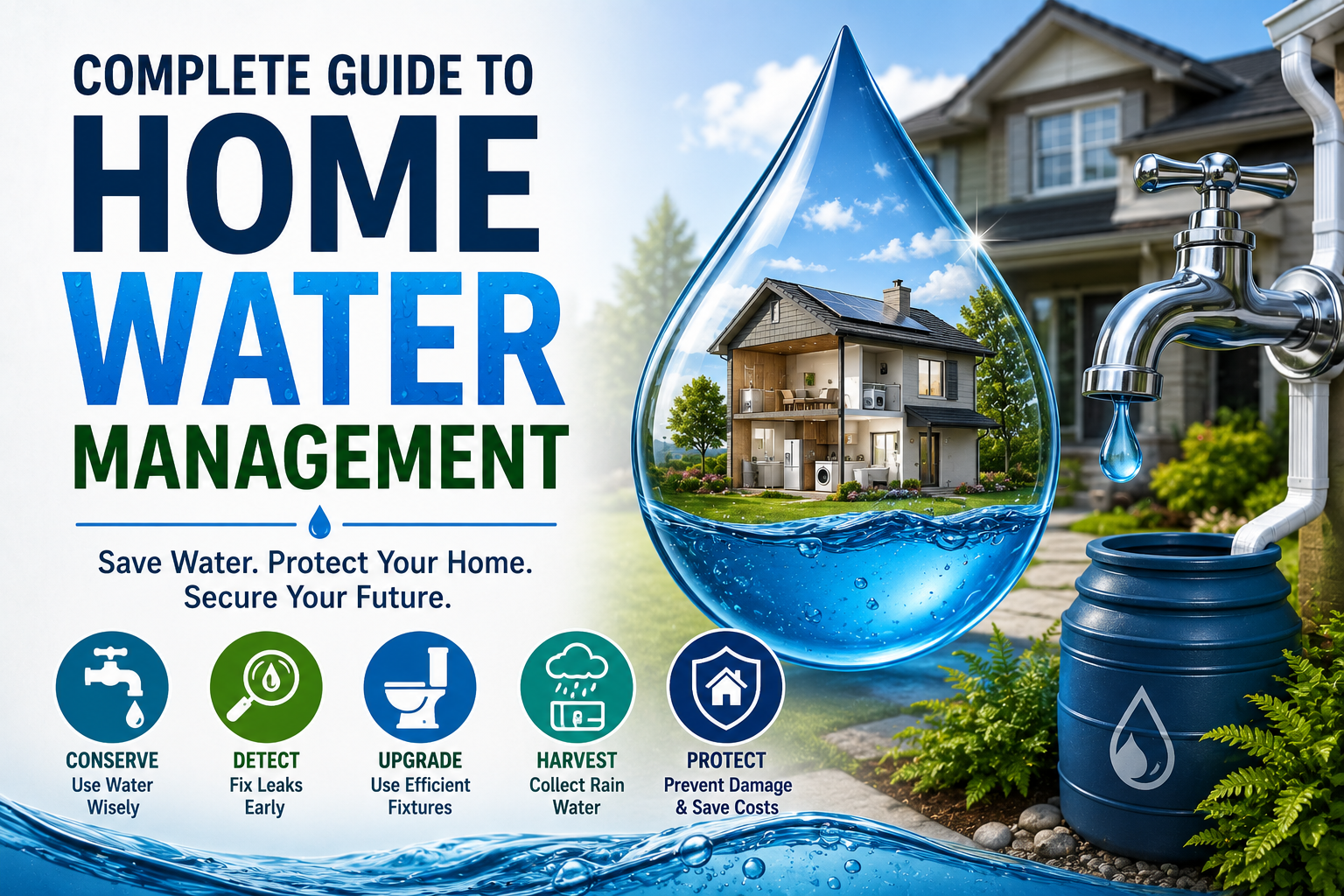
Complete Guide to Home Water Management
Water is one of the most important resources in any home, yet it is easy to overlook how much water a household uses, wastes, stores, and potentially loses through leaks.
Effective home water management is about more than simply using less water. It involves understanding where water comes from, how it moves through the property, how much the household consumes, how wastewater is handled, and how to prevent problems such as leaks, flooding, contamination, and unnecessary waste.
Whether you live in an apartment, townhouse, suburban home, or rural property, a practical water-management strategy can help reduce household costs, protect your property, and make everyday water use more efficient.
What Is Home Water Management?
Home water management is the process of efficiently using, monitoring, storing, maintaining, and disposing of water within and around a home.
It can include:
- Monitoring household water consumption
- Detecting and repairing leaks
- Improving plumbing efficiency
- Managing rainwater
- Using water-efficient fixtures
- Maintaining water storage systems
- Protecting drinking water quality
- Managing wastewater
- Preventing water damage
- Reducing unnecessary outdoor water use
Good water management combines conservation with maintenance.
A household that uses relatively little water can still experience serious water problems if a hidden pipe leaks behind a wall. Likewise, a home with a large water supply can waste substantial amounts through inefficient fixtures, poor drainage, or careless outdoor use.
Why Home Water Management Matters
Water management has several benefits beyond reducing a utility bill.
It Can Reduce Water Waste
Small leaks and inefficient fixtures can waste significant amounts of water over time.
Identifying problems early can prevent unnecessary consumption.
It Can Protect Your Property
Uncontrolled water can damage:
- Walls
- Floors
- Ceilings
- Foundations
- Cabinets
- Furniture
- Electrical systems
- Landscaping
Preventing water damage is often easier than repairing it.
It Can Lower Household Costs
Efficient fixtures, leak repairs, and sensible water-use habits can reduce consumption and potentially lower water-related expenses.
It Can Improve Resilience
Water interruptions, droughts, infrastructure problems, and severe weather can temporarily affect household water availability.
Having a sensible storage and conservation plan can make a household better prepared.
It Supports Environmental Conservation
Using water efficiently reduces unnecessary demand on water sources and the energy and infrastructure required to treat, transport, heat, and distribute water.
Understanding Your Home Water System
Before improving water management, it helps to understand how water moves through your property.
A typical home may have several important components:
- Water supply
- Main shutoff valve
- Water meter
- Distribution pipes
- Fixtures and appliances
- Hot-water system
- Drainage system
- Sewer or septic system
- Stormwater drainage
- Outdoor irrigation or watering systems
The exact setup varies depending on the property and local infrastructure.
Knowing where the main shutoff valve is located is particularly important.
If a major pipe suddenly bursts, being able to shut off the water quickly can limit damage.
How to Find Your Main Water Shutoff
The main shutoff controls the water supply entering your home.
Depending on the property, it may be located:
- Near the water meter
- Inside a utility area
- In a basement
- In a garage
- Near an exterior wall
- In a service box
- Near the point where the supply enters the property
Make sure everyone responsible for the home knows where it is.
It is also worth checking occasionally that the valve can actually be operated.
If the valve is difficult to turn, corroded, or damaged, consider having it inspected by a qualified plumber.
How to Monitor Household Water Use
One of the easiest ways to improve water management is to understand how much water your household actually uses.
If your property has a water meter, record the reading periodically.
For example:
- Record the reading at the beginning of the month.
- Record it again at the end.
- Compare consumption between months.
- Look for unexplained increases.
Sudden increases can sometimes indicate:
- A leaking toilet
- A dripping faucet
- A broken outdoor pipe
- Irrigation problems
- A concealed plumbing leak
- Changes in household behavior
Monitoring consumption gives you a baseline against which future changes can be measured.
How to Detect Hidden Water Leaks
Not every leak produces an obvious puddle.
Some leaks occur inside walls, beneath floors, underground, or inside plumbing fixtures.
Potential warning signs include:
- Unexpected increases in water consumption
- Damp spots
- Musty smells
- Peeling paint
- Discolored walls or ceilings
- Mold growth
- Warped flooring
- Sounds of running water when fixtures are off
- Water pooling in unusual places
- Toilets that repeatedly refill
If you suspect a concealed leak, investigate promptly rather than waiting for visible damage.
How to Check for Toilet Leaks
Toilets can waste water without producing an obvious external leak.
A toilet that periodically refills when nobody has used it may have a problem with its internal components.
The issue could involve:
- A worn flapper
- A faulty fill valve
- An incorrect water level
- A damaged seal
A simple inspection can sometimes reveal the problem, but persistent leaks may require professional repair.
Fix Dripping Faucets Promptly
A dripping faucet may seem insignificant, particularly if the leak is slow.
But a faucet that continuously loses water can waste much more than a properly functioning fixture.
Common causes include:
- Worn washers
- Damaged cartridges
- Faulty seals
- Loose components
- Corrosion
Repairing a small leak early is usually preferable to allowing the problem to continue.
Choosing Water-Efficient Fixtures
Water-efficient fixtures can help reduce consumption without requiring major changes to daily routines.
Potential upgrades include:
- Low-flow showerheads
- Efficient faucets
- Water-efficient toilets
- Efficient washing machines
- Efficient dishwashers
When replacing an old fixture or appliance, look at both water consumption and overall performance.
The cheapest option is not always the most efficient choice over its entire lifespan.
Managing Water in the Kitchen
The kitchen can be a significant area of household water use.
Simple habits can improve efficiency.
Avoid Running Water Unnecessarily
Instead of allowing water to run continuously while washing dishes or preparing food, turn it off when it is not needed.
Use the Dishwasher Efficiently
If you use a dishwasher, operating it with an appropriate load can reduce unnecessary water use compared with repeatedly running partially filled cycles.
Check Under the Sink
The area beneath the kitchen sink is easy to ignore.
Occasionally inspect:
- Supply connections
- Drain pipes
- Valves
- Flexible hoses
- Cabinet floors
A small leak under the sink can remain unnoticed until significant damage has occurred.
Managing Bathroom Water Use
Bathrooms are among the most important areas for household water management.
Practical improvements include:
- Repairing leaking toilets
- Fixing dripping faucets
- Installing efficient showerheads
- Avoiding unnecessarily long showers
- Turning off water while brushing teeth
- Checking plumbing connections
- Replacing inefficient fixtures when appropriate
Small changes become more meaningful when they are repeated every day.
Managing Water in the Laundry Room
Washing machines can use considerable amounts of water, depending on their design and cycle settings.
To improve efficiency:
- Run full or appropriately sized loads.
- Select suitable cycle settings.
- Avoid unnecessary extra rinses.
- Maintain hoses and connections.
- Replace damaged hoses promptly.
- Check behind the machine for moisture.
A burst washing-machine hose can release a large amount of water into a home in a short period.
Hot Water Management
Water management is also connected to energy use.
Heating water requires energy, so reducing unnecessary hot-water consumption can potentially lower both water and energy use.
Consider:
- Fixing hot-water leaks
- Insulating appropriate hot-water pipes
- Using efficient shower fixtures
- Avoiding unnecessary hot-water use
- Maintaining the water heater
- Choosing an appropriately sized water-heating system
The specific maintenance requirements depend on the type of water heater installed.
How to Manage Rainwater
Rainwater is another important part of home water management.
Instead of allowing all rainfall to run uncontrolled across a property, homeowners can use appropriate drainage and collection systems to manage it.
Possible approaches include:
- Gutters
- Downspouts
- Rain barrels
- Storage tanks
- Drainage channels
- Rain gardens
- Permeable surfaces
- Proper landscape grading
The best solution depends on local rainfall, soil conditions, available space, regulations, and the property’s design.
Rainwater Harvesting at Home
Rainwater harvesting involves collecting and storing rainwater for appropriate uses.
Depending on local regulations and the design of the system, collected rainwater may be useful for purposes such as:
- Garden irrigation
- Landscape maintenance
- Cleaning
- Other non-potable applications
Drinking rainwater requires substantially more careful treatment and system design.
A collection system intended only for gardening should not automatically be assumed to produce drinking-quality water.
Choosing a Rainwater Storage System
Rainwater storage can range from small containers to large tanks.
Factors to consider include:
- Roof area
- Local rainfall
- Household water needs
- Available installation space
- Tank capacity
- Structural requirements
- Maintenance needs
- Local regulations
A larger tank is not automatically better.
The right size depends on how much water can realistically be collected and how quickly the household uses it.
Protecting Stored Water
Stored water can become contaminated if the collection and storage system is poorly maintained.
Important considerations include:
- Keeping tanks covered
- Preventing debris from entering
- Maintaining screens and filters
- Inspecting pipes and connections
- Cleaning storage systems appropriately
- Preventing animals from accessing the water
For potable water systems, treatment and testing requirements are much more stringent.
Managing Garden Water Use
Outdoor water consumption can become substantial, particularly when watering is poorly timed or inefficient.
Better practices include:
- Watering plants according to their needs
- Using mulch to reduce evaporation
- Improving soil quality
- Watering deeply when appropriate
- Avoiding unnecessary runoff
- Repairing irrigation leaks
- Choosing plants suited to the local environment
A garden does not necessarily need to be watered every day.
Plant species, soil type, weather, season, and local climate all influence water requirements.
Improving Irrigation Efficiency
If your property has an irrigation system, inspect it regularly.
Look for:
- Broken sprinkler heads
- Blocked emitters
- Leaking connections
- Overspray
- Water pooling
- Runoff
- Areas receiving too much or too little water
Efficient irrigation directs water where it is needed rather than onto driveways, sidewalks, walls, or other unnecessary surfaces.
Why Soil Matters for Water Management
Healthy soil can play an important role in how water behaves in a garden.
Soil with good structure can absorb and retain water more effectively than severely compacted soil.
Organic matter can also influence soil structure and moisture retention.
However, different plants require different conditions.
Water management should therefore consider both the soil and the plants growing in it.
Managing Stormwater Around the Home
Heavy rainfall can create problems even when a home’s plumbing system is working perfectly.
Stormwater may enter:
- Roofs
- Foundations
- Basements
- Garages
- Crawl spaces
- Low-lying sections of the property
Good drainage helps direct water away from vulnerable areas.
Inspect gutters and downspouts regularly and ensure water is not being concentrated against the foundation.
Why Gutters Matter
Gutters collect rainwater from the roof and direct it toward appropriate drainage points.
Blocked gutters can cause water to overflow and potentially contribute to:
- Roof damage
- Wall staining
- Foundation moisture
- Landscape erosion
- Water entering unwanted areas
Inspect gutters periodically, particularly after periods when leaves, branches, or other debris may accumulate.
Preventing Water Damage Inside the Home
Water damage prevention should be part of routine home maintenance.
Check:
- Under sinks
- Around toilets
- Around bathtubs
- Around showers
- Behind washing machines
- Around water heaters
- Around refrigerators with water connections
- Around exterior doors
- Near windows
- Around roof penetrations
Early detection can make a significant difference.
A small wet patch is generally easier to investigate than extensive structural damage that has developed over months.
What to Do During a Major Plumbing Leak
If a pipe suddenly bursts:
- Shut off the main water supply.
- Turn off electricity in affected areas if it can be done safely.
- Move valuables away from standing water.
- Remove standing water where practical and safe.
- Contact a qualified plumber.
- Document the damage if an insurance claim may be required.
- Dry affected areas as quickly as possible.
Never enter standing water if there is a potential electrical hazard.
Home Water Quality Management
Water quantity is only one side of water management.
Water quality also matters.
Potential sources of concern include:
- Old plumbing
- Damaged pipes
- Contaminated storage tanks
- Poorly maintained wells
- Backflow
- Improperly maintained filtration systems
If you rely on a private well or household water-storage system, appropriate testing and maintenance may be especially important.
Water quality requirements also vary depending on whether the water is supplied by a public utility, private well, rainwater system, or another source.
Water Filters: What Should You Know?
Water filtration systems can serve different purposes.
Some are designed to reduce particular substances, while others address different contaminants or improve taste and odor.
Before buying a filter, determine:
- What problem you are trying to solve
- What contaminants are actually present
- What the filter is designed to remove
- How often the filter must be replaced
- Whether the system requires professional installation
Buying a filter without understanding the water-quality problem can result in unnecessary expense or inadequate treatment.
Managing Wastewater
Water leaving your home does not simply disappear.
It typically enters either a public sewer system or a private wastewater treatment system such as a septic system.
What goes down household drains can affect these systems.
Avoid treating drains as disposal points for:
- Cooking grease
- Oils
- Paint
- Harsh chemicals
- Solid waste
- Non-flushable products
Even products marketed as “flushable” may cause plumbing problems in some systems.
Septic System Water Management
Homes with septic systems require additional attention.
Excessive water entering a septic system over a short period can place additional stress on the system.
Good practices include:
- Fixing plumbing leaks promptly
- Avoiding unnecessary water use
- Maintaining the septic system appropriately
- Keeping vehicles away from sensitive areas
- Following professional maintenance recommendations
The exact maintenance schedule depends on the system and household conditions.
Water Management During Shortages
Water shortages can require households to change everyday behavior.
Useful strategies include:
- Prioritizing drinking and essential hygiene
- Repairing leaks immediately
- Reducing unnecessary outdoor watering
- Reusing suitable water where safe
- Limiting unnecessary cleaning with running water
- Following local water restrictions
- Maintaining appropriate emergency supplies
During an official shortage, local authorities may provide specific instructions that take priority over general conservation advice.
Creating a Household Water Emergency Plan
A basic water emergency plan can include:
Know Your Shutoffs
Identify the main water shutoff and individual fixture valves.
Know Your Storage
Understand how much emergency water is available and how it should be stored.
Protect Important Equipment
Know where water heaters, pumps, filtration systems, and other relevant equipment are located.
Keep Basic Supplies
Depending on your circumstances, useful supplies may include:
- Buckets
- Towels
- Basic plumbing tools
- Replacement washers
- Pipe repair materials for temporary emergency use
- Appropriate drinking-water storage containers
Know Who to Call
Keep contact information for qualified plumbers, property managers, utility providers, and other relevant services.
Common Home Water Management Mistakes
Ignoring Small Leaks
A small leak can become a major maintenance problem.
Waiting Until a Problem Becomes Visible
Water can travel behind walls and beneath floors before damage becomes obvious.
Overwatering Gardens
More water does not automatically mean healthier plants.
Neglecting Gutters
Blocked drainage can redirect large amounts of rainwater toward vulnerable parts of a property.
Storing Water Without Maintenance
Storage systems need inspection and cleaning where appropriate.
Treating Every Water Source as Drinking Water
Rainwater, untreated well water, and stored water should not automatically be assumed to be safe for drinking.
Focusing Only on Water Bills
A low bill does not necessarily mean a property has good water management.
Water quality, drainage, leaks, storage, and infrastructure condition matter too.
A Practical Home Water Management Checklist
Use this checklist as a starting point for routine maintenance.
Every Month
- Check for visible leaks.
- Inspect under sinks.
- Check toilets for unusual running.
- Look at your water consumption.
- Inspect outdoor taps and hoses.
- Check irrigation for obvious leaks.
Every Few Months
- Inspect gutters and downspouts.
- Check washing-machine hoses.
- Inspect water-heater connections.
- Examine outdoor drainage.
- Check stored water systems.
- Review household water-use habits.
Annually
- Review your plumbing system.
- Inspect vulnerable areas for moisture damage.
- Service relevant water equipment.
- Check rainwater collection systems.
- Review irrigation efficiency.
- Consider whether aging fixtures should be replaced.
The appropriate schedule depends on the home’s age, plumbing system, climate, water source, and equipment.
How Technology Can Improve Water Management
Modern technology can make water monitoring easier.
Smart water-management devices may include:
- Digital water meters
- Leak sensors
- Automatic shutoff valves
- Smart irrigation controllers
- Tank-level monitoring systems
- Water-use monitoring applications
These technologies can help homeowners identify unusual consumption patterns or receive alerts when a leak is detected.
However, technology works best when combined with regular physical inspection and maintenance.
A sensor should complement—not replace—basic home maintenance.
Building a More Water-Efficient Home
The most effective strategy is usually a combination of several improvements rather than one dramatic change.
A water-efficient home might include:
- Efficient plumbing fixtures
- Well-maintained pipes
- Leak detection
- Efficient appliances
- Sensible irrigation
- Rainwater management
- Proper drainage
- Appropriate water storage
- Good wastewater practices
- Regular inspections
The result is a home that uses water more intelligently while reducing the likelihood of costly water-related problems.
Frequently Asked Questions About Home Water Management
How can I reduce water use at home?
Start by repairing leaks, improving bathroom and kitchen habits, using efficient fixtures, running appliances appropriately, and managing outdoor watering more carefully.
How do I know if my home has a hidden water leak?
Unexpected increases in water consumption, damp areas, musty odors, peeling paint, and unexplained sounds of running water can indicate a hidden leak.
Is rainwater safe to drink?
Not automatically. Rainwater can collect contaminants from roofs, gutters, storage systems, and the surrounding environment. Potable rainwater systems require appropriate treatment and maintenance.
How often should I check for household leaks?
A quick visual inspection every month is a useful habit, with more detailed checks performed periodically as part of routine home maintenance.
Does landscaping affect water management?
Yes. Soil condition, plant selection, irrigation methods, drainage, mulch, and property grading can all affect how water is absorbed, stored, or lost.
What is the most important water-management habit?
There is no single habit that solves every household water problem. However, detecting leaks early and understanding how water moves through your home are two of the most useful foundations.
Making Water Management Part of Homeownership
Effective home water management is ultimately about paying attention to the entire water cycle around your property.
Water enters through a supply system or another source. It is used for drinking, cooking, cleaning, bathing, gardening, and other activities. It then leaves through drains, sewer systems, septic systems, or other pathways, while rainfall moves across roofs, gardens, driveways, and surrounding land.
Managing each stage properly can help reduce waste, protect the property, control costs, and improve household resilience.
The best approach is not necessarily to make dramatic changes overnight. Fix the leaks, understand your water system, monitor consumption, maintain drainage, use water-efficient fixtures, manage outdoor water carefully, and make routine inspections part of normal home maintenance.
Over time, those small practices can turn water management from an overlooked household task into an important part of maintaining a safer, more efficient, and more sustainable home.



2 Comments
Micle harison
June 7, 2019Lorem ipsum dolor sit amet, usu ut perfecto postulant deterruisset, libris causae volutpat at est, ius id modus laoreet urbanitas. Mel ei delenit dolores.
John Doe
June 7, 2019Some consultants are employed indirectly by the client via a consultancy staffing company.