
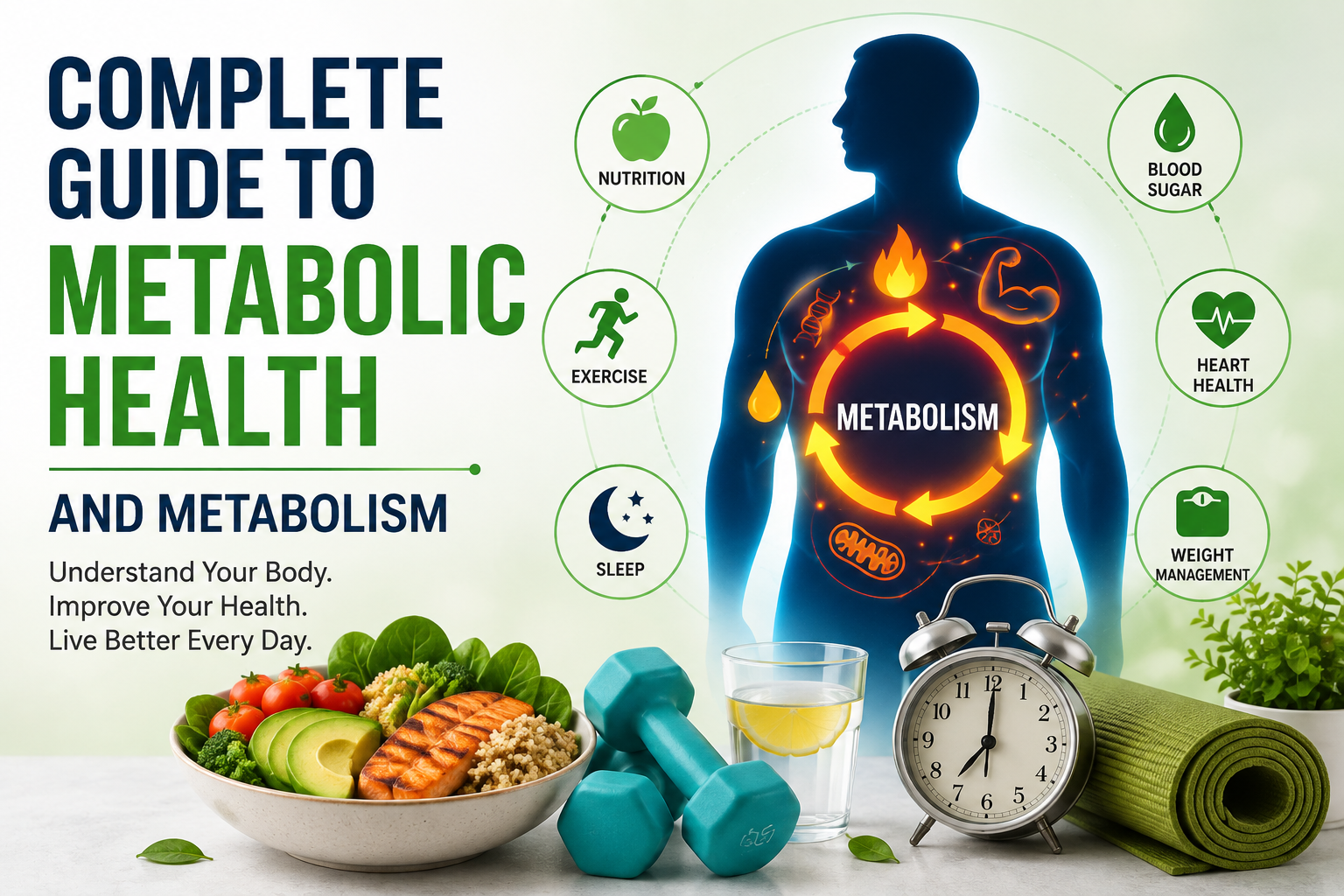
Complete Guide to Metabolic Health and Metabolism
Your metabolism is doing far more work than simply helping you burn calories. Every second, your body is converting food into energy, regulating blood sugar, processing fats and proteins, maintaining body temperature, repairing cells, and supporting the organs that keep you alive.
That is why metabolic health is about much more than body weight. It involves how effectively your body handles energy, blood sugar, blood pressure, cholesterol, body fat, physical activity, sleep, and other factors that influence long-term health.
The good news is that many of the habits associated with better metabolic health are practical and sustainable. Regular movement, nutritious food choices, adequate sleep, and appropriate medical care can all play important roles.
What Is Metabolism?
Metabolism is the collection of chemical processes your body uses to maintain life.
These processes allow your body to:
- Convert food into usable energy
- Build and repair tissues
- Maintain body temperature
- Support brain and organ function
- Store and release energy
- Process carbohydrates, fats, and proteins
- Remove metabolic waste
Metabolism continues whether you are exercising, working, sleeping, or sitting on the couch.
The amount of energy your body uses at rest is influenced by several factors, including body size, muscle mass, age, genetics, and other physiological characteristics.
Metabolism Is Not Simply About Burning Calories
A common misconception is that having a “fast metabolism” automatically means someone is healthier or will never gain weight.
In reality, metabolic health is considerably broader.
A person can have a relatively normal body weight while having problems with blood pressure, blood sugar, cholesterol, or insulin sensitivity. Conversely, body weight alone does not provide a complete picture of someone’s metabolic health.
What Is Metabolic Health?
Metabolic health describes how well the body regulates important processes involving energy, blood sugar, blood fats, blood pressure, and other physiological functions.
One important condition associated with poor metabolic health is metabolic syndrome.
Metabolic syndrome is a group of risk factors that can occur together and increase the risk of conditions such as heart disease, diabetes, and stroke.
The major factors include:
- Increased abdominal fat
- Elevated blood pressure
- Elevated blood sugar
- High triglycerides
- Low HDL cholesterol
Having several of these factors at the same time is more concerning than having one isolated measurement outside the desired range.
Why Metabolic Health Matters
Metabolic problems can develop gradually, sometimes without obvious symptoms.
For example, high blood pressure, high triglycerides, and low HDL cholesterol frequently do not produce noticeable symptoms. Blood sugar problems may also go undetected until they become more significant.
Over time, metabolic dysfunction can contribute to a higher risk of serious health conditions.
Metabolic syndrome, for example, is associated with increased risk of cardiovascular disease and diabetes.
This is one reason routine health checks can be valuable even when a person feels completely healthy.
The Five Major Components of Metabolic Health
1. Blood Sugar Regulation
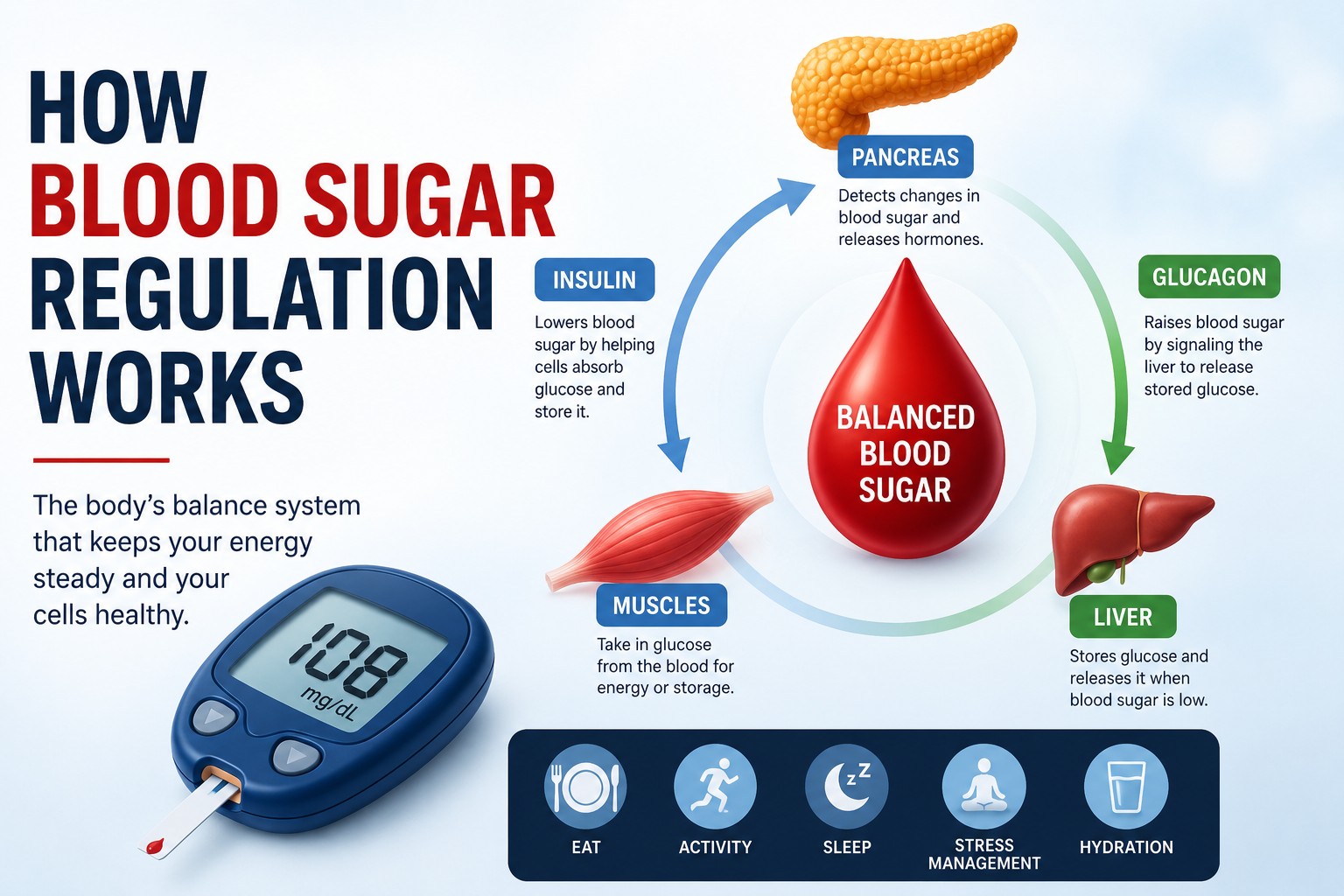
Your body needs glucose for energy, but blood glucose levels need to remain within an appropriate range.
The hormone insulin helps regulate blood sugar by allowing cells to take up glucose from the bloodstream.
When cells become less responsive to insulin, the condition is known as insulin resistance. The body may compensate by producing more insulin, but over time this system can become increasingly strained.
Insulin resistance is closely associated with metabolic syndrome.
Why Blood Sugar Matters
Persistently elevated blood sugar can damage blood vessels and contribute to complications associated with diabetes.
That makes blood glucose regulation one of the central areas of metabolic health.
2. Blood Pressure
Blood pressure measures the force of blood against the walls of your arteries.
Persistently elevated blood pressure can place additional stress on the cardiovascular system.
Blood pressure is therefore an important part of assessing metabolic and cardiovascular health.
Because high blood pressure can occur without obvious symptoms, measuring it regularly is often more informative than relying on how you feel.
3. Triglycerides
Triglycerides are a type of fat found in the blood.
Your body uses them as an energy source, but persistently elevated levels can be associated with increased cardiovascular risk and metabolic syndrome.
NHLBI classifies triglyceride levels below 150 mg/dL as healthy for adults, while levels of 150 mg/dL or higher may indicate elevated triglycerides depending on the clinical context.
Very high triglyceride levels require particular medical attention.
4. HDL Cholesterol
HDL is commonly described as “good” cholesterol because it plays a role in transporting cholesterol back toward the liver.
Low HDL levels are one of the factors considered when evaluating metabolic syndrome.
However, cholesterol should not be interpreted from one number alone. A healthcare professional may consider HDL alongside LDL cholesterol, triglycerides, blood pressure, blood sugar, age, family history, and other risk factors.
5. Abdominal Fat
Where the body stores fat can matter as well as how much fat it stores.
Excess fat around the abdomen is associated with metabolic risk. NHLBI identifies abdominal obesity as one of the factors used when evaluating metabolic syndrome.
This does not mean that waist size alone determines whether someone is metabolically healthy.
It is one piece of a much larger picture.
What Causes Poor Metabolic Health?
Metabolic health is influenced by a combination of lifestyle, biological, environmental, and genetic factors.
Some factors can be modified, while others cannot.
NHLBI identifies physical inactivity, unhealthy dietary patterns, insufficient sleep, smoking, excessive alcohol consumption, age, genetics, and family history among factors that can influence metabolic syndrome risk.
Common contributors include:
- Long periods of physical inactivity
- Poor dietary quality
- Excess calorie intake over time
- Insufficient sleep
- Chronic stress
- Smoking
- Excessive alcohol consumption
- Certain medications
- Genetic predisposition
- Increasing age
- Some underlying medical conditions
Importantly, poor metabolic health is not simply a matter of willpower.
Biology, socioeconomic circumstances, medications, sleep, stress, genetics, and access to nutritious food and healthcare can all influence health outcomes.
Does Body Weight Determine Metabolic Health?
No.
Body weight can be an important health factor, but it is not a complete measurement of metabolic health.
Two people with the same body weight can have very different:
- Blood pressure
- Blood sugar
- Triglyceride levels
- HDL levels
- Muscle mass
- Fitness levels
- Sleep patterns
- Dietary patterns
- Family histories
Likewise, someone who appears physically fit may still have an underlying health issue that requires medical attention.
A better approach is to look at multiple indicators rather than judging metabolic health from appearance alone.
How Food Affects Metabolic Health
Food provides the raw materials and energy your body needs to function.
The quality and quantity of food you regularly consume can influence body weight, blood sugar, blood fats, and other aspects of metabolic health.
A generally health-supportive eating pattern can emphasize:
- Vegetables
- Fruits
- Beans and legumes
- Whole grains
- Nuts and seeds
- Fish and other protein sources
- Lean or minimally processed protein
- Unsaturated fats
- Adequate dietary fiber
At the same time, it can be helpful to moderate excessive consumption of highly processed foods, added sugars, and foods that are very high in calories but relatively low in nutritional value.
The goal does not have to be perfection.
A sustainable eating pattern that someone can maintain for years is generally more useful than an extremely restrictive diet that lasts only a few weeks.
Why Protein Matters
Protein provides amino acids that the body uses to build and repair tissues.
Adequate protein intake can also help support muscle mass, which is important because muscle tissue plays a major role in glucose utilization and physical function.
Protein-rich foods include:
- Eggs
- Fish
- Poultry
- Dairy products
- Beans
- Lentils
- Peas
- Soy foods
- Nuts and seeds
Individual protein requirements vary based on factors such as age, body size, activity level, pregnancy status, and medical conditions.
People with kidney disease or other medical conditions should discuss dietary changes with a qualified healthcare professional.
Why Fiber Matters
Dietary fiber is found primarily in plant foods.
Good sources include:
- Beans
- Lentils
- Vegetables
- Fruits
- Whole grains
- Nuts
- Seeds
Fiber can support digestive health and may help with satiety and blood sugar management.
Rather than focusing on isolated “superfoods,” it is usually more useful to build an overall dietary pattern that contains a wide variety of minimally processed plant foods.
Does Sugar Automatically Cause Metabolic Problems?
Not necessarily.
The relationship between diet and metabolic health is more complicated than simply labeling one ingredient as “good” or “bad.”
The amount consumed, overall dietary pattern, total energy intake, physical activity, body composition, and individual health status all matter.
Added sugars can contribute significant calories without providing much nutritional value, particularly when consumed frequently in sugary drinks and highly processed foods.
Reducing excessive consumption can therefore be a useful part of a broader healthy eating pattern.
How Exercise Supports Metabolic Health
Physical activity is one of the most important tools for supporting metabolic health.
Exercise can improve physical fitness, help manage body weight, support cardiovascular health, and improve the body’s ability to use glucose.
The U.S. physical activity guidelines recommend that adults aim for 150–300 minutes of moderate-intensity aerobic activity per week, or 75–150 minutes of vigorous activity, along with muscle-strengthening activities on at least two days each week.
You do not have to achieve these numbers immediately.
For someone who is currently inactive, starting with manageable amounts of movement can be a practical first step.
Walking and Metabolic Health
Walking is often underestimated because it is simple.
Regular walking can contribute to your overall physical activity and can be easier to maintain than complicated workout programs.
Examples include:
- Walking after meals
- Taking the stairs
- Walking during work breaks
- Walking to nearby destinations
- Taking an evening walk
- Increasing daily steps gradually
The key is consistency.
Adults are also encouraged to move more and sit less, because some physical activity is better than none.
Why Strength Training Matters
Strength training helps maintain and build muscle.
Examples include:
- Weight lifting
- Resistance-band exercises
- Bodyweight exercises
- Squats
- Push-ups
- Lunges
- Resistance machines
Maintaining muscle becomes increasingly important with age because muscle mass and strength naturally tend to decline over time.
Strength training can also complement aerobic exercise as part of a balanced fitness program.
The Connection Between Sleep and Metabolism
Sleep is sometimes overlooked when people discuss metabolism.
It should not be.
Research summarized by NIH indicates that sleep affects metabolic processes, including the body’s response to insulin. Poor sleep is also associated with increased risks related to obesity and diabetes.
Adults generally need at least seven hours of sleep per night, although individual needs vary.
Recent U.S. health data found that 30.5% of adults reported averaging less than seven hours of sleep in 2024.
Better Sleep Habits
Helpful habits can include:
- Maintaining a consistent sleep schedule
- Keeping the bedroom comfortable and dark
- Limiting electronic distractions around bedtime
- Avoiding very large meals close to bedtime
- Getting regular daytime physical activity
- Creating a relaxing nighttime routine
Persistent sleep problems should be discussed with a healthcare professional.
Does Stress Affect Metabolic Health?
Chronic stress can influence many behaviors and physiological processes relevant to metabolic health.
When people are consistently stressed, they may:
- Sleep poorly
- Become less physically active
- Eat more highly processed foods
- Drink more alcohol
- Smoke
- Experience changes in appetite
Stress management therefore does not have to mean eliminating every stressful situation.
Instead, the goal can be developing healthier ways to respond to unavoidable stress.
Walking, exercise, social connection, adequate sleep, relaxation techniques, hobbies, and professional support can all be useful depending on the individual.
How Much Does Genetics Matter?
Genetics can influence metabolism, body composition, appetite, insulin sensitivity, cholesterol levels, and susceptibility to certain diseases.
Family history can therefore be an important part of understanding metabolic risk.
However, genetics does not mean that health outcomes are predetermined.
Lifestyle, environment, medical care, and other factors also matter.
This is one reason personalized medical advice can be more useful than following a generic metabolic-health checklist.
How Is Metabolic Health Checked?
A healthcare professional may evaluate several measurements rather than relying on one test.
Depending on your circumstances, this can include:
- Blood pressure
- Waist circumference
- Blood glucose
- Cholesterol
- HDL cholesterol
- Triglycerides
- Weight
- Medical history
- Family history
- Physical activity
- Dietary habits
NHLBI notes that metabolic syndrome assessment can involve a medical history, physical examination, waist measurement, blood pressure measurement, and blood tests.
Metabolic Health Numbers You May Hear About
The following values are commonly discussed when evaluating metabolic syndrome in adults:
| Measurement | Example threshold used in metabolic syndrome assessment |
|---|---|
| Waist circumference | More than 40 inches for men or 35 inches for women |
| Triglycerides | 150 mg/dL or higher |
| HDL cholesterol | Below 40 mg/dL for men or 50 mg/dL for women |
| Blood pressure | 130/85 mmHg or higher |
| Fasting blood glucose | 100 mg/dL or higher |
These thresholds come from clinical guidance and can vary depending on the guideline, population, and individual circumstances. NHLBI also notes that waist measurements may differ depending on race and ethnicity.
These numbers should not be used to diagnose yourself. A healthcare professional should interpret test results in the context of your overall health.
Can Metabolic Health Improve?
In many cases, metabolic risk factors can improve through lifestyle changes and, when appropriate, medical treatment.
NHLBI identifies healthy eating, physical activity, maintaining a healthy weight, adequate sleep, and other lifestyle changes as important components of managing metabolic syndrome. Some people may also need medication.
The important point is that metabolic health is not an all-or-nothing concept.
Improvement in even one area can be meaningful.
For example, someone might begin by:
- Walking regularly.
- Eating more vegetables and legumes.
- Replacing sugary drinks with water.
- Establishing a consistent sleep schedule.
- Adding strength training twice a week.
- Getting blood pressure and blood sugar checked.
Small improvements can become much more significant when maintained over months and years.
Common Metabolism Myths
“Eating Certain Foods Will Dramatically Speed Up Metabolism”
Some foods can have small effects on energy expenditure, but there is no magic food that transforms metabolism overnight.
Long-term metabolic health depends much more on overall dietary patterns, physical activity, body composition, sleep, genetics, and other factors.
“Skipping Meals Permanently Damages Metabolism”
Meal timing is more complicated than this claim suggests.
People have different schedules, preferences, health conditions, and dietary needs. There is no universal meal schedule that works for everyone.
“A Fast Metabolism Means You Are Healthy”
Not necessarily.
Metabolic health involves multiple systems and measurements.
“You Must Exercise Every Day”
Not necessarily.
The goal is consistent physical activity across the week. The standard guidelines focus on weekly activity totals and include both aerobic and muscle-strengthening activity.
“You Can Judge Metabolic Health by Appearance”
Appearance cannot tell you someone’s blood pressure, glucose levels, triglycerides, HDL cholesterol, insulin sensitivity, or many other important health measures.
A Practical Metabolic Health Checklist
Instead of looking for a single metabolism “hack,” consider the fundamentals.
Nutrition
- Eat a varied diet.
- Include plenty of vegetables and fruits.
- Choose high-fiber foods regularly.
- Include adequate protein.
- Moderate excessive added sugar and highly processed foods.
- Pay attention to portion sizes without becoming excessively restrictive.
Physical Activity
- Move regularly throughout the day.
- Reduce prolonged sitting.
- Aim toward recommended aerobic activity levels.
- Include resistance training.
- Choose activities you can maintain.
Sleep
- Aim for at least seven hours when possible.
- Maintain a consistent sleep schedule.
- Address persistent sleep problems.
Medical Care
- Know your blood pressure.
- Ask about appropriate blood sugar testing.
- Understand your cholesterol and triglyceride results.
- Discuss family history with your healthcare professional.
- Follow prescribed treatment when necessary.
When Should You Talk to a Healthcare Professional?
Consider discussing metabolic health with a healthcare professional if you have risk factors such as:
- High blood pressure
- Elevated blood sugar
- Abnormal cholesterol or triglycerides
- Excess abdominal weight
- A family history of diabetes or cardiovascular disease
- Persistent fatigue or other concerning symptoms
- Significant changes in weight
- A sedentary lifestyle
- A history of metabolic disease
You should also seek professional guidance before making major dietary or exercise changes if you have an existing medical condition, take prescription medications, are pregnant, or have other health considerations.
Building Better Metabolic Health for the Long Term
Metabolism is not a single switch that can be turned on or off. It is a complex network of biological processes influenced by nutrition, movement, muscle mass, sleep, hormones, genetics, age, medical conditions, and everyday behavior.
That is why the most useful approach is rarely an extreme diet or a trendy metabolism “hack.”
Instead, focus on the fundamentals that can be sustained: eat a nutritious and varied diet, move regularly, maintain muscle, get enough sleep, manage stress, avoid smoking, moderate alcohol consumption, and keep up with appropriate health screenings.
Metabolic health is ultimately about what is happening inside the body—not simply what a person weighs or looks like. Understanding that distinction can make it easier to make sensible health decisions and recognize when professional medical advice is needed.




2 Comments
Micle harison
June 7, 2019Lorem ipsum dolor sit amet, usu ut perfecto postulant deterruisset, libris causae volutpat at est, ius id modus laoreet urbanitas. Mel ei delenit dolores.
John Doe
June 7, 2019Some consultants are employed indirectly by the client via a consultancy staffing company.