
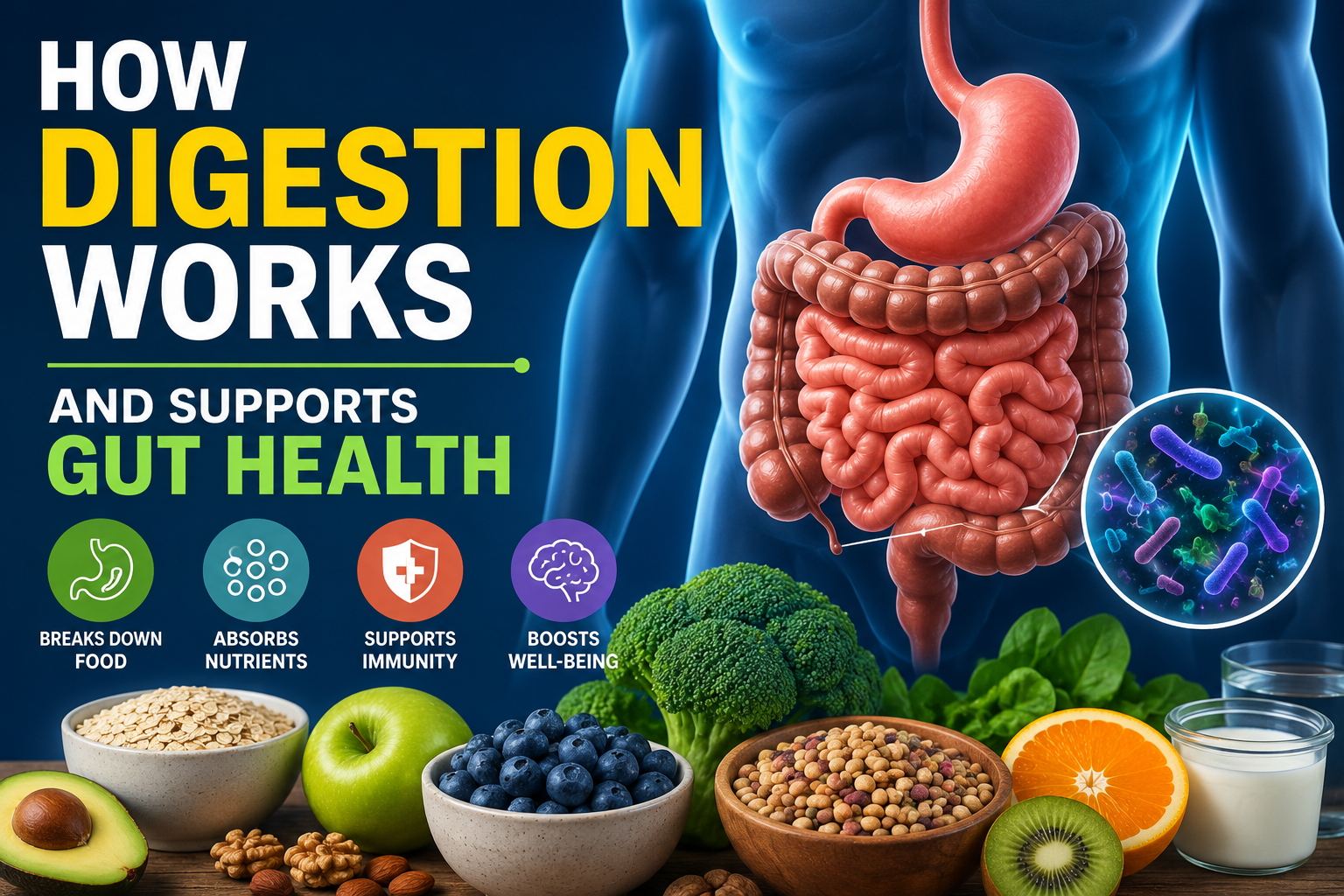
How Digestion Works and Supports Gut Health
Digestion is one of the body’s most important everyday processes, yet it is easy to overlook until something goes wrong.
Every meal sets off a carefully coordinated chain of events involving the mouth, stomach, intestines, liver, pancreas and a vast community of microorganisms living inside the digestive tract. Together, these systems break food down into nutrients the body can use while removing material it cannot absorb.
Understanding how digestion works also helps explain why gut health matters. The digestive system does far more than process food. It plays important roles in nutrient absorption, immune function, metabolism and communication between the gut and the rest of the body.
What Happens to Food During Digestion?
Digestion begins before food reaches the stomach.
When you see, smell or think about food, your body can begin preparing for a meal. Once you start eating, chewing breaks food into smaller pieces while saliva moistens it and begins breaking down certain carbohydrates.
The tongue then moves the food toward the back of the mouth, where it is swallowed.
From there, food travels through the esophagus to the stomach.
The digestive system uses both mechanical and chemical processes to break food down. Mechanical digestion involves physically breaking food into smaller pieces, while chemical digestion uses enzymes, acids and other substances to separate food into molecules that the body can absorb.
This process continues for several hours as food moves through the digestive tract.
The Role of the Stomach
The stomach acts as both a temporary storage chamber and an important digestive organ.
Muscles in the stomach wall contract and mix food with gastric juices. These juices contain hydrochloric acid and digestive enzymes that help break down proteins and destroy many microorganisms that enter with food.
The stomach gradually turns the partially digested meal into a thick liquid known as chyme.
Rather than emptying everything into the small intestine at once, the stomach releases chyme gradually. This controlled process gives the small intestine time to handle the incoming nutrients.
The stomach therefore plays an important role in regulating the pace of digestion.
Why the Small Intestine Is So Important
Although the digestive tract contains several organs, the small intestine is the primary site where most nutrient absorption occurs.
As chyme enters the small intestine, it mixes with digestive substances produced by the pancreas and liver.
The pancreas produces enzymes that help digest carbohydrates, proteins and fats. The liver produces bile, which is stored and concentrated in the gallbladder before being released into the small intestine.
Bile helps the body digest and absorb dietary fats.
The lining of the small intestine is covered with tiny finger-like structures called villi, along with even smaller structures called microvilli. Together, they create a large surface area for absorbing nutrients.
Carbohydrates are ultimately broken down into simple sugars, proteins into amino acids, and fats into fatty acids and other components.
These nutrients can then move through the intestinal lining and into the bloodstream or lymphatic system for transportation around the body.
What Happens in the Large Intestine?
After most nutrients have been absorbed in the small intestine, the remaining material moves into the large intestine.
The large intestine absorbs water and electrolytes while helping transform the remaining material into stool.
This is also where the gut microbiome becomes particularly important.
Billions of microorganisms live throughout the digestive tract, with especially large populations found in the colon. These bacteria and other microbes interact with undigested components of food and produce substances that can affect the environment inside the gut.
The large intestine eventually moves stool toward the rectum, where it remains until it is eliminated from the body.
What Is the Gut Microbiome?
The gut microbiome refers to the community of microorganisms living in the digestive tract.
Although people often use the term “gut bacteria,” the microbiome is more diverse than bacteria alone. It includes various microorganisms that interact with each other, the food we eat and the cells lining the digestive system.
The composition of the microbiome differs from person to person and can change over time.
Diet, lifestyle, medications, illness and other factors can influence the types and amounts of microorganisms present in the gut.
Some microbes help break down components of food that human digestive enzymes cannot fully process. In the process, they can produce compounds that interact with intestinal cells and other parts of the body.
This is one reason researchers increasingly view the gut as an active biological ecosystem rather than simply a tube through which food passes.
How Diet Supports Gut Health
Food provides more than calories and individual nutrients. What people eat can also influence the environment in which gut microorganisms live.
A varied diet containing different plant foods can provide a broad range of dietary fibers and other compounds for the microbiome.
Foods commonly associated with a fiber-rich diet include:
- Beans and lentils
- Whole grains
- Vegetables
- Fruits
- Nuts and seeds
- Peas and other legumes
Fiber is particularly important because some types reach the large intestine without being fully digested in the upper digestive tract. Gut microorganisms can ferment certain fibers and produce short-chain fatty acids.
Not all fiber behaves in exactly the same way, however. Different types can affect digestion, bowel movements and the microbiome differently.
This is one reason dietary variety is generally more useful than focusing on a single “superfood.”
Why Hydration Matters for Digestion
Water is another fundamental part of digestive health.
The digestive system requires fluid for several processes, including the movement and processing of food. Adequate hydration also helps the large intestine maintain an appropriate balance as it absorbs water from digestive contents.
When fluid intake is inadequate, stools can become harder and more difficult to pass in some people.
Hydration needs vary depending on factors such as body size, activity, climate and diet. Rather than relying on a single universal amount, paying attention to thirst and maintaining regular fluid intake can be useful for most healthy adults.
The Connection Between Gut Health and the Immune System
The digestive tract has a close relationship with the immune system.
A large portion of the body’s immune activity is associated with tissues surrounding the gastrointestinal tract. The intestinal barrier also helps regulate what passes from the digestive system into the body’s internal environment.
Meanwhile, microorganisms in the gut interact with immune cells and other biological systems.
This relationship is complex. A healthy gut is not simply one containing a particular “good” bacterium. Researchers are increasingly interested in the diversity, balance and functions of entire microbial communities.
The gut microbiome and immune system influence one another, which is one reason digestive health and overall health cannot always be considered separately.
The Gut-Brain Connection
The digestive system also communicates extensively with the nervous system.
The gut-brain axis describes the two-way communication between the gastrointestinal tract and the brain. Signals can travel through neural pathways, hormones, immune mechanisms and substances produced by gut microorganisms.
This helps explain why stress can affect digestion.
Some people experience changes in bowel habits, abdominal discomfort or appetite during periods of stress. At the same time, signals originating in the digestive system can influence how the brain perceives and responds to what is happening in the body.
Scientists are still working to understand the full significance of these interactions, but it is clear that digestion is not an isolated process.
Everyday Habits That Can Support Digestive Health
Supporting digestion does not necessarily require complicated diets or expensive supplements.
Several basic habits can contribute to a healthy digestive system:
Eat a Variety of Foods
A diverse diet can provide different types of fiber, vitamins, minerals and other compounds while supporting a diverse gut environment.
Include Fiber-Rich Foods
Gradually increasing fiber from vegetables, fruits, whole grains, legumes, nuts and seeds can support regular bowel movements and provide fuel for certain gut microorganisms.
People who are not accustomed to eating much fiber may need to increase it gradually to reduce the likelihood of temporary gas or bloating.
Stay Physically Active
Regular physical activity can support normal bowel function and overall metabolic health. Even everyday movement can be valuable.
Drink Enough Fluids
Adequate fluid intake helps support normal digestion and bowel function, particularly when dietary fiber intake is high.
Eat Mindfully
Eating slowly and chewing food thoroughly gives the digestive process a better start. It may also make it easier to recognize when you are becoming comfortably full.
Be Careful With Unnecessary Antibiotic Use
Antibiotics can be essential and sometimes lifesaving medications, but they can also alter the gut microbiome. They should therefore be used when medically appropriate and according to professional guidance.
Are Probiotics Necessary for Everyone?
Probiotics are live microorganisms found in certain foods and supplements. Some specific probiotic strains have been studied for particular digestive conditions, but the effects are not universal.
A major misconception is that everyone needs the same probiotic supplement to maintain a healthy gut.
The evidence is more complicated.
Different probiotic strains can have different effects, and benefits demonstrated in one situation may not apply to another. For healthy people without a specific digestive problem, a varied, fiber-rich diet may be a more useful foundation than automatically taking a probiotic product.
Anyone considering probiotics for a medical condition should discuss the choice with a qualified healthcare professional.
When Digestive Symptoms Should Not Be Ignored
Occasional digestive symptoms can happen to almost anyone. Eating too quickly, changing your diet or consuming foods that do not agree with you can temporarily cause bloating, gas or changes in bowel habits.
Persistent or severe symptoms are different.
Unexplained weight loss, blood in the stool, persistent vomiting, severe abdominal pain, prolonged changes in bowel habits, difficulty swallowing or other concerning symptoms deserve medical attention.
Digestive symptoms can have many possible causes, ranging from relatively minor issues to conditions that require treatment. Self-diagnosing based solely on internet information can therefore be misleading.
A healthcare professional can assess symptoms in context and determine whether further evaluation is necessary.
Digestion Is a Whole-Body Process
The journey from the first bite of food to the eventual elimination of waste involves an extraordinary amount of coordination.
The mouth prepares food, the stomach breaks it down, the pancreas supplies digestive enzymes, the liver produces bile, the small intestine absorbs nutrients and the large intestine manages water, waste and a complex microbial ecosystem.
Gut health emerges from all of these interactions rather than from a single food, supplement or microorganism.
For most people, the most practical approach is surprisingly straightforward: eat a varied diet rich in whole and fiber-containing foods, stay hydrated, remain physically active and pay attention to persistent changes in digestive health.
The more researchers learn about the gut, the clearer it becomes that digestion is not simply about turning meals into energy. It is a sophisticated system that connects nutrition, metabolism, immunity, the nervous system and the trillions of microorganisms that live alongside us.
Understanding that system can make everyday choices about food and lifestyle feel less like isolated health rules and more like ways of supporting one of the body’s most interconnected biological networks.




2 Comments
Micle harison
June 7, 2019Lorem ipsum dolor sit amet, usu ut perfecto postulant deterruisset, libris causae volutpat at est, ius id modus laoreet urbanitas. Mel ei delenit dolores.
John Doe
June 7, 2019Some consultants are employed indirectly by the client via a consultancy staffing company.