
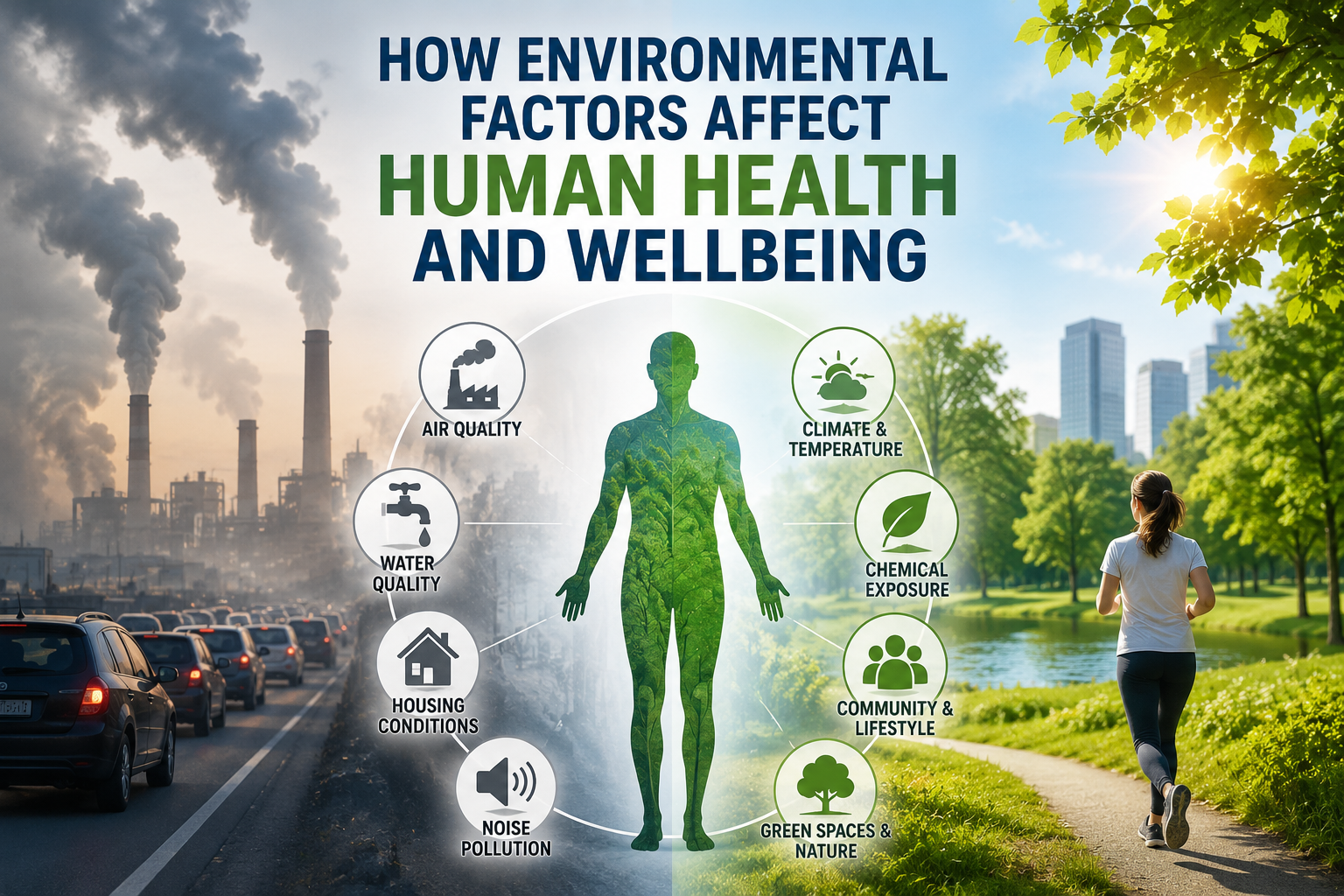
How Environmental Factors Affect Human Health and Wellbeing
Human health is shaped by far more than genetics, diet, exercise, and medical care. The environment in which people live, work, travel, and grow can influence physical health, mental wellbeing, disease risk, and life expectancy.
Environmental health includes factors such as air quality, drinking water, sanitation, housing, climate, chemical exposure, noise, workplace conditions, and access to safe and healthy surroundings. The World Health Organization (WHO) describes a healthy environment as one that supports clean air, safe water, adequate sanitation and hygiene, a stable climate, and protection from harmful chemicals, radiation, and unsafe working conditions. (World Health Organization)
Understanding these connections can help people recognize environmental risks and make practical choices that support better health.
What Are Environmental Factors?
Environmental factors are external conditions that can influence human health. They can be natural, human-made, or related to the social and physical conditions in which people live.
Common examples include:
- Air pollution
- Drinking-water quality
- Sanitation and hygiene
- Household conditions
- Climate and temperature
- Noise pollution
- Chemical exposure
- Workplace hazards
- Food and soil contamination
- Radiation
- Urban design and transportation
- Access to green and recreational spaces
- Extreme weather events
These factors rarely operate in isolation. For example, climate change can affect air quality, water availability, food production, infectious disease patterns, and exposure to extreme heat at the same time. (World Health Organization)
Air Quality and Human Health
Air pollution is one of the most significant environmental threats to health.
Outdoor pollution can come from vehicles, industrial activity, power generation, agriculture, waste burning, and other sources. Indoor pollution can come from cooking and heating with polluting fuels, tobacco smoke, building materials, and other household sources.
Important pollutants include particulate matter, carbon monoxide, ozone, nitrogen dioxide, and sulfur dioxide. Exposure can affect the respiratory and cardiovascular systems and has been associated with conditions including stroke, heart disease, chronic respiratory disease, and lung cancer. (World Health Organization)
WHO’s 2026 technical brief identifies air pollution as a leading environmental health risk and notes that children, pregnant women, older adults, people with chronic diseases, and people living in disadvantaged circumstances can face greater risks. (World Health Organization)
Indoor Air Pollution Matters Too
Environmental health isn’t only about outdoor air.
Households that rely on polluting fuels or inefficient cooking technologies can experience significant indoor exposure. Improving ventilation, using cleaner cooking technologies where available, avoiding indoor tobacco smoke, and reducing sources of harmful fumes can help improve indoor air quality.
Clean Water, Sanitation, and Hygiene
Safe water is fundamental to health.
Contaminated water can expose people to infectious organisms and harmful substances. Poor sanitation and inadequate hygiene can also increase the transmission of infectious diseases.
Environmental health therefore includes more than simply having access to water. Water needs to be appropriately protected, treated, stored, and handled.
WHO’s water and sanitation work focuses on reducing disease through safe drinking water, sanitation, hygiene, wastewater management, and other preventive measures. (World Health Organization)
For households, basic protective measures include:
- Washing hands appropriately
- Keeping drinking-water containers clean
- Preventing contamination of stored water
- Maintaining safe sanitation facilities
- Handling food safely
- Following local water-safety recommendations
Climate and Temperature Affect Health
Temperature is another important environmental determinant of health.
Extreme heat can place considerable stress on the body, particularly among older adults, young children, people with certain chronic conditions, outdoor workers, and people without reliable access to cooling or safe shelter.
Climate change can increase health risks through heatwaves, floods, storms, droughts, wildfires, food insecurity, water insecurity, and changing patterns of infectious disease. It can also affect mental health through displacement, loss of livelihoods, disasters, and prolonged environmental stress. (World Health Organization)
Climate-related risks are also interconnected. Changes in temperature and rainfall can affect agricultural production and water supplies, while extreme weather can disrupt healthcare services and sanitation infrastructure.
Chemicals and Environmental Exposures
People encounter chemicals through air, water, food, consumer products, workplaces, agriculture, and industrial activities.
Not every chemical exposure causes illness, and risk depends on factors such as the substance involved, concentration, route of exposure, duration, and individual susceptibility.
Potential environmental exposures can include:
- Pesticides
- Solvents
- Heavy metals
- Industrial pollutants
- Household cleaning chemicals
- Combustion products
- Contaminated soil or water
Reducing unnecessary exposure generally involves following product instructions, using appropriate protective equipment when required, ensuring adequate ventilation, and following occupational and public-health guidance.
Housing Conditions Can Shape Wellbeing
The home is one of the environments where people spend substantial amounts of time, making housing conditions particularly important.
Poor housing can contribute to health risks through problems such as:
- Dampness and mold
- Inadequate ventilation
- Indoor air pollution
- Excessive heat or cold
- Unsafe electrical systems
- Structural hazards
- Household pests
- Poor sanitation
- Excessive crowding
Healthy housing can provide protection from weather, pollution, injury, and infectious disease while supporting sleep, comfort, privacy, and psychological wellbeing.
This makes housing quality an important part of environmental health rather than simply a matter of comfort.
Noise Pollution and Mental Wellbeing
Noise is another environmental exposure that can affect quality of life.
Persistent or excessive noise from traffic, construction, industrial activity, aircraft, or crowded environments can interfere with sleep, concentration, communication, and relaxation.
For people exposed to substantial noise over long periods, the effects can extend beyond temporary annoyance. Environmental noise is therefore increasingly considered as part of the broader relationship between physical surroundings and wellbeing.
Reducing unnecessary noise at home, improving building insulation where practical, and designing communities with appropriate separation between residential areas and major noise sources can contribute to healthier environments.
Green Spaces and Everyday Wellbeing
The natural environment can also influence health.
Access to parks, trees, gardens, walking areas, and other green spaces can create opportunities for physical activity, social interaction, relaxation, and contact with nature.
The benefits are not necessarily dependent on spending hours outdoors. Simple opportunities to walk, sit outside, garden, or spend time in natural surroundings can make outdoor environments part of a healthier lifestyle.
However, access to green space is not distributed equally. Urban planning, income, transportation, safety, and neighborhood design can all influence whether people have convenient access to healthy outdoor environments.
Environmental Factors and Mental Health
Environmental health is closely connected with psychological wellbeing.
Stress can be influenced by factors such as unsafe housing, excessive noise, overcrowding, environmental disasters, displacement, pollution, and financial or social instability.
Climate-related events can create additional psychological pressures. People affected by floods, fires, storms, droughts, or displacement may experience anxiety, grief, trauma, uncertainty, or disruption of social networks. WHO recognizes mental health as one of the areas affected by climate change. (World Health Organization)
At the same time, pleasant and safe environments can support relaxation, social connection, physical activity, and a sense of security.
Why Some People Face Greater Environmental Risks
Environmental health risks are not experienced equally.
Several factors can increase vulnerability, including:
- Age
- Pregnancy
- Existing health conditions
- Occupation
- Housing quality
- Income
- Access to healthcare
- Geographic location
- Access to clean water and sanitation
- Access to cooling or heating
- Exposure to pollution
- Ability to respond to environmental emergencies
WHO notes that climate-related health risks can disproportionately affect vulnerable and disadvantaged populations, including children, older adults, people with underlying health conditions, migrants, and people living in low-resource settings. (World Health Organization)
This is one reason environmental health is also a matter of health equity.
How Environmental Conditions Influence Chronic Disease
Environmental exposures can contribute to the development or worsening of chronic diseases.
Air pollution, for example, is associated with cardiovascular and respiratory disease, while unhealthy environmental conditions can contribute to infectious disease transmission and other health problems. WHO reports that noncommunicable diseases such as heart disease, chronic respiratory diseases, and cancers account for a substantial share of the disease burden associated with unhealthy environments. (World Health Organization)
The relationship is often complex. A person’s health reflects the combined influence of environmental exposures, genetics, behavior, socioeconomic conditions, healthcare access, and other factors.
Environmental risk should therefore be viewed as one component of a much larger health picture.
Practical Ways to Create a Healthier Environment
Individuals cannot control every environmental exposure, but there are practical steps that can reduce some risks.
Improve Indoor Air Quality
- Avoid smoking indoors.
- Ventilate rooms when appropriate.
- Maintain cooking and heating equipment properly.
- Reduce exposure to smoke and fumes.
- Address persistent dampness and moisture problems.
- Follow manufacturer safety instructions for household products.
Protect Drinking Water
- Use a safe and reliable water source.
- Store water in clean, covered containers.
- Prevent contact between drinking water and contaminated surfaces.
- Follow local water-treatment recommendations when necessary.
Reduce Heat Exposure
During periods of extreme heat, staying hydrated, limiting strenuous activity during the hottest parts of the day, and spending time in cooler environments can help reduce heat-related risks.
People at higher risk may need additional precautions based on public-health guidance.
Make Homes Safer
Regular maintenance can help identify:
- Water leaks
- Electrical hazards
- Poor ventilation
- Structural problems
- Pest infestations
- Excessive indoor temperatures
- Unsafe storage of chemicals
Spend Time in Healthy Outdoor Environments
Where conditions are safe, walking, gardening, exercising outdoors, or spending time in parks can combine environmental benefits with physical activity and social connection.
What Governments and Communities Can Do
Environmental health cannot be solved entirely through individual behavior.
Clean air, safe water, effective sanitation, safe housing, waste management, transportation systems, occupational protections, urban planning, and climate resilience require action by governments, businesses, communities, and public-health institutions.
Policies that reduce pollution can sometimes deliver multiple benefits simultaneously. For example, cleaner energy and transportation can reduce air pollution while also reducing greenhouse-gas emissions. WHO identifies these types of measures as opportunities for significant health co-benefits. (World Health Organization)
Community-level interventions can therefore have a much larger effect than individual choices alone.
The Connection Between Environmental Health and Prevention
One of the most important lessons from environmental health is that prevention often begins before someone becomes sick.
Reducing exposure to pollution, improving sanitation, maintaining safe housing, preparing for extreme weather, and creating healthier communities can reduce health risks before they require medical treatment.
WHO estimates that a substantial proportion of the global disease burden is linked to modifiable environmental risks, highlighting the importance of prevention and healthier environments. (World Health Organization)
That does not mean every illness can be prevented by changing the environment. Genetics, aging, infections, lifestyle, healthcare access, and many other factors remain important. But improving environmental conditions can remove or reduce several avoidable risks.
Building Healthier Places to Live
Human health is inseparable from the environments people inhabit. The air entering our lungs, the water we drink, the homes we live in, the food systems that sustain us, the temperatures we experience, and the communities around us can all influence wellbeing.
The most effective approach is not to focus on one environmental threat in isolation. Healthier communities require a combination of clean air, safe water, adequate sanitation, healthy housing, pollution control, climate resilience, safe workplaces, accessible green spaces, and effective public-health systems.
Ultimately, protecting the environment is also an investment in human health. When communities create cleaner, safer, and more resilient surroundings, they can reduce preventable risks while creating conditions in which people have a better opportunity to live healthy and productive lives.



2 Comments
Micle harison
June 7, 2019Lorem ipsum dolor sit amet, usu ut perfecto postulant deterruisset, libris causae volutpat at est, ius id modus laoreet urbanitas. Mel ei delenit dolores.
John Doe
June 7, 2019Some consultants are employed indirectly by the client via a consultancy staffing company.