
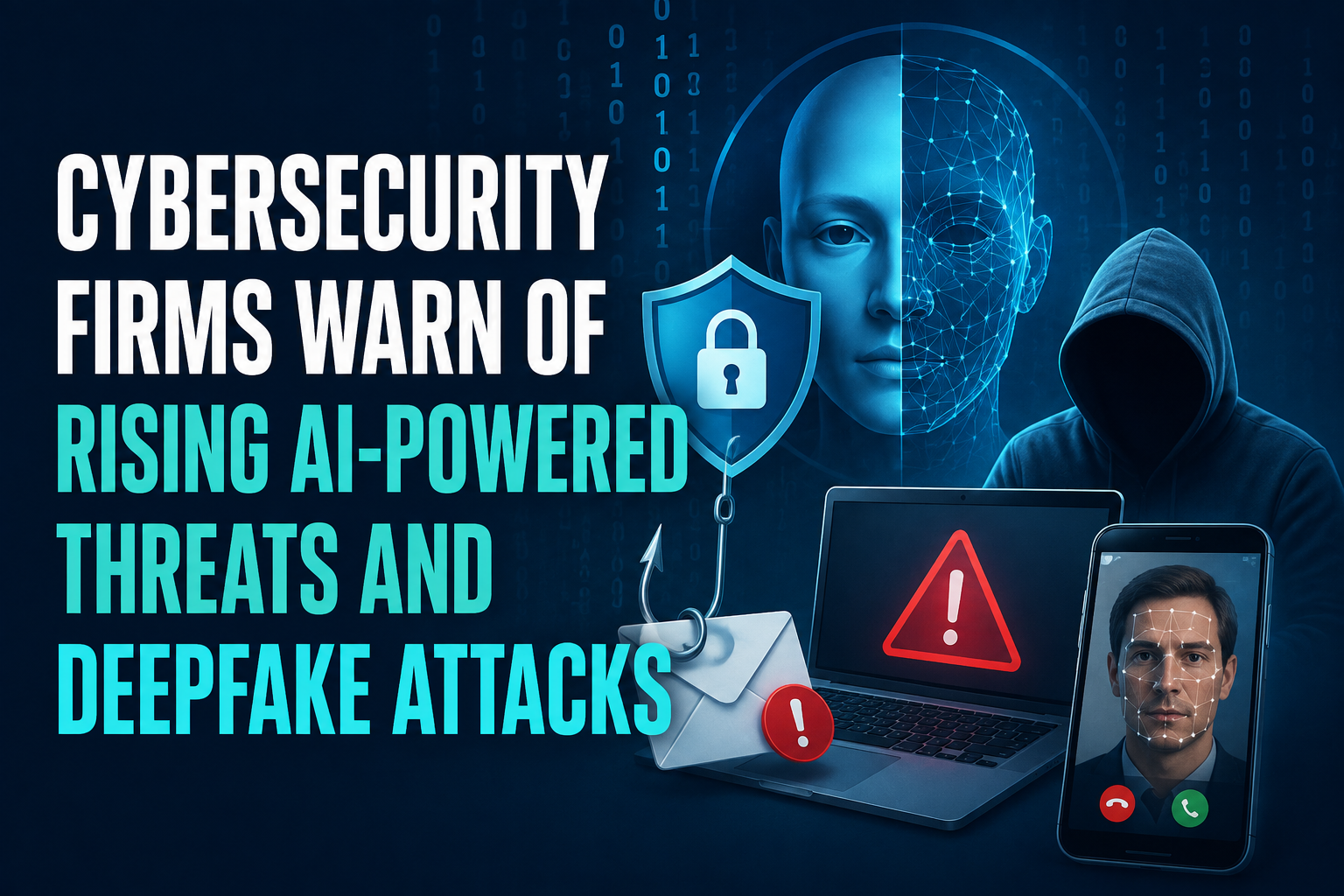
Cybersecurity Firms Warn of Rising AI-Powered Threats and Deepfake Attacks
Artificial intelligence is transforming industries, improving productivity, and opening new possibilities for businesses and consumers. But the same technology is also becoming a powerful tool for cybercriminals. Security experts around the world are warning that AI-powered cyberattacks and sophisticated deepfakes are growing in both frequency and complexity, creating new challenges for governments, businesses, and everyday internet users.
As cyber threats evolve, organizations are investing heavily in AI-driven defenses while urging individuals to become more cautious about what they see, hear, and trust online.
AI Is Changing the Cybersecurity Landscape
Artificial intelligence has become one of the biggest technological breakthroughs of the decade. Businesses use AI to automate customer service, improve healthcare, detect financial fraud, and analyze massive amounts of data.
Unfortunately, cybercriminals have also embraced the technology.
AI now enables attackers to:
- Generate convincing phishing emails in seconds
- Create realistic voice clones
- Produce fake videos using deepfake technology
- Automate malware development
- Identify software vulnerabilities faster
- Launch more sophisticated social engineering attacks
What once required highly skilled hackers can now be partially automated using AI-powered tools.
Why Cybersecurity Firms Are Raising the Alarm
Security researchers say AI is lowering the barrier to entry for cybercrime.
Attackers no longer need advanced programming skills to create convincing scams. Instead, they can use AI models to generate professional-looking emails, fake websites, malicious code, and realistic impersonations.
Several cybersecurity companies have recently highlighted concerns including:
- AI-generated phishing campaigns
- Deepfake business fraud
- Voice cloning scams
- AI-assisted malware
- Automated credential theft
- Intelligent ransomware operations
These threats are becoming increasingly difficult to detect because they closely mimic legitimate communication.
The Rise of Deepfake Attacks
Deepfakes use artificial intelligence to generate highly realistic images, videos, or audio recordings that imitate real people.
Initially viewed as an entertainment technology, deepfakes have rapidly become a cybersecurity concern.
Criminals can now create convincing fake videos or voice recordings of:
- CEOs
- Government officials
- Family members
- Financial executives
- Customer service representatives
- Celebrities
The technology has become so advanced that distinguishing real content from fake content is becoming increasingly challenging.
How Deepfake Scams Work
One of the fastest-growing cybercrime techniques involves impersonation.
A criminal might:
- Collect publicly available audio or video.
- Train an AI voice model.
- Call an employee pretending to be a company executive.
- Request an urgent financial transfer.
- Convince the victim that the request is legitimate.
Similar attacks target individuals by impersonating relatives or friends during fake emergencies.
AI Is Making Phishing More Convincing
Traditional phishing emails often contained poor grammar and obvious warning signs.
AI has changed that.
Modern phishing campaigns can generate:
- Natural language
- Personalized messages
- Professional formatting
- Multiple language translations
- Industry-specific terminology
Some campaigns even analyze publicly available information from social media and company websites to create highly personalized attacks.
This makes fraudulent emails much harder to identify.
Voice Cloning Is Becoming a Serious Threat
AI voice generators can reproduce a person’s voice using only a few seconds of recorded audio.
Cybercriminals have exploited this capability to:
- Pretend to be family members
- Impersonate executives
- Fool customer support teams
- Bypass voice authentication systems
Victims often report believing they were speaking with someone they knew.
Businesses Face Growing Risks
Organizations are increasingly targeted because successful attacks can lead to significant financial gains.
Common business risks include:
Business Email Compromise
Attackers impersonate executives requesting urgent payments.
Fake Video Meetings
Deepfake video technology could eventually be used during virtual meetings to impersonate company leaders.
Supply Chain Attacks
AI helps criminals identify vulnerable suppliers that provide indirect access to larger organizations.
Customer Fraud
Attackers may impersonate company representatives to steal customer credentials or financial information.
AI-Powered Malware
Artificial intelligence can help attackers create malware that adapts more quickly than traditional malicious software.
Potential capabilities include:
- Evading antivirus software
- Modifying its behavior
- Selecting targets automatically
- Identifying security weaknesses
- Improving persistence after infection
While many AI-assisted malware techniques remain under active research, cybersecurity experts expect increasingly sophisticated threats in the coming years.
Why Traditional Security Measures May Not Be Enough
Conventional cybersecurity often relies on identifying known attack patterns.
AI-powered attacks can evolve rapidly, generating new variations that may bypass traditional detection methods.
As a result, security teams increasingly rely on AI-powered defensive tools capable of identifying unusual behavior rather than simply matching known malware signatures.
How AI Is Also Helping Defenders
Fortunately, artificial intelligence is not only benefiting cybercriminals.
Security companies increasingly use AI to:
- Detect suspicious network activity
- Identify phishing attempts
- Monitor unusual login behavior
- Analyze malware
- Predict attack patterns
- Respond to incidents more quickly
Many experts believe AI will become one of cybersecurity’s most important defensive technologies.
Protecting Yourself Against AI-Powered Threats
Consumers can reduce their risk by adopting several cybersecurity best practices.
Verify Unusual Requests
Always confirm financial requests using a second communication method.
If someone calls requesting money, contact them directly using a trusted number.
Be Skeptical of Urgent Messages
Many scams create a false sense of urgency.
Pause before acting on:
- Payment requests
- Password reset emails
- Investment opportunities
- Emergency phone calls
Enable Multi-Factor Authentication
Even if criminals obtain your password, multi-factor authentication provides an additional security layer.
Limit Public Personal Information
Publicly available photos, videos, and audio clips may help criminals create convincing deepfakes.
Review your social media privacy settings regularly.
Keep Software Updated
Software updates frequently patch vulnerabilities that attackers attempt to exploit.
Enable automatic updates whenever possible.
Learn to Spot Deepfakes
Warning signs may include:
- Unnatural facial movements
- Poor lip synchronization
- Strange blinking patterns
- Robotic voice characteristics
- Inconsistent lighting
- Unusual emotional expressions
However, AI continues improving rapidly, making detection increasingly difficult.
Governments Are Responding
Governments worldwide are introducing new regulations aimed at addressing AI-related risks.
Efforts include:
- Deepfake disclosure requirements
- AI transparency rules
- Stronger cybersecurity standards
- Digital identity protections
- Election security measures
- International cooperation on cybercrime
Lawmakers face the challenge of encouraging innovation while reducing opportunities for misuse.
The Future of AI and Cybersecurity
Experts expect both offensive and defensive AI technologies to evolve quickly.
Future developments may include:
- Real-time deepfake detection
- AI-powered digital identity verification
- Autonomous cybersecurity systems
- Smarter fraud detection
- Stronger biometric authentication
- AI-assisted incident response
The cybersecurity industry increasingly views artificial intelligence as both its greatest challenge and one of its strongest defenses.
Tips for Staying Safe Online
| Do | Don’t |
|---|---|
| Verify unexpected requests | Trust voices or videos without verification |
| Use multi-factor authentication | Reuse passwords |
| Keep devices updated | Ignore software updates |
| Monitor financial accounts | Assume AI-generated content is authentic |
| Think before clicking links | Rush because of urgent messages |
| Confirm identities independently | Share sensitive information immediately |
Frequently Asked Questions
What is an AI-powered cyberattack?
An AI-powered cyberattack uses artificial intelligence to automate, enhance, or improve hacking techniques such as phishing, malware creation, credential theft, or social engineering.
What is a deepfake?
A deepfake is AI-generated content—including videos, images, or audio—that convincingly imitates a real person’s appearance or voice.
Can deepfakes be detected?
Sometimes. Researchers are developing AI-powered detection systems, but increasingly realistic deepfakes make detection more difficult.
Are businesses more vulnerable than individuals?
Businesses often face larger financial risks, but individuals are also increasingly targeted through identity theft, voice cloning, investment scams, and phishing attacks.
How can I protect myself?
Use strong passwords, enable multi-factor authentication, verify unexpected requests independently, keep software updated, and remain cautious of urgent messages or suspicious communications.
Will AI make cybersecurity better or worse?
Both. AI gives attackers more sophisticated tools, but it also enables faster threat detection, automated defenses, and improved security monitoring.
Final Thoughts
Artificial intelligence is reshaping cybersecurity at an unprecedented pace. While AI-powered tools offer enormous benefits for innovation and productivity, they also provide cybercriminals with new methods for creating convincing scams, automating attacks, and exploiting human trust.
The growing threat of deepfakes, AI-generated phishing campaigns, and intelligent malware highlights the need for stronger digital awareness alongside improved technical defenses. For individuals, businesses, and governments alike, cybersecurity is no longer just about protecting devices—it is about verifying identities, questioning unexpected requests, and adapting to an online world where seeing and hearing are no longer enough to establish what is real.
As AI continues to evolve, the most effective defense will combine advanced technology with informed, vigilant users who understand the risks and know how to respond.





2 Comments
Micle harison
June 7, 2019Lorem ipsum dolor sit amet, usu ut perfecto postulant deterruisset, libris causae volutpat at est, ius id modus laoreet urbanitas. Mel ei delenit dolores.
John Doe
June 7, 2019Some consultants are employed indirectly by the client via a consultancy staffing company.