
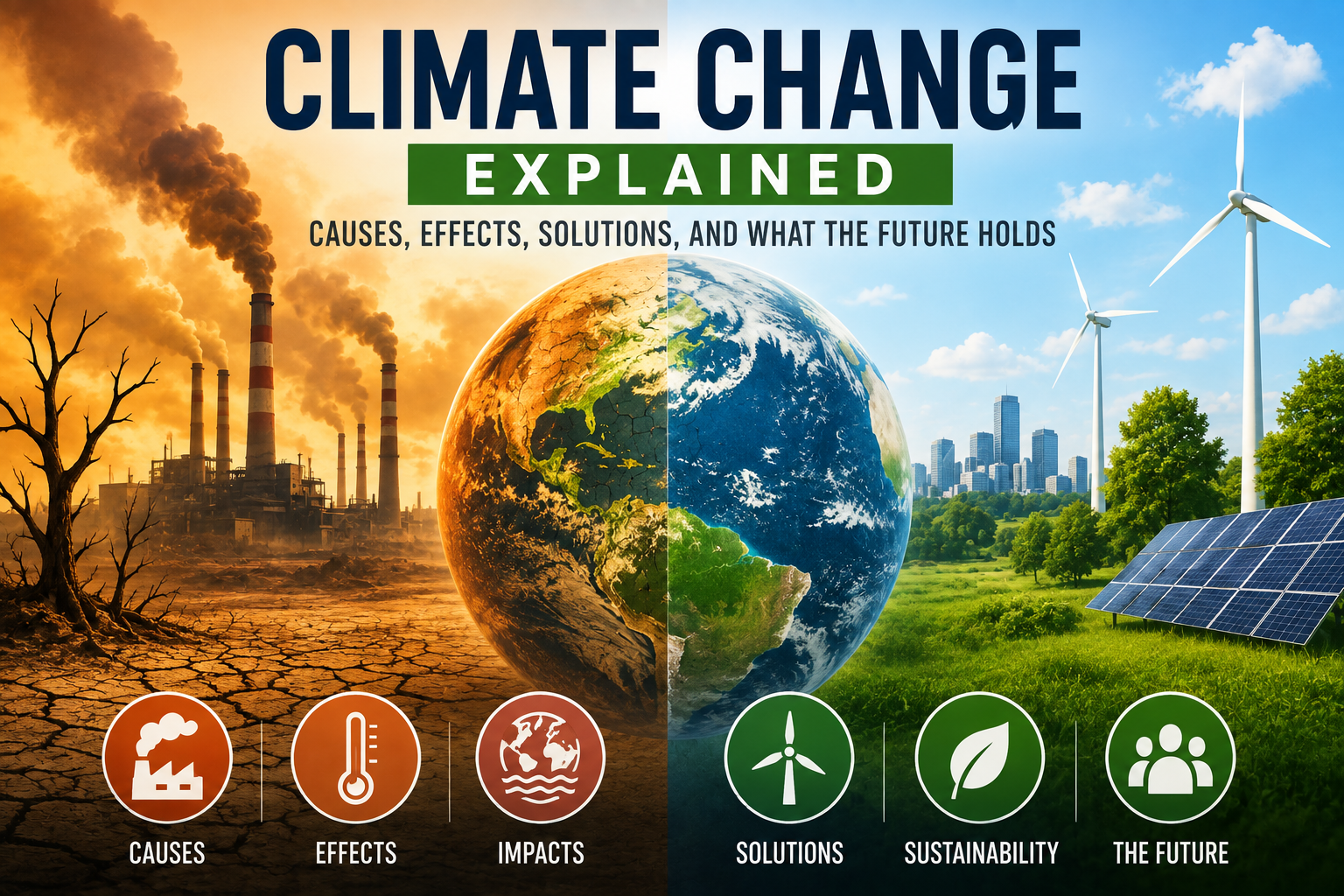
Climate Change Explained: Causes, Effects, Solutions, and What the Future Holds
Climate change is one of the defining challenges of the 21st century. Rising global temperatures, more frequent extreme weather events, melting glaciers, and shifting ecosystems are transforming the planet in ways that affect every country and every community. While the science behind climate change has become increasingly clear, many people still have questions about what causes it, how it impacts daily life, and what can be done to address it.
This guide explains the science of climate change in simple terms, explores its global consequences, highlights practical solutions, and looks at what the future may hold for humanity and the environment.
What Is Climate Change?
Climate change refers to long-term changes in Earth’s average temperatures, weather patterns, and climate systems.
Although Earth’s climate has naturally changed throughout history, today’s warming is happening at an unusually rapid pace. The primary reason is the increased concentration of greenhouse gases in the atmosphere, largely due to human activities since the Industrial Revolution.
Scientists distinguish between:
- Weather: Short-term atmospheric conditions such as rain, wind, or temperature.
- Climate: Long-term average weather patterns measured over decades.
A single heatwave does not prove climate change, but decades of rising temperatures and changing weather patterns reveal a clear long-term trend.
How Earth’s Climate System Works
The Earth receives energy from the Sun.
Normally:
- Sunlight reaches Earth.
- The surface absorbs part of this energy.
- Earth releases heat back into space.
Greenhouse gases naturally trap some of this heat, creating the greenhouse effect, which keeps the planet warm enough to support life.
Without greenhouse gases, Earth’s average temperature would be around -18°C (0°F) instead of about 15°C (59°F).
The problem arises when human activities increase greenhouse gas concentrations, trapping more heat than the planet can naturally balance.
The Main Causes of Climate Change
1. Burning Fossil Fuels
The largest contributor is burning:
- Coal
- Oil
- Natural gas
These fuels power:
- Electricity generation
- Transportation
- Manufacturing
- Heating
- Industry
Burning fossil fuels releases carbon dioxide (CO₂), the most significant human-produced greenhouse gas.
2. Deforestation
Forests absorb carbon dioxide through photosynthesis.
When forests are:
- Cut down
- Burned
- Cleared for agriculture
Less carbon is removed from the atmosphere, while additional CO₂ is released.
3. Agriculture
Agriculture contributes greenhouse gases through:
- Livestock methane emissions
- Rice farming
- Fertilizer use
- Land clearing
Methane is particularly important because it traps far more heat than carbon dioxide over shorter periods.
4. Industrial Processes
Manufacturing materials such as:
- Cement
- Steel
- Chemicals
Produces significant greenhouse gas emissions.
5. Waste Management
Landfills release methane as organic waste decomposes.
Poor waste management increases emissions over time.
Greenhouse Gases Explained
| Greenhouse Gas | Main Sources | Impact |
|---|---|---|
| Carbon dioxide (CO₂) | Fossil fuels, deforestation | Largest contributor to long-term warming |
| Methane (CH₄) | Livestock, landfills, oil & gas | Highly potent greenhouse gas |
| Nitrous oxide (N₂O) | Agriculture | Long-lasting warming effect |
| Fluorinated gases | Industrial processes | Extremely powerful but less common |
Evidence That Climate Change Is Happening
Scientists use multiple independent measurements.
Evidence includes:
- Rising global temperatures
- Melting glaciers
- Shrinking Arctic sea ice
- Rising sea levels
- More frequent heatwaves
- Changing rainfall patterns
- Ocean warming
- Ocean acidification
- Earlier spring seasons
- Shifting wildlife habitats
These changes have been documented through satellites, weather stations, ocean measurements, and long-term climate records.
Effects of Climate Change
Rising Temperatures
Global average temperatures continue to increase.
Hotter conditions contribute to:
- Heatwaves
- Drought
- Wildfires
- Crop stress
- Water shortages
More Extreme Weather
Climate change increases the likelihood or intensity of certain events:
- Heavy rainfall
- Flooding
- Hurricanes
- Cyclones
- Heatwaves
- Droughts
Not every extreme event is caused solely by climate change, but warming can make many events more severe.
Melting Ice
Mountain glaciers and polar ice sheets continue losing mass.
This contributes to:
- Rising sea levels
- Coastal flooding
- Habitat loss
- Freshwater changes
Rising Sea Levels
Sea levels rise because:
- Ocean water expands as it warms.
- Melting land ice adds water.
Low-lying coastal regions face increasing flood risks.
Ocean Changes
The oceans absorb much of Earth’s excess heat.
Consequences include:
- Coral bleaching
- Changing fish populations
- Ocean acidification
- Marine ecosystem disruption
Biodiversity Loss
Many plants and animals struggle to adapt quickly enough.
Species may experience:
- Habitat loss
- Migration
- Population decline
- Extinction risks
How Climate Change Affects Everyday Life
Climate change isn’t only an environmental issue—it influences daily life in many ways.
Food
Changing weather can affect:
- Crop yields
- Food prices
- Water availability
- Agricultural productivity
Health
Higher temperatures increase risks from:
- Heat exhaustion
- Air pollution
- Allergies
- Certain infectious diseases
Homes
Communities may experience:
- Flood damage
- Wildfire risks
- Storm damage
- Rising insurance costs
Economy
Climate-related disasters can disrupt:
- Supply chains
- Tourism
- Infrastructure
- Energy systems
- Employment
Climate Change and Renewable Energy
Reducing greenhouse gas emissions requires cleaner energy sources.
Major renewable options include:
Solar Energy
Converts sunlight into electricity.
Wind Energy
Uses turbines to generate power.
Hydropower
Produces electricity from flowing water.
Geothermal Energy
Uses heat from beneath Earth’s surface.
Marine Energy
Harnesses tides and waves.
Renewable energy produces little or no greenhouse gas emissions during operation.
Solutions to Climate Change
Transition to Clean Energy
Replacing fossil fuels with renewable energy remains one of the most effective long-term strategies.
Improve Energy Efficiency
Efficient buildings, appliances, and transportation reduce energy demand.
Protect Forests
Healthy forests absorb large amounts of carbon dioxide.
Preventing deforestation also protects biodiversity.
Sustainable Transportation
Options include:
- Electric vehicles
- Public transit
- Walking
- Cycling
- Rail transport
Sustainable Agriculture
Farmers can reduce emissions through:
- Improved soil management
- Efficient fertilizer use
- Methane reduction strategies
- Better water management
Carbon Capture Technologies
Researchers are developing technologies that capture carbon dioxide before or after it enters the atmosphere.
While promising, these technologies currently complement rather than replace emissions reductions.
Individual Actions That Make a Difference
Although governments and industries play the largest role, individuals can contribute by:
- Conserving energy
- Reducing food waste
- Using public transportation
- Choosing energy-efficient appliances
- Supporting sustainable products
- Planting trees where appropriate
- Recycling responsibly
- Staying informed about environmental issues
Collective action by millions of people can produce meaningful results.
Climate Change Myths
| Myth | Reality |
|---|---|
| Climate has always changed naturally. | Natural changes occur, but current warming is occurring much faster and is strongly linked to human activities. |
| Cold weather disproves climate change. | Weather varies daily; climate reflects long-term trends. |
| Renewable energy can’t power modern economies. | Renewable energy supplies a growing share of electricity in many countries. |
| Individual actions don’t matter. | Personal choices contribute, especially when combined with policy and business changes. |
| Scientists disagree about climate change. | The scientific evidence overwhelmingly supports that human activities are driving current global warming. |
Innovations Offering Hope
Technology continues advancing rapidly.
Promising developments include:
- Better batteries
- Smart electricity grids
- Electric vehicles
- Green hydrogen
- Carbon capture
- Sustainable aviation fuels
- Precision agriculture
- Artificial intelligence for climate monitoring
- Climate-resilient crops
Innovation alone cannot solve climate change but can significantly support global efforts.
What the Future Holds
The future depends largely on decisions made today.
If greenhouse gas emissions continue rising rapidly:
- Temperatures will likely continue increasing.
- Sea levels will rise further.
- Extreme weather risks may intensify.
- Ecosystems could face greater disruption.
If countries successfully reduce emissions while adapting to changing conditions:
- Warming can be limited.
- Cleaner energy systems may improve air quality.
- New industries and jobs may emerge.
- Ecosystems may become more resilient.
Climate change is not a single event but an ongoing challenge requiring international cooperation, scientific innovation, and long-term planning.
Frequently Asked Questions
Is climate change the same as global warming?
No. Global warming refers specifically to the increase in Earth’s average temperature, while climate change includes broader changes in weather patterns, precipitation, oceans, and ecosystems.
What is the greenhouse effect?
The greenhouse effect is a natural process in which greenhouse gases trap some of the Sun’s heat, keeping Earth warm enough to support life. Human activities have strengthened this effect by increasing greenhouse gas concentrations.
Which greenhouse gas is the biggest contributor?
Carbon dioxide (CO₂) is the largest contributor to long-term human-caused climate change because of its abundance and long lifespan in the atmosphere.
Can climate change be stopped completely?
Current scientific understanding suggests that while some warming is already unavoidable, reducing greenhouse gas emissions can limit future warming and lessen many long-term impacts.
How does climate change affect wildlife?
Changing temperatures, shifting rainfall patterns, habitat loss, ocean warming, and altered ecosystems can affect where species live, how they reproduce, and their chances of survival.
What can individuals do?
Individuals can conserve energy, reduce waste, choose sustainable transportation when practical, support environmental initiatives, and stay informed. Large-scale action by governments and industries remains essential alongside personal efforts.
Conclusion
Climate change is one of the most significant scientific, environmental, and economic challenges facing the modern world. Driven largely by human-generated greenhouse gas emissions, it is reshaping weather patterns, ecosystems, oceans, and communities across the globe.
Understanding the causes of climate change is the first step toward meaningful action. While the scale of the challenge is considerable, advances in renewable energy, sustainable technologies, scientific research, and international cooperation demonstrate that solutions are available. By combining innovation, responsible policies, and informed individual choices, societies can reduce future risks and build a more resilient world for generations to come.


2 Comments
Micle harison
June 7, 2019Lorem ipsum dolor sit amet, usu ut perfecto postulant deterruisset, libris causae volutpat at est, ius id modus laoreet urbanitas. Mel ei delenit dolores.
John Doe
June 7, 2019Some consultants are employed indirectly by the client via a consultancy staffing company.