
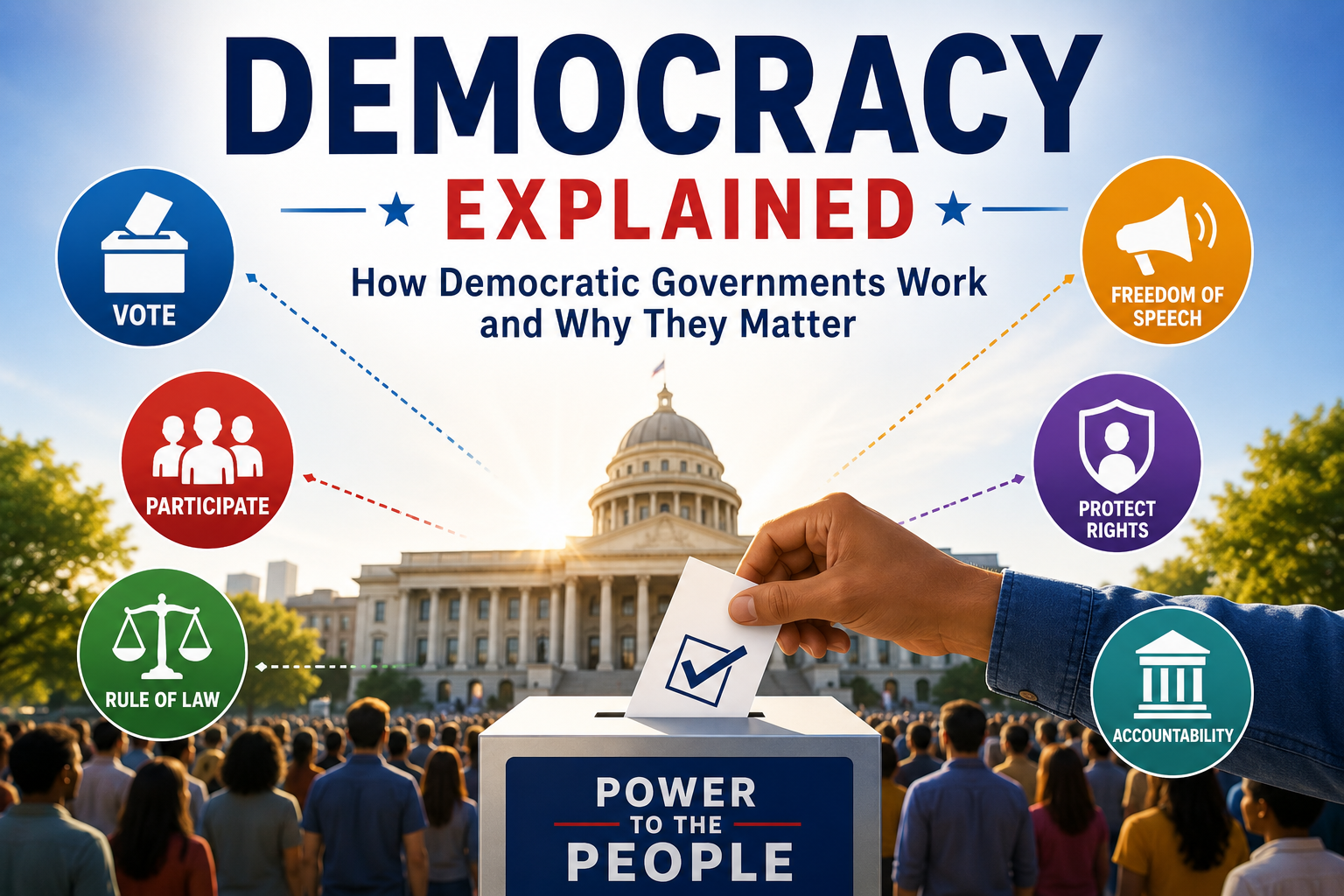
Democracy Explained: How Democratic Governments Work and Why They Matter
Democracy is one of the most influential systems of government in human history. Built on the principle that political power belongs to the people, democracy has shaped nations, protected individual freedoms, and influenced global politics for centuries. While democratic governments differ from one country to another, they share a common goal: allowing citizens to participate in choosing their leaders and shaping public policy through free and fair elections.
Today, more than half of the world’s countries identify as democracies in one form or another. Yet democracy is more than simply voting every few years. It is a system built on accountability, the rule of law, human rights, freedom of expression, and active citizen participation. This guide explores how democratic governments work, their core principles, different forms of democracy, their benefits and challenges, and why democracy continues to matter in the modern world.
What Is Democracy?
Democracy is a system of government in which the people hold political power, either directly or through elected representatives.
The word democracy comes from two Greek words:
- Demos – the people
- Kratos – power or rule
Together, they mean “rule by the people.”
Rather than concentrating power in the hands of a monarch, dictator, or small ruling elite, democratic systems give citizens the right to participate in political decision-making.
Why Democracy Matters
Democracy provides citizens with the opportunity to influence how their country is governed.
Strong democratic systems help protect:
- Individual freedoms
- Human rights
- Political participation
- Government accountability
- Equal treatment under the law
- Peaceful transfer of power
- Freedom of speech
- Freedom of religion
- Freedom of the press
These principles contribute to political stability, public trust, and long-term development.
The Core Principles of Democracy
Although democratic systems vary around the world, most are built on several fundamental principles.
Popular Sovereignty
Political power ultimately belongs to the people.
Citizens choose leaders through elections and can replace them through peaceful democratic processes.
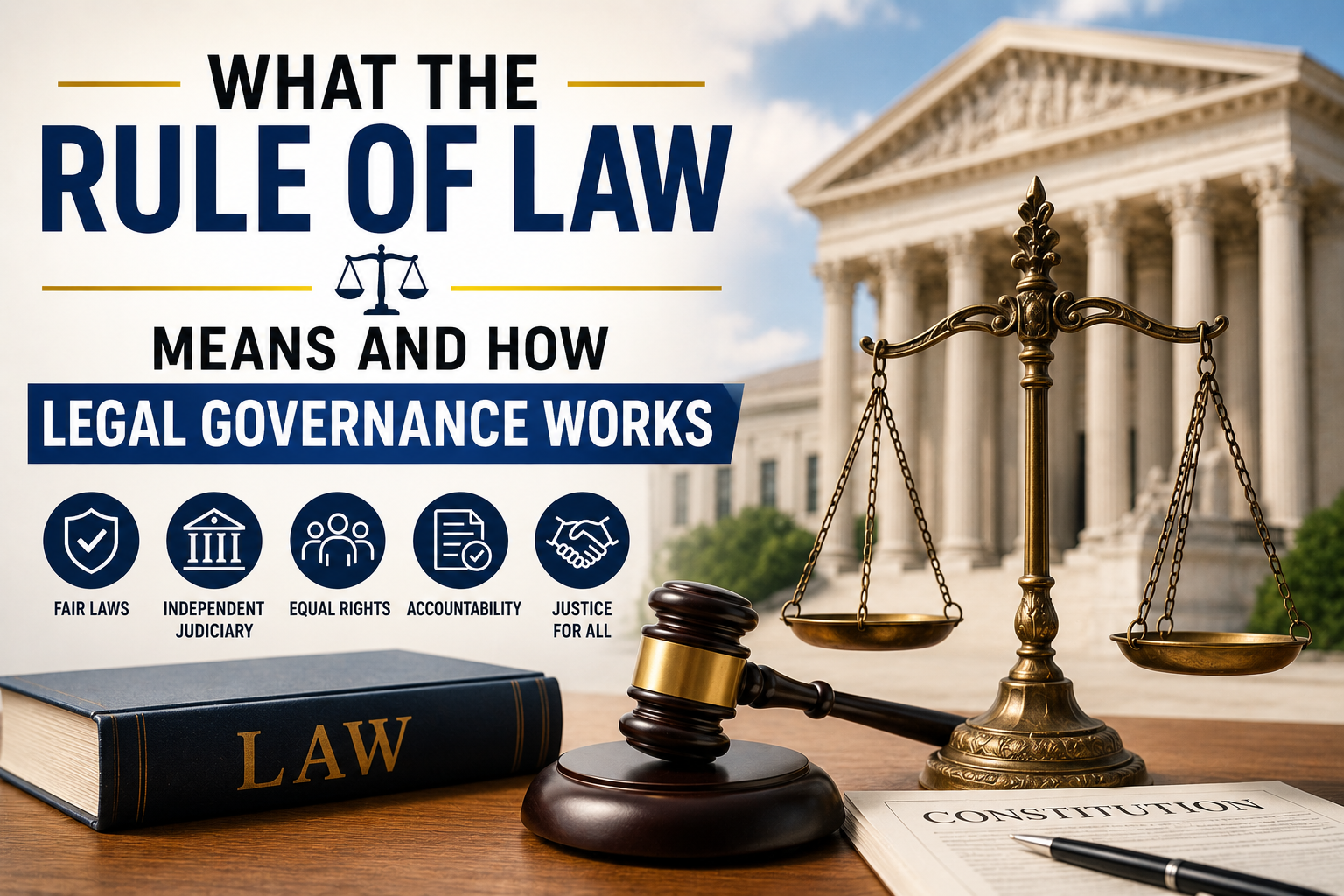
Rule of Law
Everyone—including government officials—is subject to the law.
Independent courts help ensure laws are applied fairly and consistently.
Free and Fair Elections
Elections allow citizens to choose representatives without intimidation, fraud, or discrimination.
Democratic elections generally feature:
- Secret ballots
- Independent election authorities
- Multiple political parties
- Equal voting rights
- Transparent vote counting
Majority Rule with Minority Rights
While decisions are usually made by majority vote, democratic governments also protect the rights of minorities.
This balance helps prevent the majority from unfairly restricting the freedoms of others.
Separation of Powers
Power is divided among different branches of government to prevent abuse.
Typically these include:
- Legislative branch
- Executive branch
- Judicial branch
Each branch serves as a check on the others.
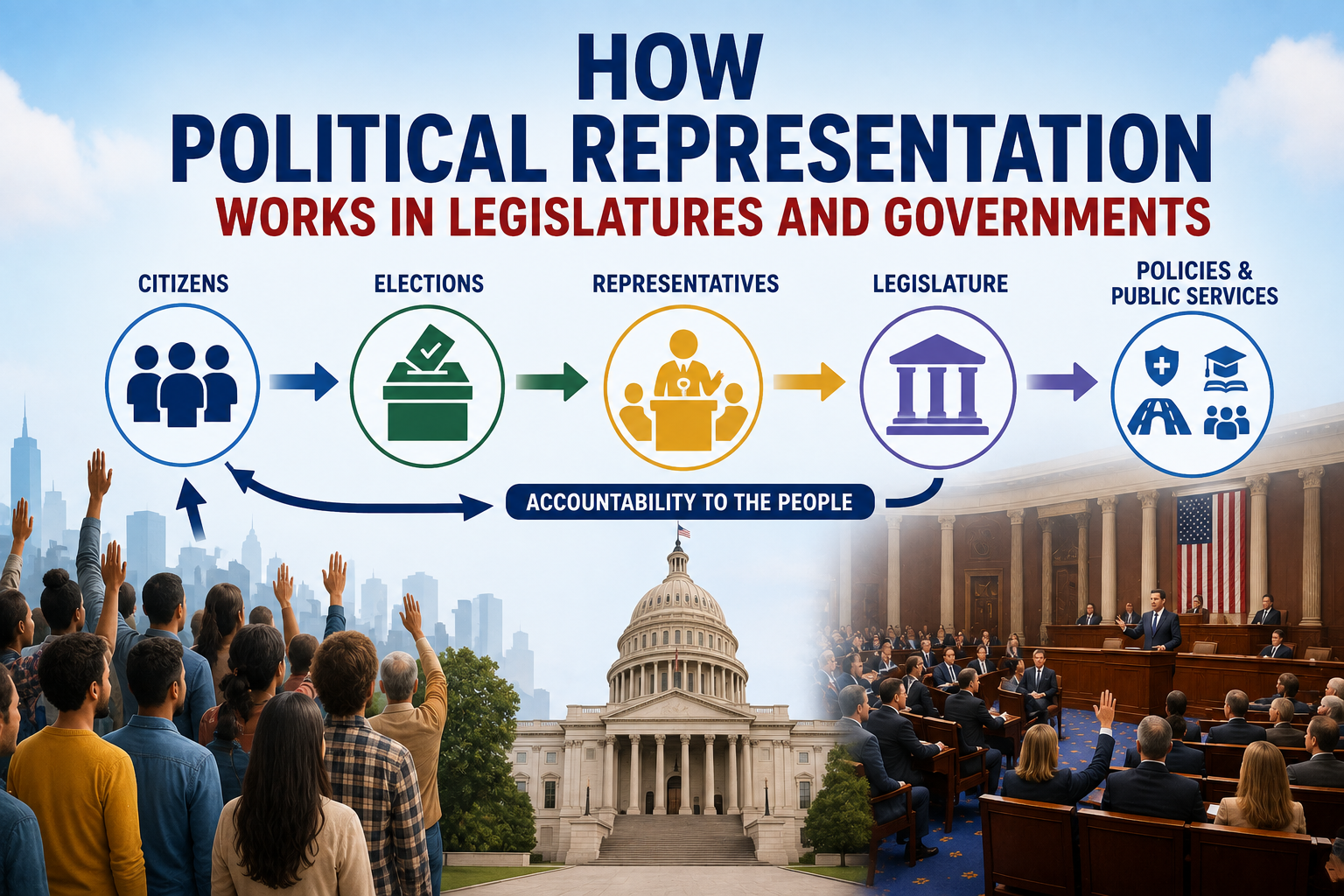
How Democratic Governments Work
Although each country has its own political system, democratic governments generally follow a similar process.
Step 1: Citizens Vote
Eligible citizens participate in elections to choose representatives or leaders.
Step 2: Representatives Form Government
Winning candidates form governments or legislatures depending on the country’s constitutional system.
Step 3: Laws Are Made
Legislatures debate, amend, and pass laws affecting society.
Step 4: Government Implements Policies
The executive branch administers laws, public services, and national programs.
Step 5: Courts Interpret the Law
Independent courts resolve disputes and determine whether laws comply with the constitution.
Step 6: Citizens Hold Leaders Accountable
Through elections, public debate, journalism, protests, and civic participation, citizens evaluate government performance.
Types of Democracy
Direct Democracy
Citizens vote directly on laws and public policies rather than electing representatives.
Examples include:
- Referendums
- Citizen initiatives
- Local community voting
Direct democracy is more practical in smaller communities than in large countries.
Representative Democracy
Most modern democracies use representative democracy.
Citizens elect officials who make decisions on their behalf.
Examples include national parliaments and legislatures.
Parliamentary Democracy
In parliamentary systems:
- Citizens elect members of parliament.
- Parliament selects the head of government (usually a Prime Minister).
- The executive remains accountable to parliament.
This model is common in many countries.
Presidential Democracy
In presidential systems:
- Citizens elect the president directly or indirectly.
- The president serves as both head of state and head of government.
- Executive and legislative branches operate independently.
Constitutional Democracy
A constitution establishes the framework of government while protecting individual rights and limiting governmental power.
The Three Branches of Government
Legislative Branch
Responsible for:
- Making laws
- Approving budgets
- Representing citizens
- Overseeing government actions
Executive Branch
Responsible for:
- Implementing laws
- Managing public services
- Conducting foreign policy
- Leading government agencies
Judicial Branch
Responsible for:
- Interpreting laws
- Protecting constitutional rights
- Resolving legal disputes
- Ensuring justice
The Role of Elections
Elections are central to democratic governance.
They provide citizens with the opportunity to:
- Choose leaders
- Approve policy directions
- Reward effective leadership
- Replace unsuccessful governments peacefully
Competitive elections encourage accountability and responsiveness.
Political Parties
Political parties organize candidates around shared ideas and policy goals.
They typically:
- Develop political platforms
- Nominate candidates
- Campaign during elections
- Form governments or opposition parties
Healthy competition between parties offers voters meaningful choices.
Freedom of the Press
An independent media helps democracy function by:
- Reporting government actions
- Investigating corruption
- Informing the public
- Encouraging debate
- Holding leaders accountable
A free press supports transparency and informed decision-making.
Civil Society
Democracies rely on active participation beyond elections.
Civil society includes:
- Community organizations
- Charities
- Labor unions
- Professional associations
- Advocacy groups
- Religious organizations
- Volunteer organizations
These groups contribute ideas, represent public interests, and strengthen democratic engagement.
Benefits of Democracy
Democratic systems offer numerous advantages.
Peaceful Transfers of Power
Leadership changes typically occur through elections rather than violence.
Protection of Rights
Constitutions and independent courts safeguard individual freedoms.
Government Accountability
Public officials can be questioned, investigated, and replaced by voters.
Citizen Participation
People influence policies through voting, public debate, and civic involvement.
Economic Stability
While outcomes vary, stable democratic institutions can foster investor confidence, innovation, and long-term planning.
Challenges Facing Democracies
Like all systems, democracy faces ongoing challenges.
Political Polarization
Deep divisions can make compromise more difficult.
Misinformation
False or misleading information may influence public debate and elections.
Low Voter Participation
Declining voter turnout may reduce representation and public trust.
Corruption
Misuse of public office undermines confidence in democratic institutions.
Foreign Interference
Cyberattacks, disinformation campaigns, and other external influences can affect democratic processes.
Democracy in the Digital Age
Technology has transformed political participation.
Digital tools allow citizens to:
- Access government information
- Follow legislative debates
- Engage on social media
- Participate in online consultations
- Organize community initiatives
However, technology also presents challenges such as misinformation, online harassment, and cybersecurity threats.
Democracy and Human Rights
Democratic societies generally recognize fundamental human rights, including:
- Freedom of speech
- Freedom of assembly
- Freedom of religion
- Equal legal protection
- Freedom of association
- Due process
- Political participation
Strong institutions help protect these rights for all citizens.
The Future of Democracy
Democracy continues to evolve in response to changing societies.
Emerging trends include:
- Digital voting technologies
- Artificial intelligence in public services
- Greater transparency through open data
- Youth political participation
- Climate-related policymaking
- Increased civic education
- Cybersecurity improvements
- International cooperation
Maintaining democratic institutions will require balancing technological innovation with the protection of rights and public trust.
Common Myths About Democracy
| Myth | Reality |
|---|---|
| Democracy only means voting. | It also includes accountability, rule of law, and protection of rights. |
| Democracies always agree on everything. | Debate and disagreement are normal parts of democratic decision-making. |
| Majority rule means minorities have no rights. | Democratic systems protect minority rights alongside majority decisions. |
| Democracy guarantees perfect governments. | It provides mechanisms for accountability and peaceful change rather than perfection. |
| Democracy is identical in every country. | Democratic institutions differ according to each nation’s constitution and political traditions. |
Frequently Asked Questions
What is democracy?
Democracy is a system of government in which political power ultimately belongs to the people, who participate directly or through elected representatives.
Why are elections important?
Elections allow citizens to choose leaders, influence public policy, and hold governments accountable through peaceful means.
What is the rule of law?
The rule of law means that everyone—including government officials—is subject to the same laws, which are applied fairly by independent courts.
Why is freedom of the press important?
An independent press informs citizens, investigates public issues, and helps ensure government transparency and accountability.
Can democracies have different systems of government?
Yes. Democracies may be parliamentary, presidential, constitutional, or use other institutional arrangements while maintaining democratic principles.
What challenges do democracies face today?
Modern democracies face issues such as misinformation, political polarization, cybersecurity threats, corruption, declining public trust, and ensuring inclusive political participation.
Conclusion
Democracy remains one of the world’s most influential systems of government because it places political power in the hands of the people while protecting individual rights, encouraging accountability, and supporting peaceful political change. Although democratic institutions vary across countries, their shared commitment to participation, the rule of law, and representative government has helped shape modern societies for generations.
Like any political system, democracy faces ongoing challenges, from misinformation and polarization to technological disruption and evolving public expectations. Yet its strength lies in its ability to adapt through open debate, civic engagement, and constitutional processes. By understanding how democracy works and actively participating in public life, citizens help ensure that democratic institutions remain resilient, responsive, and capable of serving future generations.



2 Comments
Micle harison
June 7, 2019Lorem ipsum dolor sit amet, usu ut perfecto postulant deterruisset, libris causae volutpat at est, ius id modus laoreet urbanitas. Mel ei delenit dolores.
John Doe
June 7, 2019Some consultants are employed indirectly by the client via a consultancy staffing company.