
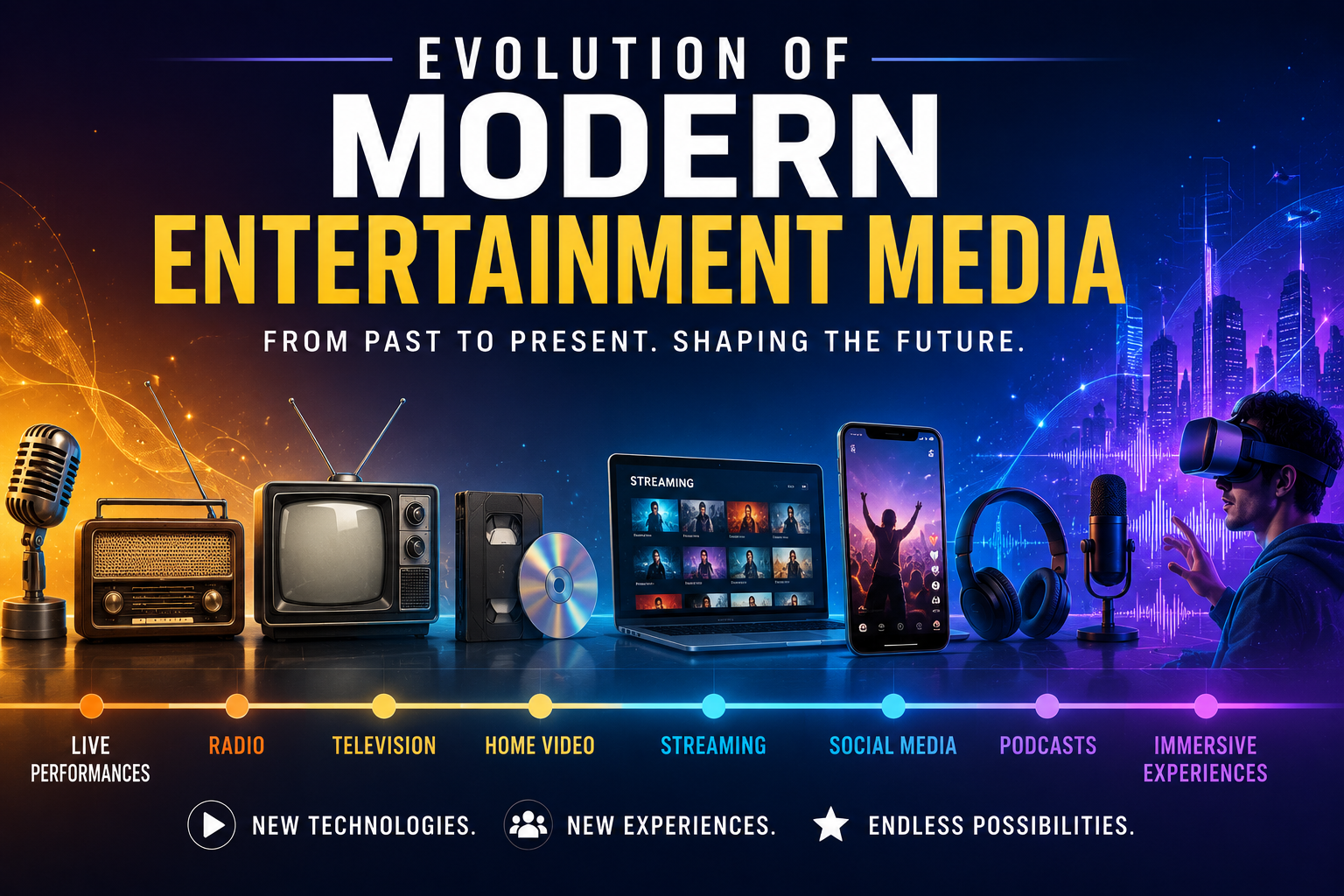
Evolution of Modern Entertainment Media
Entertainment has always reflected the way people live, communicate, and experience the world around them. From live performances and printed publications to streaming platforms, social media, podcasts, and interactive digital experiences, entertainment media has undergone a remarkable transformation.
What once required a trip to a theater, a television schedule, or a physical store can now be accessed almost instantly from a smartphone. This evolution has not only changed how audiences consume entertainment but also how creators produce, distribute, and monetize it.
From Live Performances to Mass Media
For centuries, entertainment was primarily experienced in person. Theater, music performances, storytelling, sporting events, and other live activities depended on audiences being physically present.
The development of mass media began changing that model. Newspapers and magazines allowed stories, criticism, photographs, and other forms of entertainment to reach much larger audiences.
Radio introduced another major shift. People could listen to music, serialized stories, comedy, news, and live broadcasts from their homes. Entertainment became something audiences could experience without leaving their living rooms.
The Rise of Cinema and Television
The emergence of motion pictures created an entirely new form of entertainment. Cinema combined storytelling, visual performance, music, and technology into an experience that could be distributed to audiences around the world.
Television eventually brought moving images directly into people’s homes. Unlike cinema, television offered entertainment as part of everyday domestic life.
Television also introduced scheduled programming. Viewers generally watched programs at specific times, creating shared cultural experiences around popular shows, broadcasts, and major events.
For decades, television and cinema remained central pillars of the entertainment industry.
The Home Video Revolution
The arrival of home video began weakening the traditional television schedule.
VHS tapes, DVDs, and other physical formats allowed people to watch movies and programs when they wanted. Audiences gained greater control over their entertainment choices.
Video rental stores also became an important part of entertainment culture. Instead of waiting for a movie to appear on television, viewers could choose what they wanted to watch and take it home.
This period helped establish an idea that would become fundamental to modern entertainment: on-demand access.
The Internet Changes Entertainment
The internet transformed entertainment more dramatically than many previous technologies.
Websites allowed creators and publishers to distribute content directly to audiences. Music, videos, games, articles, photographs, and other forms of media could be shared globally without relying exclusively on traditional distribution networks.
The internet also changed the relationship between creators and audiences. Consumers were no longer simply passive viewers or listeners. They could comment, share, review, remix, recommend, and eventually create their own content.
This helped create the foundations of today’s creator economy.
Social Media Becomes Entertainment
Social media platforms blurred the boundaries between communication and entertainment.
Short videos, livestreams, memes, user-generated posts, podcasts, and interactive communities became major forms of entertainment. Audiences could discover content through personalized feeds rather than traditional schedules.
One important consequence was the rise of the individual creator. A person with a smartphone and an internet connection could potentially build an audience without working for a traditional media company.
This democratized content creation while also increasing competition for audience attention.
Streaming Changes How People Watch
Streaming services fundamentally changed video consumption.
Instead of purchasing physical media or following fixed television schedules, audiences could access large libraries of movies and programs through internet-connected devices.
Streaming also encouraged binge-watching, personalized recommendations, and increasingly flexible viewing habits.
The television set itself became less important as the exclusive destination for video. Smartphones, tablets, computers, and connected televisions allowed audiences to move between screens according to their circumstances.
Music Becomes More Accessible
Music experienced a similar transformation.
Physical albums gave way to digital downloads, which were eventually complemented and, in many cases, replaced by streaming services. Listeners could access enormous music libraries without maintaining physical collections.
Playlists and algorithmic recommendations also changed music discovery. Instead of relying entirely on radio stations, record stores, or personal recommendations, listeners could discover artists through personalized digital systems.
This has made music more accessible while creating new challenges for artists trying to stand out in an increasingly crowded marketplace.
Gaming Becomes Interactive Entertainment
Video games have evolved from relatively simple electronic experiences into sophisticated forms of interactive entertainment.
Modern games can combine cinematic storytelling, complex worlds, multiplayer communities, music, competition, and social interaction.
Online gaming has also transformed the meaning of an audience. Players can simultaneously be participants, spectators, commentators, and creators.
Streaming platforms have expanded this ecosystem further, allowing people to watch others play games and build communities around shared interests.
Podcasts Expand Audio Entertainment
Podcasts have helped reinvent long-form audio.
Unlike traditional radio, podcasts allow audiences to choose specific programs and listen whenever convenient. Topics range from comedy and storytelling to education, business, culture, technology, and personal experiences.
Podcasting has also lowered the barriers to becoming a publisher. Independent creators can produce programs for specialized audiences without requiring a traditional broadcasting network.
This has contributed to a broader shift toward niche entertainment, where relatively small but highly engaged communities can support specialized creators.
The Rise of Personalized Entertainment
One of the defining characteristics of modern entertainment is personalization.
Digital platforms can use information about viewing, listening, searching, and engagement behavior to recommend content that may interest individual users.
As a result, two people using the same platform can encounter very different entertainment experiences.
Personalization can make discovery easier, but it also means audiences may spend more time within highly customized content environments.
The Creator Economy Changes Media
Modern entertainment increasingly allows creators to build direct relationships with their audiences.
Video creators, musicians, writers, podcasters, streamers, photographers, and other independent professionals can distribute their work through digital platforms.
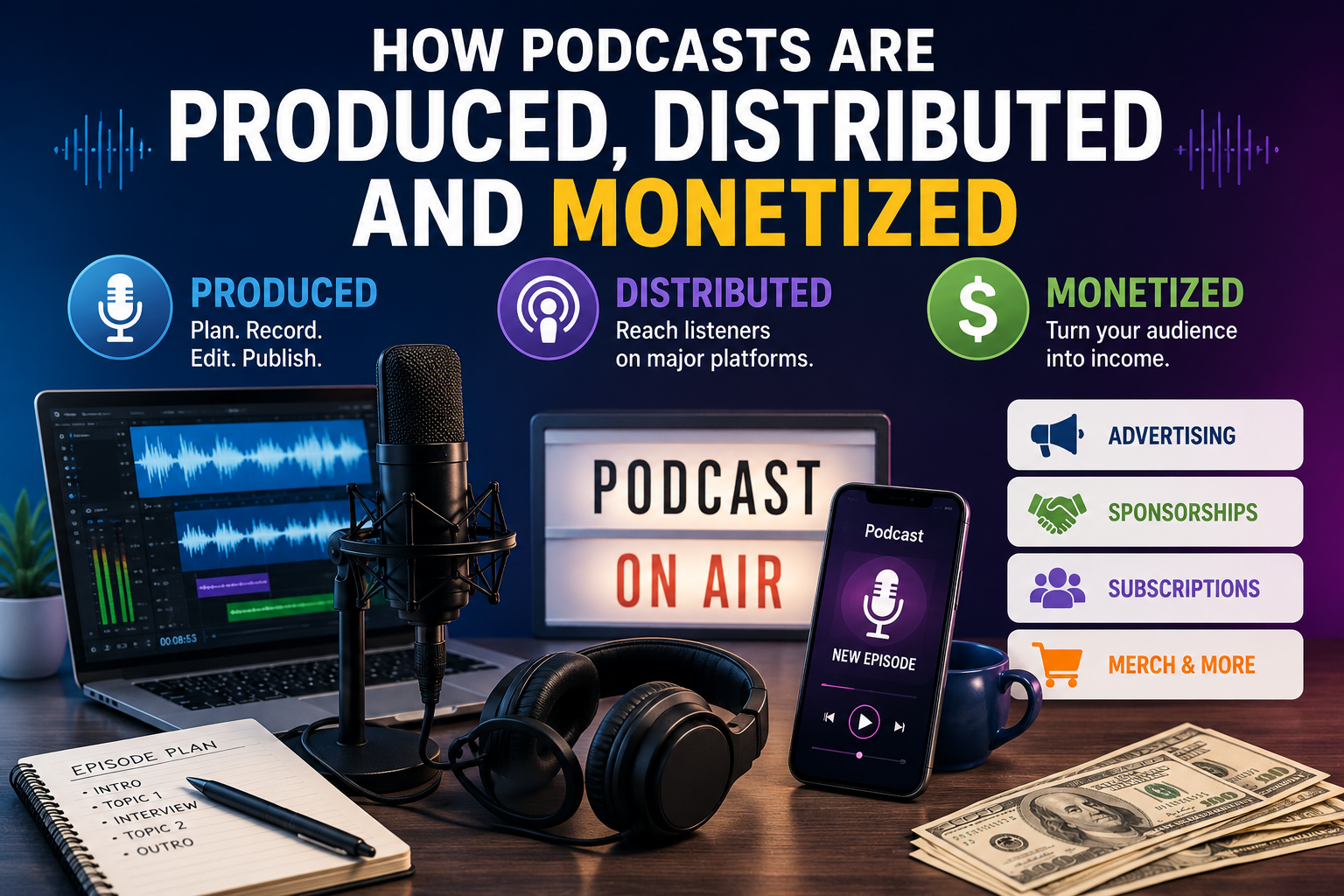
Revenue can come from advertising, subscriptions, sponsorships, memberships, merchandise, licensing, and direct audience support.
This has expanded opportunities for creators while making personal branding, audience engagement, and consistency increasingly important.
Artificial Intelligence and Entertainment
Artificial intelligence is becoming another important influence on entertainment.
AI technologies can assist with areas such as content recommendation, visual effects, audio production, editing, game development, translation, and creative workflows.
At the same time, AI raises important questions about originality, ownership, authenticity, employment, and the role of human creativity.
The long-term influence of AI will depend not only on what the technology can produce but also on how audiences, creators, companies, and regulators choose to use it.
Virtual and Immersive Experiences
Entertainment is also becoming increasingly immersive.
Virtual reality, augmented reality, spatial computing, and interactive digital environments offer experiences that can move beyond traditional screens.
Rather than simply watching a story, audiences may increasingly be able to explore environments, interact with characters, influence narratives, or participate in shared digital spaces.
These technologies remain developing areas, but they illustrate a broader direction in entertainment: greater interaction between audiences and content.
Why Entertainment Keeps Changing
The evolution of entertainment media is ultimately driven by several forces working together.
Technology changes what is possible. Consumer behavior determines what becomes popular. Business models determine how content is funded and distributed. Creators experiment with new formats, while audiences continuously develop new expectations.
The result is an entertainment landscape that changes faster than previous generations experienced.
Yet some fundamentals remain remarkably consistent. People continue to seek stories, music, humor, competition, connection, escapism, and shared experiences.
What Comes Next for Entertainment Media?
The future of entertainment is unlikely to be defined by a single format.
Instead, audiences will probably move fluidly between streaming video, interactive games, social platforms, podcasts, immersive experiences, live events, and emerging forms of digital media.
The most significant change may be the increasing ability of audiences to decide what they consume, when they consume it, and how they participate in it.
Entertainment has moved from a largely scheduled and centralized system toward an increasingly personalized, interactive, and creator-driven ecosystem. As technology continues to develop, the industry will keep evolving—but its central purpose will remain familiar: giving people compelling ways to experience stories, ideas, emotions, and shared moments.



2 Comments
Micle harison
June 7, 2019Lorem ipsum dolor sit amet, usu ut perfecto postulant deterruisset, libris causae volutpat at est, ius id modus laoreet urbanitas. Mel ei delenit dolores.
John Doe
June 7, 2019Some consultants are employed indirectly by the client via a consultancy staffing company.