
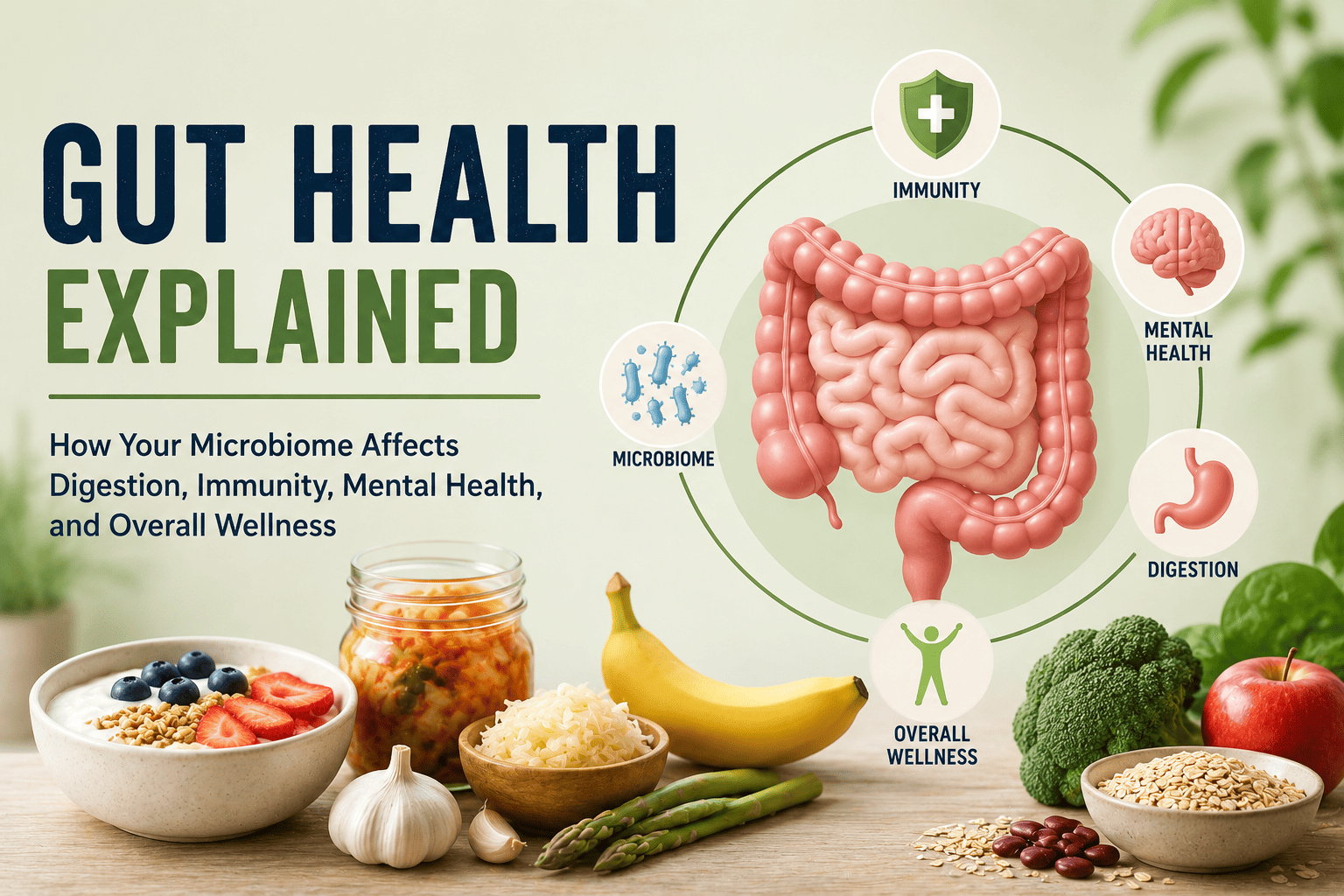
Gut Health Explained: How Your Microbiome Affects Digestion, Immunity, Mental Health, and Overall Wellness
Inside your body lives an invisible ecosystem so vast and complex that scientists often call it your “second brain.” It contains trillions of microorganisms working around the clock to digest food, train your immune system, influence your mood, and even affect your risk of chronic disease.
For years, the gut was viewed simply as the body’s digestive system—a place where food was broken down before nutrients entered the bloodstream. Modern science has completely transformed that understanding.
Today, researchers know that the human gut is home to one of the most diverse biological communities on Earth: the gut microbiome.
This microscopic world is made up of bacteria, fungi, viruses, and other microorganisms that coexist inside the digestive tract. Far from being harmful, many of these microbes perform essential jobs that keep the body functioning properly.
When the microbiome is healthy, it supports digestion, strengthens immunity, regulates inflammation, and even communicates with the brain.
When it’s out of balance, however, the consequences may extend far beyond stomach discomfort.
Poor gut health has been linked to obesity, diabetes, autoimmune disorders, anxiety, depression, heart disease, and numerous digestive conditions.
As scientists continue uncovering the remarkable influence of the microbiome, one message has become increasingly clear:
Taking care of your gut may be one of the most important investments you can make in your long-term health.
What Is the Gut Microbiome?
The gut microbiome refers to the enormous collection of microorganisms living primarily inside your large intestine.
These include:
- Beneficial bacteria
- Neutral bacteria
- Fungi
- Viruses
- Archaea
Together, they form a highly complex ecosystem that interacts continuously with your body.
Scientists estimate that the human digestive tract contains trillions of microbes representing hundreds of different species.
Each person’s microbiome is unique—much like a fingerprint.
Its composition is influenced by factors such as:
- Genetics
- Diet
- Lifestyle
- Age
- Medications
- Environment
- Birth method (vaginal delivery or C-section)
Rather than existing separately from the body, the microbiome functions almost like an additional organ.
Why Gut Health Matters
Although digestion remains one of its primary responsibilities, the gut influences far more than processing food.
Researchers now associate a healthy microbiome with nearly every major body system.
A balanced gut supports:
- Efficient digestion
- Strong immune defenses
- Healthy metabolism
- Vitamin production
- Hormone regulation
- Brain function
- Mental well-being
When beneficial bacteria outnumber harmful microbes, the digestive system generally functions more effectively.
Problems often arise when that balance becomes disrupted—a condition known as dysbiosis.
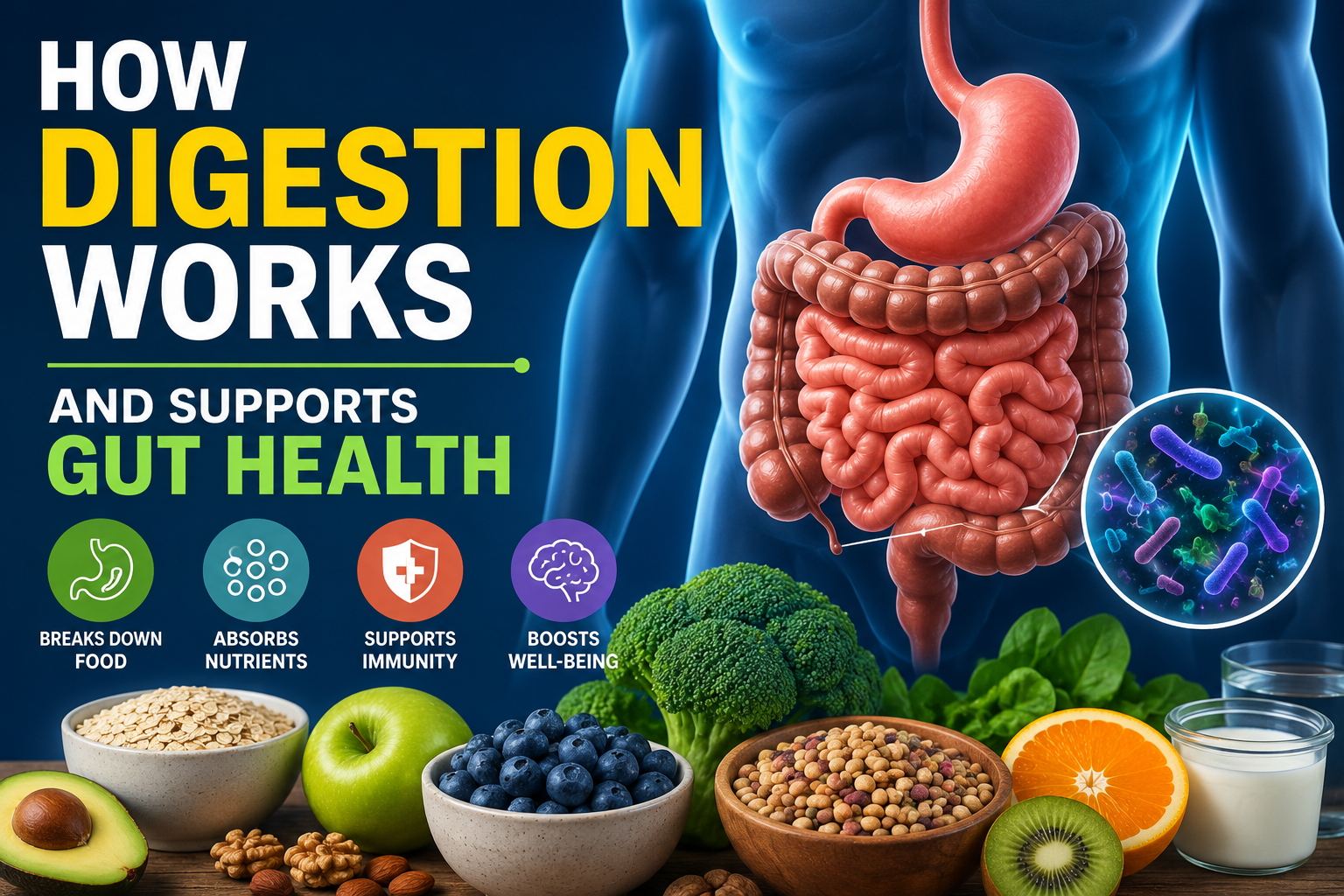
How Your Gut Helps Digest Food
Many foods contain fibers and complex carbohydrates that the human body cannot digest on its own.
This is where gut bacteria become essential.
Beneficial microbes break down these compounds through fermentation, producing nutrients known as short-chain fatty acids (SCFAs).
These compounds help:
- Nourish cells lining the colon
- Reduce inflammation
- Support healthy metabolism
- Strengthen the intestinal barrier
Without these microorganisms, many important nutrients would simply pass through the digestive system unused.
The Gut and Your Immune System
One of the microbiome’s most important jobs is supporting immunity.
In fact, scientists estimate that around 70% of the immune system is closely associated with the gut.
Beneficial bacteria help by:
- Training immune cells
- Preventing harmful microbes from multiplying
- Maintaining the protective intestinal lining
- Regulating inflammation
A healthy gut teaches the immune system to distinguish between harmless substances and dangerous pathogens.
When this communication breaks down, immune responses may become either too weak or overly aggressive.
Researchers continue investigating how gut health may influence autoimmune diseases and allergies.
The Gut-Brain Connection
Perhaps one of the most fascinating discoveries in modern medicine is the gut-brain axis.
The digestive system and brain constantly communicate through:
- The vagus nerve
- Hormones
- Immune signals
- Chemical messengers produced by gut bacteria
This two-way communication helps explain why emotional stress often affects digestion—and why digestive disorders may influence mental health.
Many researchers now describe the gut as the body’s “second brain.”
Can Gut Health Affect Mental Health?
Increasing evidence suggests the answer is yes.
Gut bacteria help produce several important neurotransmitters involved in mood regulation.
These include:
- Serotonin
- Dopamine
- Gamma-aminobutyric acid (GABA)
Remarkably, a large proportion of the body’s serotonin is produced within the digestive system.
Although this serotonin does not directly enter the brain, the gut and brain communicate extensively through multiple pathways.
Researchers are actively studying whether improving gut health may help support people living with:
- Anxiety
- Depression
- Chronic stress
- Cognitive decline
While the science continues to evolve, the relationship between mental health and the microbiome has become one of medicine’s fastest-growing research fields.
Signs Your Gut May Be Unhealthy
An unhealthy microbiome doesn’t always cause obvious digestive symptoms.
However, common warning signs may include:
- Frequent bloating
- Gas
- Constipation
- Diarrhea
- Acid reflux
- Food intolerances
- Chronic fatigue
- Skin problems
- Poor sleep
- Frequent illness
These symptoms can result from many different conditions, so persistent concerns should always be evaluated by a healthcare professional.
Foods That Support a Healthy Gut
Diet is one of the most powerful influences on the microbiome.
Fiber-Rich Foods
Dietary fiber feeds beneficial bacteria.
Excellent sources include:
- Oats
- Beans
- Lentils
- Apples
- Broccoli
- Carrots
- Whole grains
Fermented Foods
Fermented foods naturally contain beneficial microorganisms.
Examples include:
- Yogurt with live cultures
- Kefir
- Kimchi
- Sauerkraut
- Miso
- Tempeh
These foods may help increase microbial diversity in the gut.
Prebiotic Foods
Prebiotics are special plant fibers that nourish beneficial bacteria.
Common sources include:
- Garlic
- Onions
- Asparagus
- Bananas
- Chicory root
- Leeks
Colorful Fruits and Vegetables
Different plant compounds support different bacterial species.
Eating a wide variety of colorful produce encourages a more diverse microbiome.
Foods That May Harm Gut Health
Occasional treats are unlikely to cause lasting problems.
However, diets consistently high in certain foods may negatively affect microbial diversity.
These include:
- Highly processed foods
- Excess added sugars
- Excessive alcohol
- Diets very low in fiber
- Excessive ultra-processed snacks
Balance—not perfection—is the goal.
Lifestyle Habits That Improve Gut Health
Food isn’t the only factor influencing the microbiome.
Several daily habits also play important roles.
Exercise Regularly
Regular physical activity has been associated with increased microbial diversity.
Get Enough Sleep
Poor sleep may alter gut bacteria while disrupting hormone regulation and immune function.
Manage Stress
Chronic stress affects communication between the gut and brain.
Relaxation techniques such as meditation, walking, breathing exercises, and mindfulness may indirectly support gut health.
Use Antibiotics Responsibly
Antibiotics save lives.
However, they often kill beneficial bacteria alongside harmful ones.
This is why healthcare professionals recommend using antibiotics only when medically necessary.
What Are Probiotics?
Probiotics are live microorganisms that may provide health benefits when consumed in adequate amounts.
They are available through:
- Certain fermented foods
- Yogurt
- Dietary supplements
Different probiotic strains perform different functions.
Not every product benefits every person, and research continues to determine which strains are most effective for specific conditions.
Common Myths About Gut Health
Myth 1: Everyone Needs Probiotic Supplements
Not necessarily.
Many healthy people support their microbiome through a balanced diet without supplements.
Myth 2: Detox Products Clean Your Gut
The digestive system naturally removes waste.
Most “gut detox” products lack strong scientific evidence.
Myth 3: All Bacteria Are Harmful
Quite the opposite.
Many bacteria are essential for digestion, immunity, and overall health.
Myth 4: Gut Health Only Affects Digestion
Modern research shows the microbiome influences many systems beyond digestion, including immunity, metabolism, and communication with the brain.
The Future of Gut Health Research
Scientists continue making exciting discoveries about the microbiome.
Emerging areas of research include:
- Personalized nutrition
- Microbiome-based therapies
- Precision probiotics
- Gut bacteria and cancer treatment
- Artificial intelligence in microbiome research
- Fecal microbiota transplantation (FMT)
Researchers believe the microbiome may eventually become central to preventing and treating many chronic diseases.
Frequently Asked Questions
How long does it take to improve gut health?
Some dietary changes may influence the microbiome within days, but meaningful, long-term improvements generally require consistent healthy habits over weeks or months.
Can stress affect digestion?
Yes.
Stress influences communication between the brain and digestive system, which is why many people experience stomach discomfort during stressful periods.
Is yogurt enough to improve gut health?
Yogurt with live cultures can be part of a healthy diet, but gut health depends on overall lifestyle, including eating plenty of fiber-rich foods, exercising regularly, sleeping well, and managing stress.
Should everyone take probiotics?
Not necessarily.
While probiotics may benefit certain individuals, they are not required for everyone. It’s best to seek medical advice before using probiotic supplements, especially if you have underlying health conditions.
Final Thoughts
The human gut is far more than a digestive organ.
It is home to an astonishing community of microorganisms that influence digestion, immunity, metabolism, mental well-being, and overall health in ways scientists are only beginning to fully understand.
Rather than viewing bacteria as enemies, modern medicine increasingly recognizes many of them as essential partners in keeping us healthy.
Supporting your microbiome doesn’t require expensive supplements or extreme diets.
Simple, evidence-based habits—such as eating a diverse range of fiber-rich foods, exercising regularly, managing stress, sleeping well, and using antibiotics responsibly—can help create an environment where beneficial microbes thrive.
As research continues to uncover the remarkable connections between the gut and the rest of the body, one conclusion grows stronger every year:
A healthier gut isn’t just about better digestion—it’s one of the foundations of better overall health.



2 Comments
Micle harison
June 7, 2019Lorem ipsum dolor sit amet, usu ut perfecto postulant deterruisset, libris causae volutpat at est, ius id modus laoreet urbanitas. Mel ei delenit dolores.
John Doe
June 7, 2019Some consultants are employed indirectly by the client via a consultancy staffing company.