
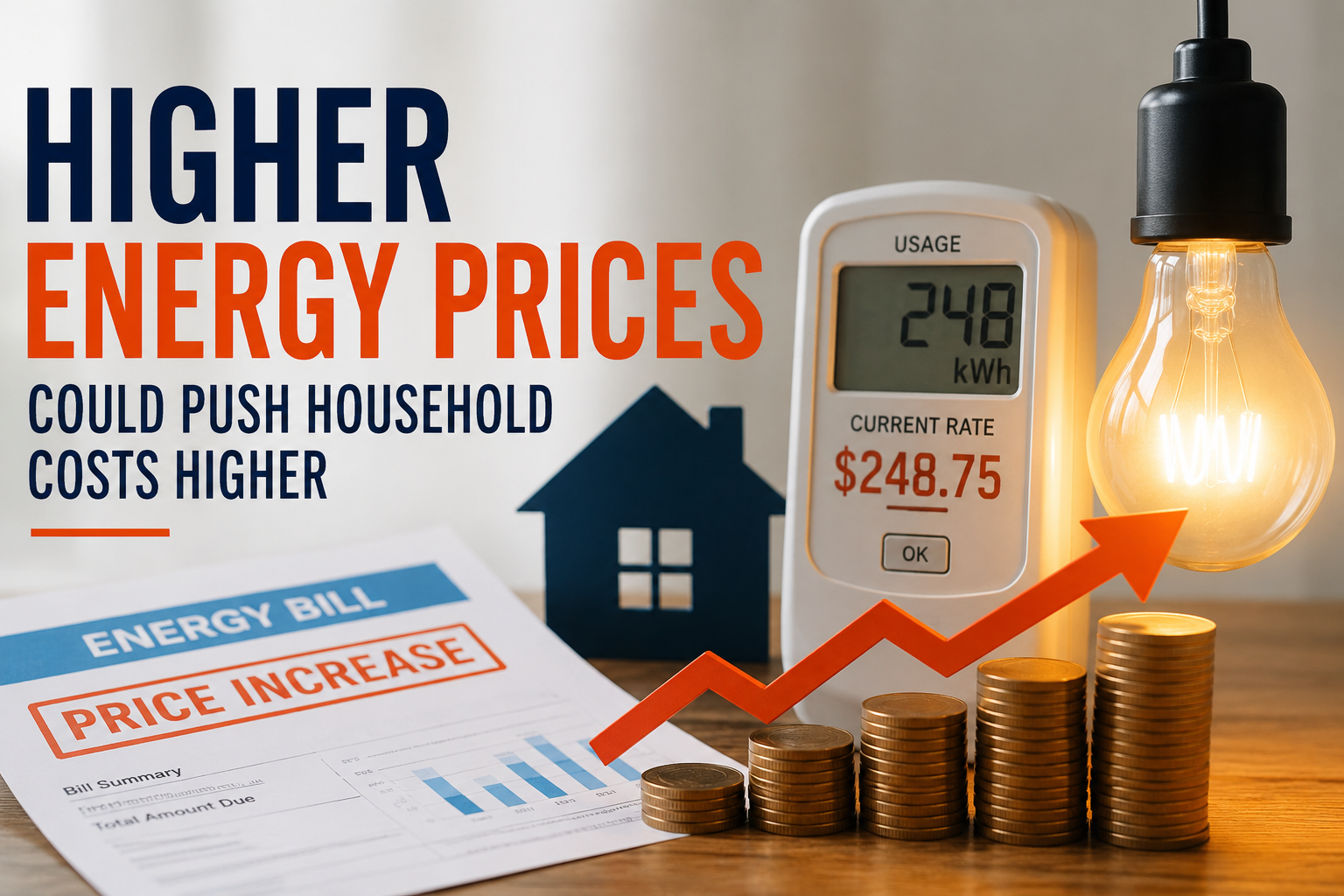
Higher Energy Prices Could Push Household Costs Higher
As energy prices continue to climb in many parts of the world, households may soon feel the impact in more ways than just higher electricity and gas bills. Economists warn that rising energy costs often ripple through the broader economy, increasing transportation expenses, manufacturing costs, and ultimately the prices consumers pay for everyday goods and services.
For families already managing tight budgets, another round of higher utility bills could make balancing monthly finances even more challenging.
Why Energy Prices Matter
Energy powers nearly every aspect of modern life. Homes rely on electricity and natural gas for heating, cooling, lighting, and cooking, while businesses depend on affordable energy to produce and transport goods.
When wholesale energy prices rise, utility companies and fuel suppliers often pass a portion of those costs on to consumers. The effects can include:
- Higher electricity bills
- Increased natural gas costs
- More expensive gasoline and diesel
- Rising grocery prices
- Higher transportation and delivery fees
- Increased manufacturing costs
Although the size of the impact varies by region, sustained increases in energy prices tend to affect almost every household.
Household Budgets Could Feel the Pressure
For many families, utility bills already represent one of the largest recurring monthly expenses after housing and transportation.
If electricity and heating costs continue to rise, households may need to adjust spending in other areas, including:
- Dining out
- Entertainment
- Travel
- Clothing purchases
- Home improvement projects
- Savings contributions
Lower-income households often experience the greatest financial strain because utilities account for a larger share of their monthly income.
Higher Energy Costs Can Increase Food Prices
Energy plays a significant role in food production and distribution.
Farmers rely on fuel to operate equipment, manufacturers use energy to process food, and trucking companies transport products across long distances.
As fuel and electricity become more expensive, those additional costs can gradually appear on grocery store shelves through:
- Higher produce prices
- Increased dairy costs
- More expensive packaged foods
- Rising meat prices
- Increased delivery charges
While not every product is affected equally, sustained energy inflation often contributes to broader food inflation.
Transportation Expenses May Rise
Fuel prices remain one of the most visible consequences of higher energy costs.
Whether commuting to work, driving children to school, or planning holidays, households may spend more on transportation if gasoline or diesel prices increase.
Public transportation systems and shipping companies may also face higher operating costs, which can influence fares and delivery fees.
Home Heating and Cooling Become More Expensive
Seasonal weather can amplify the effects of rising energy prices.
During summer, households often rely heavily on air conditioning, while winter brings increased demand for heating.
If energy markets remain under pressure, consumers could face:
- Higher summer cooling bills
- Increased winter heating expenses
- Greater demand charges during peak usage periods
Improving home energy efficiency can help reduce the impact of these increases over time.
Businesses May Pass Costs to Consumers
Higher energy prices affect businesses across nearly every industry.
Retailers, manufacturers, restaurants, logistics companies, and service providers all rely on energy to operate.
Rather than absorbing higher costs indefinitely, many businesses eventually adjust prices, leading to broader increases in the cost of living.
This is one reason economists closely monitor energy markets when assessing future inflation trends.
Practical Ways to Reduce Energy Costs
Although consumers cannot control market prices, there are several ways to reduce household energy consumption.
Consider these strategies:
Improve Home Efficiency
- Seal drafts around doors and windows.
- Add insulation where practical.
- Replace older light bulbs with LEDs.
- Use programmable or smart thermostats.
Reduce Electricity Use
- Turn off unused electronics.
- Run full loads in washing machines and dishwashers.
- Unplug devices that consume standby power.
- Wash clothes in cold water when appropriate.
Shop Around
Where energy markets allow, comparing electricity or gas providers may help households find more competitive rates.
Review Your Monthly Budget
Periods of higher utility costs are a good opportunity to reassess household spending and identify areas where savings can offset increased bills.
Could Prices Moderate Later?
Energy markets are influenced by a wide range of factors, including global supply and demand, weather patterns, infrastructure, geopolitical developments, and government policy.
Because these conditions change over time, energy prices can move in either direction.
While temporary declines are always possible, many analysts believe households should remain prepared for continued price volatility rather than expecting a steady decline.
Looking Ahead
Energy prices remain one of the most important drivers of household expenses and overall inflation.
Whether through utility bills, transportation costs, or grocery prices, sustained increases can affect nearly every part of a family’s budget. Staying informed, improving energy efficiency, and reviewing spending habits can help households better manage rising costs if energy prices remain elevated.
Although no one can predict exactly how energy markets will evolve, proactive financial planning can make households more resilient during periods of higher living expenses.
Key Takeaways
- Rising energy prices can increase electricity, heating, and transportation costs.
- Higher fuel expenses may contribute to more expensive groceries and consumer goods.
- Businesses often pass increased operating costs on to customers over time.
- Improving home energy efficiency can help lower monthly utility bills.
- Reviewing household budgets early can make it easier to adapt to changing living costs.




2 Comments
Micle harison
June 7, 2019Lorem ipsum dolor sit amet, usu ut perfecto postulant deterruisset, libris causae volutpat at est, ius id modus laoreet urbanitas. Mel ei delenit dolores.
John Doe
June 7, 2019Some consultants are employed indirectly by the client via a consultancy staffing company.