
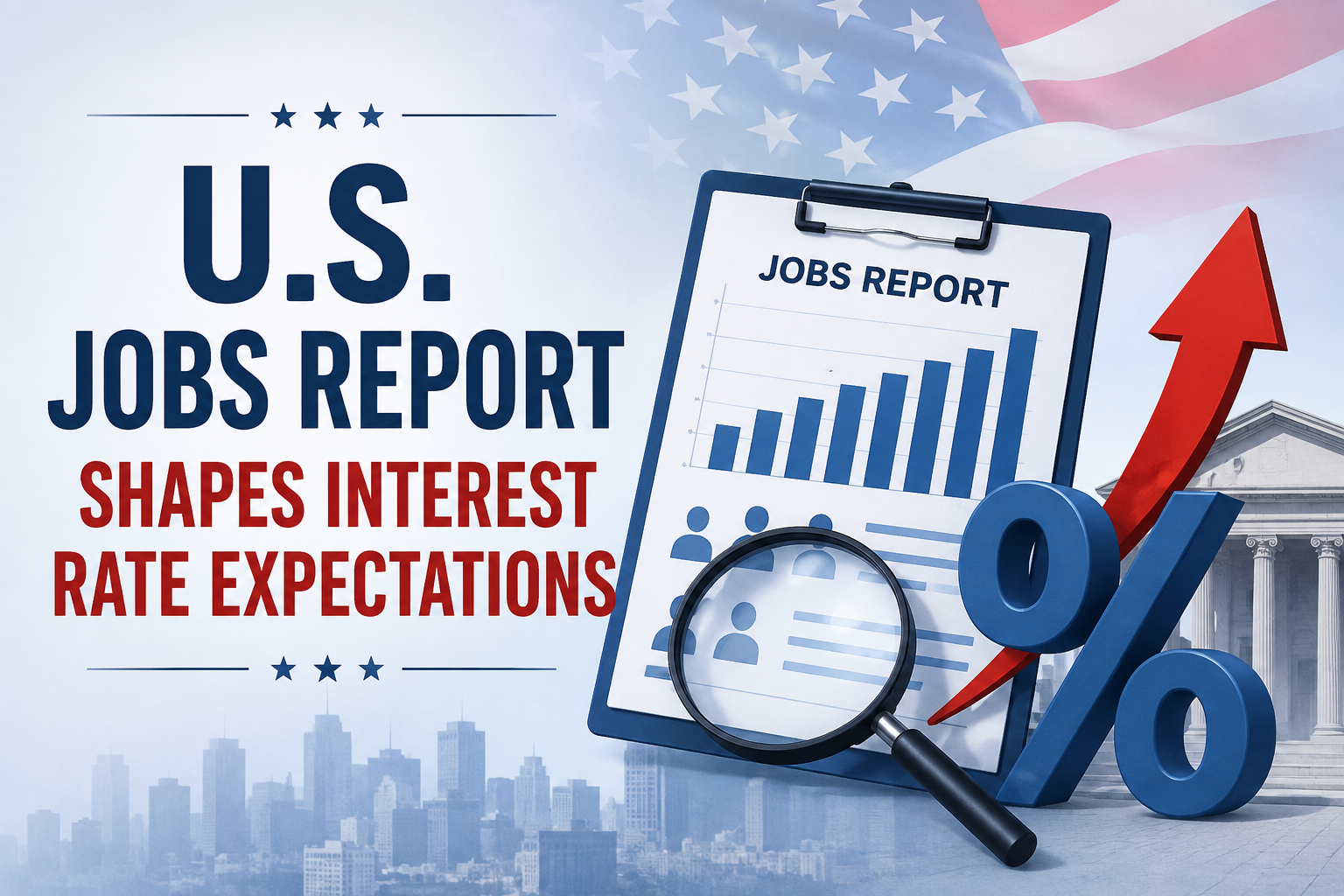
U.S. Jobs Report Shapes Interest Rate Expectations
The monthly U.S. jobs report has once again become the center of attention for investors, policymakers, businesses, and consumers as fresh employment data influences expectations about the direction of interest rates. Because the labor market plays a crucial role in the health of the U.S. economy, every major employment release is closely analyzed for clues about inflation, economic growth, and future decisions by the Federal Reserve.
While employment figures are only one piece of the broader economic picture, they often have an immediate impact on financial markets. Strong hiring can signal continued economic resilience, while weaker-than-expected job growth may indicate slowing economic momentum. Both scenarios can reshape expectations for borrowing costs, investment decisions, and household finances.
Why the Jobs Report Matters
Published each month by the U.S. Bureau of Labor Statistics (BLS), the Employment Situation Report provides one of the most comprehensive snapshots of the American labor market. It includes several key indicators that economists and investors monitor closely, including: Total nonfarm payroll employment The national unemployment rate Average hourly earnings Labor force participation rate Average weekly hours worked Employment changes across industries Together, these figures help paint a picture of whether the economy is expanding, slowing, or remaining relatively stable.
The Connection Between Employment and Interest Rates
The Federal Reserve has a dual mandate: promoting maximum employment while maintaining stable prices. Because of this, labor market conditions are one of the most important factors considered when setting monetary policy. A strong jobs report may suggest that businesses continue hiring aggressively and consumers remain financially confident. Robust employment can increase consumer spending, which may contribute to higher inflation if demand outpaces supply. Conversely, softer employment growth or rising unemployment can signal cooling economic activity, potentially reducing inflationary pressures and increasing expectations that policymakers may ease monetary policy if broader economic conditions warrant.
What Investors Look For
Financial markets often react within minutes of the jobs report’s release. Investors typically compare the actual data with economists’ forecasts rather than focusing solely on the headline payroll number.
Key areas of interest include:
Payroll Growth
The number of new jobs added during the month provides insight into business confidence and economic expansion.
Unemployment Rate
A low unemployment rate generally reflects a healthy labor market, although extremely tight labor conditions can sometimes contribute to wage inflation.
Wage Growth
Average hourly earnings receive significant attention because sustained wage increases may contribute to broader inflation if businesses pass higher labor costs on to consumers.
Labor Force Participation
Participation rates reveal how many people are actively working or seeking employment, offering additional context beyond the unemployment rate alone.
How Interest Rate Expectations Affect Consumers
Changes in interest rate expectations can influence many aspects of personal finance, even before the Federal Reserve makes any official policy adjustments.
Mortgage Rates
Homebuyers may see mortgage rates fluctuate as bond markets respond to employment data and changing expectations for future interest rates.
Credit Cards
Variable-rate credit cards may eventually become more or less expensive depending on the broader interest rate environment.
Auto Loans
Financing costs for new and used vehicles can be affected by changes in benchmark interest rates.
Savings Accounts
Higher interest rate environments often allow banks to offer more competitive yields on savings accounts and certificates of deposit.
Business Borrowing
Companies may adjust expansion plans, hiring decisions, and investment strategies based on expected financing costs.
Why Markets Sometimes React Unexpectedly
Market reactions are not always straightforward. A jobs report that appears strong on the surface may contain underlying weaknesses, while a seemingly disappointing report could include positive revisions to previous months. Investors also consider: Inflation data Consumer spending Manufacturing activity GDP growth Retail sales Global economic conditions Geopolitical developments As a result, employment figures are interpreted within the context of broader economic trends rather than in isolation.
Balancing Growth and Inflation
One of the biggest challenges for policymakers is maintaining a healthy labor market without allowing inflation to accelerate significantly. If employment remains exceptionally strong while inflation stays elevated, policymakers may prefer to keep interest rates higher for longer. On the other hand, if hiring slows noticeably and inflation continues easing, markets may increasingly anticipate a less restrictive monetary policy, although decisions ultimately depend on a broad range of incoming economic data.
Looking Ahead
Upcoming employment reports will continue to play an important role in shaping market expectations for interest rates. However, economists emphasize that no single data release determines monetary policy on its own. Instead, policymakers evaluate a wide range of indicators before making decisions intended to support long-term economic stability. For consumers, businesses, and investors alike, understanding how employment data influences interest rate expectations can provide valuable context for financial planning. Whether considering a mortgage, managing investments, or preparing a business budget, staying informed about labor market trends helps explain why financial markets often react so quickly to each new jobs report.
Bottom Line
The U.S. jobs report remains one of the most influential economic releases each month because it offers critical insight into the strength of the labor market and the broader economy. By shaping expectations for future interest rate decisions, employment data can influence everything from stock prices and bond yields to mortgage rates and consumer borrowing costs. While individual reports may cause short-term market volatility, long-term financial decisions are best made by considering the broader economic landscape rather than reacting to a single month’s data.



2 Comments
Micle harison
June 7, 2019Lorem ipsum dolor sit amet, usu ut perfecto postulant deterruisset, libris causae volutpat at est, ius id modus laoreet urbanitas. Mel ei delenit dolores.
John Doe
June 7, 2019Some consultants are employed indirectly by the client via a consultancy staffing company.