
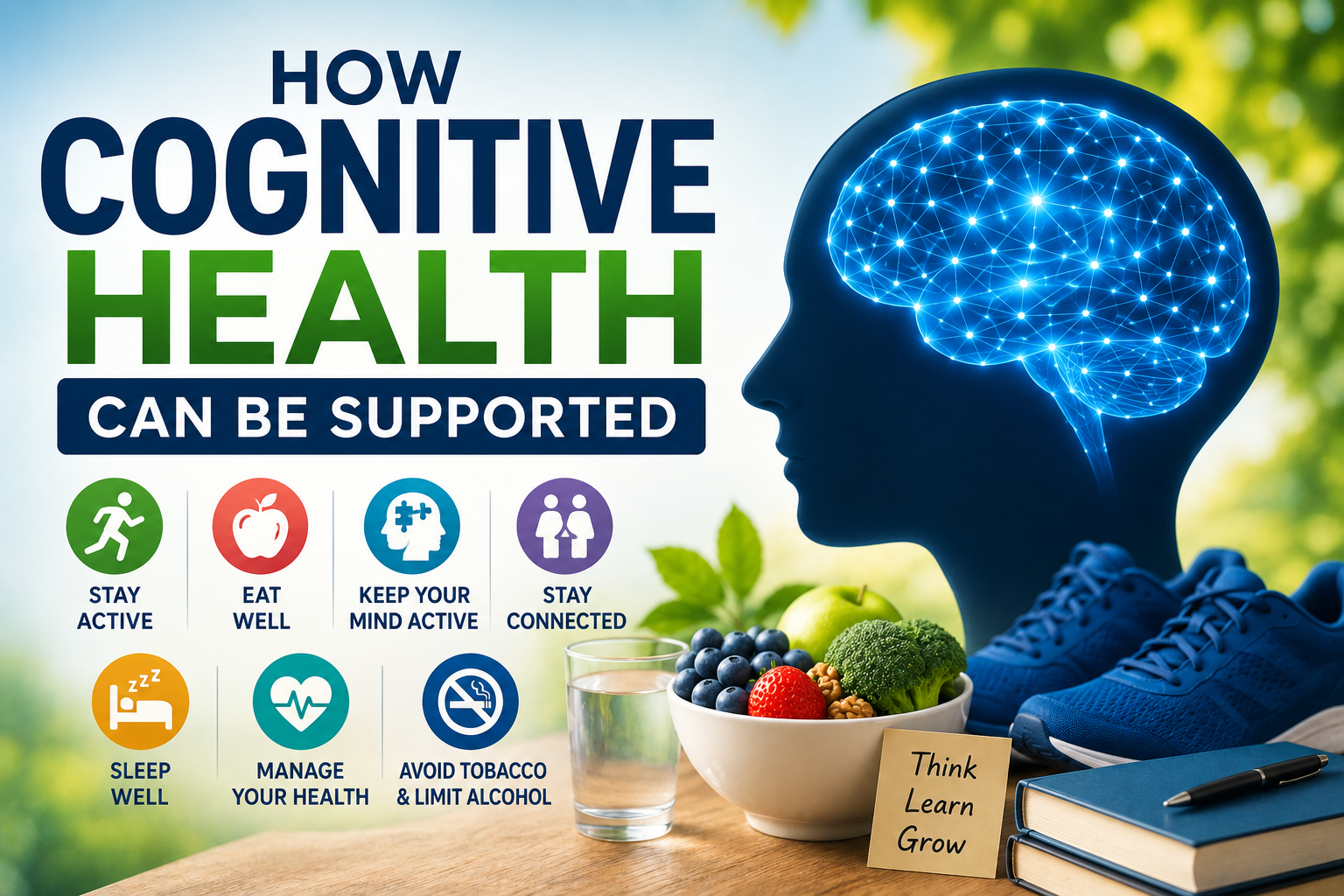
How Cognitive Health Can Be Supported
Cognitive health refers to the ability to think, learn, remember, make decisions and carry out everyday activities effectively. It is an important part of overall brain health and can influence independence and quality of life throughout adulthood.
While some factors affecting cognitive health, including genetics and age, cannot be changed, many lifestyle and health factors can be managed. Research increasingly points toward a broad approach rather than a single food, supplement, exercise or “brain-training” trick.
The World Health Organization’s updated 2026 guidance emphasizes this broader approach, including physical activity, healthy eating, management of conditions such as high blood pressure and diabetes, cognitive and social engagement, avoiding tobacco and harmful alcohol use, and reducing exposure to air pollution.
What Is Cognitive Health?
Cognitive health describes how well a person can use mental abilities such as memory, attention, reasoning, learning and problem-solving.
It is closely connected with overall brain health but is not exactly the same thing. A person’s cognitive abilities can be influenced by many factors, including:
- Physical activity
- Sleep and general health
- Cardiovascular health
- Blood pressure and blood sugar
- Diet and nutrition
- Social relationships
- Mental stimulation
- Hearing and vision
- Alcohol and tobacco use
- Environmental exposures
- Certain illnesses and injuries
Cognitive changes can also occur for many different reasons. Occasional forgetfulness does not automatically mean someone has a neurological disease, but persistent or worsening changes that interfere with everyday activities deserve medical attention.
Stay Physically Active
Regular physical activity is one of the most consistently recommended components of a brain-healthy lifestyle.
Exercise supports cardiovascular health, and healthy blood circulation is important for the brain. Physical activity is also associated with benefits for sleep, mood and cognitive health. The National Institute on Aging notes that exercise may help maintain aspects of cognitive function, although researchers are still studying exactly how different types and amounts of activity affect long-term cognitive decline.
Walking, cycling, swimming, dancing, strength training and other activities can all contribute to an active lifestyle.
For people who have been inactive, starting gradually may be more realistic than attempting an intense exercise routine immediately. People with medical conditions or concerns about beginning vigorous exercise should discuss an appropriate activity plan with a healthcare professional.
Eat for Overall Health
There is no single food that guarantees better memory or prevents cognitive decline.
Instead, dietary patterns that support overall cardiovascular and metabolic health may also support brain health. A balanced diet can include vegetables, fruits, whole grains, legumes, nuts, seeds, lean protein sources and other nutrient-dense foods while limiting excessive amounts of highly processed foods, added sugars, salt and unhealthy fats.
This matters because conditions such as high blood pressure, diabetes and abnormal cholesterol levels are associated with increased dementia risk. Managing these conditions is therefore part of a broader strategy for protecting health across the life course.
Keep the Brain Engaged
Learning and mentally challenging activities can provide opportunities to use different cognitive skills.
Reading, learning a new skill, studying a subject, playing a musical instrument, solving puzzles, writing, participating in creative activities or taking up a new hobby can all provide mental stimulation.
However, it is important to distinguish between mental engagement and exaggerated claims about commercial “brain-training” products.
The National Institute on Aging says certain forms of structured cognitive training have shown benefits in research, but there is not enough evidence to assume that commercially available brain-training apps produce the same effects.
The practical lesson is simple: choose meaningful activities that challenge you rather than relying on a product that promises dramatic improvements in memory.
Maintain Strong Social Connections
Social interaction is another part of cognitive and overall well-being.
Spending time with family and friends, participating in community activities, volunteering, joining a group or maintaining meaningful relationships can provide both emotional and mental stimulation.
Research has associated greater social engagement with better cognitive health in later life, although scientists continue to investigate the precise relationship between social activity and cognitive decline.
For someone experiencing loneliness or isolation, even relatively simple steps—such as regularly calling a friend, joining a community group or participating in a shared hobby—can create more opportunities for connection.
Protect Heart and Metabolic Health
Brain health does not exist separately from the rest of the body.
High blood pressure, diabetes, high cholesterol, excess body weight and other cardiovascular or metabolic conditions can contribute to dementia risk. WHO recommends addressing these health factors as part of efforts to reduce the risk of cognitive decline.
That makes routine healthcare important. Checking blood pressure, following recommended screening schedules and working with a healthcare professional to manage diagnosed conditions can be valuable parts of long-term health maintenance.
Avoid Tobacco and Harmful Alcohol Use
Tobacco affects multiple organs and is a major risk factor for cardiovascular and other serious diseases. WHO identifies tobacco use as one of the modifiable factors associated with dementia risk.
Alcohol also deserves attention. Harmful alcohol use is associated with a range of health problems, and reducing harmful consumption is included in WHO recommendations for reducing dementia risk.
For people who smoke, quitting can be one of the most meaningful changes they can make for their overall health.
Pay Attention to Hearing and Vision
Hearing and vision are increasingly recognized as relevant to healthy aging and cognitive health.
Difficulty hearing can make communication and social participation harder, potentially contributing to isolation. WHO’s updated guidance includes hearing aids, where needed, among interventions that may form part of dementia risk-reduction strategies.
Regular attention to hearing and vision problems can therefore be about more than comfort. Treating correctable problems may help people remain engaged with their surroundings and everyday activities.
Reduce Risks to the Brain
Protecting the brain from injury is another important consideration.
Using appropriate safety equipment during activities, addressing fall risks and following sensible precautions in situations where head injuries are possible can reduce preventable harm.
Brain injuries can have lasting effects, so safety should not be treated as an afterthought—particularly for older adults who may be at increased risk of falls.
Be Careful With Cognitive Health Claims
The growing interest in brain health has also created a market for supplements, apps, diets and products that promise sharper memory or protection against cognitive decline.
Consumers should be cautious about claims that sound too good to be true.
WHO’s 2026 guidelines specifically state that vitamin B and E supplements, omega-3 polyunsaturated fatty acids and multivitamins or minerals are not recommended for reducing cognitive decline or dementia in people without a diagnosed deficiency, because evidence has not shown benefits that outweigh potential harms.
That does not mean every supplement is inappropriate for every person. It means supplementation should be based on an individual’s nutritional needs and medical circumstances rather than broad promises about “boosting the brain.”
Think About Cognitive Health Across Life
Cognitive health is not something that needs attention only in old age.
WHO’s updated guidance emphasizes risk reduction across the life course. Some factors may have greater influence at particular stages of life, while accumulated exposure to several risk factors can affect long-term risk.
That makes everyday health habits worthwhile even when a person feels completely healthy.
Regular movement, nutritious eating, meaningful mental activity, social connection, appropriate medical care, avoiding tobacco and harmful alcohol use, and protecting the brain from injury are not quick fixes. They are components of a broader approach to maintaining health over time.
When Cognitive Changes Deserve Medical Attention
Everyone occasionally forgets a name, loses their train of thought or misplaces an item. Such experiences alone do not establish that someone has cognitive impairment.
More concerning changes can include persistent problems with memory or thinking that interfere with familiar activities, managing finances, taking medication, cooking, driving, communicating or maintaining independence.
Anyone experiencing noticeable, persistent or worsening cognitive changes should discuss them with a qualified healthcare professional. There can be many possible causes, some of which may be treatable, and an appropriate evaluation is more useful than attempting to diagnose the problem independently.
Building a Brain-Healthy Routine
Supporting cognitive health is best viewed as a long-term process rather than a search for one perfect intervention.
The strongest approach is to look after the factors that can be influenced: stay physically active, eat a balanced diet, manage cardiovascular and metabolic health, remain socially and mentally engaged, avoid tobacco and harmful alcohol use, address hearing or vision problems, protect against brain injury and seek medical advice when concerning changes occur. Current WHO guidance supports this multidimensional approach to reducing the risk of cognitive decline and dementia.
This article is for general educational purposes and is not a substitute for personalized medical advice. Anyone concerned about changes in memory, thinking or daily functioning should speak with a qualified healthcare professional.




2 Comments
Micle harison
June 7, 2019Lorem ipsum dolor sit amet, usu ut perfecto postulant deterruisset, libris causae volutpat at est, ius id modus laoreet urbanitas. Mel ei delenit dolores.
John Doe
June 7, 2019Some consultants are employed indirectly by the client via a consultancy staffing company.