
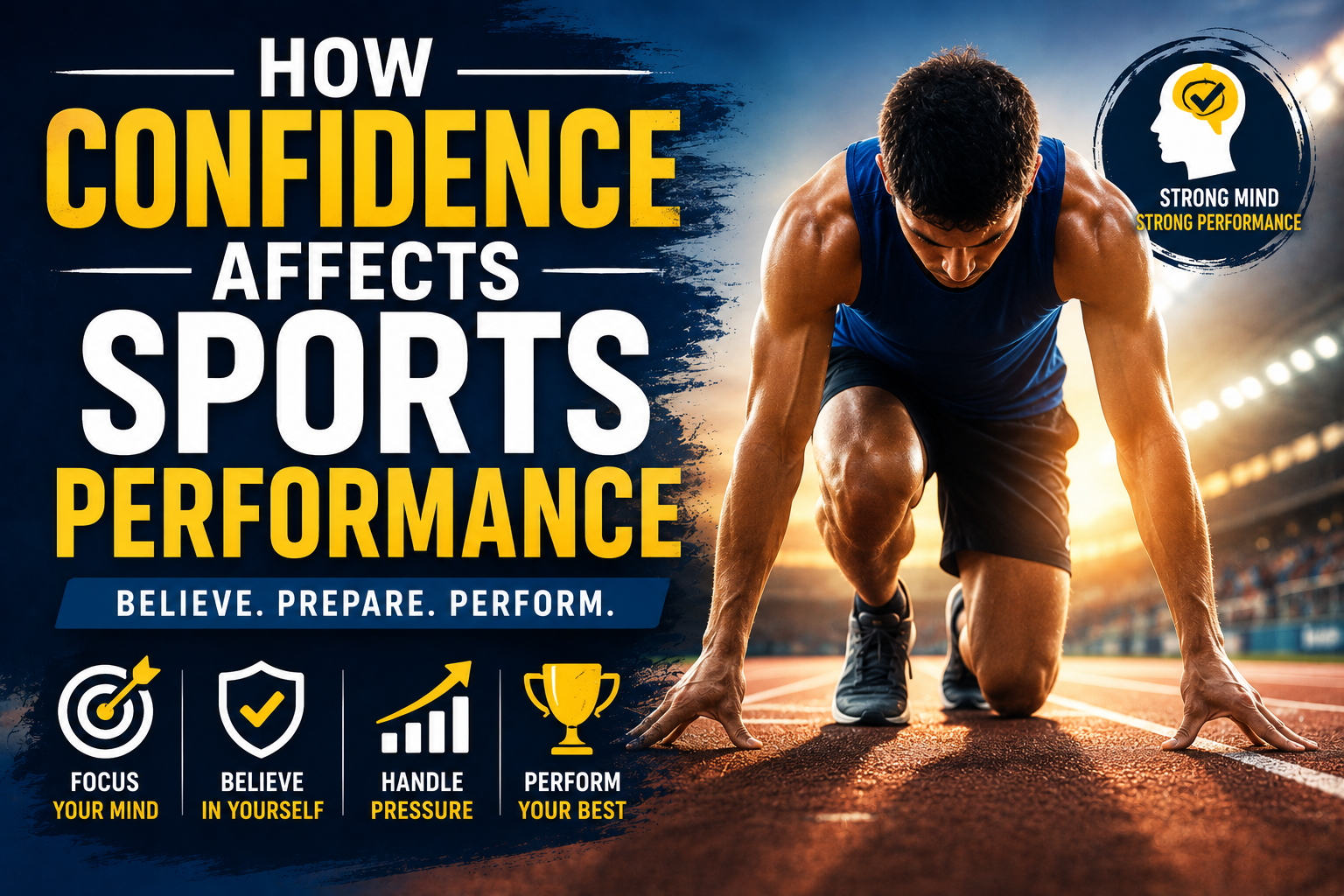
How Confidence Affects Sports Performance
Confidence can be one of the most influential psychological factors in sport. Two athletes with similar physical abilities can perform very differently when one trusts their preparation and the other doubts their ability.
Confidence does not mean believing you will win every competition. It is the belief that you can perform the skills required, respond to challenges and recover when things do not go according to plan.
A confident athlete can still feel nervous. The difference is often how they interpret and manage those feelings.
From amateur competitors to elite professionals, confidence can influence decision-making, concentration, motivation, resilience and the willingness to perform under pressure.
What Is Confidence in Sports?
Sports confidence is an athlete’s belief in their ability to perform successfully in a particular sporting situation.
It can involve confidence in:
- Physical abilities
- Technical skills
- Decision-making
- Tactical understanding
- Fitness
- Mental preparation
- Recovery from mistakes
- Performing under pressure
Confidence is also situation-specific.
A football player may be highly confident during training but feel less certain when taking a decisive penalty. A runner may trust their endurance but doubt their ability to finish strongly against a particular opponent.
This means confidence is not simply a personality trait. It can change depending on circumstances, preparation and previous experiences.
Why Confidence Matters in Sports
Confidence can affect how athletes approach competition before they even begin.
An athlete who trusts their preparation may be more willing to commit fully to a movement or decision. Someone who doubts themselves may hesitate, overthink or avoid taking risks.
Confidence can influence several areas of performance.
Concentration
Confident athletes may find it easier to focus on the task rather than becoming consumed by concerns about failure.
Decision-Making
Many sports require decisions to be made in fractions of a second.
Confidence can help athletes commit to decisions instead of hesitating.
Motivation
Athletes who believe improvement is possible may be more willing to train consistently and work through difficult periods.
Resilience
Confidence can make it easier to interpret mistakes as temporary setbacks rather than evidence that an athlete cannot succeed.
Performance Under Pressure
High-pressure situations can cause athletes to focus excessively on consequences. Appropriate confidence can help shift attention back toward execution.
The Relationship Between Confidence and Performance
Confidence and performance can influence each other.
Successful performance can increase confidence.
Increased confidence can then encourage better preparation and stronger performance.
This can create a positive cycle:
Preparation → Confidence → Better execution → Positive experience → Greater confidence
However, the opposite can also happen:
Poor preparation → Doubt → Hesitation → Poor execution → Reduced confidence
This does not mean one bad performance automatically destroys confidence. Athletes can interrupt negative cycles by analyzing mistakes, adjusting training and rebuilding trust in their abilities.
Confidence Is Different From Overconfidence
Confidence is not the same as assuming you cannot lose.
Healthy confidence might sound like:
“I have prepared well, and I can handle this challenge.”
Overconfidence may sound more like:
“I don’t need to prepare because I’m better than everyone else.”
Overconfidence can lead athletes to underestimate opponents, neglect preparation or ignore weaknesses.
The goal is therefore not maximum confidence at all times.
The goal is realistic confidence supported by preparation and self-awareness.
How Preparation Builds Confidence
One of the most reliable ways to develop confidence is through preparation.
Athletes become more comfortable trusting themselves when they have repeatedly practiced the skills required in competition.
Preparation can include:
- Technical training
- Strength and conditioning
- Tactical preparation
- Competition experience
- Recovery
- Nutrition
- Sleep
- Mental skills training
- Reviewing previous performances
Confidence built on preparation tends to be more stable than confidence based entirely on praise or temporary success.
An athlete who knows they have trained consistently has something concrete to rely on when nerves appear.
The Role of Previous Success
Past success can strengthen confidence.
A basketball player who has successfully made difficult shots in previous games may approach a similar situation with greater belief.
A swimmer who has repeatedly completed demanding training sessions may feel more capable of handling the final stages of a race.
However, athletes should avoid becoming dependent on perfect results.
Confidence based exclusively on winning can disappear quickly after a loss.
A more resilient approach is to build confidence around controllable behaviors, such as preparation, effort, technique and decision-making.
How Failure Can Affect Confidence
Failure is unavoidable in competitive sport.
A missed shot, poor race, lost match or disappointing performance can temporarily reduce confidence.
The psychological response to failure is often more important than the failure itself.
An athlete might interpret a poor result as:
“I’m not good enough.”
Or:
“My preparation wasn’t good enough this time. What can I change?”
The second interpretation leaves room for improvement.
This is one reason coaches often encourage athletes to evaluate performances rather than simply labeling them as successes or failures.
Confidence and the Fear of Failure
Fear of failure can interfere with performance when athletes become overly concerned about the consequences of making mistakes.
They may:
- Avoid taking appropriate risks
- Hesitate before making decisions
- Become overly cautious
- Focus on spectators or coaches
- Think excessively about the outcome
- Lose concentration
A confident athlete is not necessarily free from fear.
Instead, they may be better able to acknowledge the possibility of failure without allowing it to control their behavior.
The Importance of Self-Talk
Self-talk refers to the internal dialogue athletes use before and during performance.
Negative self-talk might include:
- “I’m going to mess this up.”
- “I’m not ready.”
- “Everyone is better than me.”
- “I always make mistakes.”
Such thoughts can increase anxiety and distract attention.
More constructive self-talk can focus on actions:
- “Stay focused.”
- “Trust the technique.”
- “One play at a time.”
- “Keep moving.”
- “Follow the plan.”
Effective self-talk does not require pretending everything is perfect.
It works best when it is realistic, specific and connected to something the athlete can control.
Visualization and Mental Rehearsal
Many athletes use visualization, also called mental imagery, to rehearse performance.
An athlete might mentally picture:
- Executing a skill correctly
- Responding to an opponent
- Remaining calm before competition
- Recovering after a mistake
- Finishing strongly
- Following a tactical plan
Mental rehearsal can help athletes become more familiar with situations they expect to encounter.
It should complement physical practice rather than replace it.
The most useful visualization is often detailed and realistic rather than simply imagining victory.
Confidence Before Competition
Pre-competition routines can help athletes create consistency.
A routine might include:
- Arriving early.
- Completing a warm-up.
- Reviewing key tactical instructions.
- Using controlled breathing.
- Listening to music.
- Reviewing performance cues.
- Visualizing important actions.
- Focusing on the first task rather than the final result.
The specific routine varies between athletes.
What matters is creating a predictable process that helps the athlete transition from preparation into performance.
How Coaches Influence Athlete Confidence
Coaches can have a significant impact on confidence.
Constructive coaching can help athletes understand:
- What they are doing well
- What needs improvement
- How to correct mistakes
- What they can control
- How their preparation is progressing
Constant criticism can undermine confidence, particularly when athletes are uncertain about what they should do differently.
At the same time, empty praise is not always useful.
Telling an athlete that they are “the best” without providing meaningful feedback may not build durable confidence.
Specific feedback is usually more valuable.
For example:
“Your positioning improved during the second half, and you made better decisions under pressure.”
This gives the athlete evidence they can use to reinforce their confidence.
Teammates and Confidence
Confidence can also be affected by the social environment.
Supportive teammates can create an environment where athletes feel comfortable taking appropriate risks and learning from mistakes.
A negative team culture can have the opposite effect.
Athletes may become afraid to make mistakes if they expect teammates to criticize them.
Strong teams often encourage accountability while still allowing athletes to recover from errors.
Confidence and Performance Anxiety
Nervousness before competition is normal.
An athlete may experience:
- Increased heart rate
- Sweating
- Muscle tension
- Rapid thoughts
- Nervousness
- Difficulty concentrating
These sensations do not automatically mean an athlete will perform badly.
In some cases, athletes can interpret physical arousal as preparation for competition rather than evidence that something is wrong.
Breathing exercises, routines, preparation and attention to controllable tasks can help athletes manage competitive anxiety.
Persistent or severe anxiety that interferes with everyday life or athletic participation may warrant support from a qualified mental-health professional.
Confidence Can Affect Decision-Making
Many sports require rapid decisions.
A confident tennis player may commit fully to an attacking shot.
A confident goalkeeper may quickly decide whether to come off the goal line.
A confident basketball player may take an open shot rather than hesitate.
This does not mean confidence always produces the correct decision.
Rather, appropriate confidence can reduce unnecessary hesitation and allow athletes to execute decisions they have practiced.
Confidence and Physical Performance
Confidence can also influence how athletes use their physical abilities.
An athlete who is worried about making a mistake may move cautiously.
That hesitation can affect timing, coordination and execution.
By contrast, trusting a well-practiced movement can allow an athlete to perform more naturally.
This is particularly important in sports where timing and automatic movement are essential.
The Role of Confidence After an Injury
Returning from injury can create a unique confidence challenge.
An athlete may be physically cleared to compete but still worry about:
- Reinjury
- Pain
- Losing speed
- Losing strength
- Making the wrong movement
- Trusting the injured body part
Physical rehabilitation and psychological readiness therefore need to work together.
A gradual return to sport can help athletes rebuild trust in their bodies.
Coaches, athletic trainers, physiotherapists and sports psychologists can all contribute to a successful return depending on the athlete’s circumstances.
How to Build Confidence Without Faking It
Confidence does not have to come from constantly telling yourself that you are going to win.
A more sustainable approach involves collecting evidence that you are capable of handling challenges.
Set Small, Specific Goals
Instead of focusing only on winning, establish performance goals.
Examples include:
- Improving passing accuracy
- Maintaining technique during fatigue
- Completing a specific training session
- Improving reaction time
- Executing a tactical instruction
Achieving these goals provides tangible evidence of progress.
Practice Under Pressure
Training should sometimes reproduce competitive conditions.
Athletes can practice with:
- Time limits
- Score pressure
- Fatigue
- Opponent simulation
- Consequences for mistakes
This can make competition situations feel more familiar.
Track Progress
Keeping training records can reveal improvements that athletes might otherwise overlook.
Progress could involve strength, speed, consistency, technique or decision-making.
Learn From Mistakes
After a poor performance, ask:
- What happened?
- What was within my control?
- What can I practice?
- What should I do differently next time?
This turns mistakes into information.
Confidence-Building Exercises for Athletes
Several simple exercises can be incorporated into training.
Three-Minute Performance Review
After practice, write down:
- One thing you executed well.
- One thing you learned.
- One thing you will work on next time.
This encourages balanced reflection.
Performance Cue
Choose one short phrase that reminds you what to focus on.
Examples:
- “Stay composed.”
- “Trust the movement.”
- “Next play.”
- “Attack the space.”
The cue should be short enough to remember during competition.
Mental Rehearsal
Spend a few minutes imagining yourself executing an important skill successfully.
Include realistic details such as movement, timing, surroundings and possible distractions.
Controlled Breathing
Slow, controlled breathing can help an athlete settle before competition.
It can be particularly useful when nervousness causes rapid breathing or excessive tension.
Confidence Should Be Built Around Controllables
One of the most useful principles in sports psychology is focusing on what you can control.
Athletes cannot fully control:
- The referee
- Weather
- Opponent performance
- Crowd behavior
- Selection decisions
- The final result
They can influence:
- Preparation
- Effort
- Communication
- Technique
- Tactical decisions
- Recovery
- Attitude
- Response to mistakes
When confidence is connected to controllable actions, it becomes less dependent on circumstances.
Confidence in Individual vs. Team Sports
Confidence can work differently depending on the sport.
In individual sports, athletes may carry more direct responsibility for performance.
In team sports, an athlete’s confidence can be influenced by teammates, communication and tactical roles.
A football player, for example, may feel confident individually but struggle if they are uncertain about their role within the team’s strategy.
Team confidence can also develop at the group level.
When players trust one another, communication and decision-making can improve.
Can Confidence Be Too High?
Yes.
Excessive confidence can produce:
- Poor preparation
- Underestimating opponents
- Ignoring weaknesses
- Risky decisions
- Reduced concentration
- Resistance to feedback
The ideal state is not maximum confidence.
It is calibrated confidence—a realistic belief in your ability combined with awareness of the challenge ahead.
An athlete can think:
“I’m prepared, I’m capable, and I still need to respect the competition.”
That mindset leaves room for both confidence and discipline.
Confidence Across Different Skill Levels
Beginners often build confidence through small achievements.
An inexperienced runner might initially focus on completing a training session. As fitness improves, the athlete may set longer-distance or faster-time goals.
Intermediate athletes may need to develop confidence under greater pressure.
Advanced athletes may need to maintain confidence despite high expectations, injuries, media attention or repeated competition.
The process changes, but the underlying principle remains similar:
Confidence grows when athletes repeatedly experience themselves preparing, performing, adapting and improving.
When Professional Support Can Help
Sports psychologists and other qualified professionals can help athletes address confidence problems that persist despite training.
Professional support may be particularly useful when an athlete experiences:
- Persistent performance anxiety
- Severe fear of failure
- Loss of enjoyment
- Confidence problems after injury
- Repeated negative thinking
- Difficulty competing despite adequate physical preparation
- Significant distress connected to sport
Mental skills training is not only for elite athletes. Recreational and youth athletes can also benefit from learning healthy approaches to confidence, pressure and setbacks.
Turning Confidence Into Consistent Performance
Confidence is most useful when it supports action.
An athlete does not need to feel fearless before every competition. They need to trust their preparation enough to execute their skills, make decisions and respond to mistakes.
That trust can be developed through deliberate practice, realistic goals, constructive self-talk, mental rehearsal, supportive coaching and experience under pressure.
The strongest confidence is rarely built from a single victory. It develops gradually as athletes collect evidence that they can prepare effectively, perform under pressure, learn from setbacks and keep improving.
When confidence is paired with discipline and preparation, it becomes more than a feeling—it becomes a practical performance tool.





2 Comments
Micle harison
June 7, 2019Lorem ipsum dolor sit amet, usu ut perfecto postulant deterruisset, libris causae volutpat at est, ius id modus laoreet urbanitas. Mel ei delenit dolores.
John Doe
June 7, 2019Some consultants are employed indirectly by the client via a consultancy staffing company.