
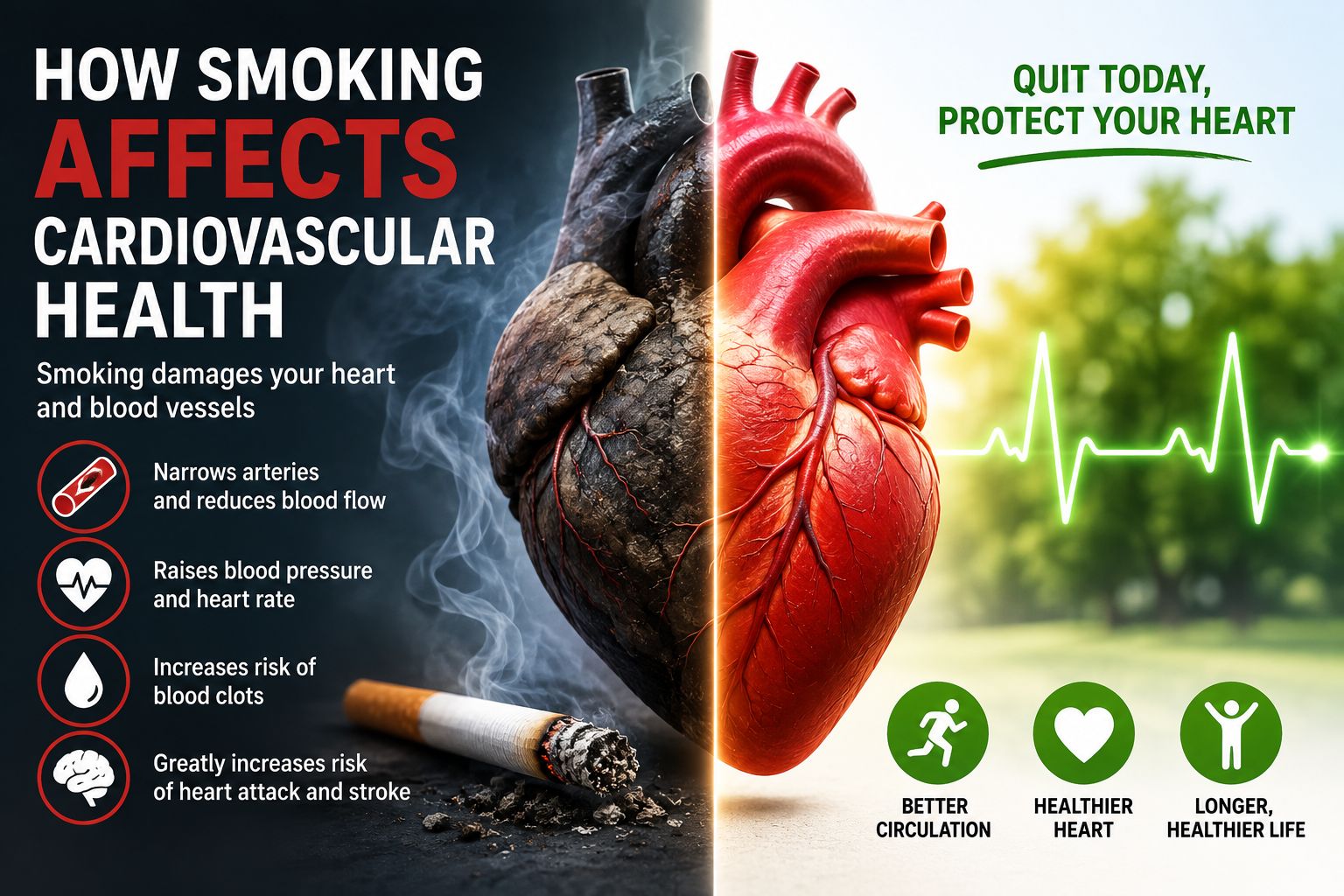
How Smoking Affects Cardiovascular Health
Smoking is often discussed in terms of lung cancer and respiratory disease, but its effects on the cardiovascular system can be just as serious. Tobacco smoke affects blood vessels, blood pressure, blood clotting and the heart itself, increasing the risk of conditions such as coronary heart disease, heart attack and stroke.
The World Health Organization identifies tobacco use as one of the major behavioral risk factors for cardiovascular disease. Cardiovascular diseases remain the world’s leading cause of death, with heart attacks and strokes accounting for the majority of cardiovascular deaths. [World Health Organization]
The good news is that cardiovascular risk can begin to improve after quitting. Understanding how smoking damages the heart and blood vessels—and what changes after stopping—can help people make informed decisions about their health.
How Smoking Damages the Cardiovascular System
Cigarette smoke contains thousands of chemicals, including substances that can damage blood vessels and interfere with the body’s normal cardiovascular functions. WHO reports that smoked tobacco products contain more than 7,000 chemicals, including hundreds known to be toxic or carcinogenic. [World Health Organization]
Several processes work together to increase cardiovascular risk.
Blood Vessel Damage
The inner lining of blood vessels plays an important role in regulating blood flow. Tobacco smoke can damage this lining, making it easier for fatty deposits and other substances to accumulate within artery walls.
Over time, this can contribute to atherosclerosis, a condition in which arteries become narrowed or hardened by plaque.
Narrowed arteries can restrict blood flow to the heart, brain and other organs.
Increased Blood Pressure
Nicotine can temporarily raise heart rate and blood pressure. Repeated exposure places additional stress on the cardiovascular system.
High blood pressure itself is a major risk factor for heart attack and stroke, and smoking can compound that risk.
Reduced Oxygen Availability
Carbon monoxide in cigarette smoke interferes with the blood’s ability to transport oxygen.
The heart therefore has to work harder to supply the body’s tissues with the oxygen they need.
For someone who already has narrowed coronary arteries, reduced oxygen delivery can be particularly dangerous.
Greater Tendency for Blood to Clot
Smoking can make blood more prone to clotting and contributes to changes that increase the likelihood of blood-vessel blockage.
If a clot blocks an artery supplying the heart, a heart attack can occur. If it blocks blood flow to part of the brain, it can cause an ischemic stroke.
Smoking and Coronary Heart Disease
Coronary heart disease occurs when the arteries supplying the heart become narrowed or blocked.
Smoking is a major preventable risk factor.
WHO’s European health data indicate that smokers are approximately two to four times more likely than non-smokers to experience coronary heart disease and stroke. [World Health Organization]
The risk develops through several interacting mechanisms:
- Smoking damages artery walls.
- Plaque can accumulate within damaged arteries.
- Blood vessels can become narrower.
- Blood becomes more prone to clotting.
- Oxygen delivery can be impaired.
- The heart may have to work harder.
Together, these changes can substantially increase the likelihood of a cardiovascular event.
Smoking and Heart Attack Risk
A heart attack occurs when blood flow to part of the heart muscle becomes severely reduced or blocked.
Smoking increases the likelihood of the processes that can lead to this blockage.
Importantly, cardiovascular risk is not limited to people who smoke heavily. WHO has reported that even occasional smoking and exposure to second-hand smoke can increase the risk of heart disease. [World Health Organization]
That means there is no reliable cardiovascular benefit to assuming that “just a few cigarettes” are harmless.
The safest approach for heart health is not to smoke.
Smoking and Stroke
A stroke occurs when blood flow to part of the brain is interrupted or when a blood vessel in the brain ruptures.
Smoking contributes to stroke risk through several pathways, including damage to blood vessels, increased clotting tendency and effects on blood pressure.
The connection is significant enough that WHO lists tobacco use among the leading behavioral risk factors for both heart disease and stroke. [World Health Organization]
Stroke can result in:
- Difficulty speaking
- Weakness or paralysis
- Problems with balance
- Vision problems
- Cognitive impairment
- Long-term disability
- Death
Because a stroke can occur suddenly, reducing preventable risk factors is an important part of cardiovascular health.
Does Smoking Affect Cholesterol?
Smoking can contribute to an unfavorable cardiovascular risk profile.
Tobacco exposure affects blood vessels and lipid-related processes involved in atherosclerosis. It can also interact with other cardiovascular risk factors, including high blood pressure, diabetes and unhealthy cholesterol levels.
This is important because cardiovascular disease rarely results from one factor alone.
For example, someone who smokes and also has high blood pressure may face a substantially greater overall cardiovascular risk than someone with either risk factor by itself.
This is why cardiovascular prevention generally involves looking at a person’s overall risk profile, rather than focusing on a single measurement.
Second-Hand Smoke Also Affects the Heart
You do not have to smoke yourself to be exposed to cardiovascular harm.
Second-hand smoke contains many of the same harmful substances found in tobacco smoke.
WHO states that there is no safe level of exposure to second-hand tobacco smoke and that exposure causes serious cardiovascular and respiratory diseases. [World Health Organization]
Adults exposed to second-hand smoke have been estimated to have a 25–30% higher risk of coronary heart disease and stroke, according to WHO’s European regional data. [World Health Organization] This is particularly important in homes, workplaces and vehicles where exposure can occur repeatedly.
Creating smoke-free environments therefore protects both smokers and non-smokers.
Is Occasional Smoking Safer?
Smoking fewer cigarettes generally means lower exposure than heavy smoking, but it does not make smoking risk-free.
The cardiovascular system can be affected by tobacco exposure even when smoking is not constant.
WHO has specifically highlighted the cardiovascular risks associated with occasional smoking and second-hand exposure. [World Health Organization]
This is why reducing the number of cigarettes can be a useful step toward quitting, but complete cessation provides the greatest health benefit.
What Happens to the Heart After You Quit Smoking?
One of the most encouraging aspects of smoking cessation is that the cardiovascular system can begin recovering relatively quickly.
According to WHO:
- Within about 20 minutes: heart rate and blood pressure begin to fall.
- Within about 12 hours: carbon monoxide levels in the blood return to normal.
- Within 2–12 weeks: circulation improves and lung function increases.
- Within 1 year: coronary heart disease risk is about half that of a continuing smoker.
- Within 5–15 years: stroke risk can fall to that of a non-smoker.
- Around 15 years: coronary heart disease risk can reach that of someone who has never smoked. [World Health Organization]
The exact timeline varies among individuals, but the overall message is clear: quitting at any age can improve health.
What If Someone Already Has Heart Disease?
Quitting remains beneficial even after cardiovascular disease has developed.
Someone with coronary artery disease, previous heart attack or stroke may still substantially benefit from stopping tobacco use.
Smoking cessation is not a substitute for prescribed treatment, but it can become an important part of reducing future cardiovascular risk.
People with cardiovascular disease should discuss smoking cessation with their healthcare professional, particularly if they need help managing nicotine withdrawal or choosing an appropriate cessation strategy.
How to Quit Smoking for Better Heart Health
Quitting can be difficult because nicotine is highly addictive. Struggling to stop does not mean someone lacks willpower.
WHO notes that counselling and medication can more than double the chance of successfully quitting tobacco. [World Health Organization]
A practical quitting strategy can include:
Set a quit date
Choose a specific date and prepare for it rather than relying entirely on spontaneous motivation.
Identify triggers
Common triggers can include:
- Alcohol
- Stress
- Social situations
- Certain routines
- Coffee or other beverages
- Being around other smokers
Knowing your triggers makes it easier to plan alternatives.
Remove tobacco products
Dispose of cigarettes, lighters and ashtrays before the quit date.
Seek professional support
Healthcare professionals can provide advice about evidence-based cessation methods and medications.
Use a support network
Friends, family members, support groups and healthcare providers can make the process easier.
Prepare for withdrawal
Nicotine withdrawal can cause cravings, irritability, difficulty concentrating and other symptoms. These generally improve with time.
Does Exercise Reverse the Effects of Smoking?
Regular physical activity is beneficial for cardiovascular health, but it should not be viewed as a way to cancel out smoking.
Exercise can help improve:
- Cardiovascular fitness
- Blood pressure
- Weight management
- Mood
- Stress management
- Overall heart health
However, it does not eliminate the cardiovascular damage associated with tobacco exposure.
The strongest strategy is to combine healthy behaviors, including not smoking, regular physical activity, a balanced diet and appropriate management of blood pressure and cholesterol.
WHO identifies smoking cessation, healthy eating and regular physical activity among measures that can reduce cardiovascular risk. [World Health Organization]
Smoking, Age and Cardiovascular Risk
Smoking can accelerate cardiovascular damage over time, but its effects are not restricted to older adults.
Younger smokers may feel healthy and experience no obvious symptoms, even while tobacco exposure is contributing to changes in blood vessels and cardiovascular risk.
This is one reason prevention is so important.
Quitting earlier generally means spending fewer years exposed to tobacco and gives the cardiovascular system more opportunity to recover.
At the same time, it is never too late to stop. WHO emphasizes that giving up tobacco can significantly reduce disease risk, including cardiovascular risk. [World Health Organization]
Other Cardiovascular Risk Factors Matter Too
Smoking is powerful, but it is only one component of cardiovascular risk.
Other important factors include:
- High blood pressure
- High cholesterol
- Diabetes
- Physical inactivity
- Unhealthy diet
- Obesity
- Harmful alcohol use
- Air pollution
- Family history
- Age
These factors can interact.
For example, a smoker with uncontrolled hypertension may face a substantially different risk profile from a smoker whose blood pressure and cholesterol are well managed.
That is why regular health checks can be valuable, particularly for people with multiple risk factors.
Warning Signs That Require Urgent Attention
Smoking increases the risk of heart attack and stroke, both of which can require immediate medical attention.
Possible heart attack symptoms include:
- Chest pain or pressure
- Pain spreading to the arm, shoulder, back, neck or jaw
- Shortness of breath
- Cold sweating
- Nausea
- Unusual weakness or lightheadedness
Possible stroke symptoms include:
- Sudden weakness or numbness, especially on one side
- Sudden difficulty speaking or understanding speech
- Sudden vision problems
- Sudden loss of balance or coordination
- A sudden, severe headache with no known cause
These symptoms should be treated as medical emergencies. Seek emergency medical care immediately rather than waiting to see whether they disappear.
The Cardiovascular Benefits of Quitting Extend Beyond the Heart
Stopping smoking does more than reduce the likelihood of heart attack and stroke.
Tobacco cessation also reduces exposure to substances responsible for numerous cancers and respiratory diseases. WHO estimates that tobacco kills more than 7 million people each year, including more than 1.6 million non-smokers exposed to second-hand smoke. [World Health Organization]
For someone who has smoked for years, quitting may feel like a decision about the distant future.
In reality, the benefits begin much sooner.
Blood pressure and heart rate start changing within minutes, carbon monoxide levels normalize within hours, and circulation improves over subsequent weeks. [World Health Organization]
Protecting Your Heart Starts With Reducing Tobacco Exposure
Smoking places the cardiovascular system under repeated stress by damaging blood vessels, affecting blood pressure, interfering with oxygen delivery and increasing the likelihood of harmful blood clots. Over time, these effects can contribute to atherosclerosis, coronary heart disease, heart attack and stroke.
The encouraging part is that cardiovascular health can improve after quitting. Even people who have smoked for many years can benefit from stopping, and the earlier someone quits, the more years of reduced exposure they can gain.
For anyone who smokes, quitting is one of the most meaningful steps available for protecting long-term cardiovascular health. And for people who do not smoke, avoiding second-hand smoke is another important way to protect the heart. [World Health Organization]


2 Comments
Micle harison
June 7, 2019Lorem ipsum dolor sit amet, usu ut perfecto postulant deterruisset, libris causae volutpat at est, ius id modus laoreet urbanitas. Mel ei delenit dolores.
John Doe
June 7, 2019Some consultants are employed indirectly by the client via a consultancy staffing company.