
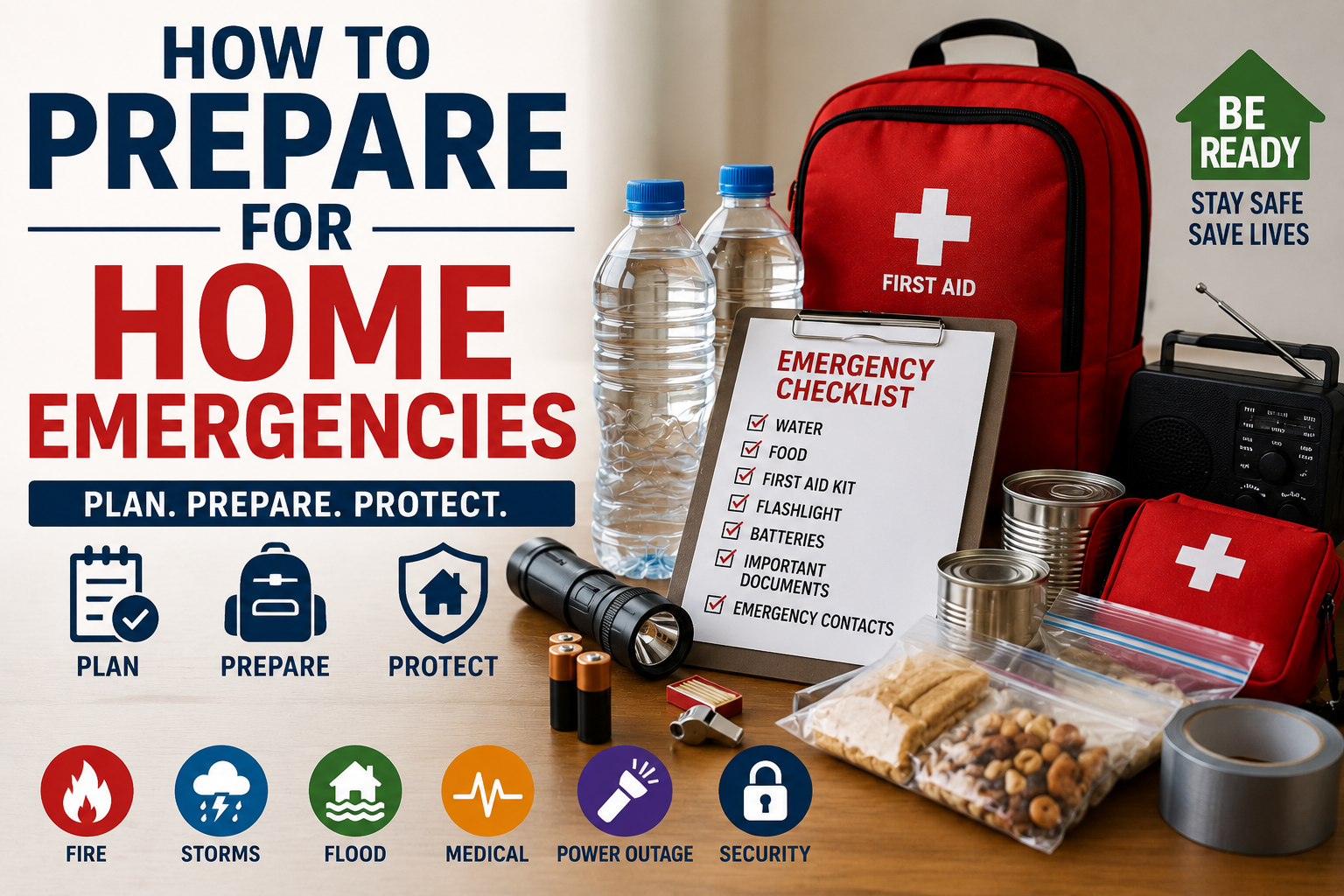
How to Prepare for Home Emergencies
A home is supposed to be a place of safety, but unexpected emergencies can quickly turn an ordinary day into a stressful situation. A power outage can leave a household without lighting or refrigeration. A burst pipe can cause serious water damage within minutes. A kitchen fire, severe storm, gas leak or medical emergency may require immediate action before professional help arrives.
The best time to prepare for these situations is before they happen.
Home emergency preparedness does not require turning your house into a bunker or spending a fortune on equipment. It is mostly about understanding the risks around your home, keeping essential supplies accessible, knowing how to shut off utilities and making sure everyone in the household knows what to do.
What Is Home Emergency Preparedness?
Home emergency preparedness is the process of planning and preparing for situations that could threaten people’s safety, damage property or temporarily disrupt essential services.
Depending on where you live, possible emergencies may include:
- House fires
- Electrical failures
- Water leaks and burst pipes
- Gas leaks
- Severe storms
- Flooding
- Earthquakes
- Extreme heat or cold
- Medical emergencies
- Security emergencies
- Extended power outages
- Loss of water supply
- Communication or internet outages
Not every household faces the same risks. Someone living in an apartment may have different concerns from someone living in a detached house, while homes in flood-prone areas may require different preparations from properties in areas vulnerable to wildfires or severe storms.
The goal is therefore not to prepare for every imaginable disaster. It is to prepare for the most realistic risks and the consequences they could create.
Start With a Home Emergency Risk Assessment
Before buying emergency supplies, walk through your home and identify potential hazards.
Look at each major area of the property and ask:
- What could go wrong here?
- How quickly could the problem become dangerous?
- Who could be affected?
- What could I do immediately to reduce the damage?
- What equipment or information would I need?
Kitchen
The kitchen can contain several potential hazards, including cooking fires, gas appliances, electrical equipment and sharp objects.
Check that:
- Cooking appliances are in good condition.
- Electrical cables are not damaged.
- Flammable materials are kept away from heat sources.
- Fire extinguishing equipment is accessible.
- Everyone knows how to respond to a cooking fire.
Utility Areas
Inspect areas containing:
- Electrical panels
- Water heaters
- Gas equipment
- Water shut-off valves
- Backup power equipment
Make sure household members know where important controls are located.
Bedrooms and Living Areas
Check smoke alarms, electrical outlets, heaters and escape routes.
Furniture should not unnecessarily block doors, windows or hallways that could become evacuation routes.
Exterior
Look for:
- Loose roofing materials
- Overhanging branches
- Blocked drainage
- Damaged fences
- Potential trip hazards
- Water entering around doors or windows
Small maintenance problems can become much bigger problems during severe weather.
Create a Household Emergency Plan
An emergency plan should be simple enough to remember when people are frightened or under pressure.
Your plan should cover:
- How household members will receive warnings.
- Where everyone should go during different emergencies.
- Which exits can be used.
- Where to meet if separated.
- How to contact one another.
- Who is responsible for children, older adults or pets.
- Where emergency supplies are stored.
- How utilities can be safely shut off when appropriate.
Write the plan down and make sure everyone understands it.
Children should be included in age-appropriate emergency discussions rather than being expected to figure things out during a crisis.
Know Your Emergency Exits
Every household should know at least two possible ways out of the home where practical.
This is particularly important during a fire because smoke or flames can make a familiar route unusable.
Keep escape routes:
- Clear
- Easily accessible
- Free of unnecessary storage
- Well understood by household members
If your home has multiple floors, consider how occupants on upper levels would escape if the main staircase were blocked.
Practice the evacuation plan occasionally so that people know what to do without having to make decisions from scratch.
Install and Maintain Smoke Alarms
Smoke alarms provide an early warning that can be critical during a house fire.
Place appropriate alarms according to the manufacturer’s instructions and applicable local safety guidance, particularly near sleeping areas and on each level of a home where recommended.
Do not ignore an alarm that repeatedly activates.
If an alarm is malfunctioning or reaching the end of its service life, replace it according to the manufacturer’s instructions.
Households should also understand the difference between a smoke alarm and a carbon monoxide alarm. They detect different hazards and should not automatically be treated as interchangeable.
Consider a Carbon Monoxide Alarm
Carbon monoxide is a colorless and odorless gas that can be produced when fuels do not burn completely.
Potential sources can include certain:
- Gas appliances
- Fuel-burning heaters
- Generators
- Fireplaces
- Cooking equipment
Carbon monoxide can accumulate indoors when fuel-burning equipment is improperly installed, maintained or ventilated.
A carbon monoxide alarm can provide an important warning.
Never use a fuel-burning generator, charcoal grill or similar equipment indoors or in an enclosed area because of the risk of carbon monoxide poisoning.
Keep a Basic Emergency Kit
An emergency kit should contain supplies that help your household function if normal services become temporarily unavailable.
Depending on your circumstances, consider keeping:
- Drinking water
- Non-perishable food
- Flashlights
- Spare batteries
- First-aid supplies
- Phone charging equipment
- Battery-powered or hand-crank radio
- Essential medications
- Hygiene supplies
- Basic tools
- Blankets
- Copies of important information
- Emergency contact details
- Necessary supplies for pets
The exact contents should reflect the needs of your household.
For example, a family with an infant will need different supplies from a household of adults, while someone who depends on electrically powered medical equipment may need a much more detailed backup-power plan.
Store Water and Food Properly
Emergency food should be practical rather than simply inexpensive.
Choose foods that:
- Have a long shelf life
- Require little or no refrigeration
- Can be prepared safely with available equipment
- Are familiar to household members
- Accommodate dietary requirements
Rotate stored supplies periodically so that food does not sit unused until it expires.
Water storage also requires attention to cleanliness, containers and storage conditions. Follow guidance from your local water or emergency-management authorities when determining how much water your household should keep available.
Prepare for Power Outages
Power outages can affect far more than lighting.
They can interrupt:
- Refrigeration
- Internet access
- Mobile-device charging
- Water pumps
- Heating or cooling
- Security systems
- Medical equipment
- Cooking appliances
Keep flashlights in several convenient locations instead of storing one emergency flashlight somewhere difficult to find.
A power bank can provide temporary phone charging, while a backup power system may be appropriate for households that depend on electricity for essential equipment.
Be Careful With Generators
Generators can be useful, but they can also be dangerous if used incorrectly.
Never operate a fuel-burning generator inside a house, garage, basement or other enclosed space.
Keep generators outdoors and positioned according to the manufacturer’s safety instructions, away from doors, windows and ventilation openings.
Improper generator use can expose people to dangerous carbon monoxide.
Know How to Shut Off Household Utilities
Knowing where your utility shut-offs are located can help reduce damage during certain emergencies.
Households should identify:
- Main water shut-off
- Electrical main switch or breaker
- Gas shut-off where applicable
However, knowing where a control is located does not mean everyone should operate it in every emergency.
For gas leaks, for example, do not create sparks or operate electrical switches if you suspect gas is accumulating. Leave the area and contact the appropriate emergency or utility service from a safe location.
If you are unsure how to safely operate a utility shut-off, ask a qualified professional to explain the system.
Prepare for Water Leaks and Burst Pipes
A leaking pipe can cause substantial property damage surprisingly quickly.
Know where your main water shut-off valve is and make sure it can be accessed without moving heavy objects.
Watch for warning signs such as:
- Unexplained damp spots
- Water stains on ceilings or walls
- Persistent dripping
- Reduced water pressure
- Unusual sounds in plumbing
- Mold or musty odors
- Unexpected increases in water use
Addressing small plumbing problems early can prevent more expensive damage later.
If a pipe bursts, shutting off the water can limit the amount of water entering the property while you arrange professional repairs.
Prepare for Kitchen Fires
Cooking areas deserve particular attention because many household fires begin during cooking.
Basic precautions include:
- Never leave active cooking unattended.
- Keep towels, paper and other combustible items away from heat sources.
- Keep appliance cords away from hot surfaces.
- Clean grease buildup regularly.
- Know how your cooking appliances work.
- Keep appropriate fire-safety equipment accessible.
If a small pan fire occurs, do not pour water onto an oil or grease fire. Water can cause burning oil to splatter and spread the fire.
If you cannot safely control a fire immediately, evacuate and call the emergency services rather than attempting to fight a growing fire yourself.
Build a Household Communication Plan
Communication becomes especially important when family members are not together when an emergency occurs.
Your household should know:
- Which phone numbers to call
- Where to meet
- Who the emergency contact is
- How to communicate if mobile networks are congested
- Where important contact information is stored
Consider having an emergency contact who lives outside your immediate area.
Keep important numbers available in more than one form rather than relying entirely on a phone that may have a dead battery.
Protect Important Documents
Emergencies can damage or destroy paperwork.
Consider securely storing copies of important documents such as:
- Identification documents
- Insurance information
- Property records
- Financial information
- Medical information
- Emergency contacts
- Important legal documents
Digital copies can be useful, but sensitive information should be stored securely and protected with appropriate access controls.
A physical emergency folder kept in a safe location can also be useful when electricity or internet access is unavailable.
Prepare for Medical Emergencies
A household first-aid kit can help with minor injuries while professional medical care is being arranged when necessary.
Depending on household needs, it may include:
- Adhesive bandages
- Gauze
- Antiseptic supplies
- Disposable gloves
- Medical tape
- Scissors
- Thermometer
- Basic wound-care supplies
Households should also know where regularly used medications are stored and maintain an appropriate supply.
For serious injuries, severe allergic reactions, difficulty breathing, loss of consciousness, chest pain or other potentially life-threatening symptoms, first-aid supplies should not replace emergency medical care.
Make Your Home Safer for Children
Children may not recognize hazards that adults take for granted.
Secure or restrict access to:
- Cleaning chemicals
- Medicines
- Sharp tools
- Matches and lighters
- Electrical hazards
- Hot appliances
- Dangerous machinery
- Certain household chemicals
Emergency planning should also account for children’s height, mobility and ability to understand instructions.
Teach children basic emergency information in a calm and age-appropriate way.
Don’t Forget Older Adults and People With Disabilities
Emergency plans should reflect the actual needs of everyone in the household.
Consider whether anyone may need assistance with:
- Moving quickly
- Hearing alarms
- Seeing emergency information
- Taking medication
- Operating emergency equipment
- Accessing stairs
- Communicating with responders
Do not wait until an emergency to discover that an evacuation route or backup plan does not work for someone in the household.
Include Pets in Your Emergency Plan
Pets are part of many families, but emergency planning often overlooks them.
Prepare supplies such as:
- Food
- Water
- Medication where needed
- Leashes or carriers
- Identification information
- Waste supplies
Know in advance where pets could be taken if your home becomes temporarily unsafe.
Do not assume emergency shelters or hotels will automatically accept animals.
Prepare for Severe Weather
Your preparations should reflect the weather risks common in your area.
Depending on location, these may include:
- Heavy rainfall
- Flooding
- Strong winds
- Lightning
- Extreme heat
- Extreme cold
- Hail
- Wildfires
- Severe storms
Before severe weather, inspect drainage systems, secure loose outdoor objects and make sure essential supplies are accessible.
For flooding risks, important items and electrical equipment should not be stored unnecessarily in areas where rising water could reach them.
Keep Emergency Supplies Accessible
An emergency kit is not useful if nobody can find it.
Choose a location that is:
- Easy to reach
- Known to household members
- Dry
- Secure
- Away from avoidable hazards
Some supplies should be distributed throughout the home.
For example, keeping a flashlight beside the bed can be more useful during a nighttime power failure than storing every flashlight in one central box.
Practice Instead of Just Planning
A plan that exists only on paper may not work as expected.
Practice important procedures such as:
- Leaving the home quickly
- Finding emergency exits
- Locating the water shut-off
- Locating the electrical panel
- Calling emergency services
- Meeting at the household meeting point
- Checking emergency supplies
Practice can reveal problems that are difficult to identify when simply reading a checklist.
For example, a supposedly clear exit may actually be blocked by furniture, or an emergency kit may be missing something the family depends on.
Review Your Emergency Plan Regularly
Households change.
People move in or out. Children grow. Pets are added. Appliances are replaced. Medical needs change. Contact information becomes outdated.
Review your emergency plan periodically and update:
- Emergency contacts
- Insurance information
- Medication supplies
- Food and water
- Batteries
- Flashlights
- Fire-safety equipment
- Evacuation arrangements
- Pet supplies
Check expiration dates and replace damaged or outdated equipment.
Home Emergency Preparedness Checklist
A simple checklist can make preparedness easier.
| Area | Preparation |
|---|---|
| Emergency plan | Written and discussed with household |
| Escape routes | Clear and accessible |
| Smoke alarms | Installed and maintained |
| Carbon monoxide protection | Appropriate alarms installed where needed |
| Water | Emergency supply available |
| Food | Non-perishable supplies available |
| Lighting | Flashlights and spare batteries |
| Communication | Emergency contacts available |
| First aid | Basic kit accessible |
| Utilities | Shut-off locations identified |
| Documents | Important records protected |
| Power | Backup charging and lighting available |
| Fire safety | Appropriate equipment and procedures understood |
| Pets | Food, water and transport arrangements |
| Weather | Local hazards identified |
| Special needs | Individual requirements included |
Small Preparations Can Prevent Bigger Problems
Home emergencies are difficult to predict, but the consequences of many emergencies can be reduced through preparation.
Knowing where your water and electrical shut-offs are, maintaining smoke alarms, keeping basic emergency supplies accessible and having a clear evacuation plan can make a major difference when something goes wrong.
The most effective preparedness strategy is not necessarily the one with the most equipment. It is the one that matches the real risks of the household, keeps essential resources accessible and gives everyone a clear idea of what to do under pressure.
A few hours spent assessing hazards, organizing supplies and practicing an emergency plan can save valuable time when every minute matters.



2 Comments
Micle harison
June 7, 2019Lorem ipsum dolor sit amet, usu ut perfecto postulant deterruisset, libris causae volutpat at est, ius id modus laoreet urbanitas. Mel ei delenit dolores.
John Doe
June 7, 2019Some consultants are employed indirectly by the client via a consultancy staffing company.