
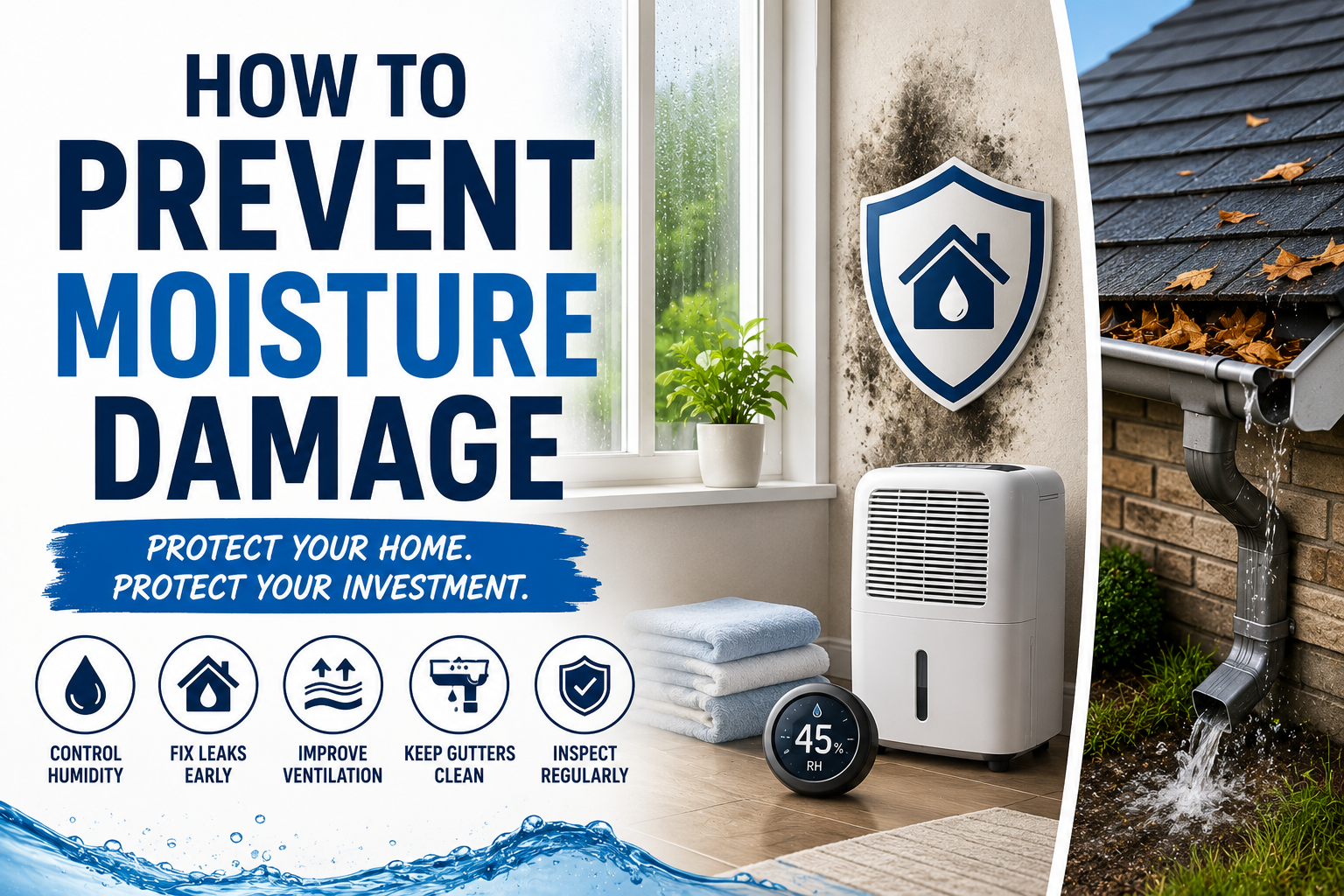
How to Prevent Moisture Damage at Home
Moisture is one of the most common threats to a home’s condition. A small leak under a sink, persistent condensation around windows, or poor ventilation in a bathroom may seem harmless at first, but prolonged exposure to water can contribute to mold growth, damaged finishes, unpleasant odors, and deterioration of building materials.
The good news is that many moisture problems can be prevented with regular maintenance and a few simple habits. Understanding where moisture comes from—and dealing with it before it becomes a bigger problem—can help protect both your home and your household budget.
Why Moisture Damage Happens
Moisture can enter or accumulate inside a home in several ways. Plumbing leaks, roof problems, damaged gutters, flooding, condensation, and high indoor humidity are among the most common causes.
Everyday activities can also introduce significant amounts of water vapor into the air. Cooking, showering, drying clothes indoors, and even breathing release moisture. If that moisture cannot escape, it can settle on cold surfaces and eventually contribute to dampness.
Problems are particularly likely in areas with poor ventilation or where water is allowed to remain unnoticed for long periods.
Check for Plumbing Leaks Regularly
Plumbing problems are among the easiest sources of moisture to overlook.
Inspect the areas underneath sinks, around toilets, behind washing machines, and near water heaters. Look for:
- Damp cabinets or flooring
- Water stains
- Dripping pipes
- Musty smells
- Peeling paint
- Swollen wood or warped materials
- Unexplained increases in water usage
Even a slow leak can cause significant damage if it continues for months.
If you notice a persistent leak, repair it promptly rather than simply placing a container underneath it. Hidden leaks inside walls or under floors may require professional inspection.
Improve Bathroom Ventilation
Bathrooms naturally produce large amounts of humidity, particularly during hot showers.
Use an exhaust fan while showering and continue running it for a while afterward. If your bathroom has a window, opening it when weather and privacy allow can also help release humid air.
Keep shower curtains or doors positioned so that water drains back into the shower or tub rather than onto the surrounding floor.
After bathing, wiping excess water from walls and other surfaces can further reduce the amount of moisture left behind.
Control Indoor Humidity
Keeping indoor humidity at a reasonable level can help reduce condensation and moisture-related problems.
A hygrometer can provide a simple way to monitor humidity. If indoor humidity regularly remains high, consider improving ventilation or using a dehumidifier in problem areas.
Pay particular attention to rooms that tend to stay humid, such as bathrooms, kitchens, laundry rooms, basements, and enclosed storage spaces.
Prevent Condensation Around Windows
Condensation occurs when warm, humid air comes into contact with a colder surface. Windows are particularly vulnerable during cooler weather.
If you regularly find water collecting on window glass or frames, wipe it away and investigate the underlying cause. Improving ventilation and reducing excessive indoor humidity can help.
Persistent condensation may also indicate inadequate insulation or ventilation problems that deserve further investigation.
Keep Gutters and Downspouts Clear
Water management outside the home is just as important as controlling moisture indoors.
Blocked gutters can cause rainwater to overflow and run down exterior walls. If water repeatedly accumulates near the foundation, it may eventually find its way into basements, crawl spaces, or other parts of the structure.
Clean gutters regularly and make sure downspouts direct water away from the home’s foundation.
After heavy rainfall, check for standing water around the property. Persistent pooling may indicate drainage problems that need to be addressed.
Inspect the Roof for Warning Signs
A damaged roof can allow water to enter areas that are difficult to see.
Periodically inspect the roof and attic for obvious signs of trouble, including damaged roofing materials, water stains, damp insulation, or daylight appearing through areas where it should not.
Inside the home, look for unexplained stains or discoloration on ceilings and upper walls. A small stain can be an early warning sign of a larger roof or plumbing problem.
Roof work can be dangerous, so significant repairs are generally best handled by a qualified professional.
Dry Spills and Wet Areas Quickly
Small amounts of water are not necessarily a major problem, but allowing them to remain for long periods can increase the risk of damage.
Clean up spills promptly, particularly on wood flooring, carpets, cabinets, and other moisture-sensitive materials.
Pay attention to areas around refrigerators, dishwashers, washing machines, and sinks. These appliances can produce leaks that remain hidden until damage has already occurred.
Protect Your Home During Vacations
A small leak can become a serious problem when nobody is home to notice it.
Before leaving for an extended period, consider checking faucets, toilets, appliances, and visible plumbing connections. Depending on the circumstances, homeowners may also choose to shut off the main water supply while away.
It is also useful to make sure someone can check the property periodically, particularly during periods when severe weather or freezing temperatures could create additional risks.
Watch for Early Signs of Moisture Damage
Moisture problems are often easier and less expensive to address when they are caught early.
Common warning signs include:
- Musty or damp odors
- Peeling or bubbling paint
- Discolored walls or ceilings
- Warped flooring
- Swollen wooden cabinets
- Persistent condensation
- Mold or mildew growth
- Damp carpets
- Crumbling or deteriorating materials
Don’t assume that a cosmetic repair will solve the problem. Painting over a water stain, for example, may hide the evidence temporarily without addressing the source of the moisture.
Be Careful With Mold and Mildew
Mold can develop when moisture remains present for an extended period. Small areas of surface growth may sometimes be addressed through appropriate cleaning, but recurring or extensive growth can signal a continuing moisture problem.
The most important step is to identify and correct the source of moisture.
If mold covers a large area, keeps returning, is located in difficult-to-access areas, or may be associated with significant water damage, professional assessment may be appropriate.
People with allergies, asthma, or other sensitivities may also need to take additional precautions around mold.
Maintain Good Kitchen Ventilation
Cooking can add considerable moisture to indoor air.
Use a range hood or exhaust fan when cooking, particularly when boiling water or preparing foods that generate steam. Where possible, ensure the ventilation system actually exhausts air outside rather than simply circulating it.
Covering pots when appropriate can also reduce the amount of steam released into the kitchen.
After cooking, allow humid air to escape rather than letting it accumulate throughout the home.
Don’t Ignore the Basement or Crawl Space
Basements and crawl spaces can be especially vulnerable to moisture because they are often cooler, darker, and less ventilated than living areas.
Check these spaces periodically for dampness, standing water, condensation, musty smells, and visible signs of water intrusion.
Good drainage around the foundation, appropriate ventilation, and a properly functioning sump pump where needed can help reduce moisture risks.
Stored belongings should also be kept off basement floors where possible, particularly in areas with a history of water problems.
Keep Water Away From the Foundation
The area immediately surrounding a home’s foundation plays an important role in moisture control.
Ideally, rainwater should move away from the structure rather than collecting beside it. Damaged drainage systems, poorly positioned downspouts, and landscaping that directs water toward the house can all increase the risk of water intrusion.
If you repeatedly notice water accumulating beside your home after rainfall, investigate the drainage issue rather than allowing the problem to continue.
Make Moisture Prevention Part of Home Maintenance
Preventing moisture damage does not require checking every pipe and wall every day. A consistent maintenance routine can catch many problems before they become expensive repairs.
A useful routine includes:
- Checking visible plumbing for leaks.
- Cleaning gutters and inspecting downspouts.
- Checking bathrooms for excessive condensation.
- Looking for ceiling and wall stains.
- Inspecting basements and crawl spaces.
- Monitoring indoor humidity when necessary.
- Checking around major water-using appliances.
- Addressing leaks immediately.
- Inspecting the roof for signs of damage.
- Keeping water drainage directed away from the foundation.
The goal is not simply to remove water after damage occurs. It is to prevent water from accumulating where it can cause problems in the first place.
When a Moisture Problem Needs Professional Attention
Some moisture problems can be handled through routine maintenance, while others require professional help.
Consider getting an inspection when you notice unexplained or recurring water stains, persistent dampness, significant mold growth, water entering through walls or foundations, extensive plumbing leaks, or damage that continues despite your efforts to control moisture.
The sooner the underlying problem is identified, the more options you may have for preventing further deterioration.
A Drier Home Starts With Small Habits
Moisture damage rarely appears overnight. In many cases, it develops gradually because a small leak, condensation problem, or drainage issue goes unnoticed.
Regular inspections, good ventilation, prompt leak repairs, and proper water drainage can go a long way toward protecting a home. These simple habits can also help homeowners spot warning signs early, before a manageable maintenance issue turns into a major repair project.





2 Comments
Micle harison
June 7, 2019Lorem ipsum dolor sit amet, usu ut perfecto postulant deterruisset, libris causae volutpat at est, ius id modus laoreet urbanitas. Mel ei delenit dolores.
John Doe
June 7, 2019Some consultants are employed indirectly by the client via a consultancy staffing company.