
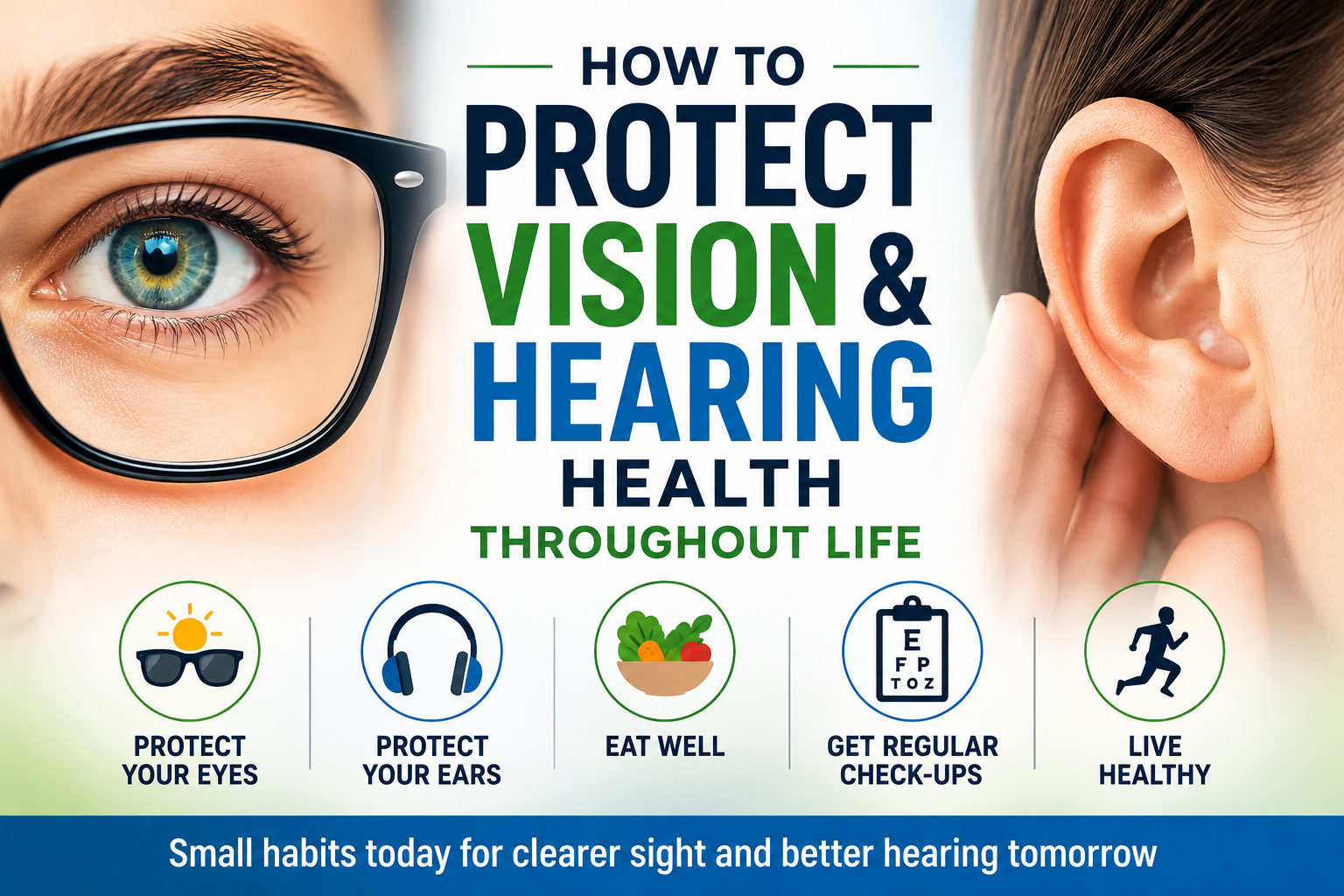
How to Protect Vision and Hearing Health Throughout Life
Vision and hearing are easy to take for granted—until something changes.
Both senses play a central role in communication, learning, mobility, work, relationships and independence. Yet many age-related changes in eyesight and hearing develop gradually, allowing problems to go unnoticed for years. Some conditions can also progress without obvious symptoms until significant damage has occurred.
The good news is that protecting vision and hearing is not something that begins in old age. Healthy habits, preventive screenings, sensible protection from environmental risks and timely medical care can all help preserve these senses throughout life.
Why vision and hearing deserve lifelong attention
Eyes and ears are exposed to the effects of aging, environmental conditions, injuries, infections and underlying health problems.
For vision, common concerns include refractive errors, cataracts, glaucoma, age-related macular degeneration and diabetic eye disease. Some conditions can cause permanent vision loss if they are not identified and treated promptly.
Hearing can also change gradually. Repeated exposure to loud sounds can damage delicate structures in the inner ear, while aging, certain illnesses, medications and other factors can contribute to hearing loss.
Because both vision and hearing can deteriorate slowly, regular checks are important even when everything appears to be working normally.
Start with regular eye examinations
One of the most effective ways to protect vision is to have your eyes examined at appropriate intervals.
An eye examination can do more than determine whether you need glasses or contact lenses. Eye-care professionals can look for signs of conditions that may not cause noticeable symptoms in their early stages.
The appropriate frequency depends on factors such as age, family history, existing medical conditions, medications and previous eye problems.
People with diabetes, for example, may require specialized monitoring because high blood glucose can damage blood vessels in the retina and increase the risk of diabetic eye disease.
If you notice sudden changes in vision, flashes of light, a sudden increase in floaters, a dark curtain or shadow across your field of vision, severe eye pain or sudden vision loss, seek urgent medical attention rather than waiting for a routine appointment.
Protect your eyes from excessive sunlight
Long-term exposure to ultraviolet radiation can contribute to several eye problems.
When spending time outdoors, particularly in strong sunlight, consider wearing sunglasses that provide protection against 100% of UVA and UVB radiation. A wide-brimmed hat can provide additional protection.
Sunglasses are useful even when the sky is cloudy because ultraviolet radiation can still reach the eyes.
Children also benefit from sensible protection. A lifetime of sun exposure accumulates, making eye protection an everyday habit rather than something reserved for vacations or exceptionally sunny days.
Give your eyes regular breaks from close-up screens
Digital screens have become part of everyday life, from smartphones and laptops to tablets and televisions.
Extended periods of close-up screen use do not necessarily cause permanent eye damage, but they can contribute to temporary symptoms such as dry eyes, blurred vision, headaches and eye fatigue.
A practical strategy is to periodically look away from the screen and focus on something farther away. The commonly recommended 20-20-20 approach involves looking at something about 20 feet away for 20 seconds every 20 minutes.
Blinking regularly can also help maintain the eye’s tear film, particularly during concentrated screen work when people may blink less frequently.
Screen position, lighting and text size matter too. Adjusting these factors can make prolonged computer work more comfortable.
Pay attention to nutrition and overall health
The eyes depend on the body’s circulatory, metabolic and nutritional health.
A balanced diet containing vegetables, fruits, whole grains, legumes, healthy sources of protein and unsaturated fats supports overall health and provides nutrients needed by the eyes.
Leafy green vegetables and colorful fruits and vegetables are particularly useful components of a varied diet because they provide antioxidants and other nutrients.
Controlling conditions such as high blood pressure and diabetes is also important. These conditions can affect the blood vessels and tissues involved in vision.
Smoking is another significant risk factor. Tobacco use is associated with several serious eye conditions, including cataracts and age-related macular degeneration. Quitting smoking can therefore benefit eye health as well as the cardiovascular and respiratory systems.
Protect your hearing from loud sounds
Hearing protection becomes particularly important when noise is part of everyday life.
Concerts, nightclubs, construction sites, factories, sporting events, power tools, firearms and some recreational activities can expose people to sound levels capable of damaging hearing.
The risk depends on both how loud the sound is and how long you are exposed to it.
When loud noise cannot be avoided, properly fitted hearing protection can reduce exposure. Earplugs and earmuffs are commonly used depending on the environment.
Another useful habit is to move farther away from loudspeakers and take breaks from noisy environments whenever possible.
If you regularly need to raise your voice to communicate with someone standing nearby because of background noise, the environment may be loud enough to warrant hearing protection.
Be careful with headphones and earbuds
Personal listening devices can make it easy to spend hours exposed to elevated sound levels.
Keeping the volume at a moderate level and taking regular listening breaks can reduce the risk of noise-related hearing damage.
Some devices provide volume-limiting features or warnings when listening levels remain high for extended periods. These features can be useful, particularly for children and teenagers.
Noise-cancelling headphones may also help in certain environments because users may be less tempted to increase the volume to overcome background noise. However, noise cancellation does not make unlimited high-volume listening safe.
Do not ignore changes in hearing
Hearing loss is often gradual.
You might notice that conversations are becoming harder to follow in restaurants, that people seem to mumble, or that you increasingly need to turn up the television. Family members may notice these changes before you do.
Persistent ringing, buzzing or other unexplained sounds in the ears—known as tinnitus—can also warrant evaluation, particularly when symptoms are sudden, severe or accompanied by hearing loss, dizziness or other neurological symptoms.
A hearing assessment can determine whether hearing has changed and help identify possible causes.
Early evaluation is useful because hearing difficulties can affect communication and social participation, and some causes may be treatable.
Keep ears away from unnecessary objects
The ear has its own natural mechanisms for managing earwax.
Putting cotton swabs, hairpins or other objects deep into the ear canal can push wax farther inside or injure the delicate structures of the ear.
Unless a healthcare professional recommends otherwise, avoid inserting objects into the ear canal.
People who experience persistent blockage, pain, discharge or significant hearing changes should have the problem assessed rather than attempting to remove it aggressively at home.
Take medications seriously
Some medicines can affect hearing, vision or both.
Certain drugs are known to have potentially harmful effects on sensory organs, particularly at specific doses or in people with particular health conditions. This does not mean that people should stop prescribed medicines on their own.
Instead, ask a healthcare professional or pharmacist about possible side effects when starting a new medication, especially if you notice a new change in hearing, vision, balance or other sensory function.
Promptly reporting unusual symptoms can help determine whether they are related to medication, an underlying condition or another cause.
Protect your eyes and ears during work and recreation
Safety equipment is important whenever there is a realistic risk of injury.
Protective eyewear can reduce the risk of eye injuries from flying particles, chemicals, dust and other hazards. This is particularly important when using power tools, working with chemicals or participating in activities where objects can strike the face.
Hearing protection is similarly important in workplaces and recreational environments with high noise levels.
Employers should provide appropriate occupational safety measures where required, but individuals also have an important role in using protective equipment correctly and consistently.
Make healthy habits part of family life
Vision and hearing protection are easier to maintain when they become routine.
Parents can help children develop habits such as wearing appropriate sunglasses outdoors, using reasonable headphone volumes and wearing protective equipment during sports or activities that present injury risks.
Children should also receive appropriate vision and hearing screening because problems can affect classroom learning, language development and social interaction.
Older adults may benefit from paying particular attention to gradual changes in sensory function. Declining vision or hearing can affect balance, communication and independence, making regular assessment increasingly important.
Know when a symptom needs urgent attention
Some sensory changes should not wait for a routine appointment.
For vision, sudden loss of sight, a sudden increase in floaters, flashes, a curtain-like shadow, severe eye pain or sudden visual distortion can indicate a potentially serious problem.
For hearing, sudden hearing loss—especially in one ear—requires prompt medical evaluation. New hearing loss accompanied by severe dizziness, neurological symptoms or significant pain should also be assessed urgently.
The specific cause can only be determined through appropriate medical evaluation, but acting quickly can sometimes make an important difference.
A lifelong approach to sensory health
Protecting vision and hearing is less about finding one perfect intervention and more about reducing preventable risks over many years.
That means protecting your eyes from ultraviolet radiation and injuries, managing conditions that can affect vision, taking breaks during prolonged screen use and getting appropriate eye examinations.
For hearing, it means limiting exposure to loud sounds, using hearing protection when necessary, keeping listening volumes reasonable and seeking assessment when changes become noticeable.
Perhaps the most important habit is not waiting for a problem to become disruptive before taking action. Regular preventive care and small protective decisions made consistently over decades can help preserve the senses that connect us to the world around us.



2 Comments
Micle harison
June 7, 2019Lorem ipsum dolor sit amet, usu ut perfecto postulant deterruisset, libris causae volutpat at est, ius id modus laoreet urbanitas. Mel ei delenit dolores.
John Doe
June 7, 2019Some consultants are employed indirectly by the client via a consultancy staffing company.