
How Travel Insurance Works and What It Covers
Travel insurance is designed to protect travelers from some of the financial losses and unexpected expenses that can arise before or during a trip.
A canceled flight, medical emergency, lost luggage or sudden need to return home can turn an otherwise enjoyable vacation into an expensive problem. Travel insurance can help reduce some of that financial risk, although exactly what it covers depends on the policy, insurer and circumstances.
Understanding how travel insurance works before purchasing a policy can make it easier to choose appropriate coverage and avoid unpleasant surprises when making a claim.
What Is Travel Insurance?
Travel insurance is a type of insurance policy that provides financial protection against specified travel-related risks.
Depending on the policy, coverage may begin before a trip starts and continue until the traveler returns home. Some policies are designed for a single journey, while others provide coverage for multiple trips during a defined period.
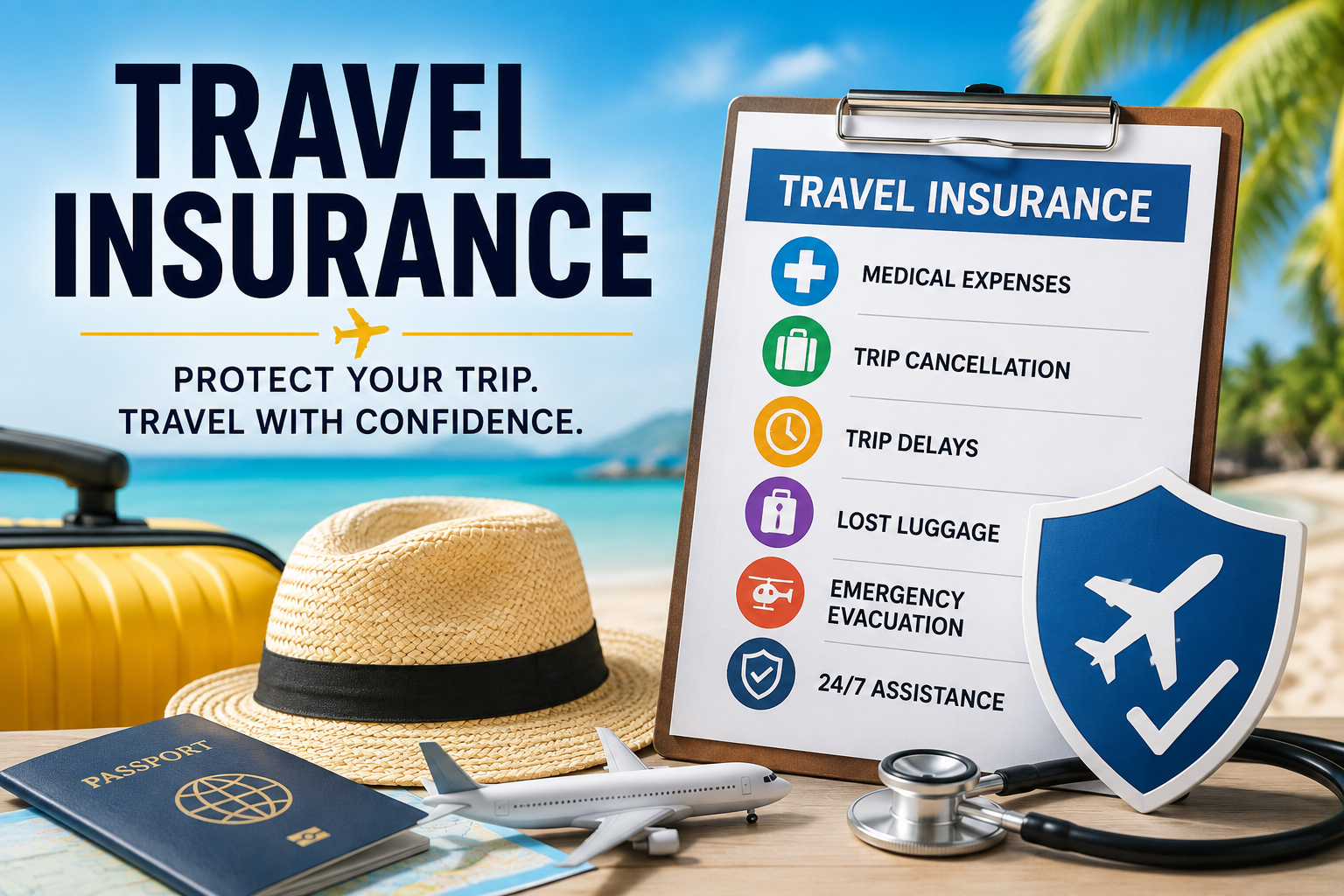
Travel insurance can cover several different categories of risk, including:
- Emergency medical expenses
- Trip cancellations
- Trip interruptions
- Travel delays
- Lost, stolen or damaged baggage
- Missed connections
- Emergency evacuation
- Repatriation in certain circumstances
- Personal liability
Not every policy includes all of these protections. Some benefits may also have limits, exclusions, deductibles or specific conditions that travelers must meet before a claim is accepted.
How Travel Insurance Actually Works
The basic process is relatively straightforward.
A traveler purchases a policy before or around the time of booking a trip. The policy specifies the risks covered, the maximum amount the insurer will pay, exclusions and the procedures for making a claim.
If a covered event occurs, the traveler generally needs to notify the insurer and provide supporting documentation.
For example, if luggage is stolen, the insurer may request a police report, receipts or evidence of ownership. If a medical emergency occurs overseas, the insurer may require hospital records, medical bills and proof of payment.
The insurer then reviews the claim against the terms of the policy.
If the event is covered and the required conditions have been satisfied, the insurer may reimburse eligible expenses up to the applicable policy limit.
This is important because travel insurance is not an automatic refund system. A policy only pays for losses that fall within its defined coverage.
Medical Coverage Is One of the Most Important Benefits
Medical emergencies can be among the most expensive problems travelers encounter abroad.
A traveler who becomes seriously ill or is injured may need medical consultations, diagnostic tests, hospitalization, medication or emergency transportation.
Travel medical insurance can help cover eligible medical expenses incurred during a trip, subject to the policy’s terms and limits.
Some policies also provide access to a 24-hour assistance service that can help travelers locate appropriate medical facilities or coordinate care.
Travelers should pay particular attention to medical coverage when visiting countries where healthcare costs are high.
A standard domestic health insurance policy may not provide the same protection overseas, and government-funded healthcare arrangements may not cover visitors.
Emergency Evacuation Can Be Especially Valuable
Medical treatment and medical transportation are two different expenses.
In serious situations, a traveler may need to be transported from a remote location to a facility capable of providing appropriate treatment. In some circumstances, transportation may even be required to return the traveler to their home country.
Emergency evacuation coverage can help pay eligible transportation costs when the policy conditions are met.
These expenses can become extremely high when specialized aircraft, medical teams or long-distance transportation are required.
Because evacuation coverage can vary substantially between policies, travelers taking adventure trips or visiting remote destinations should examine the limits carefully.
Trip Cancellation Coverage
Trip cancellation insurance is designed to provide protection when a traveler has to cancel a trip because of a covered reason.
Depending on the policy, covered reasons might include certain unexpected illnesses or injuries, the death of a close family member, severe weather or other qualifying events.
If the traveler has already paid for flights, accommodation, tours or other nonrefundable arrangements, eligible cancellation coverage may reimburse some of those prepaid costs.
However, simply changing your mind about a trip usually does not qualify as a covered cancellation.
This distinction is important because cancellation policies contain specific definitions of what constitutes a covered reason.
Trip Interruption Is Different From Cancellation
Cancellation occurs before a trip begins. Trip interruption generally applies after the traveler has already started traveling.
For example, a traveler might need to return home unexpectedly because of a covered emergency involving themselves or a close family member.
Depending on the policy, trip interruption coverage may reimburse eligible unused travel expenses and additional costs associated with returning home.
Some policies may also cover reasonable additional accommodation or transportation expenses required to continue or complete the journey after a covered disruption.
Again, the exact benefits depend on the policy.
Travel Delays Can Lead to Additional Expenses
Flight and transportation delays can create more than inconvenience.
A significant delay may force a traveler to pay for additional accommodation, meals or transportation.
Some travel insurance policies provide compensation or reimbursement after a qualifying delay exceeds a specified period.
For example, a policy might provide a fixed amount after a delay reaches a certain number of hours, while another might reimburse specific reasonable expenses.
Travelers should check whether the policy uses a fixed benefit, expense reimbursement or another structure.
Lost, Stolen or Damaged Baggage
Baggage coverage can protect travelers when their luggage or personal belongings are lost, stolen or damaged under circumstances covered by the policy.
Coverage can apply to checked baggage and, depending on the policy, carry-on items.
However, insurers commonly impose limits on individual items and on the total amount that can be claimed.
There may also be special rules for valuable items such as electronics, jewelry, cameras or specialized equipment.
Travelers should therefore avoid assuming that every item they pack is automatically covered for its full replacement value.
Keeping receipts and other evidence of ownership can make the claims process easier.
Baggage Delays May Also Be Covered
Some policies distinguish between baggage that is permanently lost and baggage that is temporarily delayed.
If an airline delays checked luggage for a qualifying period, travel insurance may reimburse reasonable expenses for essential items such as clothing or toiletries.
The policy will usually specify how long the baggage must be delayed before the benefit becomes available and how much the insurer will pay.
Travelers should keep receipts for eligible purchases and follow the insurer’s documentation requirements.
Missed Connections
A missed connection can create a chain reaction.
Missing one flight may mean paying for a new ticket, finding overnight accommodation or rearranging transportation.
Some travel insurance policies provide coverage for missed connections caused by qualifying delays or other covered events.
The rules can be particularly important when travelers have separate tickets rather than a single itinerary.
A policy may require travelers to have allowed a reasonable amount of time between connections or may exclude certain circumstances.
Reading these conditions before traveling can prevent confusion later.
Personal Liability Coverage
Travel insurance can sometimes include personal liability protection.
This coverage may apply if a traveler unintentionally causes injury to another person or damages someone else’s property and becomes legally responsible for the loss.
The precise circumstances covered vary considerably.
Liability coverage can be particularly useful for travelers participating in activities where accidental damage or injury is possible, although high-risk activities may require specialized insurance.
Common Travel Insurance Exclusions
Understanding what insurance does not cover can be just as important as understanding what it does.
Common exclusions or restrictions can involve:
- Pre-existing medical conditions
- Traveling against medical advice
- Certain high-risk activities
- Alcohol- or drug-related incidents
- Unattended belongings
- Certain natural disasters or political events
- Known circumstances that existed before the policy was purchased
- Changes of mind or voluntary cancellations
- Failure to obtain required documentation
- Travel to destinations subject to specific restrictions
These exclusions vary by insurer and policy.
A traveler should therefore read the policy wording rather than relying solely on a summary or promotional description.
Pre-Existing Medical Conditions Need Special Attention
Travelers with existing medical conditions should pay particular attention to the medical section of a policy.
Some policies exclude pre-existing conditions entirely. Others may provide coverage if the traveler meets specific requirements or pays an additional premium.
Insurers may ask medical questions during the application process.
Providing accurate information is important. Failing to disclose relevant medical information can create problems if a claim later arises.
Travelers should also understand whether their regular medications and ongoing treatments are covered while abroad.
Adventure Activities May Require Additional Coverage
Standard travel insurance may not automatically cover every activity.
Activities such as scuba diving, skiing, mountaineering, skydiving, motorcycling or certain forms of extreme sports may be excluded or subject to specific conditions.
Travelers planning activity-based vacations should check whether their intended activities are included.
In some cases, a specialized policy or additional coverage may be necessary.
The safest approach is to check the policy before booking or participating in an activity rather than discovering an exclusion after an accident.
How Much Does Travel Insurance Cost?
The cost of travel insurance varies according to several factors.
These can include:
- Traveler’s age
- Destination
- Trip length
- Total trip cost
- Type of coverage
- Medical coverage limits
- Deductible
- Number of travelers
- Optional benefits
- Existing medical conditions
- Activities planned during the trip
A basic policy may cost considerably less than comprehensive coverage with high medical limits and extensive cancellation protection.
The cheapest policy is not necessarily the best value.
A low-cost plan with restrictive coverage may provide little protection for the risks that matter most to a particular traveler.
How to Compare Travel Insurance Policies
Travelers should compare policies based on coverage rather than price alone.
Important questions include:
How much medical coverage is provided?
Medical limits can be particularly important for international travel.
What is the emergency evacuation limit?
Evacuation can be extremely expensive in some circumstances.
Which cancellation reasons qualify?
A policy with a long list of exclusions may provide less practical protection than expected.
What are the baggage limits?
Check both the total baggage limit and the maximum amount payable for individual items.
What deductible applies?
A deductible is the amount the traveler may need to pay before insurance benefits begin.
Are planned activities covered?
This is especially important for adventure or sports vacations.
How does the claims process work?
A policy with clear reporting procedures and accessible assistance can be valuable during an emergency.
The Importance of Reading the Fine Print
Insurance policies can be lengthy, but the details matter.
Travelers should pay particular attention to sections covering definitions, exclusions, conditions, benefit limits and claims procedures.
Marketing materials often provide a simplified overview. The policy wording determines the actual contractual coverage.
For example, a policy might advertise “trip cancellation coverage,” but the detailed terms determine exactly which cancellation circumstances qualify.
Similarly, “medical coverage” does not necessarily mean every medical expense will be covered.
Understanding these distinctions before purchasing the policy can help travelers make more informed decisions.
What to Do When Something Goes Wrong
If a covered event occurs during a trip, travelers should contact their insurer or assistance provider as soon as reasonably possible.
The insurer may be able to help coordinate medical treatment, arrange transportation or explain what documentation is required.
Travelers should also keep important records, including:
- Receipts
- Medical records
- Police reports
- Airline documentation
- Booking confirmations
- Proof of payment
- Correspondence related to the incident
When possible, travelers should avoid making major arrangements that could result in significant expenses without first contacting the insurer, unless the situation is an emergency and immediate action is necessary.
Following the policy’s notification and documentation requirements can make the claims process considerably easier.
Travel Insurance Does Not Replace Good Travel Planning
Insurance is a financial safety net, not a substitute for preparation.
Travelers should still research entry requirements, health recommendations, weather conditions, local laws, transportation arrangements and destination-specific risks.
Copies of important documents should also be stored securely, and travelers should know how to contact their bank, airline, accommodation provider and insurer if problems occur.
Good preparation can prevent many problems from becoming emergencies in the first place.
When Travel Insurance May Be Especially Valuable
Travel insurance can be particularly useful when a trip involves significant financial commitments or higher potential risks.
Examples include:
- Expensive international vacations
- Long trips
- Cruises
- Trips involving multiple destinations
- Travel to countries with high medical costs
- Adventure vacations
- Trips with significant nonrefundable bookings
- Travel involving older passengers or complex medical considerations
For a short, inexpensive trip with refundable bookings and limited financial exposure, a traveler may decide that extensive coverage provides less value.
The decision ultimately depends on the individual’s circumstances and tolerance for financial risk.
Making Travel Protection Work for You
Travel insurance works best when travelers understand exactly what they are buying.
The most useful policy is not necessarily the one with the longest list of benefits or the lowest price. It is the one that provides meaningful protection against the risks most relevant to the trip, with limits and conditions the traveler understands.
Before purchasing coverage, travelers should consider the cost of the trip, potential medical expenses, the destination, planned activities and how much money could be lost if the journey were canceled or interrupted.
Once a policy is purchased, keeping a copy of the policy documents and knowing how to contact the insurer can be just as important as having the coverage itself.
Travel will always involve some uncertainty. A well-chosen insurance policy cannot eliminate that uncertainty, but it can help prevent an unexpected medical emergency, cancellation or travel disruption from turning into a much larger financial setback.




2 Comments
Micle harison
June 7, 2019Lorem ipsum dolor sit amet, usu ut perfecto postulant deterruisset, libris causae volutpat at est, ius id modus laoreet urbanitas. Mel ei delenit dolores.
John Doe
June 7, 2019Some consultants are employed indirectly by the client via a consultancy staffing company.