
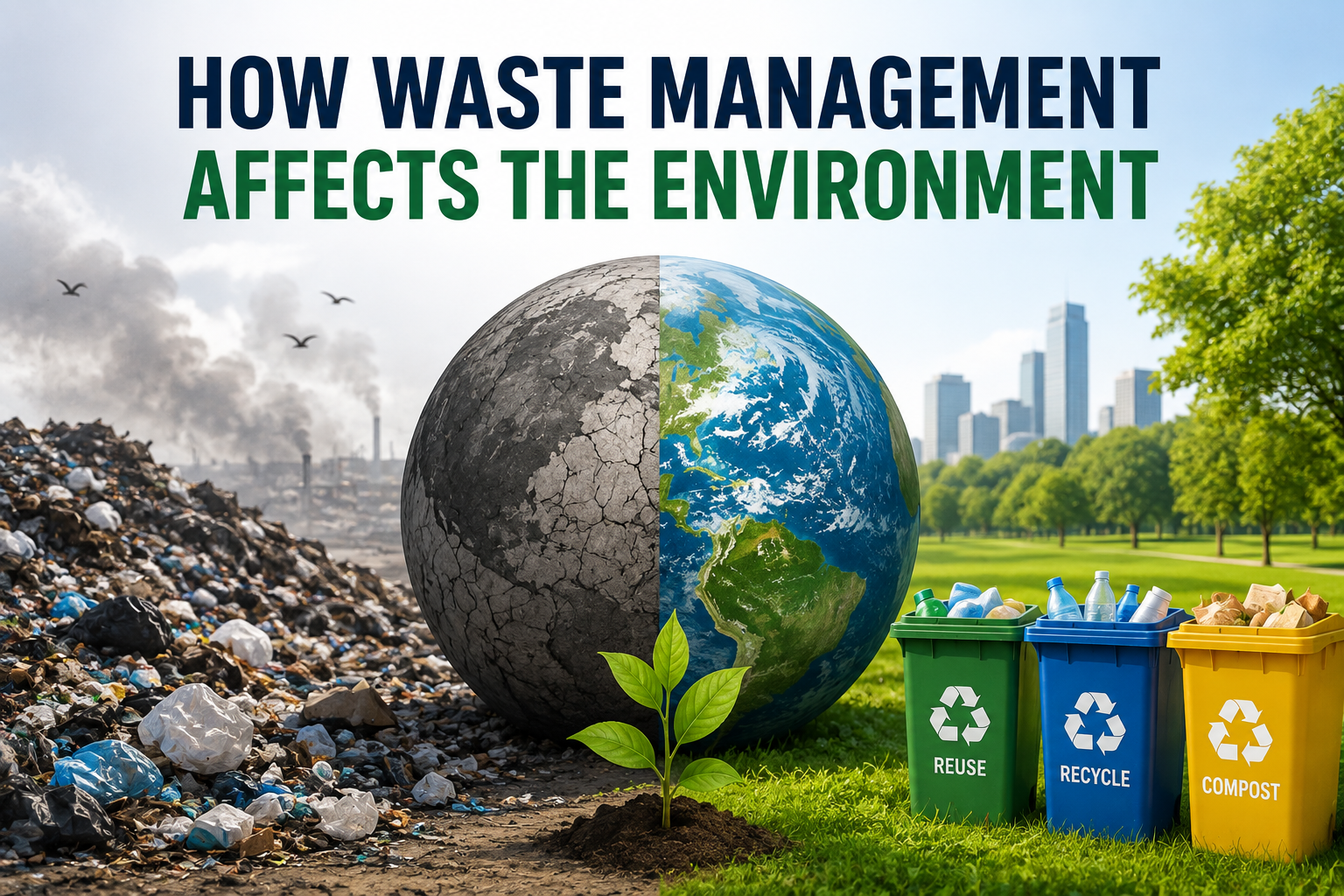
How Waste Management Affects the Environment
Every day, households, businesses and industries generate enormous amounts of waste. From food scraps and plastic packaging to electronic devices, construction materials and industrial byproducts, the things people throw away do not simply disappear. Where waste goes—and how it is collected, processed, recycled or disposed of—can have lasting effects on air, water, soil, wildlife and human communities.
Effective waste management can reduce these impacts and conserve valuable resources. Poorly managed waste, on the other hand, can contribute to pollution, greenhouse gas emissions, habitat destruction and the spread of disease.
Understanding the environmental consequences of waste management is therefore an important part of understanding how communities can become cleaner and more sustainable.
What Is Waste Management?
Waste management refers to the collection, transportation, treatment, recycling and disposal of waste.
The process can involve several different methods, including:
- Waste reduction: Preventing unnecessary waste from being created in the first place.
- Reuse: Using products or materials again instead of throwing them away.
- Recycling: Processing discarded materials so they can become inputs for new products.
- Composting: Allowing organic materials such as food scraps and yard waste to decompose under controlled conditions.
- Waste-to-energy: Using certain types of waste to generate heat or electricity.
- Landfilling: Placing waste in engineered disposal sites designed to isolate it from the surrounding environment.
- Incineration: Burning waste under controlled conditions, sometimes with systems that recover energy.
The environmental performance of these methods varies considerably depending on the type of waste, local infrastructure and how effectively the system is operated.
How Poor Waste Management Pollutes the Environment
One of the most obvious environmental consequences of poor waste management is pollution.
When waste is dumped illegally, burned in the open or allowed to accumulate without adequate controls, pollutants can enter the surrounding environment.
Plastic bags, bottles and other materials can be carried by wind or rain into rivers, lakes and oceans. Chemicals from discarded products can contaminate soil and groundwater. Burning certain types of waste can release harmful substances into the air.
The problem can become particularly serious in places where waste collection systems are inadequate or where rapidly growing populations are generating more waste than existing infrastructure can handle.
Waste and Air Pollution
Waste management can affect air quality in several ways.
Open burning is one major concern. People sometimes burn household waste because there is no convenient collection service or because burning appears to be a simple way to reduce accumulated rubbish. However, burning mixed waste can release smoke and pollutants into the atmosphere.
Landfills can also affect air quality. As organic material decomposes in oxygen-poor conditions, it can produce methane and other gases. Modern landfills can capture some of these gases, but poorly managed sites may allow significant amounts to escape.
Waste transportation contributes to air pollution as well. Trucks and other vehicles used to collect and transport waste consume fuel and produce emissions.
Reducing the amount of waste generated in the first place can therefore help reduce the environmental footprint associated with collection, transportation and disposal.
The Impact on Water
Water is particularly vulnerable to poorly managed waste.
Rainwater can move through piles of waste and carry dissolved pollutants into nearby soil and waterways. At disposal sites, the contaminated liquid produced when water passes through waste is known as leachate.
Modern landfills are designed with systems intended to collect and manage leachate. Without adequate controls, however, contaminants can migrate into groundwater or nearby surface water.
Plastic waste creates another major problem. Discarded plastics can enter drainage systems, streams and rivers before eventually reaching the ocean. Larger items can entangle wildlife, while smaller pieces can break down into microplastics that persist in aquatic environments.
Plastic Waste and Wildlife
Plastic pollution has become one of the most visible consequences of modern waste consumption.
Wild animals can mistake plastic for food or become trapped in discarded packaging, fishing equipment and other debris. Marine animals are particularly exposed because waste transported through rivers and coastal areas can accumulate in oceans.
Even when larger plastic objects break apart, the resulting fragments do not necessarily disappear. They can become increasingly small particles that remain in the environment for long periods.
The environmental problem begins long before a plastic item reaches a landfill or waterway. Producing plastic requires raw materials and energy, while manufacturing, transportation and disposal all have environmental costs.
Reducing unnecessary single-use plastics can therefore address the problem at its source.
Food Waste and Greenhouse Gas Emissions
Food waste is another important part of the environmental equation.
When food is thrown away and buried in a landfill, it can decompose without much oxygen and generate methane. Methane is a potent greenhouse gas, making the way organic waste is handled an important climate consideration.
Food waste also represents wasted resources.
Producing food requires land, water, energy, fertilizer, transportation and labor. When food is discarded, the environmental resources used to produce it have essentially been spent without providing the intended nutritional benefit.
Composting can provide an alternative for some organic waste. Under appropriate conditions, composting converts food scraps and other biodegradable materials into a soil amendment that can be used to support plant growth.
Electronic Waste Creates Special Challenges
Electronic waste, or e-waste, includes discarded phones, computers, televisions, batteries, appliances and other electronic equipment.
These products contain valuable materials that can potentially be recovered and reused. They can also contain substances that require careful handling.
When electronics are improperly dismantled, burned or dumped, hazardous materials can potentially enter soil, air and water.
Responsible e-waste recycling can reduce these risks while recovering materials such as metals that would otherwise require additional mining.
For consumers, donating working electronics, repairing devices when practical and using certified recycling programs can help keep electronic products out of ordinary waste streams.
Landfills Have Both Benefits and Drawbacks
Landfills are often viewed negatively because they represent the final destination for waste that cannot be reused or recycled. However, properly engineered landfills are fundamentally different from uncontrolled dumping.
Modern facilities can include liners, leachate collection systems, gas management equipment and environmental monitoring.
These systems help isolate waste from the surrounding environment.
Even so, landfills require substantial amounts of land and do not eliminate the environmental costs associated with producing and transporting discarded products. Organic waste can generate methane, while materials that could have been recycled or reused are permanently removed from the production cycle.
For this reason, reducing waste and recovering useful materials are generally important parts of a broader waste-management strategy.
Recycling Can Conserve Natural Resources
Recycling allows certain materials to re-enter the manufacturing process rather than being discarded after a single use.
Paper, glass, metals and many types of plastic can be recycled through established systems, although the feasibility and environmental benefits depend on the material and local processing infrastructure.
Recycling can reduce the demand for virgin raw materials. Recovering metals from discarded products, for example, can reduce the need to extract additional ore.
However, recycling is not a perfect solution.
Collection, sorting and processing require energy and infrastructure. Contamination can make materials difficult or impossible to recycle, and not every product can be economically recovered.
That is why waste reduction and reuse generally remain important alongside recycling.
Waste Management and Climate Change
Waste contributes to climate change through several pathways.
Landfills can release methane. Waste collection and transportation consume fuel. Manufacturing replacement products requires energy and raw materials. Incineration can produce carbon dioxide, depending on the materials being burned and the technology used.
A more sustainable waste system therefore looks beyond disposal.
Preventing waste can avoid environmental impacts associated with manufacturing products that are never ultimately used. Reusing products can extend their useful lives. Recycling can recover materials and reduce demand for some virgin resources. Composting can divert organic material from landfills.
Together, these approaches can help reduce the climate footprint associated with consumption.
The Importance of the Waste Hierarchy
A useful way to think about waste management is through a hierarchy that prioritizes prevention before disposal.
In broad terms, the preferred order is:
- Prevent waste
- Reduce consumption
- Reuse products
- Repair and refurbish
- Recycle materials
- Recover energy where appropriate
- Dispose of remaining waste safely
This approach recognizes that the most effective waste problem is often the one that never occurs.
For example, buying a durable product that can be repaired may create less waste over its lifetime than repeatedly replacing inexpensive disposable alternatives.
Communities Have a Major Role to Play
Waste management is not solely an individual responsibility.
Local governments need effective collection systems, appropriate disposal facilities, recycling infrastructure and enforcement against illegal dumping. Businesses can reduce unnecessary packaging, design products that are easier to repair and recycle, and improve how materials are recovered.
Manufacturers also influence waste through product design.
Products that are difficult to disassemble or repair can become waste more quickly. Designing products for durability, repairability and material recovery can make it easier to keep valuable resources in circulation.
Consumers influence the system as well through purchasing and disposal decisions.
Choosing durable products, avoiding unnecessary packaging, repairing items and separating waste correctly can all contribute to better outcomes.
What Individuals Can Do
Small changes can make a difference when they are adopted consistently.
Households can reduce their environmental impact by:
- Buying only what they need.
- Choosing reusable products when practical.
- Repairing items instead of immediately replacing them.
- Donating usable clothing, furniture and electronics.
- Separating recyclable materials according to local rules.
- Composting suitable food and yard waste.
- Keeping batteries, electronics and hazardous materials out of ordinary household trash.
- Avoiding littering and illegal dumping.
- Choosing products with less unnecessary packaging.
- Learning how local waste collection and recycling systems operate.
The most important point is to recognize that recycling is only one part of responsible waste management. Reducing consumption and extending the useful life of products can prevent waste before it needs to be processed.
Better Waste Management Can Support a Circular Economy
Traditional economies often follow a relatively linear pattern: resources are extracted, products are manufactured, goods are purchased and eventually discarded.
A circular economy attempts to keep products and materials useful for as long as possible.
That can involve repairing products, reselling used goods, refurbishing equipment, recycling materials and designing products so their components can be recovered at the end of their useful lives.
The goal is not simply to manage waste more efficiently. It is to reduce the amount of waste created in the first place while making better use of the resources already available.
This approach can also create economic opportunities through repair businesses, recycling industries, resale markets and technologies designed to recover valuable materials.
Building Cleaner Communities Starts Before the Trash Bin
Waste management is ultimately a reflection of how societies produce and consume resources.
A landfill, recycling facility or composting center can manage waste after it has been created, but the environmental story begins much earlier—with the extraction of raw materials, manufacturing of products, packaging, transportation and consumer decisions.
Better waste management can reduce pollution, protect waterways, conserve resources and limit greenhouse gas emissions. But the greatest gains often come from combining improved disposal systems with efforts to prevent unnecessary waste.
As populations grow and consumption increases, communities will face greater pressure to manage discarded materials responsibly. Creating cleaner neighborhoods and a healthier environment will depend not only on where waste ends up, but also on designing an economy in which less material becomes waste in the first place.


2 Comments
Micle harison
June 7, 2019Lorem ipsum dolor sit amet, usu ut perfecto postulant deterruisset, libris causae volutpat at est, ius id modus laoreet urbanitas. Mel ei delenit dolores.
John Doe
June 7, 2019Some consultants are employed indirectly by the client via a consultancy staffing company.