
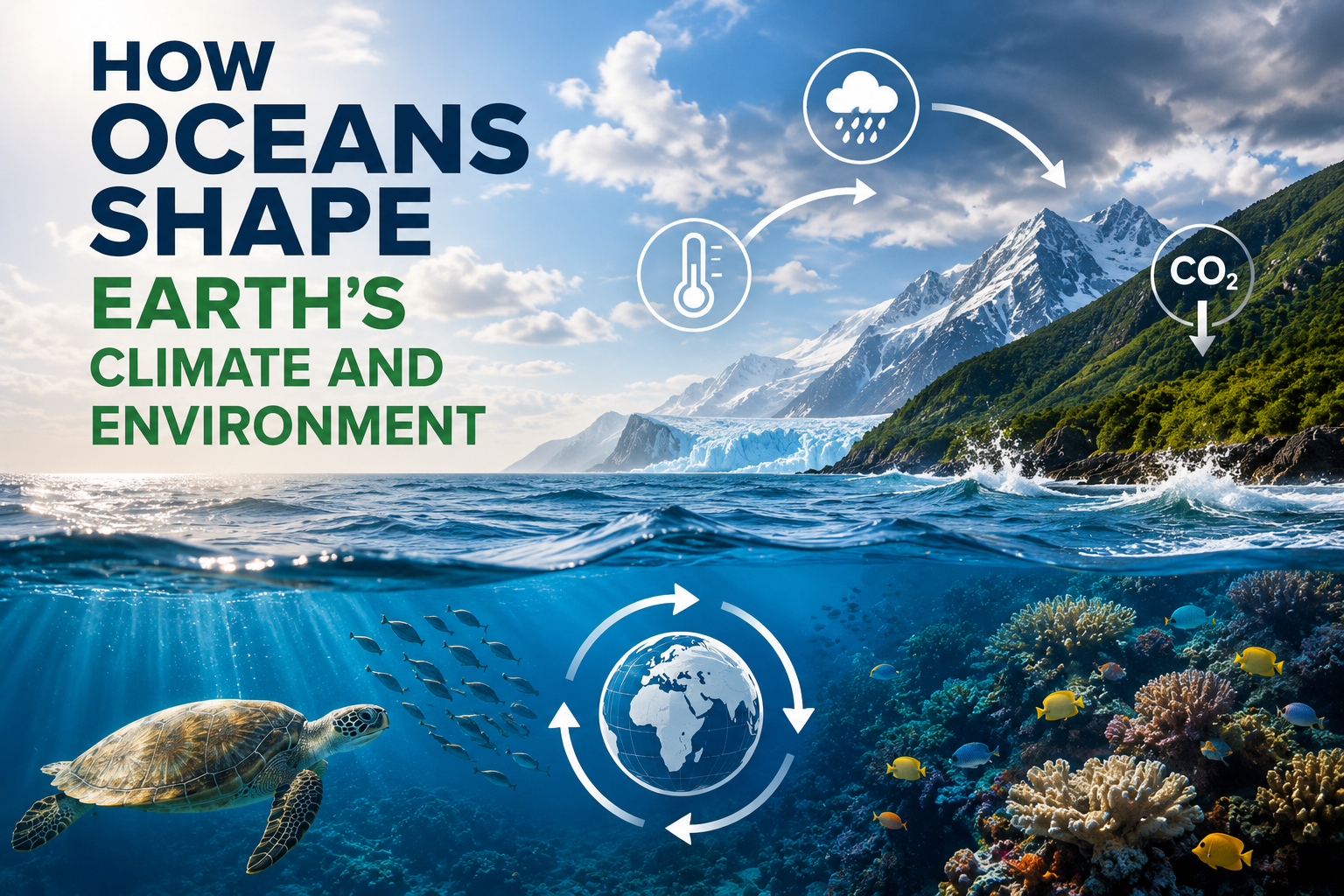
How Oceans Shape Earth’s Climate and Environment
When people think about Earth’s climate, they often focus on the atmosphere, forests, ice sheets or changing temperatures on land. But covering more than 70% of the planet’s surface, the oceans are arguably the most important part of the climate system.
Oceans absorb enormous amounts of heat, move energy around the planet, store carbon dioxide, influence rainfall and support ecosystems that sustain millions of species. Their influence reaches far beyond coastlines, shaping weather patterns and environmental conditions across continents.
Understanding how oceans work is therefore essential to understanding why Earth’s climate behaves the way it does—and how a warming planet could change in the decades ahead.
Oceans Act as Earth’s Largest Heat Reservoir
One of the ocean’s most important climate functions is storing heat.
Sunlight warms the surface of the planet, but the ocean absorbs a substantial share of the excess heat entering the climate system. Water can store much more heat than air or land, allowing the oceans to act as a massive buffer against rapid changes in global temperature.
The upper layers of the ocean absorb much of this energy, while ocean circulation gradually transports heat into deeper waters.
This process helps prevent Earth’s surface temperature from changing even more rapidly than it otherwise would.
But storing heat does not mean the energy disappears. The ocean can eventually release heat back into the atmosphere, influencing weather and climate patterns over periods ranging from days to centuries.
That is one reason the oceans are central to understanding both short-term weather events and long-term climate change.
Ocean Currents Move Heat Around the Planet
The ocean is not a static body of water. Massive currents continuously transport heat, nutrients and other materials across the globe.
Warm surface waters generally move away from the tropics toward higher latitudes, while colder water can travel toward the equator and sink into deeper layers.
This global circulation helps redistribute solar energy.
Without this enormous transportation system, some parts of the planet would become substantially hotter while others would be considerably colder.
The Gulf Stream and the broader Atlantic circulation are familiar examples of how ocean currents can influence regional climates. Changes in ocean circulation can affect temperatures, precipitation and weather patterns far from where the original change occurs.
The Ocean and the Water Cycle Are Closely Connected
Every day, enormous quantities of water move between the ocean and atmosphere.
Solar energy causes seawater to evaporate, adding water vapor to the atmosphere. That moisture can later condense into clouds and return to Earth’s surface as precipitation.
Because the oceans cover such a large portion of the planet, they are the primary source of atmospheric moisture.
This connection means ocean conditions can influence rainfall over land, including areas hundreds or thousands of kilometers from the coast.
Changes in sea-surface temperatures can alter evaporation and atmospheric circulation, potentially affecting droughts, floods and storm patterns.
Oceans Help Regulate Carbon Dioxide
The oceans also play a major role in Earth’s carbon cycle.
Carbon dioxide from the atmosphere dissolves into seawater, while marine organisms absorb carbon as part of biological processes. Some carbon eventually sinks into deeper parts of the ocean when organisms die or organic material is transported downward.
This makes the ocean an important long-term carbon reservoir.
However, the relationship between oceans and atmospheric carbon dioxide has consequences of its own.
As humans release more carbon dioxide through activities such as burning fossil fuels, the ocean absorbs a portion of that additional carbon dioxide. While this reduces the amount remaining in the atmosphere, it also changes seawater chemistry.
That process contributes to ocean acidification, which can make conditions more difficult for some marine organisms that build shells or skeletons from calcium carbonate.
Ocean Acidification Is Changing Marine Conditions
Ocean acidification is one of the less visible consequences of rising atmospheric carbon dioxide.
When carbon dioxide dissolves in seawater, chemical reactions ultimately increase the concentration of hydrogen ions and reduce the availability of carbonate ions. The result is a gradual decline in ocean pH.
The term “acidification” can sometimes be misleading because seawater is still generally alkaline. The issue is that it is becoming less alkaline.
This matters for organisms such as corals, oysters, mussels and some planktonic species that depend on carbonate chemistry to construct shells and skeletons.
Changes at the bottom of the marine food web can potentially spread upward, affecting larger animals and the communities that depend on them.
Oceans Influence Hurricanes and Other Storms
Warm ocean water provides energy that can fuel tropical storms.
As warm seawater evaporates, it adds heat and moisture to the atmosphere. Under suitable atmospheric conditions, that energy can contribute to the development and intensification of tropical cyclones.
This is why ocean temperatures are closely monitored during hurricane and cyclone seasons.
A warmer ocean does not mean every storm will become stronger. Storm formation depends on numerous factors, including atmospheric winds, humidity and the structure of the atmosphere.
However, warmer waters can provide more energy and moisture to storms that do develop, increasing the potential for particularly intense systems and heavier rainfall.
El Niño and La Niña Show the Ocean’s Global Influence
Few natural climate patterns demonstrate the connection between ocean and atmosphere more clearly than El Niño and La Niña.
These phenomena involve large-scale changes in tropical Pacific Ocean temperatures and atmospheric circulation.
During El Niño conditions, unusually warm surface waters develop across parts of the central and eastern tropical Pacific. This can disrupt normal atmospheric circulation and influence weather patterns around the world.
La Niña generally involves cooler-than-average surface waters in the same broad region and can produce a different set of atmospheric effects.
The consequences can include changes in rainfall, drought risk, temperature patterns and storm activity across multiple continents.
This demonstrates that an ocean temperature change in one region can have consequences thousands of kilometers away.
Oceans Support Some of Earth’s Richest Ecosystems
Climate regulation is only one part of the ocean’s importance.
Marine environments contain an extraordinary variety of life, from microscopic plankton to enormous whales. Coral reefs, mangroves, seagrass meadows, deep-sea ecosystems and open-ocean habitats all contribute to the planet’s biological diversity.
These ecosystems also provide services that directly benefit people.
Healthy oceans help support fisheries, protect coastlines, provide recreational opportunities and contribute to economies around the world.
Coastal ecosystems can be particularly valuable. Mangrove forests and wetlands, for example, can reduce wave energy and help protect shorelines from erosion while providing habitat for fish, birds and other wildlife.
Phytoplankton Play an Outsized Role
Some of the smallest organisms in the ocean have an enormous influence on Earth’s environment.
Phytoplankton are microscopic organisms that use sunlight to produce energy through photosynthesis. They consume carbon dioxide and release oxygen as part of this process.
Marine photosynthesis contributes substantially to the oxygen cycling that supports life on Earth.
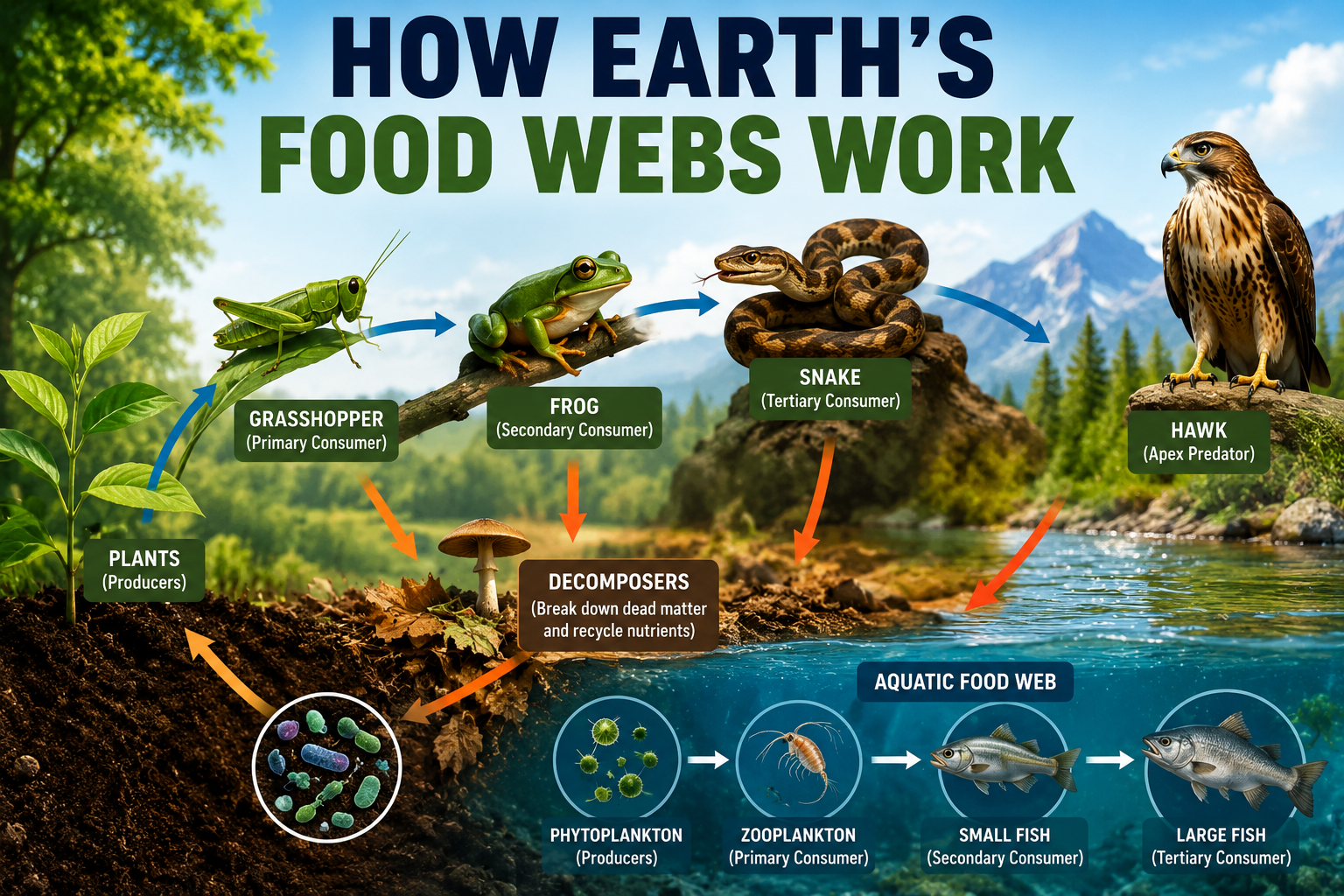
Phytoplankton also form the foundation of many marine food webs. Tiny organisms are consumed by larger organisms, which are then eaten by progressively larger animals.
Changes in ocean temperature, nutrient availability, acidity and circulation can therefore affect marine ecosystems starting at microscopic levels.
Warming Oceans Can Reshape Marine Ecosystems
As the climate warms, the ocean is changing in several interconnected ways.
Sea temperatures are increasing, marine heatwaves are becoming an important concern, and some species are shifting their geographic ranges in response to changing environmental conditions.
Coral reefs are particularly vulnerable to prolonged periods of unusually warm water.
When corals experience severe thermal stress, they can expel the microscopic algae that live within their tissues. This process, known as coral bleaching, can leave corals weakened and, if stressful conditions persist, contribute to large-scale mortality.
The effects can extend beyond coral itself because reefs provide habitat for many other marine species.
Rising Seas Connect Ocean Warming and Ice Loss
The ocean also plays a major role in sea-level rise.
One mechanism is thermal expansion. As seawater warms, it expands, contributing to higher sea levels.
The other major contributor is the addition of water from melting land-based ice, including glaciers and ice sheets.
Rising sea levels can increase the risk of coastal flooding, erosion and saltwater intrusion into freshwater systems.
Low-lying communities are particularly exposed, but the consequences can reach much farther through impacts on infrastructure, agriculture, ecosystems and economies.
The Deep Ocean Matters Too
Much of the public discussion about climate change focuses on the ocean surface, but the deep ocean is crucial.
Ocean circulation transports heat and carbon into deeper layers, where they can remain isolated from the atmosphere for long periods.
This means the deep ocean can act as a long-term storage system for both heat and carbon.
It also means some consequences of today’s climate changes may continue unfolding long after atmospheric conditions change.
The ocean’s enormous size gives it tremendous capacity to absorb energy, but that capacity does not make it immune to disruption.
Human Activity Is Putting Additional Pressure on the Oceans
Climate change is only one of the pressures affecting marine environments.
Overfishing, plastic pollution, chemical contamination, habitat destruction, nutrient runoff and coastal development can all damage ocean ecosystems.
These pressures can interact.
For example, a coral reef already weakened by pollution or overfishing may have less resilience when exposed to unusually warm water. Similarly, coastal habitats damaged by development may be less capable of protecting communities from storms and rising seas.
Protecting ocean health therefore requires more than addressing a single environmental problem.
Why Healthy Oceans Matter for the Future
The ocean’s role in Earth’s climate means protecting marine environments is ultimately about protecting the broader planetary system.
Reducing greenhouse gas emissions can slow the rate at which oceans warm and limit further ocean acidification. Protecting wetlands, mangroves, seagrass meadows and other coastal ecosystems can preserve biodiversity while strengthening natural defenses against climate-related hazards.
Sustainable fisheries management can also help marine populations recover and make ecosystems more resilient.
Scientific monitoring is equally important. Researchers rely on satellites, autonomous instruments, research vessels, buoys and underwater sensors to track changes in temperature, chemistry, sea level and marine ecosystems.
The more scientists understand these systems, the better communities can prepare for changes that are already underway.
The Ocean Is a Climate System in Motion
Earth’s oceans are far more than vast bodies of water separating continents. They are an enormous engine that absorbs and redistributes heat, moves moisture through the atmosphere, stores carbon and supports an extraordinary share of the planet’s biodiversity.
Their influence can be seen in everyday weather, rainfall patterns, fisheries, coastal communities and global temperatures.
As the climate changes, the relationship between the ocean and atmosphere becomes increasingly important. The ocean can slow some effects of warming by absorbing heat and carbon, but that buffering capacity comes with consequences for marine chemistry, ecosystems and sea levels.
Understanding those connections is critical because changes in the ocean rarely stay confined to the ocean. What happens beneath the waves can ultimately influence the climate, environment and communities across the entire planet.



2 Comments
Micle harison
June 7, 2019Lorem ipsum dolor sit amet, usu ut perfecto postulant deterruisset, libris causae volutpat at est, ius id modus laoreet urbanitas. Mel ei delenit dolores.
John Doe
June 7, 2019Some consultants are employed indirectly by the client via a consultancy staffing company.