
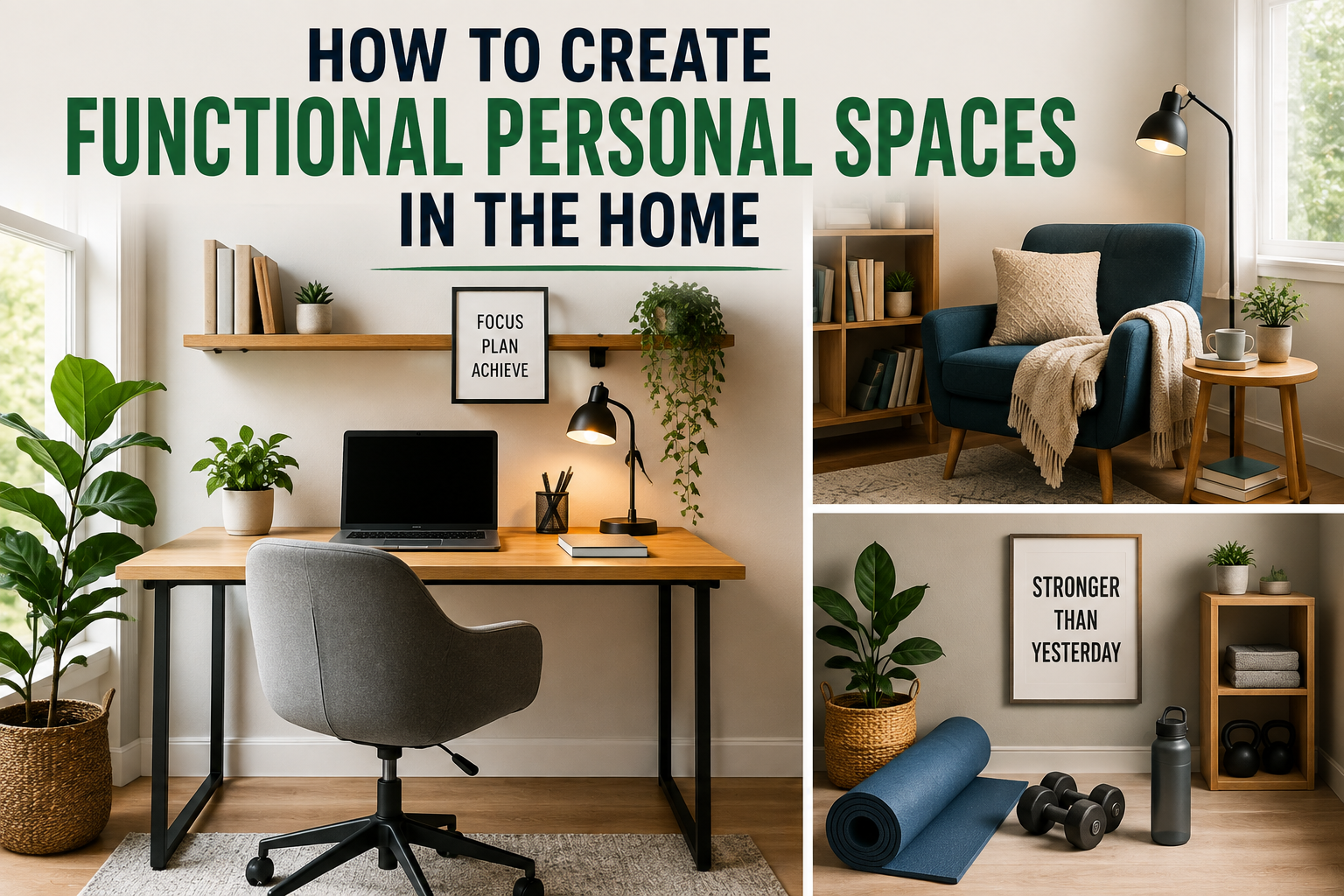
How to Create Functional Personal Spaces in the Home
A home does not have to be large to feel comfortable, organized and useful. In many cases, the difference comes down to how individual spaces are planned and how well they reflect the people who use them.
A functional personal space can be a quiet reading corner, a compact home office, a creative workspace, a workout area or simply a comfortable place to relax at the end of the day. The goal is not to fill every available corner with furniture and decorations. It is to create spaces that have a clear purpose while still feeling natural within the rest of the home.
With thoughtful planning, even a small or shared home can accommodate personal spaces that improve comfort, organization and everyday routines.
Start With the Purpose of the Space
The first step is deciding what you actually need the space to accomplish.
A personal area works best when its primary purpose is clear. A corner intended for reading, for example, may need comfortable seating, adequate lighting and a small surface for books or a drink. A workspace may require a desk, an ergonomic chair, storage and access to power outlets.
Before buying furniture or rearranging a room, ask a few practical questions:
- What will I mainly do here?
- How often will I use the space?
- What items need to be within easy reach?
- Will the space serve more than one purpose?
- How much room can realistically be dedicated to it?
- Does the area need privacy or separation from other activities?
Answering these questions can prevent a common mistake: designing a space around furniture instead of designing it around daily activities.
Look for Underused Areas
Personal spaces do not necessarily require an entire room.
A corner of a bedroom, an unused section of a living room, part of a hallway or an area beneath a staircase may be enough to create a useful personal zone.
The key is to identify areas that are currently underutilized.
For example, a small corner near a window might become a reading area. A narrow wall could accommodate a compact desk. An unused portion of a bedroom could become a hobby station with vertical storage.
This approach is especially useful in apartments and smaller homes where dedicating an entire room to one activity may not be practical.
Use Furniture That Fits the Space
Furniture should support the function of an area without overwhelming it.
Large furniture can make a small room feel crowded and can interfere with movement. On the other hand, furniture that is too small or uncomfortable may discourage regular use.
Measure the available area before purchasing anything. Consider not only the dimensions of the furniture itself but also the space needed to open drawers, move chairs and walk around it.
Multi-purpose furniture can be particularly valuable.
A desk with built-in storage, a bench with hidden compartments or a foldable table can provide functionality without permanently consuming valuable floor space.
Create Zones Within Shared Rooms
Open-plan homes often require different activities to coexist in the same room.
Instead of physically separating every function with walls, homeowners can create visual or practical zones.
A rug can define a sitting area. A bookcase can separate a workspace from a living area. Lighting can distinguish a reading corner from the rest of a room. A change in furniture arrangement can also create a subtle boundary between activities.
The objective is to make each zone feel intentional without making the room feel fragmented.
This can be particularly useful when several people share the same living space.
Pay Attention to Lighting
Lighting has a significant influence on how functional a personal space feels.
Natural light can make a workspace or reading area more inviting, but it is not always available at the right time of day. A well-planned personal space should therefore have appropriate artificial lighting as well.
Different activities may require different types of light.
A desk may benefit from focused task lighting, while a relaxation area may work better with softer ambient lighting. A reading corner needs enough illumination to make reading comfortable without creating harsh glare.
Position lamps carefully so that they illuminate the activity without casting unwanted shadows.
Keep Essential Items Within Reach
A functional space should make the things you use most often easy to access.
If a workspace requires a notebook, headphones, charger and writing supplies, keeping those items nearby can reduce unnecessary interruptions.
Storage does not have to be complicated. Small drawers, baskets, shelves and containers can help keep frequently used items organized.
The goal is to avoid creating a space where every activity requires searching through another room for supplies.
At the same time, keeping too many items within reach can create visual clutter. Store frequently used essentials nearby and move less frequently used belongings elsewhere.
Use Vertical Space
Walls are often overlooked when people plan storage.
Shelves, pegboards, wall-mounted cabinets and hooks can provide additional storage without taking up much floor space.
Vertical storage can be particularly useful in small rooms.
A compact desk, for example, can be paired with shelves above it for books and office supplies. A craft area can use wall-mounted organizers for tools and materials. A bedroom corner can incorporate floating shelves for personal items.
However, vertical storage should be planned carefully. Too many shelves or objects can make a room feel visually crowded.
Make the Space Comfortable
Functionality should not come at the expense of comfort.
If a personal space is uncomfortable, it is unlikely to be used consistently.
A chair should support the activity it is intended for. A work area should encourage a comfortable posture. A relaxation area should provide enough room to sit or stretch naturally.
Temperature, airflow and noise can also affect comfort.
For a space intended for concentration, reducing distractions may be more important than adding decorative features. For a relaxation area, soft textures and comfortable seating may be more valuable.
Think about how the space feels during actual use rather than how it looks in a photograph.
Add Personal Elements Without Creating Clutter
A personal space should feel like it belongs to the person using it.
Photographs, artwork, books, plants, collections and other meaningful objects can give a small area character.
The key is restraint.
Instead of displaying every personal possession, select a few items that have genuine meaning or contribute to the atmosphere you want.
A simple combination of artwork, a plant and a few favorite books can make a functional corner feel personal without turning it into a storage area.
Consider Noise and Privacy
Not every personal space needs complete privacy, but some activities benefit from a degree of separation.
Someone working from home may need to minimize background noise. A person practicing music may need to consider how sound travels through the home. A reading or meditation area may simply feel better when it is away from television and household traffic.
Furniture placement can help create modest privacy.
A bookcase, folding screen or strategically positioned chair can establish a visual boundary without requiring construction.
In some homes, headphones, rugs, curtains and soft furnishings can also help reduce the perception of noise.
Design for Multiple Uses
A personal space does not always need to serve one function.
A desk can support both work and creative hobbies. A window seat can provide a place for reading, relaxing or enjoying a morning coffee. A spare bedroom can function as both a guest room and a workspace.
The trick is to make transitions between activities easy.
Storage plays an important role here. If a workspace doubles as a craft area, supplies should be organized so one activity can be cleared away without disrupting the other.
Foldable furniture and mobile storage can also make multi-purpose rooms easier to adapt.
Choose Materials That Suit the Activity
The materials used in a personal space should match how the area will be used.
A creative workspace may benefit from a durable, easy-to-clean surface. A reading corner may benefit from soft textiles and comfortable upholstery. A children’s activity area should prioritize durable and easy-to-maintain materials.
Practicality is particularly important in spaces that are likely to experience frequent use.
A beautiful surface that is difficult to maintain may become frustrating over time. Choosing materials that tolerate everyday wear can help the space remain useful for longer.
Keep Cables and Technology Organized
Modern personal spaces often involve technology.
Computers, phones, chargers, lamps, speakers and other devices can quickly produce a collection of cables that makes an otherwise organized space look messy.
Cable clips, cable boxes and under-desk organizers can help keep cords under control.
Power outlets should also be considered when choosing where to place a desk or entertainment area. Running extension cords across walkways can create both visual and practical problems.
A well-planned technology setup should make devices easy to use without allowing equipment to dominate the room.
Leave Enough Room to Move
One of the simplest ways to make a room more functional is to protect the pathways through it.
Furniture should not block doors, windows or frequently used routes.
When arranging a personal zone, consider how someone will enter the area, sit down, retrieve an item and leave. If using the space requires squeezing between furniture, the layout probably needs adjustment.
Leaving adequate circulation space can make even a compact room feel considerably larger.
Avoid Designing Only for Appearance
Interior design trends can provide inspiration, but functionality should come first.
A space may look attractive in a photograph while being inconvenient in everyday life.
For example, a minimalist desk with no storage may look clean but become cluttered quickly if there is nowhere to put essential supplies. A decorative chair may look stylish but remain unused if it is uncomfortable.
A successful personal space balances appearance with practicality.
The best design is usually one that makes everyday tasks easier while still creating an environment the occupants enjoy being in.
Make Organization Easy to Maintain
An organized space should not require constant effort to remain organized.
If putting an item away involves several steps, people are more likely to leave it on a nearby surface.
Storage should therefore match actual habits.
Frequently used objects should have convenient homes. Items that are rarely used can be stored farther away. Open shelves may work well for objects used every day, while drawers and cabinets can hide less attractive or less frequently used belongings.
The easier the system is to maintain, the more likely it is to remain effective.
Let the Space Evolve
A personal space does not need to be perfect from the beginning.
As people use an area, they often discover what works and what does not. A desk may turn out to be positioned incorrectly. Additional storage may become necessary. A chair may need to be replaced. The original purpose of the space may even change.
Rather than treating the initial arrangement as permanent, think of it as a starting point.
Small adjustments over time can make the space increasingly suited to the person’s routines.
Small Spaces Can Have a Big Impact
Creating a functional personal space is ultimately about making better use of the home rather than simply adding more furniture or decoration.
A well-designed corner can provide a place to concentrate, create, rest or pursue a hobby. It can establish a sense of personal ownership even within a busy household or a shared room.
The most effective approach is to begin with the activity, understand the available space, choose appropriately scaled furniture, provide adequate lighting and storage, and add personal touches gradually.
When a home is designed around the way people actually live, even the smallest unused corner can become a valuable part of everyday life.


2 Comments
Micle harison
June 7, 2019Lorem ipsum dolor sit amet, usu ut perfecto postulant deterruisset, libris causae volutpat at est, ius id modus laoreet urbanitas. Mel ei delenit dolores.
John Doe
June 7, 2019Some consultants are employed indirectly by the client via a consultancy staffing company.