
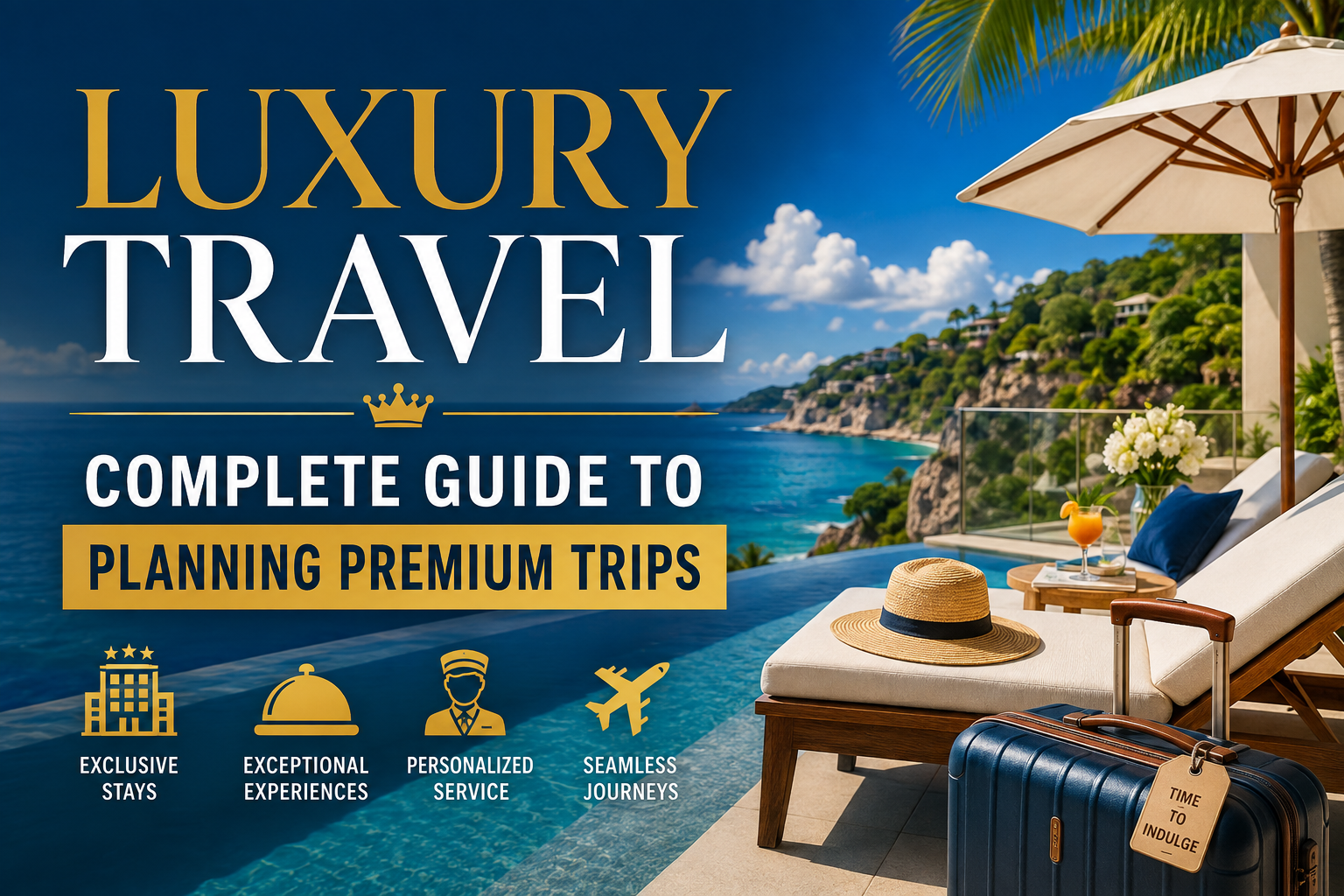
Luxury Travel: Complete Guide to Planning Premium Trips
Luxury travel is about more than expensive hotels, business-class flights, and exclusive restaurants. A truly premium trip is carefully designed around comfort, privacy, convenience, exceptional service, memorable experiences, and personal preferences.
For some travelers, luxury means a private villa overlooking the ocean. For others, it means a seamless airport transfer, a quiet boutique hotel, a private guide, or having an itinerary flexible enough to change without stress.
The best luxury trips rarely happen by accident. They are usually the result of thoughtful planning, careful destination selection, smart budgeting, and attention to details that can dramatically improve the experience.
This complete guide explains how to plan a luxury vacation from start to finish, including choosing destinations, setting a realistic budget, booking premium transportation and accommodation, designing personalized experiences, managing logistics, and avoiding common mistakes.
What Is Luxury Travel?
Luxury travel refers to travel experiences that emphasize exceptional quality, comfort, personalization, exclusivity, and service.
It can include:
- Luxury hotels and resorts
- Private villas and residences
- Business-class or first-class flights
- Private aviation
- Chauffeured transportation
- Private tours
- Exclusive dining experiences
- Wellness retreats
- Luxury cruises
- Safari lodges
- Personalized concierge services
- Private guides
- Exclusive cultural experiences
- Premium travel insurance
- Flexible itineraries
However, luxury does not necessarily mean spending the most money possible.
A traveler can spend a substantial amount on a trip and still have a disappointing experience if the hotel is poorly located, transportation is inconvenient, or the itinerary is overloaded.
The real objective is to spend strategically on the things that matter most to you.
What Makes a Trip Truly Luxurious?
Luxury can be difficult to define because travelers value different things.
One person may prioritize a five-star hotel, while another may care more about privacy and having a private guide.
Several characteristics commonly distinguish premium travel from conventional travel.
Personalization
The experience is designed around the traveler rather than forcing the traveler into a standard package.
Convenience
Transfers, reservations, check-ins, transportation, and other logistics are handled smoothly.
Comfort
Accommodation, transportation, dining, and activities provide a high level of physical comfort.
Privacy
Private villas, secluded resorts, private tours, and exclusive transportation can create a more intimate experience.
Service
Exceptional service can transform an ordinary luxury property into an outstanding experience.
Access
Some premium experiences provide access that is difficult for ordinary travelers to arrange independently.
Time Efficiency
Luxury travelers often pay to reduce unnecessary waiting, complicated transfers, long queues, and logistical friction.
Authenticity
Modern luxury increasingly includes meaningful experiences rather than simply expensive surroundings.
A private cooking lesson with a local chef, for example, may be more memorable than another afternoon in a hotel lounge.
How to Define Your Luxury Travel Style
Before booking anything, identify what luxury means to you.
This prevents spending heavily on things that do not actually improve your trip.
Ask yourself:
- Do I prioritize privacy?
- How important is accommodation?
- Do I prefer adventure or relaxation?
- Do I want a highly structured itinerary?
- Do I prefer complete flexibility?
- Is food a major part of the experience?
- Do I value wellness?
- Do I want cultural immersion?
- Do I want personal service?
- How much travel time am I willing to tolerate?
- Which conveniences are worth paying extra for?
You can then divide your budget according to your priorities.
For example, an adventure-focused traveler might spend more on private guides and unique excursions while choosing a less extravagant hotel.
A relaxation-focused traveler may do the opposite, choosing an exceptional resort and keeping the activity schedule relatively light.
Choosing the Right Luxury Destination
Destination selection is one of the most important decisions in premium travel planning.
The most expensive destination is not necessarily the best destination.
Consider several factors before making your choice.
Climate and Timing
Think about the weather you want during your trip.
Consider:
- Temperature
- Rainfall
- Humidity
- Ocean conditions
- Seasonal activities
- Crowds
Traveling during a quieter period can sometimes provide a more relaxing luxury experience and better value.
Accessibility
A spectacular destination becomes less attractive if reaching it requires multiple exhausting connections.
Consider:
- Flight duration
- Number of connections
- Airport transfers
- Ground transportation
- Travel time between destinations
- Visa requirements
For shorter trips, convenience can be worth paying for.
Accommodation Quality
Research the actual accommodation options available rather than judging a destination solely by reputation.
Look at:
- Luxury hotels
- Boutique properties
- Private villas
- Resorts
- Safari lodges
- Serviced apartments
- Private residences
Experiences
Ask what you can actually do once you arrive.
Potential experiences include:
- Private sightseeing
- Wildlife viewing
- Sailing
- Diving
- Skiing
- Hiking
- Golf
- Culinary experiences
- Spa treatments
- Cultural tours
- Photography
- Art and architecture
- Shopping
A beautiful destination with few experiences that interest you may not be the right choice.
Setting a Luxury Travel Budget
One of the biggest mistakes travelers make is creating a budget based only on the headline hotel and flight prices.
A premium trip can involve many additional expenses.
Your budget should potentially include:
| Category | Examples |
|---|---|
| Flights | Business class, first class, premium economy |
| Accommodation | Hotels, resorts, villas, suites |
| Transportation | Transfers, private drivers, rental vehicles |
| Dining | Restaurants, tasting menus, private dining |
| Activities | Tours, excursions, guides |
| Wellness | Spas, treatments, retreats |
| Insurance | Comprehensive travel coverage |
| Visas | Application and processing fees |
| Tips | Drivers, guides, hotel staff |
| Shopping | Clothing, souvenirs, specialty purchases |
| Communications | Roaming, eSIMs, internet |
| Contingency | Unexpected costs |
A useful approach is to create a base budget and a comfort buffer.
The base budget covers planned expenses.
The buffer provides flexibility for unexpected transportation changes, upgraded meals, additional activities, medical expenses, or other surprises.
Luxury Flights: Choosing the Right Cabin
Premium airfare can represent a significant portion of a luxury travel budget.
The right cabin depends on the length of the journey and what you value.
Premium Economy
Premium economy can provide a useful middle ground.
It may offer:
- More legroom
- Wider seats
- Additional baggage
- Priority services
- Improved meals
For relatively short flights, this can be sufficient for travelers who do not need a fully flat bed.
Business Class
Business class is particularly valuable on long-haul overnight flights.
Benefits can include:
- Lie-flat seats
- Lounge access
- Priority boarding
- Additional baggage
- Better meals
- More privacy
For long journeys, the ability to arrive rested can be one of the most valuable luxury upgrades.
First Class
First class generally provides the highest level of airline service, although the value varies considerably between airlines and routes.
Potential benefits include:
- Larger private suites
- Premium dining
- Personalized service
- Exclusive lounges
- Chauffeur services on certain routes
- Greater privacy
The key is to research what the specific airline and aircraft actually provide.
Planning Luxury Accommodation
Luxury accommodation should be evaluated on more than star ratings.
Two five-star properties can offer completely different experiences.
Location
A spectacular hotel can become inconvenient if it is far from the attractions and experiences you want to enjoy.
Ask:
- How long are transfers?
- Is the property isolated?
- Is transportation readily available?
- Is it close to restaurants?
- Does the location provide the experience you want?
Room or Villa Type
Compare the different accommodation categories.
A standard room at a luxury property may be excellent, but a suite or villa could provide substantially more privacy and space.
Look at:
- Room size
- Views
- Balconies
- Private pools
- Outdoor space
- Bathrooms
- Living areas
- Kitchen facilities
- Butler service
Service
Service can be more important than physical luxury.
Look for evidence of:
- Personalized assistance
- Responsive staff
- Concierge services
- Efficient housekeeping
- Flexible dining
- Airport transfer coordination
Reviews
Do not focus only on the overall rating.
Read recent reviews to identify recurring comments about:
- Service
- Cleanliness
- Noise
- Food
- Maintenance
- Location
- Privacy
- Staff responsiveness
Patterns are often more useful than isolated complaints.
Private Villas vs Luxury Hotels
Private villas and luxury hotels offer different forms of premium travel.
| Private Villa | Luxury Hotel |
|---|---|
| More privacy | More on-site services |
| Greater space | Professional hospitality infrastructure |
| Often suited to groups | Convenient for couples and solo travelers |
| Private pools may be available | Restaurants and spas usually on-site |
| More residential atmosphere | Traditional hotel experience |
| May require more independent planning | Concierge support is often readily available |
A villa can be ideal for families, groups, or travelers who value privacy.
A luxury hotel may be better for travelers who want restaurants, room service, spa facilities, and concierge assistance immediately available.
Designing a Personalized Itinerary
A luxury itinerary should not necessarily be packed with activities.
One of the advantages of premium travel is having enough time to enjoy each experience.
Instead of scheduling six activities in one day, consider selecting one or two major experiences and leaving room for spontaneous decisions.
A well-balanced itinerary might include:
Morning: Private cultural tour
Afternoon: Leisure at the hotel
Evening: Fine dining reservation
The next day could be deliberately slower.
This approach prevents the trip from becoming an expensive version of a stressful schedule.
The Importance of Private Guides
Private guides can significantly improve certain luxury trips.
A knowledgeable guide can provide:
- Historical context
- Local recommendations
- Cultural insights
- Flexible scheduling
- Personalized sightseeing
- Language assistance
- Access to lesser-known locations
A private guide can also adjust the experience according to your interests.
Someone interested in architecture, for example, should receive a very different tour from someone primarily interested in food.
Luxury Dining Experiences
Food can be one of the most memorable parts of a premium trip.
Luxury dining can take many forms:
- Michelin-starred restaurants
- Chef’s tasting menus
- Private dining rooms
- Vineyard meals
- Cooking classes
- Local food tours
- Private chefs
- Farm-to-table experiences
- Traditional culinary experiences
Do not automatically equate high prices with the best experience.
Sometimes an intimate local restaurant or private cooking experience creates a stronger memory than a formal fine-dining establishment.
Research the type of dining experience you actually enjoy.
Planning Luxury Transportation
Transportation between destinations can either enhance or undermine a premium trip.
Options may include:
- Private drivers
- Chauffeured vehicles
- Premium rental cars
- Private boats
- Helicopter transfers
- Luxury trains
- Domestic business-class flights
- Private aviation
Private transportation can be particularly valuable when:
- The destination has limited public transportation.
- You are traveling with children or a group.
- You have significant luggage.
- You have multiple destinations.
- Your schedule is tight.
- Comfort and privacy are priorities.
However, private transportation should be evaluated based on actual convenience rather than prestige alone.
Building a Multi-Destination Luxury Trip
Multi-destination trips can be rewarding but require careful planning.
The biggest mistake is trying to visit too many places.
Moving hotels every night may create unnecessary fatigue.
Instead, consider spending several nights in each location.
A well-designed itinerary might combine:
- A major city
- A cultural destination
- A nature-focused location
- A relaxing resort
This creates variety without excessive movement.
Allow Buffer Time
Flight delays, traffic, weather, and other disruptions can affect even carefully planned itineraries.
Avoid scheduling critical activities immediately after long international journeys whenever possible.
A buffer can protect the rest of the trip from one unexpected delay.
Luxury Travel With Family
Luxury family travel requires a different approach from couples’ travel.
Parents should evaluate:
- Family-friendly accommodation
- Connecting rooms
- Villas
- Children’s activities
- Babysitting services
- Family dining
- Transportation
- Medical access
- Child-friendly excursions
A resort with an excellent children’s program may provide more luxury to parents than an adults-only property that requires constant childcare planning.
The best family luxury experience often reduces the amount of work parents have to do.
Luxury Travel for Couples
Couples may prioritize:
- Privacy
- Romantic dining
- Scenic accommodation
- Spa treatments
- Private excursions
- Sunset experiences
- Couples’ activities
- Flexible schedules
Rather than filling the itinerary, couples can benefit from leaving time for unplanned experiences.
Sometimes a quiet morning overlooking the ocean can be more memorable than another scheduled excursion.
Wellness and Luxury Travel
Wellness has become an important part of premium travel.
A luxury wellness trip might include:
- Spa treatments
- Fitness programs
- Yoga
- Meditation
- Healthy cuisine
- Nature activities
- Sleep-focused accommodations
- Thermal experiences
- Personalized wellness programs
Travelers should distinguish between general wellness experiences and programs that make medical or therapeutic claims.
When health-related services are involved, research the credentials and qualifications of the providers carefully.
Luxury Adventure Travel
Luxury does not have to mean sitting beside a pool.
Premium adventure travel can combine comfort with challenging experiences.
Examples include:
- Luxury safari
- Private sailing
- Guided mountain trekking
- Premium ski trips
- Private diving excursions
- Wilderness lodges
- Luxury expedition cruises
The ideal combination is often high-quality logistics surrounding an adventurous experience.
For example, a demanding day of hiking can become more enjoyable when transportation, accommodation, meals, equipment, and recovery are handled professionally.
Luxury Travel Insurance
Travel insurance is particularly important for expensive trips.
A standard policy may not provide sufficient coverage for every premium itinerary.
Before purchasing insurance, check:
- Medical coverage
- Emergency evacuation
- Trip cancellation
- Trip interruption
- Lost luggage
- Delayed flights
- Expensive equipment
- Pre-existing conditions where applicable
- Adventure activities
- Maximum reimbursement limits
Read the exclusions carefully.
A policy is useful only if it actually covers the circumstances you are concerned about.
How to Use a Luxury Travel Advisor
For complex trips, a specialist travel advisor can save time and reduce logistical problems.
An experienced advisor may help with:
- Destination selection
- Hotel selection
- Private transfers
- Guides
- Dining reservations
- Special occasions
- Itinerary design
- Problem resolution
This can be particularly valuable for multi-country trips or travelers with limited planning time.
However, travelers should still understand what is being booked and why.
A good advisor should explain the reasoning behind recommendations rather than simply presenting expensive options.
How to Research Luxury Hotels Properly
Before booking a premium hotel, examine several sources of information.
Look for:
Official Property Information
Useful for understanding facilities, room categories, and services.
Independent Reviews
Helpful for identifying recurring strengths and weaknesses.
Recent Guest Experiences
Important because service quality and facilities can change.
Location Information
Use maps to understand distances between the hotel and places you plan to visit.
Room-Specific Reviews
A hotel may have excellent rooms in one category and less desirable rooms in another.
Cancellation Terms
Always understand the property’s cancellation and modification policies before committing.
Common Luxury Travel Mistakes
Booking Based Only on Star Ratings
A five-star rating does not guarantee that a property is right for your particular trip.
Overpacking the Itinerary
Luxury travel should reduce stress rather than create it.
Ignoring Transfer Times
A beautiful resort that requires an exhausting series of transfers may not be worth the inconvenience.
Spending Everything on Accommodation
An extraordinary hotel cannot compensate for poor transportation or badly planned activities.
Choosing Prestige Over Personal Preference
The most famous destination or hotel may not be the most enjoyable for you.
Failing to Check Cancellation Policies
Expensive bookings can create significant financial exposure if plans change.
Not Researching Room Categories
The difference between accommodation types can be substantial.
Underestimating Travel Time
A short-looking distance on a map can take hours because of roads, traffic, terrain, or transportation schedules.
Leaving No Flexibility
A completely fixed itinerary can make travel feel like work.
Assuming Expensive Means Better
Price is only one indicator of luxury.
How to Make Luxury Travel More Sustainable
Premium travel can also be approached with greater environmental and social awareness.
Travelers can consider:
- Longer stays instead of frequent short trips
- Smaller locally owned properties
- Responsible wildlife experiences
- Local guides
- Sustainable transportation where practical
- Supporting local businesses
- Reducing unnecessary consumption
- Choosing accommodations with credible sustainability practices
Sustainability should not simply be treated as a marketing label.
Look for specific evidence of responsible practices rather than relying solely on vague environmental claims.
How to Get Better Value From Luxury Travel
Luxury does not require ignoring the budget.
Strategic spending can often produce a better experience than indiscriminate spending.
Consider prioritizing:
Experiences You Cannot Easily Recreate
Private cultural experiences, special events, or rare access may be worth paying more for.
Long-Haul Comfort
For overnight international travel, upgrading the flight can dramatically affect how you feel upon arrival.
Location
Paying more for a well-located hotel can reduce transportation time and make sightseeing easier.
Privacy
A private villa or private excursion may be worth the premium for travelers who value personal space.
Flexibility
Flexible bookings can provide valuable protection when plans are uncertain.
A Practical Luxury Trip Planning Timeline
Six to Twelve Months Before
For complex international trips:
- Choose the destination.
- Establish the budget.
- Research travel requirements.
- Identify preferred hotels.
- Book major flights.
- Reserve high-demand accommodation.
- Research special experiences.
Three to Six Months Before
- Finalize major activities.
- Arrange private transportation.
- Reserve important restaurants.
- Confirm guides.
- Purchase appropriate insurance.
- Review passport and visa requirements.
One to Two Months Before
- Confirm reservations.
- Review transfers.
- Check flight schedules.
- Organize travel documents.
- Arrange connectivity.
- Review cancellation policies.
One Week Before
- Check the itinerary.
- Confirm transportation.
- Download important documents.
- Check weather conditions.
- Organize medications and essential items.
- Share emergency information with relevant family members.
Luxury Travel Planning Checklist
Before departure, make sure you have considered:
- Destination selected
- Travel dates confirmed
- Budget established
- Flights booked
- Accommodation booked
- Transfers arranged
- Travel insurance purchased
- Passport validity checked
- Visa requirements reviewed
- Important activities reserved
- Restaurant reservations made
- Private guides arranged where appropriate
- Special requests communicated
- Emergency contacts recorded
- Travel documents organized
- Payment methods prepared
- Connectivity arranged
- Flexible time included in itinerary
Questions to Ask Before Booking a Premium Trip
Before committing to an expensive itinerary, ask:
What am I actually paying for?
Is the price buying better service, greater privacy, convenience, location, access, or simply branding?
Will this upgrade materially improve the trip?
Not every premium upgrade provides meaningful value.
How much time will I spend in transit?
An impressive itinerary can become exhausting if transportation is poorly planned.
What happens if my plans change?
Understand cancellation, refund, and modification policies.
Does this experience match my interests?
Luxury is personal. Choose experiences that you genuinely value.
Is the provider reputable?
Research service quality, reviews, credentials, and policies.
Designing the Right Luxury Experience
The best premium trip is not necessarily the one with the largest hotel suite, most expensive restaurant, or highest airfare.
It is the trip where money, time, comfort, and experiences are aligned with the traveler’s priorities.
For one person, that could mean a secluded beach villa and a private chef. For another, it might mean a carefully organized cultural journey with exceptional local guides. Someone else may consider a luxury safari, wellness retreat, yacht charter, or first-class city break the ideal experience.
The key is to start with the experience you want and work backward.
Define your priorities, choose a destination that supports them, build a realistic budget, invest in the elements that matter most, and leave enough flexibility to actually enjoy the journey.
Turning a Luxury Trip Into a Memorable Journey
Luxury travel works best when comfort serves the experience rather than becoming the experience itself.
Exceptional accommodation, premium transportation, private guides, fine dining, and personalized service can all make a trip more enjoyable. But the most valuable part of premium travel is often the freedom those elements create: less time dealing with logistics and more time experiencing a destination.
A thoughtfully planned luxury trip therefore combines quality with purpose. Spend more where it genuinely improves your experience, avoid unnecessary extravagance, and build an itinerary that gives you enough space to appreciate where you are.
When those pieces come together, luxury stops being simply about price and becomes what premium travel should ultimately provide: more comfort, more choice, fewer unnecessary hassles, and experiences worth remembering long after the journey ends.





2 Comments
Micle harison
June 7, 2019Lorem ipsum dolor sit amet, usu ut perfecto postulant deterruisset, libris causae volutpat at est, ius id modus laoreet urbanitas. Mel ei delenit dolores.
John Doe
June 7, 2019Some consultants are employed indirectly by the client via a consultancy staffing company.