
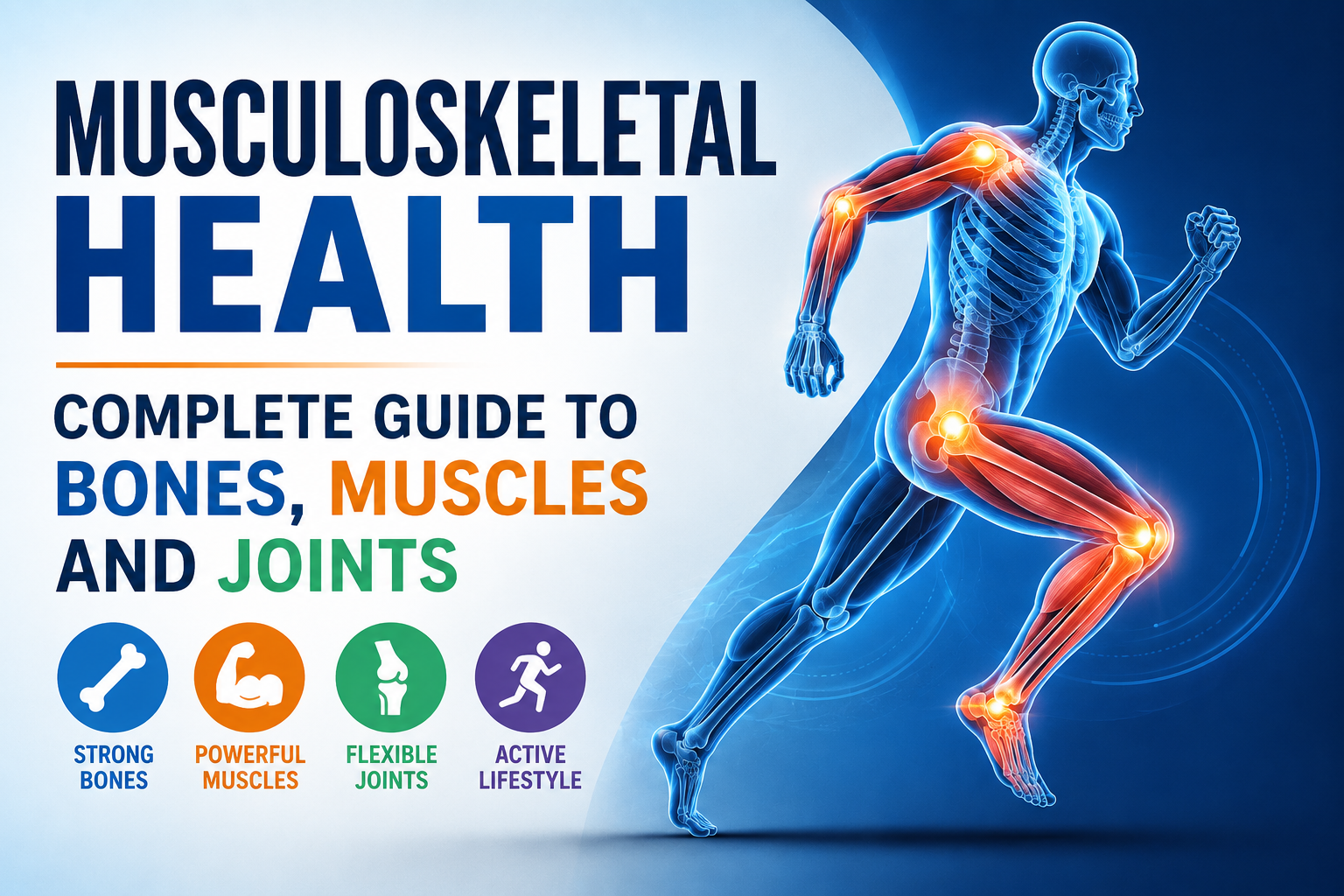
Musculoskeletal Health: Complete Guide to Bones, Muscles and Joints
Your musculoskeletal system is the framework that allows you to stand, walk, lift, bend, work, exercise and perform countless everyday activities. It includes your bones, muscles, joints, tendons, ligaments, cartilage and other connective tissues, all working together to provide stability, movement and protection.
Musculoskeletal health matters throughout life. Problems can range from short-term injuries such as sprains and strains to longer-term conditions such as osteoarthritis, osteoporosis, chronic back pain and muscle loss. The World Health Organization estimates that approximately 1.71 billion people worldwide live with musculoskeletal conditions, making them a major contributor to disability globally. (World Health Organization)
The good news is that many aspects of musculoskeletal health can be supported through regular physical activity, appropriate nutrition, healthy body weight, injury prevention and timely medical care.
This guide explains how the musculoskeletal system works, common problems that can affect it, and practical ways to protect your bones, muscles and joints.
What Is the Musculoskeletal System?
The musculoskeletal system is the body’s movement and support system. It consists primarily of bones, muscles, joints, tendons, ligaments and cartilage. (NIAMS)
These structures don’t work independently. They form an interconnected system that gives your body its shape, protects internal organs and enables movement.
For example, when you walk:
- Your brain sends signals to your muscles.
- Muscles contract and generate force.
- Tendons transfer that force to bones.
- Joints allow the bones to move relative to one another.
- Ligaments help stabilize the joints.
- Cartilage helps provide smooth movement within many joints.
A problem in any part of this chain can affect mobility and physical function.
What Do Bones Do?
Bones are much more than rigid structures that hold the body upright.
According to the National Institute of Arthritis and Musculoskeletal and Skin Diseases (NIAMS), bones:
- Support and protect organs.
- Work with muscles to produce movement.
- House bone marrow, which produces blood cells.
- Store minerals such as calcium.
- Participate in important biological processes. (NIAMS)
The skeleton also provides attachment points for muscles and helps determine the body’s overall structure.
Bone Is Living Tissue
Although bones appear hard and inactive, they are living tissue that continually changes.
Throughout life, old bone is broken down and new bone is formed. Maintaining this balance is important for keeping the skeleton strong.
Bone health is influenced by factors including:
- Physical activity
- Nutrition
- Age
- Hormonal factors
- Genetics
- Certain medical conditions
- Some medications
- Lifestyle habits
This is one reason why protecting bone health isn’t something that should begin only in old age.
How Muscles Support the Body
Muscles generate the force needed for movement and help maintain posture.
Skeletal muscles attach to bones through tendons. When a muscle contracts, it pulls on the associated bone, creating movement around a joint.
Muscles also contribute to:
- Balance
- Posture
- Stability
- Physical strength
- Everyday functional ability
- Exercise performance
Regular muscle-strengthening activity can help preserve or increase muscle mass, strength and power. (CDC)
This becomes particularly important with aging, when maintaining strength can help people continue performing everyday activities independently.
Understanding Joints
A joint is a place where two or more bones meet.
Joints allow different types and ranges of movement. Some provide extensive movement, while others are designed primarily for stability.
Common examples include:
- Shoulder joints — allow extensive arm movement.
- Hip joints — support body weight while allowing leg movement.
- Knee joints — help with walking, running and bending.
- Elbow joints — allow the arm to bend and straighten.
- Wrist joints — provide movement and positioning of the hand.
- Ankle joints — help support and move the body during walking.
Many joints contain cartilage, which helps create smooth movement and provides cushioning between bones.
Tendons, Ligaments and Cartilage Explained
These connective tissues are often confused, but they perform different jobs.
Tendons
Tendons connect muscles to bones.
Their primary role is to transfer the force generated by muscles so that bones can move.
Ligaments
Ligaments connect bones to other bones.
They help stabilize joints and limit excessive or potentially damaging movement.
Cartilage
Cartilage provides flexible support and helps reduce friction in joints.
Articular cartilage covers the surfaces of many bones where they meet within joints.
Damage or deterioration involving these tissues can contribute to pain, stiffness and reduced movement.
Why Musculoskeletal Health Matters
Healthy bones, muscles and joints are essential for ordinary activities.
Climbing stairs, carrying groceries, gardening, playing with children, walking to work or getting out of a chair all depend on musculoskeletal function.
The CDC’s Physical Activity Guidelines note that healthy bones, joints and muscles are important for performing everyday activities without physical limitations. (CDC)
Poor musculoskeletal health can therefore affect much more than exercise.
It can influence:
- Independence
- Work capacity
- Mobility
- Sleep
- Physical activity
- Quality of life
- Participation in social activities
WHO reports that musculoskeletal conditions can significantly restrict mobility and dexterity and are a major contributor to the global need for rehabilitation. (World Health Organization)
Common Musculoskeletal Conditions
Musculoskeletal conditions cover a very broad range of problems. WHO identifies more than 150 different conditions affecting muscles, bones, joints and related connective tissues. (World Health Organization)
Some of the most familiar include:
Osteoarthritis
Osteoarthritis affects joints and can cause pain, stiffness and difficulty moving.
It commonly affects areas such as the:
- Knees
- Hips
- Hands
- Spine
Physical activity can be beneficial for people with osteoarthritis. The CDC notes that regular activity can improve pain management, physical function and quality of life for people with osteoarthritis and other rheumatic conditions. (CDC)
Osteoporosis
Osteoporosis is a condition in which bones become weaker and more vulnerable to fractures.
Because bone loss can occur without obvious symptoms, people may not realize they have reduced bone strength until a fracture occurs.
Bone health is influenced by nutrition, physical activity, age and other risk factors.
Back Pain
Back pain is extremely common and can have many causes.
It may be associated with:
- Muscle or ligament strain
- Physical overexertion
- Repetitive movements
- Poor movement patterns
- Certain spinal conditions
- Injury
- Other medical problems
Persistent or severe back pain deserves appropriate medical assessment rather than being automatically attributed to posture or a minor strain.
Sprains and Strains
A sprain generally involves a ligament.
A strain generally involves a muscle or tendon.
Both can occur during sports, falls, lifting or everyday activities.
Tendon Problems
Tendons can become painful or irritated following repetitive loading or injury.
Examples include problems involving the:
- Achilles tendon
- Rotator cuff
- Elbow tendons
- Wrist tendons
Muscle Loss
Muscle mass and strength can decline with aging and inactivity.
Significant age-related muscle loss is sometimes referred to as sarcopenia. Maintaining physical activity and muscle-strengthening exercise can help support muscle function.
What Causes Musculoskeletal Problems?
There isn’t one universal cause.
Musculoskeletal problems can result from a combination of factors, including:
Aging
The structure and function of bones, muscles and connective tissues change with age.
Muscle strength and bone density can decline, while some joints may become more vulnerable to degenerative changes.
Physical Inactivity
Too little movement can contribute to reduced muscle strength and physical function.
WHO emphasizes that some physical activity is better than none and recommends gradually increasing activity for people who are inactive. (World Health Organization)
Overuse
Repeatedly performing the same movement can place excessive stress on particular muscles, tendons or joints.
This can occur in:
- Sports
- Manual labor
- Construction
- Office work
- Manufacturing
- Household tasks
Acute Injuries
Falls, collisions, lifting accidents and sports injuries can damage bones, muscles, ligaments or tendons.
Nutrition
Bones and muscles require adequate nutrients to develop and function properly.
Calcium and vitamin D are particularly important to bone health, while adequate overall nutrition and protein support muscle maintenance.
Certain Medical Conditions
Some systemic diseases can affect bones, muscles, joints or connective tissues.
This is one reason persistent or unexplained symptoms shouldn’t automatically be treated with home remedies.
How Physical Activity Protects Musculoskeletal Health
Regular movement is one of the most important habits for maintaining musculoskeletal health.
Physical activity can support:
- Muscle strength
- Bone strength
- Joint function
- Balance
- Mobility
- Physical independence
- Healthy body weight
The CDC’s physical activity guidance specifically identifies aerobic, muscle-strengthening and bone-strengthening activities as important components of musculoskeletal health. (CDC)
WHO similarly recommends regular physical activity across the lifespan and emphasizes that physical activity includes much more than formal exercise. Walking, cycling, active recreation, work and household activities can all contribute. (World Health Organization)
How Much Exercise Do You Need?
For generally healthy adults, WHO recommends at least 150–300 minutes of moderate-intensity aerobic physical activity per week, or an equivalent amount of vigorous activity. Muscle-strengthening activities should also be included. (World Health Organization)
However, the right amount and type of activity varies from person to person.
Someone who has been inactive for years shouldn’t necessarily begin with an intense workout program.
A practical progression might look like:
- Start with manageable activity.
- Increase frequency gradually.
- Add resistance training.
- Include balance and mobility work where appropriate.
- Increase intensity progressively.
- Allow adequate recovery.
WHO emphasizes that inactive people should start with small amounts and gradually increase duration, frequency and intensity. (World Health Organization)
Strength Training for Bones and Muscles
Resistance exercise is particularly valuable because it directly challenges muscles.
Examples include:
- Squats
- Lunges
- Push-ups
- Resistance-band exercises
- Weight machines
- Free-weight exercises
- Bodyweight exercises
The appropriate exercise depends on a person’s age, fitness level, experience and health status.
Strength training doesn’t necessarily require a gym.
A properly designed bodyweight or resistance-band program can provide meaningful muscular challenges.
Why Weight-Bearing Exercise Matters
Bones respond to mechanical loading.
Activities such as:
- Walking
- Hiking
- Running
- Dancing
- Stair climbing
- Jumping
- Resistance training
can place loads on the skeleton.
The CDC notes that physical activity is important for bone development in children and adolescents and can help slow age-related declines in bone density. (CDC)
However, people with osteoporosis, previous fractures or certain joint conditions may need individualized guidance about which activities are appropriate.
Nutrition for Strong Bones and Muscles
Exercise is only one part of musculoskeletal health.
A balanced diet provides the energy, protein, vitamins and minerals needed to maintain tissues.
Calcium
Calcium is an important structural mineral in bone.
Good dietary sources can include:
- Dairy products
- Fortified plant-based beverages
- Some fish eaten with bones
- Tofu made with calcium
- Certain leafy green vegetables
- Other calcium-containing foods
Individual calcium requirements vary by age and other factors.
Vitamin D
Vitamin D helps the body absorb calcium and plays an important role in bone health.
Sources include sunlight exposure, certain foods and supplements when appropriate.
People with suspected deficiency or medical risk factors should discuss testing and supplementation with a healthcare professional.
Protein
Protein provides amino acids required for maintaining and repairing muscle tissue.
Useful sources include:
- Eggs
- Fish
- Poultry
- Meat
- Milk and yogurt
- Beans
- Lentils
- Peas
- Soy foods
- Nuts and seeds
Rather than focusing on a single “muscle-building” food, a balanced eating pattern is generally more useful.
Musculoskeletal Health and Aging
Maintaining musculoskeletal health becomes increasingly important as people get older.
Age-related changes can affect:
- Muscle mass
- Muscle strength
- Bone density
- Balance
- Flexibility
- Joint function
- Recovery from injury
These changes can contribute to falls and loss of independence.
Regular physical activity can help older adults maintain physical function. The CDC notes that multicomponent physical activity programs incorporating muscle strengthening and balance training can reduce falls and fall-related injuries in older adults. (CDC)
This doesn’t mean older adults should avoid exercise.
In many cases, appropriately prescribed exercise becomes even more important with age.
How to Protect Your Joints
Joint health isn’t about avoiding movement.
In fact, regular appropriate movement generally helps maintain physical function.
Practical strategies include:
Maintain a healthy body weight
Excess body weight can increase mechanical demands on weight-bearing joints.
Strengthen supporting muscles
Stronger muscles can help improve physical function and joint stability.
Increase training gradually
Sudden increases in exercise volume or intensity can increase injury risk.
Use proper technique
Learning appropriate movement patterns can reduce unnecessary stress during exercise and physical work.
Don’t ignore persistent pain
Pain that continues, worsens or repeatedly returns deserves assessment.
Workplace Habits Can Affect Musculoskeletal Health
Musculoskeletal problems aren’t limited to athletes.
Jobs involving:
- Heavy lifting
- Repetitive movements
- Prolonged sitting
- Awkward postures
- Pushing and pulling
- Frequent bending
- Vibrations
can place stress on the musculoskeletal system.
NIOSH identifies lifting, pushing, pulling and awkward postures as factors that can contribute to work-related musculoskeletal problems. (CDC)
For office workers, practical measures can include:
- Adjusting the workstation.
- Changing positions regularly.
- Taking movement breaks.
- Keeping frequently used items within easy reach.
- Avoiding prolonged static postures.
- Building general strength and fitness.
Ergonomics isn’t simply about buying an expensive chair. It’s about designing tasks and environments so the physical demands are appropriate for the person performing them.
Common Mistakes That Harm Musculoskeletal Health
Staying Completely Inactive
Avoiding all movement because you’re worried about injury can lead to declining strength and function.
Appropriate activity is generally preferable to prolonged inactivity.
Doing Too Much Too Soon
Starting an intense workout program after months or years of inactivity can place excessive stress on tissues.
Progress gradually.
Ignoring Persistent Pain
A recurring or worsening symptom shouldn’t simply be pushed through indefinitely.
Focusing Only on Cardio
Walking and other aerobic activities are valuable, but muscle-strengthening and, where appropriate, bone-loading activities also matter.
Neglecting Balance
Balance becomes increasingly important with age and can help reduce the risk of falls.
Treating Every Pain the Same Way
A minor muscle soreness after exercise isn’t necessarily equivalent to severe or persistent pain.
Different causes require different approaches.
Signs You Should Seek Medical Attention
Many minor aches and injuries improve with appropriate self-care.
However, medical evaluation is important when symptoms are:
- Severe
- Persistent
- Getting worse
- Associated with significant swelling
- Associated with major loss of movement
- Following a serious injury
- Associated with an inability to bear weight
- Accompanied by unexplained weakness or numbness
- Associated with repeated falls
- Accompanied by unexplained weight loss, fever or other concerning symptoms
A suspected fracture or serious injury should be assessed promptly.
Sudden neurological symptoms, severe weakness or loss of bladder or bowel control alongside back symptoms can represent an emergency and require immediate medical attention.
How to Build a Musculoskeletal-Friendly Lifestyle
You don’t need an extreme fitness routine to start supporting your bones, muscles and joints.
A sustainable approach can include:
Move Every Day
Walking, household activities, cycling and recreational activities all count as physical activity. (World Health Organization)
Strengthen Regularly
Include resistance exercises appropriate to your fitness level.
Challenge Balance
Balance exercises can become particularly valuable as you age.
Eat a Balanced Diet
Prioritize adequate protein and a varied diet containing essential nutrients.
Maintain Healthy Body Weight
A healthy weight can reduce mechanical stress on weight-bearing joints.
Avoid Rapid Training Changes
Give your body time to adapt.
Protect Yourself During Risky Activities
Use appropriate equipment and techniques for sports, work and recreational activities.
Get Persistent Problems Checked
Early assessment can help identify conditions that require specific treatment or rehabilitation.
Musculoskeletal Health Across the Lifespan
The priorities change somewhat with age.
| Life stage | Important priorities |
|---|---|
| Childhood | Bone development, active play, balanced nutrition |
| Adolescence | Building bone mass, strength and movement skills |
| Adulthood | Maintaining strength, mobility, fitness and healthy body weight |
| Middle age | Preserving muscle and bone health while preventing injuries |
| Older adulthood | Strength, balance, mobility, fall prevention and independence |
The underlying principle remains the same: use the body appropriately and consistently while giving it the nutrition, recovery and protection it needs.
The Bottom Line on Stronger Bones, Muscles and Joints
Musculoskeletal health isn’t just about avoiding back pain or preventing broken bones. It is about preserving the physical capacity to move, work, exercise and live independently throughout life.
Bones provide structure and protection. Muscles generate movement. Joints provide controlled mobility, while tendons, ligaments and cartilage help connect and stabilize the entire system.
Regular physical activity, strength training, balanced nutrition, appropriate body weight, sensible progression and injury prevention can all contribute to healthier movement and physical function. WHO emphasizes that physical activity benefits people across the lifespan and that even inactive people can benefit by starting with manageable amounts and gradually increasing activity. (World Health Organization)
Most importantly, musculoskeletal health is not something to think about only after an injury occurs. The habits you build today can help determine how well your body moves years from now.
This article is for general educational purposes and does not replace individualized medical advice, diagnosis or treatment. If you have persistent pain, significant injury, unexplained symptoms or a condition affecting your bones, muscles or joints, consult a qualified healthcare professional.



2 Comments
Micle harison
June 7, 2019Lorem ipsum dolor sit amet, usu ut perfecto postulant deterruisset, libris causae volutpat at est, ius id modus laoreet urbanitas. Mel ei delenit dolores.
John Doe
June 7, 2019Some consultants are employed indirectly by the client via a consultancy staffing company.