
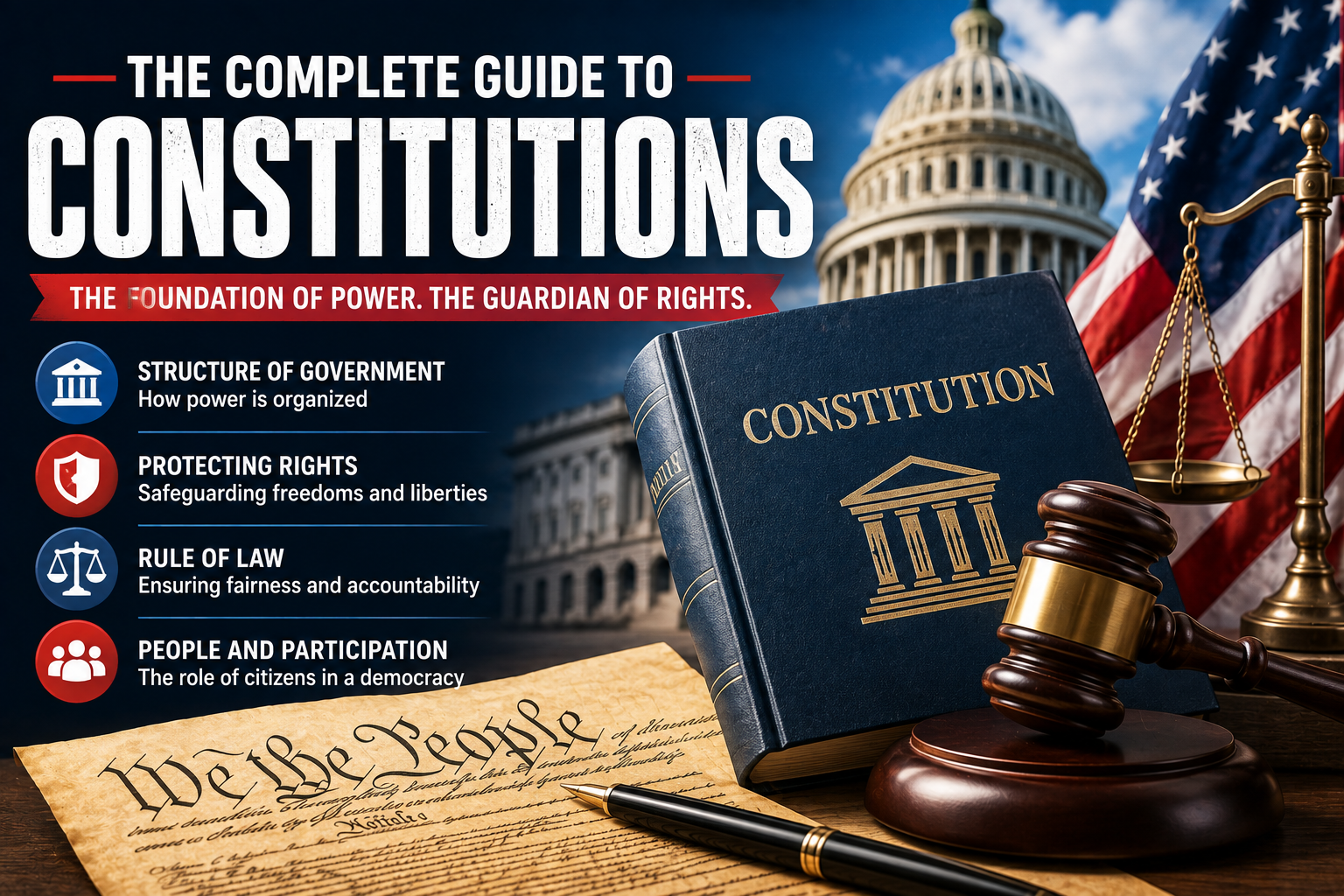
The Complete Guide to Constitutions
Every nation relies on a set of fundamental rules that define how power is exercised, how leaders are chosen, and how citizens’ rights are protected. These foundational rules are contained in a constitution—the highest legal authority in many countries and the framework upon which governments operate.
Constitutions influence nearly every aspect of public life, from elections and lawmaking to the protection of civil liberties and the balance of power among government institutions. While constitutions differ from one country to another, they all serve the common purpose of establishing order, limiting governmental authority, and providing a framework for governance.
This guide explains what constitutions are, how they work, why they matter, and how they continue to shape modern democracies and constitutional governments around the world.
What Is a Constitution?
A constitution is the supreme legal framework that establishes the structure, powers, responsibilities, and limitations of a country’s government.
It typically defines:
- The structure of government
- Distribution of political power
- Rights and freedoms of citizens
- Lawmaking procedures
- Election processes
- Judicial authority
- Constitutional amendment procedures
In many countries, no ordinary law can override the constitution.
Why Constitutions Matter
A constitution provides stability by creating clear rules for governing a nation.
Its purposes include:
- Limiting government power
- Protecting individual rights
- Promoting accountability
- Supporting political stability
- Establishing legal certainty
- Preventing abuse of authority
- Providing peaceful methods for resolving political disputes
Without constitutional rules, governments may lack consistent legal boundaries.
The Core Principles of Constitutional Government
Although constitutions vary, many are built upon several common principles.
Rule of Law
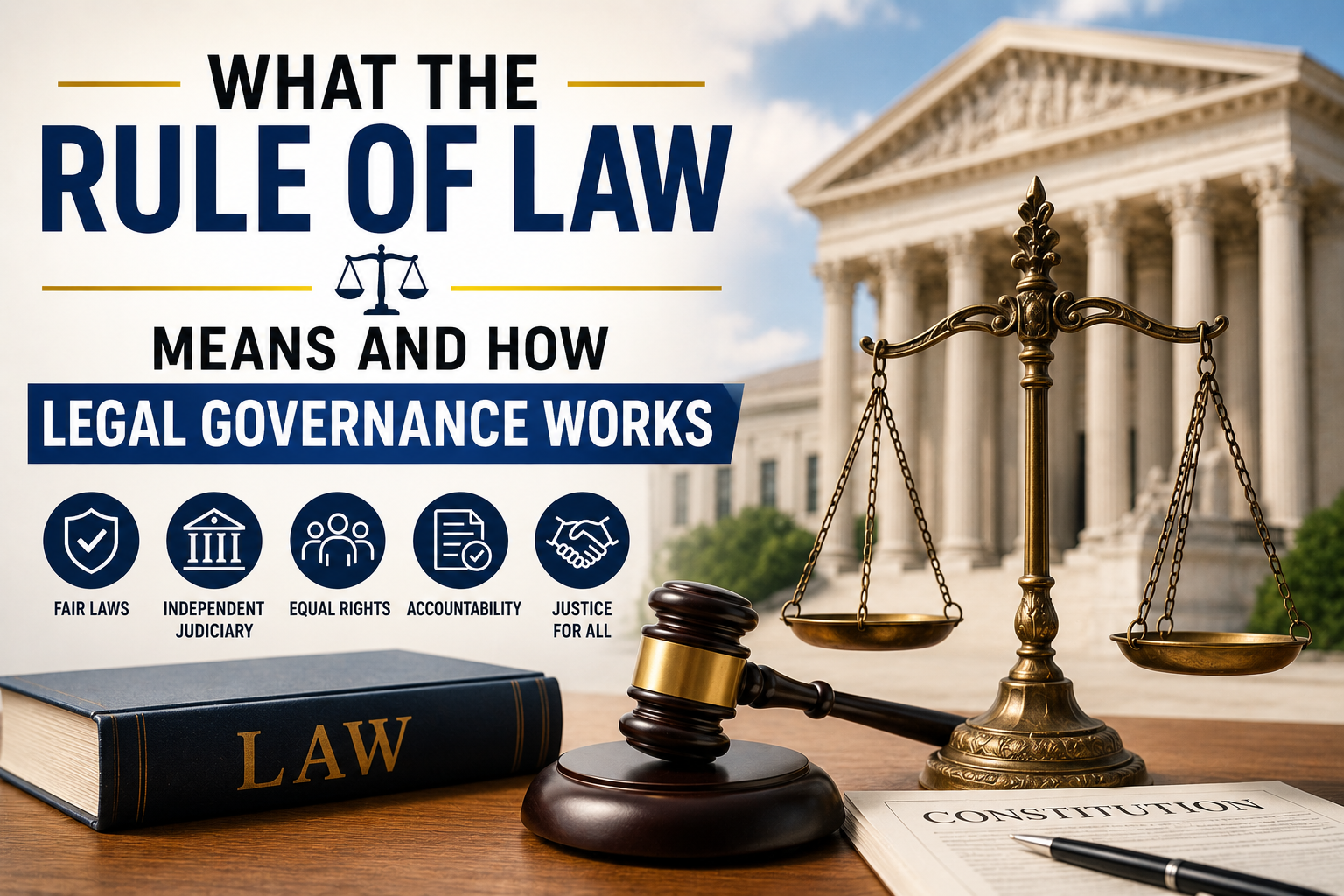
The rule of law means everyone—including government officials—is subject to the law.
This principle promotes:
- Equal treatment
- Accountability
- Fair legal processes
- Predictable governance
No individual is considered above the law.
Separation of Powers
Many constitutions divide government into separate branches to prevent excessive concentration of power.
These branches often include:
Legislative Branch
Responsible for creating laws.
Executive Branch
Responsible for implementing laws and governing.
Judicial Branch
Responsible for interpreting laws and resolving legal disputes.
Separating responsibilities helps create checks on governmental authority.
Checks and Balances
Checks and balances allow different branches of government to monitor and limit one another’s powers.
Examples may include:
- Judicial review
- Legislative oversight
- Executive veto powers
- Legislative approval processes
These mechanisms encourage accountability and reduce the risk of abuse.
Protection of Rights
Many constitutions guarantee certain fundamental rights and freedoms.
Examples include:
- Freedom of speech
- Freedom of religion
- Freedom of assembly
- Equal protection under the law
- Due process
- Property rights
- Voting rights
- Privacy protections
The specific rights recognized vary by country.
Types of Constitutions
Constitutions can take different forms.
Written Constitutions
A written constitution is contained in one or more formal legal documents.
Advantages include:
- Clear legal reference
- Easier public access
- Defined amendment procedures
Many countries use written constitutions.
Unwritten or Partly Uncodified Constitutions
Some constitutional systems rely on a combination of:
- Laws
- Judicial decisions
- Historical documents
- Parliamentary practices
- Constitutional conventions
These systems evolve over time through legal and political developments.
Constitutional Amendments
Societies change over time, and constitutions often include procedures for making amendments.
Amendments may address:
- Expanding voting rights
- Updating governmental structures
- Protecting additional freedoms
- Clarifying constitutional provisions
Many constitutions intentionally make amendments more difficult than passing ordinary legislation to preserve stability while allowing for change.
Constitutional Rights and Freedoms
Constitutions frequently include protections designed to safeguard individual liberty.
Common constitutional protections may include:
- Freedom of expression
- Freedom of the press
- Freedom of association
- Freedom of religion
- Equal treatment before the law
- Fair trials
- Protection against unlawful detention
- Political participation
The interpretation of these rights often develops through court decisions over time.
The Role of Courts
Courts play an essential role in interpreting constitutions.
Their responsibilities may include:
- Resolving constitutional disputes
- Reviewing government actions
- Interpreting constitutional language
- Protecting constitutional rights
- Determining whether laws comply with the constitution
Independent courts help uphold constitutional principles and the rule of law.
Constitutions and Democracy
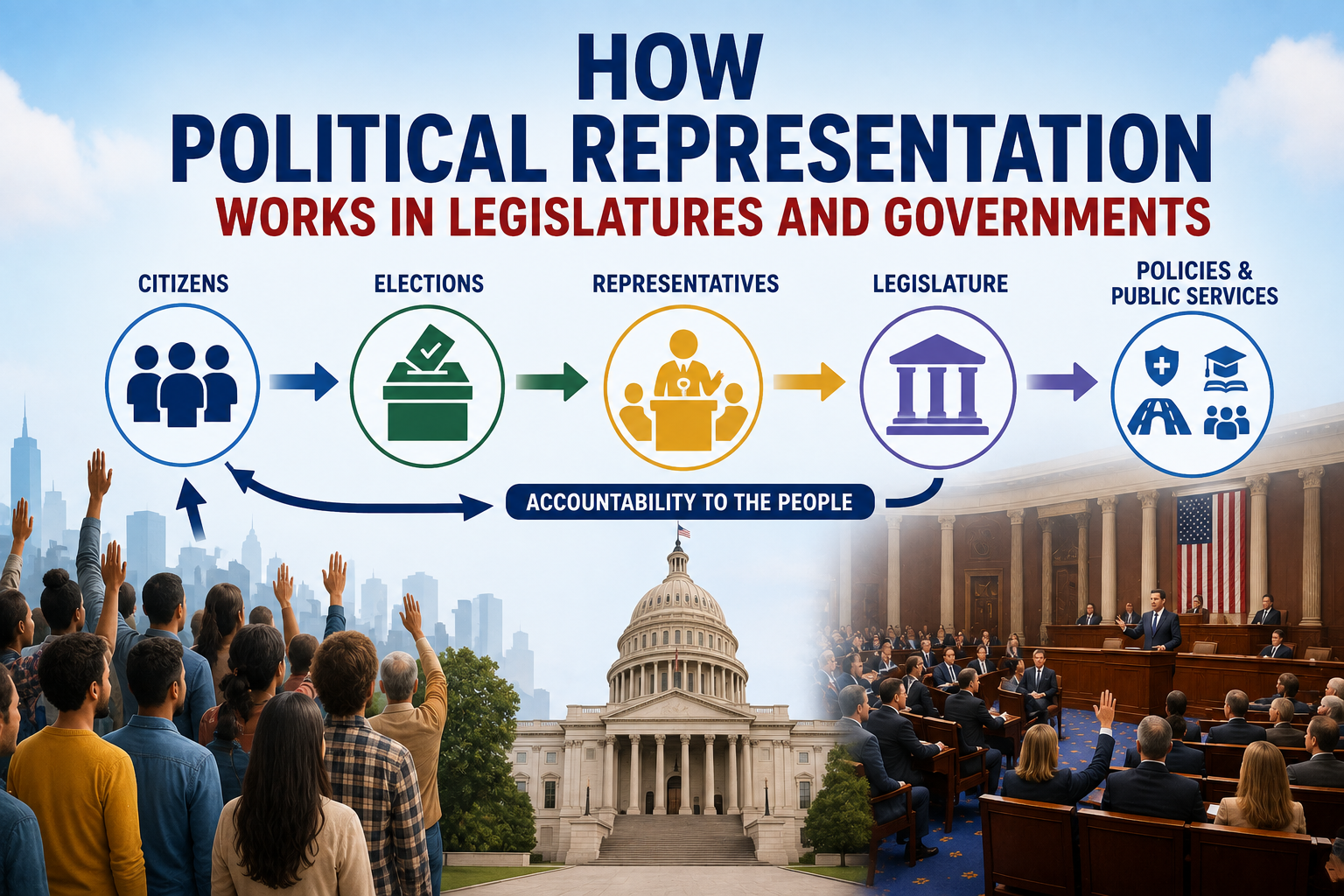
Many democratic systems rely on constitutional principles to guide government.
Constitutions often establish rules regarding:
- Elections
- Political representation
- Government accountability
- Peaceful transfer of power
- Legislative procedures
A constitution alone does not guarantee democracy, but it can provide an important framework for democratic governance.
Responsibilities of Citizens
Constitutions often emphasize not only rights but also civic responsibilities.
Citizens contribute to constitutional systems by:
- Voting in elections
- Respecting the law
- Participating in public life
- Staying informed
- Respecting the rights of others
- Supporting peaceful civic engagement
Active civic participation strengthens democratic institutions.
Common Misconceptions About Constitutions
Myth: Constitutions never change.
Many constitutions include formal amendment procedures that allow changes over time.
Myth: Constitutions only concern lawyers and politicians.
Constitutions affect everyday issues such as voting, education, free speech, property rights, and access to justice.
Myth: Every country has the same constitutional system.
Each nation develops constitutional arrangements based on its own history, legal traditions, and political institutions.
Challenges Facing Constitutional Systems
Modern constitutional governments continue to face evolving challenges, including:
- Political polarization
- Balancing security and civil liberties
- Technological change
- Digital privacy
- Electoral integrity
- Constitutional reform debates
- Judicial independence
- Public trust in institutions
Addressing these issues often requires ongoing public discussion and adherence to constitutional processes.
The Future of Constitutions
As societies continue to evolve, constitutions remain living frameworks that guide governance while adapting to changing circumstances through lawful processes.
Future constitutional discussions may increasingly address topics such as:
- Artificial intelligence
- Data privacy
- Cybersecurity
- Environmental protection
- Digital rights
- Election security
- Global cooperation
Regardless of future developments, constitutional principles are likely to remain central to stable governance.
Final Thoughts
Constitutions provide the legal and institutional foundation for many governments around the world. They define how power is exercised, protect individual rights, establish accountability, and create systems designed to promote fairness and stability.
Although constitutional systems differ across countries, their shared purpose is to create a framework that balances authority with liberty. Understanding how constitutions function helps citizens better appreciate the institutions that shape public life and supports informed participation in democratic processes.
Frequently Asked Questions
What is a constitution?
A constitution is the highest legal framework that establishes the structure, powers, and responsibilities of a country’s government while protecting fundamental rights and outlining how laws are created and applied.
Why is a constitution important?
A constitution provides stability, limits government power, protects individual rights, and establishes rules for governance and the peaceful resolution of political disputes.
Can constitutions be changed?
Many constitutions include formal amendment procedures that allow changes over time while maintaining legal stability.
What is the rule of law?
The rule of law is the principle that everyone—including government officials—is subject to the law and accountable under it.
What is the separation of powers?
The separation of powers divides governmental authority among legislative, executive, and judicial branches to promote accountability and prevent excessive concentration of power.
Key Takeaways
- Constitutions establish the legal framework for government and public institutions.
- They define governmental powers while protecting fundamental rights and freedoms.
- Principles such as the rule of law, separation of powers, and checks and balances support accountable governance.
- Courts play an important role in interpreting and upholding constitutional provisions.
- Constitutions can evolve through lawful amendment processes to address changing societal needs.
- Understanding constitutional principles encourages informed civic participation and appreciation of democratic institutions.



2 Comments
Micle harison
June 7, 2019Lorem ipsum dolor sit amet, usu ut perfecto postulant deterruisset, libris causae volutpat at est, ius id modus laoreet urbanitas. Mel ei delenit dolores.
John Doe
June 7, 2019Some consultants are employed indirectly by the client via a consultancy staffing company.