

The Complete Guide to Fitness for Athletes
Athletic success depends on much more than talent alone. Whether competing professionally, participating in amateur leagues, or training for personal goals, athletes rely on a combination of strength, endurance, speed, flexibility, recovery, and mental resilience to perform at their best.
Modern sports science has shown that effective fitness programs go beyond simply spending hours in the gym. A balanced approach that includes structured training, proper nutrition, quality sleep, and injury prevention helps athletes improve performance while supporting long-term health.
This guide explores the essential elements of athletic fitness and offers practical strategies for athletes at every level.
What Is Athletic Fitness?
Athletic fitness refers to the physical and mental conditioning required to perform effectively in sports and physical competition.
Unlike general fitness, athletic fitness focuses on improving sport-specific abilities such as:
- Strength
- Speed
- Endurance
- Power
- Agility
- Balance
- Coordination
- Flexibility
- Reaction time
Different sports require different combinations of these components.
Why Fitness Matters for Athletes
A well-designed fitness program helps athletes:
- Improve overall performance
- Increase strength and power
- Enhance endurance
- Reduce injury risk
- Improve recovery
- Increase mobility
- Maintain healthy body composition
- Build confidence during competition
Consistent training creates a strong foundation for long-term athletic development.
Components of Athletic Fitness
Strength
Strength allows athletes to generate force efficiently.
Benefits include:
- Better stability
- Improved performance
- Increased injury resistance
- Enhanced muscular endurance
Exercises may include:
- Squats
- Deadlifts
- Push-ups
- Pull-ups
- Lunges
- Resistance training
Power
Power combines strength with speed.
Sports requiring explosive movement include:
- Sprinting
- Basketball
- Football
- Volleyball
- Tennis
- Track and field
Power-focused exercises include:
- Box jumps
- Olympic lifts
- Medicine ball throws
- Plyometric drills
Speed
Speed is essential in many competitive sports.
Training often includes:
- Sprint intervals
- Resistance sprints
- Acceleration drills
- Technique work
- Reaction exercises
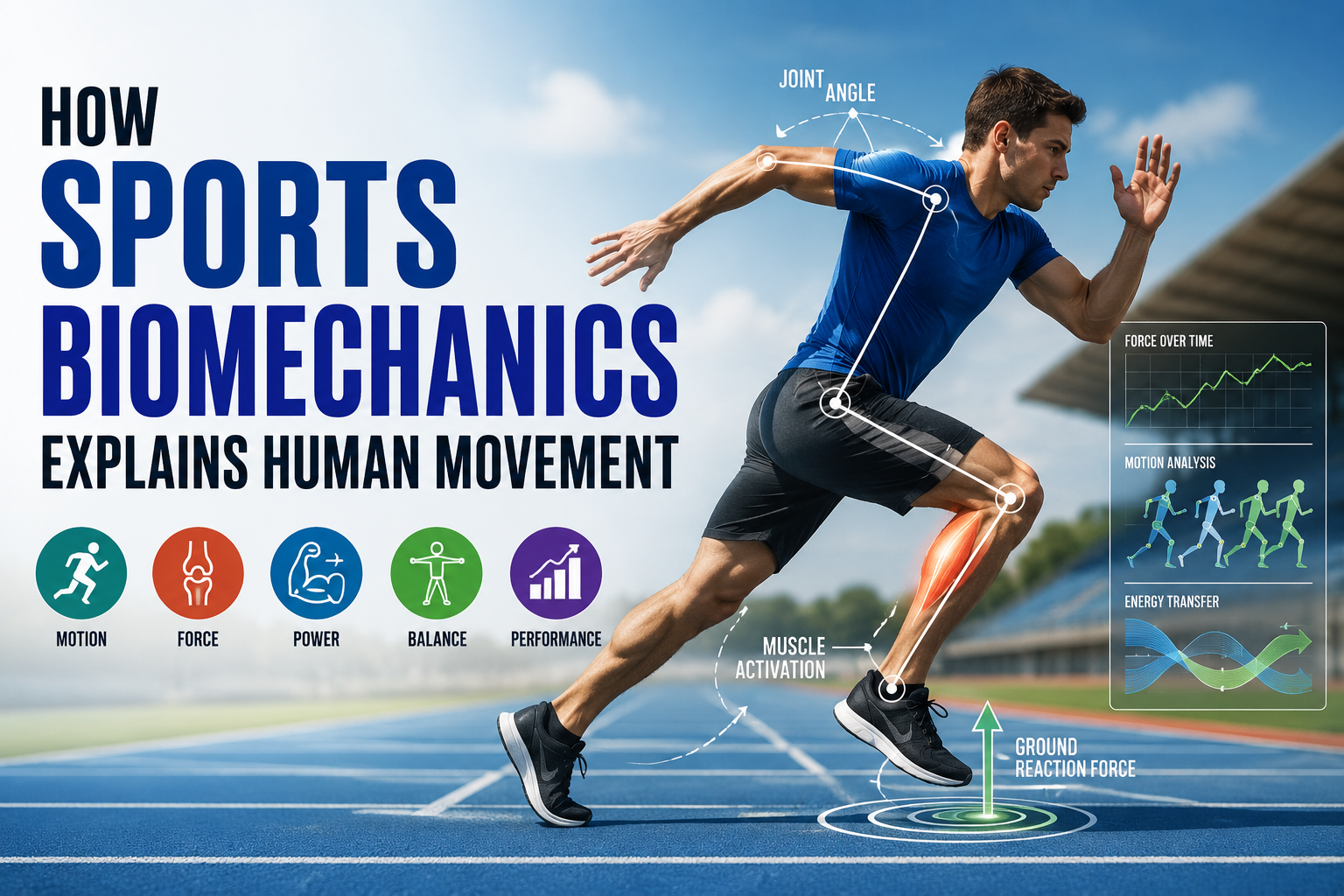
Improving running mechanics can significantly enhance speed.
Endurance
Endurance allows athletes to maintain performance over extended periods.
Training methods include:
- Long-distance running
- Cycling
- Swimming
- Interval training
- Circuit workouts
Both cardiovascular and muscular endurance contribute to athletic success.
Agility
Agility involves changing direction quickly while maintaining balance and control.
Common drills include:
- Cone drills
- Ladder drills
- Shuttle runs
- Side shuffles
Agility is especially valuable in sports involving rapid directional changes.
Flexibility and Mobility
Healthy joints and muscles improve movement efficiency.
Benefits include:
- Greater range of motion
- Better athletic performance
- Reduced injury risk
- Improved recovery
Mobility exercises may include:
- Dynamic stretching
- Yoga
- Foam rolling
- Mobility drills
Building an Effective Training Program
Every athlete benefits from a structured plan tailored to their goals.
A balanced weekly program often includes:
- Strength training
- Sport-specific practice
- Cardiovascular conditioning
- Mobility work
- Recovery sessions
- Rest days
Progressive overload—gradually increasing training demands—helps improve fitness safely over time.
The Importance of Nutrition
Nutrition provides the fuel athletes need for training, competition, and recovery.
A balanced eating pattern generally includes:
Carbohydrates
The body’s primary energy source during many forms of exercise.
Examples:
- Whole grains
- Fruits
- Rice
- Potatoes
- Oats
Protein
Supports muscle repair and growth.
Examples:
- Chicken
- Fish
- Eggs
- Beans
- Greek yogurt
- Tofu
Healthy Fats
Help support hormone production and overall health.
Examples:
- Nuts
- Seeds
- Avocados
- Olive oil
- Fatty fish
Hydration
Staying hydrated supports:
- Performance
- Temperature regulation
- Muscle function
- Recovery
Athletes should replace fluids lost through sweat, especially during intense training or competition.
Recovery Is Part of Training
Improvement occurs during recovery, not just during exercise.
Effective recovery strategies include:
- Quality sleep
- Rest days
- Stretching
- Light recovery sessions
- Foam rolling
- Proper nutrition
- Hydration
Ignoring recovery increases the likelihood of fatigue and injury.
Sleep and Athletic Performance
Sleep plays a critical role in physical recovery and cognitive function.
Benefits of sufficient sleep include:
- Faster muscle repair
- Better concentration
- Improved reaction time
- Enhanced decision-making
- Reduced injury risk
- Greater energy levels
Establishing a consistent sleep schedule can support peak performance.
Preventing Sports Injuries
While injuries cannot always be avoided, good habits help reduce risk.
Important strategies include:
- Warming up properly
- Cooling down after exercise
- Using correct technique
- Wearing appropriate equipment
- Gradually increasing training intensity
- Allowing adequate recovery time
Listening to your body and addressing pain early can prevent minor issues from becoming more serious.
Mental Fitness for Athletes
Athletic success involves mental preparation as well as physical conditioning.
Many athletes develop skills such as:
- Goal setting
- Visualization
- Focus
- Confidence
- Emotional control
- Stress management
Mental resilience helps athletes perform consistently under pressure.
Common Fitness Mistakes Athletes Make
Avoiding these mistakes can improve long-term development.
Common errors include:
- Overtraining
- Skipping recovery
- Poor nutrition
- Inadequate hydration
- Neglecting mobility
- Ignoring pain
- Unrealistic expectations
- Inconsistent training
Balanced progress is generally more sustainable than rapid improvements.
Tracking Progress
Monitoring performance helps athletes identify strengths and areas for improvement.
Useful metrics may include:
- Strength gains
- Running times
- Vertical jump
- Body composition
- Heart rate
- Endurance performance
- Training consistency
Keeping a training journal can provide valuable insights over time.
Looking Ahead
Sports performance continues to evolve through advances in exercise science, nutrition, recovery techniques, and wearable technology. While elite athletes often benefit from specialized coaching and advanced training tools, the core principles of athletic fitness remain the same: consistent training, balanced nutrition, quality recovery, and disciplined preparation.
Whether your goal is to compete at the highest level or simply become a stronger, healthier athlete, focusing on long-term development rather than quick results will provide the greatest rewards.
Frequently Asked Questions
How often should athletes train?
Training frequency depends on the sport, competition schedule, experience level, and recovery needs. A balanced program typically includes training, recovery, and rest throughout the week.
Why is recovery important?
Recovery allows muscles and connective tissues to repair, supports adaptation to training, and helps reduce the risk of overuse injuries.
Do athletes need strength training?
Yes. Strength training can improve power, stability, injury resistance, and overall athletic performance across many sports.
How important is nutrition for athletic performance?
Nutrition provides the energy and nutrients needed for training, recovery, and overall health. A balanced diet supports consistent performance.
Can flexibility improve sports performance?
Maintaining good flexibility and mobility can improve movement efficiency, support proper technique, and help reduce injury risk.
Key Takeaways
- Athletic fitness combines strength, endurance, speed, agility, mobility, and mental preparation.
- Structured training programs should include conditioning, recovery, and sport-specific practice.
- Proper nutrition and hydration support both performance and recovery.
- Quality sleep and rest are essential for long-term athletic development.
- Injury prevention begins with good technique, gradual progression, and consistent recovery.
- Sustainable training habits help athletes perform at their best while protecting long-term health.




2 Comments
Micle harison
June 7, 2019Lorem ipsum dolor sit amet, usu ut perfecto postulant deterruisset, libris causae volutpat at est, ius id modus laoreet urbanitas. Mel ei delenit dolores.
John Doe
June 7, 2019Some consultants are employed indirectly by the client via a consultancy staffing company.