
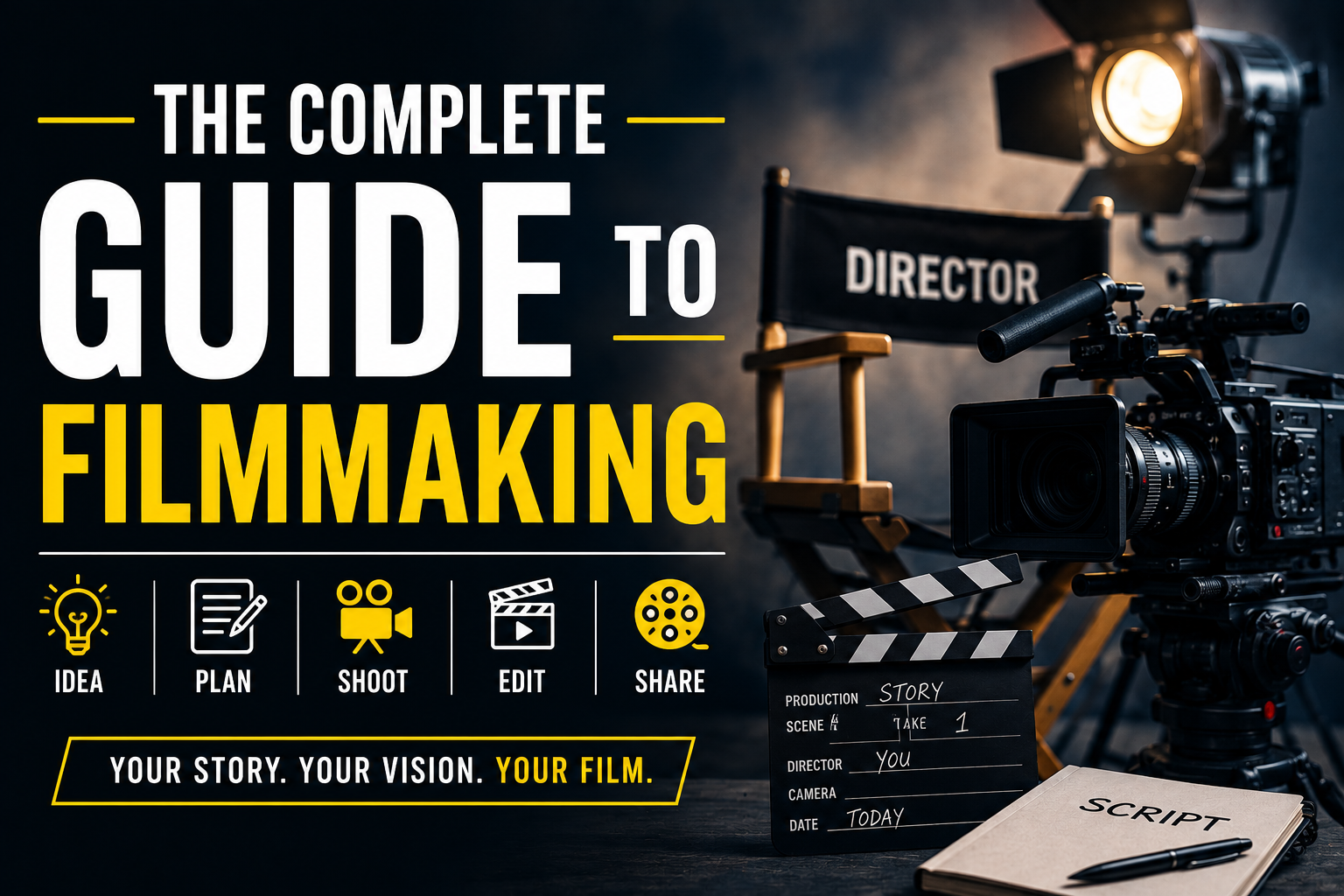
The Complete Guide to Filmmaking
Filmmaking is one of the most powerful forms of storytelling, combining creativity, technology, and collaboration to bring ideas to life on screen. From blockbuster movies and independent films to documentaries and streaming series, filmmaking has the unique ability to entertain, educate, inspire, and connect audiences around the world.
While audiences often see only the finished product, every film is the result of months—or even years—of planning, writing, filming, editing, and teamwork. Whether you’re an aspiring filmmaker, a student, a content creator, or simply curious about how movies are made, understanding the filmmaking process offers valuable insight into one of the world’s most influential creative industries.
This guide explains the fundamentals of filmmaking, the stages of production, the key roles involved, essential equipment, and the technologies shaping the future of cinema.
What Is Filmmaking?
Filmmaking is the process of creating motion pictures by combining visual storytelling, sound, performance, editing, and production techniques into a finished film or video.
A successful production blends artistic vision with technical expertise across multiple disciplines, including:
- Screenwriting
- Directing
- Cinematography
- Acting
- Sound design
- Production design
- Editing
- Visual effects
- Music composition
- Producing
Each department contributes to creating a compelling story that resonates with audiences.
Why Filmmaking Matters
Films do far more than entertain. They influence culture, preserve history, spark conversations, and introduce audiences to new ideas and perspectives.
Filmmaking helps:
- Tell meaningful stories
- Preserve historical events
- Educate audiences
- Inspire creativity
- Showcase diverse cultures
- Raise awareness of important issues
- Build emotional connections
- Support creative industries
- Advance technology
- Create employment across many professions
Cinema remains one of the most influential forms of global communication.
The Three Main Stages of Filmmaking
Most productions follow three primary phases.
1. Pre-Production
Pre-production is the planning stage where the foundation of the project is established.
Key activities include:
- Writing the screenplay
- Creating a production budget
- Developing storyboards
- Casting actors
- Hiring crew members
- Choosing filming locations
- Scheduling production
- Designing costumes
- Planning visual style
- Securing permits
Strong preparation often leads to smoother production and fewer costly delays.
2. Production
Production is the stage where scenes are filmed.
During production, the crew focuses on:
- Directing actors
- Operating cameras
- Recording dialogue
- Managing lighting
- Capturing sound
- Supervising continuity
- Monitoring performances
- Coordinating equipment
- Managing schedules
- Solving on-set challenges
Every department works together to translate the screenplay into visual storytelling.
3. Post-Production
Post-production transforms raw footage into the finished film.
This stage may include:
- Video editing
- Sound editing
- Music composition
- Color grading
- Visual effects
- Audio mixing
- Titles and graphics
- Quality control
- Final mastering
- Distribution preparation
Many filmmakers consider editing to be where the story truly comes together.
The Importance of Storytelling
Every memorable film begins with a strong story.
Successful storytelling often includes:
- Clear themes
- Compelling characters
- Meaningful conflict
- Emotional development
- Logical pacing
- Satisfying resolution
Whether creating action films, documentaries, dramas, or comedies, storytelling remains the heart of filmmaking.
Essential Filmmaking Roles
Producing a film requires collaboration among many professionals.
Producer
Producers oversee financing, planning, scheduling, and overall project management.
Director
The director shapes the creative vision, guiding performances, camera work, and storytelling.
Screenwriter
The screenwriter develops the script, dialogue, characters, and narrative structure.
Cinematographer
Also known as the Director of Photography (DP), the cinematographer designs the film’s visual style through camera placement, lighting, and composition.
Production Designer
This role creates the visual environment, including sets, props, and overall aesthetics.
Editor
Editors assemble footage, refine pacing, and create the final narrative structure.
Sound Team
Sound professionals record dialogue, create sound effects, and mix audio for the finished production.
Cameras and Equipment
Modern filmmaking uses a wide range of equipment depending on project size and budget.
Common tools include:
- Digital cinema cameras
- DSLR and mirrorless cameras
- Professional lenses
- Tripods
- Gimbals
- Drones
- External monitors
- Audio recorders
- Microphones
- Lighting equipment
Advances in technology have made high-quality filmmaking more accessible than ever.
Lighting and Cinematography
Lighting influences mood, realism, and visual storytelling.
Filmmakers use lighting to:
- Guide audience attention
- Create atmosphere
- Reveal emotion
- Shape characters
- Improve image quality
- Enhance visual depth
Cinematography combines lighting, composition, camera movement, and lens selection to create each shot.
The Role of Sound
Excellent sound is just as important as strong visuals.
Sound design includes:
- Dialogue
- Ambient sound
- Foley effects
- Music
- Background audio
- Audio mixing
Well-crafted sound helps immerse audiences in the story and enhances emotional impact.
Editing and Post-Production
Editors shape the pacing, rhythm, and emotional flow of a film.
Post-production may involve:
- Cutting scenes
- Rearranging sequences
- Adding transitions
- Color correction
- Visual effects
- Motion graphics
- Music synchronization
- Audio balancing
Thoughtful editing can significantly improve storytelling and audience engagement.
Visual Effects and CGI
Computer-generated imagery (CGI) allows filmmakers to create environments, creatures, and action sequences that would otherwise be impossible or impractical.
Visual effects are commonly used for:
- Science fiction
- Fantasy
- Superhero films
- Historical recreations
- Disaster scenes
- Digital environments
Modern productions often combine practical effects with digital technology for greater realism.
Independent vs. Studio Filmmaking
Filmmakers work under various production models.
Independent Films
Independent productions often emphasize creative freedom while operating with smaller budgets.
Studio Productions
Major studios typically provide larger budgets, extensive crews, advanced equipment, and global distribution networks.
Both approaches can produce critically acclaimed and commercially successful films.
Common Challenges in Filmmaking
Creating a film often involves overcoming numerous obstacles.
Common challenges include:
- Budget limitations
- Scheduling conflicts
- Weather delays
- Equipment issues
- Creative differences
- Technical problems
- Time constraints
- Location logistics
- Sound interference
- Post-production deadlines
Effective planning and communication help minimize these challenges.
The Future of Filmmaking
Rapid technological innovation continues transforming the entertainment industry.
Emerging developments include:
- Virtual production
- Artificial intelligence-assisted editing
- Real-time rendering
- LED volume stages
- High-resolution digital cameras
- Cloud collaboration
- Motion capture advancements
- Virtual reality storytelling
- Augmented reality experiences
- Interactive films
These technologies are expanding creative possibilities while making professional filmmaking increasingly accessible.
Tips for Aspiring Filmmakers
If you’re interested in filmmaking, consider these practical steps:
- Study storytelling fundamentals.
- Practice writing short scripts.
- Learn basic camera techniques.
- Experiment with lighting.
- Develop editing skills.
- Record high-quality audio.
- Collaborate with other creators.
- Watch films critically.
- Build a portfolio.
- Continue learning through hands-on experience.
Every successful filmmaker improves through consistent practice and experimentation.
Final Thoughts
Filmmaking is a remarkable blend of creativity, technical skill, and collaboration. From the first idea on a blank page to the final edited scene, every stage of the filmmaking process contributes to creating stories that entertain, educate, and inspire audiences around the world.
As technology continues to evolve, filmmaking is becoming more accessible than ever, allowing creators of all backgrounds to share their unique perspectives. Whether your goal is to produce feature films, documentaries, online videos, or short films, understanding the filmmaking process provides a strong foundation for turning creative ideas into compelling visual stories.




2 Comments
Micle harison
June 7, 2019Lorem ipsum dolor sit amet, usu ut perfecto postulant deterruisset, libris causae volutpat at est, ius id modus laoreet urbanitas. Mel ei delenit dolores.
John Doe
June 7, 2019Some consultants are employed indirectly by the client via a consultancy staffing company.