
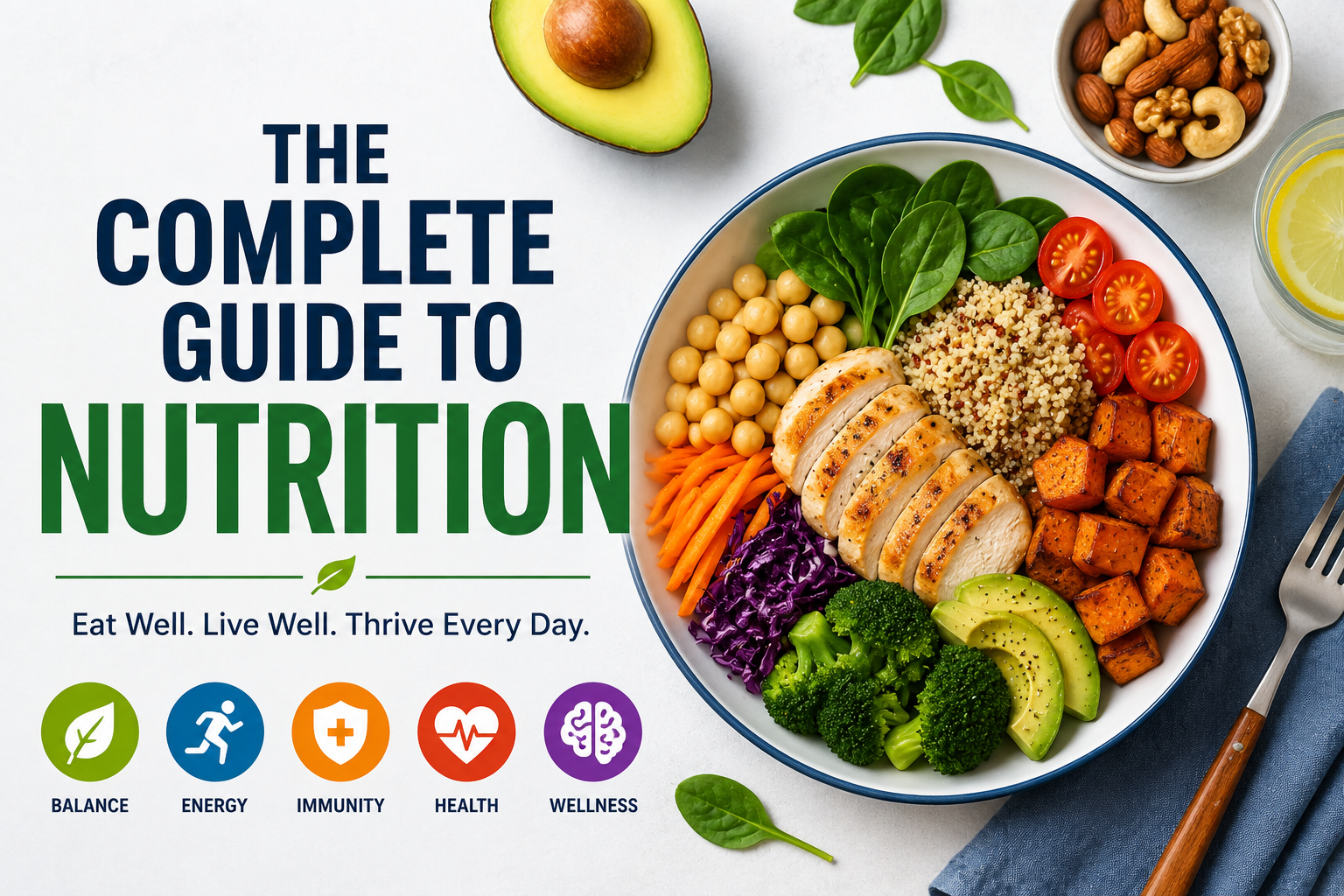
The Complete Guide to Nutrition
Nutrition is one of the most important foundations of good health. Every bite of food and every sip of a beverage provides the body with nutrients that fuel daily activities, support growth and repair, strengthen the immune system, and help reduce the risk of many chronic diseases. Yet, with an overwhelming amount of nutrition advice available online, it can be difficult to separate evidence-based guidance from myths and fad diets.
Healthy nutrition isn’t about strict rules or eliminating entire food groups. Instead, it’s about building balanced eating habits that provide the right combination of nutrients while supporting individual health goals, lifestyle, and long-term well-being.
This guide explains the fundamentals of nutrition, the essential nutrients your body needs, healthy eating principles, common nutrition myths, and practical strategies for creating a balanced diet.
What Is Nutrition?
Nutrition is the process by which the body obtains, absorbs, and uses nutrients from food to produce energy, maintain bodily functions, support growth, and repair tissues.
Good nutrition provides the body with the vitamins, minerals, proteins, fats, carbohydrates, and water needed to function efficiently throughout every stage of life.
A balanced diet supports:
- Energy production
- Brain function
- Muscle growth and repair
- Bone health
- Heart health
- Digestive health
- Hormone production
- Immune function
- Healthy aging
- Disease prevention
Why Nutrition Matters
The foods people eat influence nearly every aspect of physical and mental health.
A nutritious eating pattern can help:
- Maintain a healthy body weight
- Reduce the risk of heart disease
- Support healthy blood sugar levels
- Improve digestive health
- Strengthen bones
- Enhance immune function
- Increase energy levels
- Improve concentration
- Support healthy skin
- Promote overall longevity
Consistent healthy eating habits often have a greater long-term impact than temporary diets.
The Six Essential Nutrients
The body requires six major categories of nutrients.
Carbohydrates
Carbohydrates are the body’s primary source of energy. They are converted into glucose, which fuels the brain, muscles, and other organs.
Healthy carbohydrate sources include:
- Whole grains
- Fruits
- Vegetables
- Legumes
- Oats
- Brown rice
- Sweet potatoes
Choosing complex carbohydrates over highly processed options provides longer-lasting energy and more dietary fiber.
Protein
Protein supports the growth, repair, and maintenance of muscles, tissues, skin, enzymes, and hormones.
Good protein sources include:
- Fish
- Poultry
- Lean meats
- Eggs
- Beans
- Lentils
- Tofu
- Greek yogurt
- Nuts
- Seeds
Protein is especially important during growth, recovery from illness, and regular physical activity.
Healthy Fats
Dietary fats play essential roles in hormone production, brain health, nutrient absorption, and cell function.
Healthier fat sources include:
- Avocados
- Olive oil
- Nuts
- Seeds
- Fatty fish
- Nut butters
Unsaturated fats are generally considered more heart-friendly than diets high in saturated and trans fats.
Vitamins
Vitamins help regulate numerous body processes.
Examples include:
- Vitamin A for vision
- Vitamin C for immune support
- Vitamin D for bone health
- Vitamin E as an antioxidant
- Vitamin K for blood clotting
- B vitamins for energy metabolism
Eating a wide variety of colorful fruits and vegetables helps provide many essential vitamins.
Minerals
Minerals support strong bones, nerve function, muscle contraction, hydration, and oxygen transport.
Important minerals include:
- Calcium
- Iron
- Potassium
- Magnesium
- Zinc
- Phosphorus
- Sodium
- Selenium
A varied, balanced diet generally supplies most essential minerals.
Water
Water is often overlooked despite being one of the body’s most vital nutrients.
It helps:
- Regulate body temperature
- Transport nutrients
- Remove waste
- Lubricate joints
- Support digestion
- Maintain healthy circulation
Daily hydration needs vary depending on age, climate, activity level, and overall health.
Building a Balanced Plate
One practical way to support healthy nutrition is by creating balanced meals.
A nutritious plate often includes:
- Plenty of vegetables
- Whole fruits
- Whole grains
- Lean protein
- Healthy fats
- Water as the primary beverage
Balancing these food groups helps provide a wide range of nutrients while promoting steady energy levels throughout the day.
The Importance of Dietary Fiber
Fiber is a type of carbohydrate that the body cannot fully digest.
Benefits include:
- Supporting digestive health
- Promoting regular bowel movements
- Helping manage cholesterol levels
- Supporting healthy blood sugar control
- Increasing feelings of fullness
- Supporting beneficial gut bacteria
High-fiber foods include:
- Fruits
- Vegetables
- Beans
- Lentils
- Oats
- Whole grains
- Nuts
- Seeds
Nutrition Throughout Life
Nutritional needs change over time.
Children
Growing children require sufficient calories, protein, calcium, iron, healthy fats, and vitamins to support healthy development.
Adults
Adults benefit from balanced nutrition that supports energy, weight management, heart health, and disease prevention.
Older Adults
Older adults may require increased attention to:
- Protein intake
- Calcium
- Vitamin D
- Hydration
- Nutrient-dense foods
These nutrients help maintain muscle mass and bone health.
Common Nutrition Myths
Nutrition misinformation is widespread. Some common misconceptions include:
Myth: Carbohydrates Are Always Unhealthy
Whole grains, fruits, vegetables, and legumes provide important nutrients and are valuable parts of a balanced diet.
Myth: Fat Should Be Completely Avoided
Healthy fats are essential for brain function, hormone production, and overall health.
Myth: Skipping Meals Helps Everyone Lose Weight
Regular, balanced meals may help many people maintain energy levels and avoid overeating later in the day.
Myth: Detox Diets Cleanse the Body
The liver and kidneys naturally remove waste products from the body. Most commercial detox diets lack strong scientific evidence supporting their claims.
Myth: One Superfood Can Transform Health
No single food provides every nutrient the body needs. Overall dietary patterns matter far more than any individual ingredient.
Healthy Eating Habits
Small, sustainable habits often have the greatest long-term impact.
Helpful strategies include:
- Eat a variety of foods.
- Choose whole foods more often.
- Limit highly processed foods.
- Read nutrition labels.
- Practice portion awareness.
- Stay hydrated.
- Plan balanced meals.
- Include fruits and vegetables daily.
- Cook at home more frequently.
- Enjoy treats in moderation.
Consistency is generally more beneficial than striving for perfection.
Nutrition and Chronic Disease Prevention
Healthy eating patterns are associated with a lower risk of many chronic conditions, including:
- Heart disease
- Type 2 diabetes
- High blood pressure
- Obesity
- Certain cancers
- Osteoporosis
Nutrition works alongside:
- Regular physical activity
- Quality sleep
- Stress management
- Preventive healthcare
These factors together support long-term wellness.
The Future of Nutrition
Advances in nutritional science continue to improve understanding of how food affects human health.
Emerging areas of research include:
- Personalized nutrition
- Gut microbiome health
- Nutrigenomics
- Digital nutrition tracking
- Artificial intelligence in meal planning
- Sustainable diets
- Plant-based nutrition
- Precision health
As research evolves, future dietary recommendations may become increasingly tailored to individual genetics, lifestyles, and health conditions.
Final Thoughts
Nutrition is far more than simply counting calories or following the latest diet trend. It is the lifelong process of nourishing the body with the nutrients needed to support physical health, mental well-being, and overall quality of life.
By focusing on balanced meals, whole foods, appropriate portions, and consistent healthy habits, individuals can build eating patterns that support energy, resilience, and long-term health. While no single food guarantees perfect health, a varied and nutrient-rich diet remains one of the most effective tools for promoting wellness and reducing the risk of chronic disease throughout life.



2 Comments
Micle harison
June 7, 2019Lorem ipsum dolor sit amet, usu ut perfecto postulant deterruisset, libris causae volutpat at est, ius id modus laoreet urbanitas. Mel ei delenit dolores.
John Doe
June 7, 2019Some consultants are employed indirectly by the client via a consultancy staffing company.