
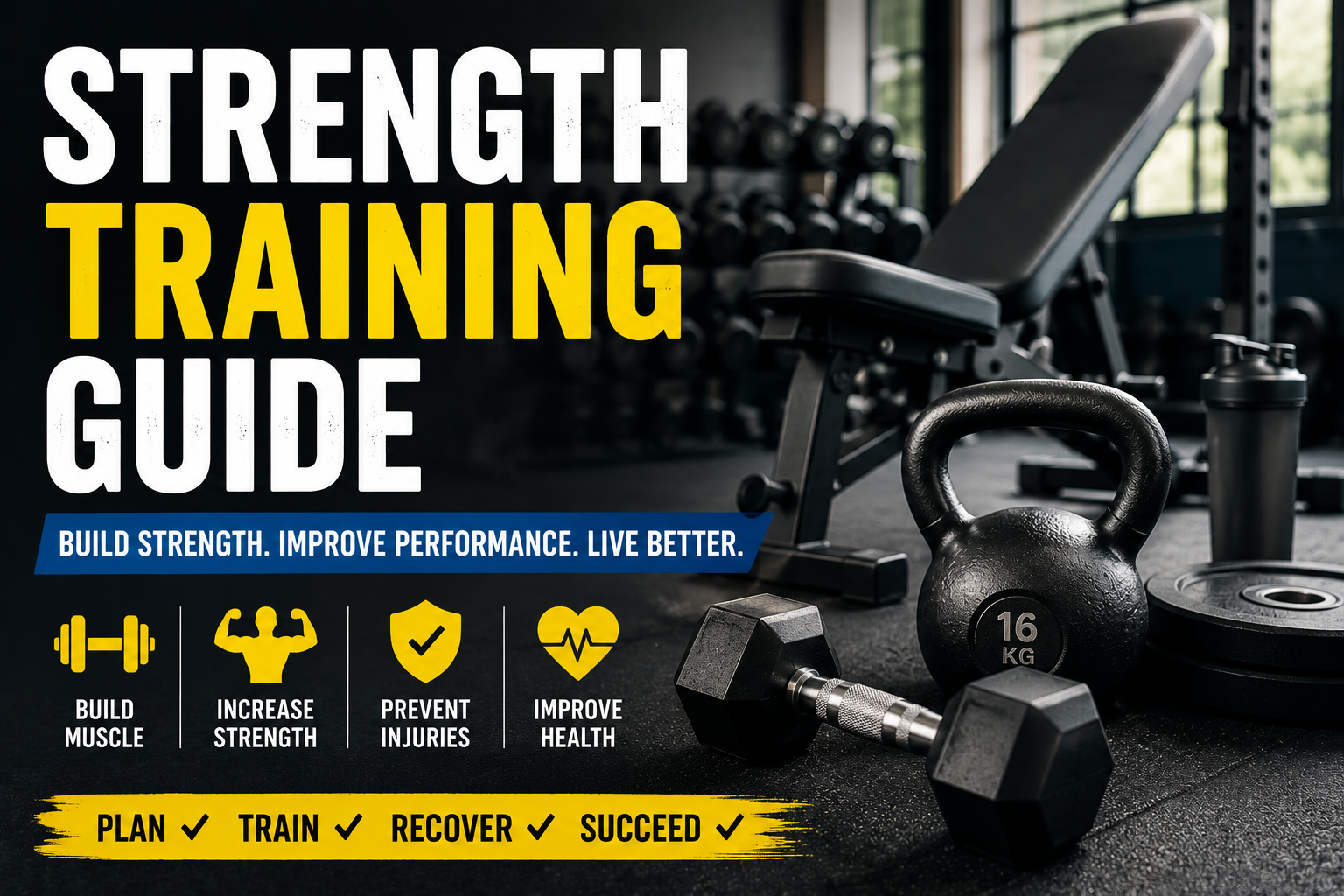
Strength Training Guide
Strength training has become one of the most effective and widely recommended forms of exercise for improving overall health, athletic performance, and quality of life. While many people associate strength training with bodybuilding or competitive sports, it offers benefits for individuals of all ages and fitness levels—from beginners looking to improve daily function to athletes aiming to maximize performance.
Regular strength training helps build muscle, increase bone density, improve metabolism, enhance posture, and reduce the risk of injury. Combined with proper nutrition, recovery, and consistency, it forms the foundation of a well-rounded fitness routine.
This guide explains what strength training is, its benefits, different training methods, essential exercises, and practical tips for building a safe and effective program.
What Is Strength Training?
Strength training, also known as resistance training or weight training, involves exercises that challenge muscles by working against resistance. The goal is to improve muscular strength, endurance, power, and overall physical function.
Resistance can come from various sources, including:
- Free weights
- Resistance machines
- Resistance bands
- Body weight
- Kettlebells
- Medicine balls
- Cable systems
- Sandbags
By gradually increasing resistance over time, muscles adapt by becoming stronger and more efficient.
Why Strength Training Matters
Strength training provides benefits that extend far beyond muscle development.
Regular resistance exercise can help:
- Increase muscular strength
- Improve muscle endurance
- Build lean muscle mass
- Support healthy weight management
- Increase bone density
- Improve posture
- Enhance athletic performance
- Reduce injury risk
- Improve balance and coordination
- Support healthy aging
It also contributes to better functional movement, making everyday tasks such as lifting groceries, climbing stairs, or carrying children easier.
How Muscles Become Stronger
During resistance exercise, muscle fibers experience small amounts of stress. During recovery, the body repairs these fibers, making them stronger and better prepared for future challenges.
This process depends on:
- Progressive training
- Adequate protein intake
- Sufficient sleep
- Proper recovery
- Consistent exercise
Improvement occurs gradually over weeks and months rather than after individual workouts.
Types of Strength Training
There are several approaches to resistance training depending on individual goals.
Bodyweight Training
Exercises use the body’s own weight as resistance.
Examples include:
- Push-ups
- Squats
- Lunges
- Pull-ups
- Planks
- Dips
Bodyweight exercises are accessible and require little or no equipment.
Free Weights
Dumbbells, barbells, and kettlebells allow for a wide range of natural movement patterns while engaging stabilizing muscles.
Resistance Machines
Machines guide movement through fixed paths, making them useful for beginners and targeted muscle training.
Resistance Bands
Elastic bands provide adjustable resistance and are portable, affordable, and suitable for home workouts.
Functional Strength Training
Functional exercises improve movements used in daily life by emphasizing balance, coordination, stability, and multiple muscle groups.
Major Muscle Groups
A balanced strength program trains all major muscle groups.
These include:
Chest
Responsible for pushing movements.
Back
Supports posture and pulling movements.
Shoulders
Assist lifting and overhead movements.
Arms
Biceps and triceps help with pulling and pushing activities.
Core
The abdominal and lower back muscles stabilize the body during nearly every movement.
Legs
Quadriceps, hamstrings, calves, and glutes generate power for walking, running, jumping, and lifting.
Training all major muscle groups promotes balanced development and reduces injury risk.
Fundamental Strength Exercises
Many effective training programs emphasize compound exercises that work multiple muscle groups simultaneously.
Popular compound exercises include:
- Squats
- Deadlifts
- Bench press
- Overhead press
- Rows
- Pull-ups
- Lunges
- Romanian deadlifts
Isolation exercises can complement compound movements by targeting specific muscles when appropriate.
Progressive Overload
One of the most important principles of strength training is progressive overload.
This means gradually increasing training demands over time by adjusting:
- Weight
- Repetitions
- Sets
- Exercise difficulty
- Training frequency
- Time under tension
Gradual progression encourages continuous adaptation while reducing the risk of overtraining.
Proper Technique Comes First
Using correct exercise technique is essential for maximizing benefits while minimizing injury risk.
Focus on:
- Controlled movement
- Proper posture
- Full range of motion
- Appropriate weight selection
- Stable breathing
- Balanced body positioning
Beginners often benefit from learning movement patterns before attempting heavier loads.
The Importance of Recovery
Muscles grow stronger during recovery—not during the workout itself.
Recovery includes:
- Quality sleep
- Rest days
- Balanced nutrition
- Hydration
- Light movement
- Stretching
- Stress management
Allowing adequate recovery supports long-term progress and helps reduce the likelihood of injury.
Nutrition for Strength Training
Exercise and nutrition work together to support performance and recovery.
Important nutritional considerations include:
Protein
Protein provides amino acids that support muscle repair and growth.
Common sources include:
- Lean meat
- Fish
- Eggs
- Dairy products
- Beans
- Lentils
- Tofu
- Greek yogurt
Carbohydrates
Carbohydrates supply energy for workouts and help replenish glycogen stores afterward.
Healthy Fats
Healthy fats support hormone production and overall health.
Hydration
Adequate fluid intake supports muscle function, performance, and recovery.
A balanced eating pattern generally provides the nutrients needed for most recreational strength-training programs.
Common Beginner Mistakes
Many new lifters can improve results by avoiding common errors.
Examples include:
- Using excessive weight too soon
- Poor exercise technique
- Skipping warm-ups
- Neglecting recovery
- Ignoring lower-body training
- Inconsistent workouts
- Unrealistic expectations
- Not tracking progress
- Insufficient sleep
- Inadequate nutrition
Patience and consistency usually produce better long-term results than rushing progress.
Strength Training for Different Goals
Training programs vary depending on objectives.
General Fitness
Focus on balanced full-body workouts performed consistently.
Muscle Growth
Higher training volume combined with progressive overload supports muscular development.
Athletic Performance
Sport-specific strength, power, speed, and mobility become priorities.
Healthy Aging
Resistance training helps maintain muscle mass, bone health, balance, and independence as people grow older.
Programs should be tailored to individual fitness levels, goals, and any medical considerations.
Strength Training Myths
Several misconceptions discourage people from starting resistance exercise.
Myth: Strength Training Is Only for Athletes
People of all ages and fitness levels can benefit from appropriately designed resistance training.
Myth: Lifting Weights Always Leads to Excessive Muscle Size
Muscle development depends on many factors, including genetics, training style, nutrition, and overall lifestyle.
Myth: Older Adults Should Avoid Strength Training
Properly supervised resistance exercise can support healthy aging by improving strength, balance, and functional independence.
Myth: More Exercise Always Produces Better Results
Recovery is a critical part of progress. Overtraining without adequate rest may reduce performance and increase injury risk.
The Future of Strength Training
Technology continues to influence fitness and sports performance.
Emerging developments include:
- AI-powered workout coaching
- Smart fitness equipment
- Wearable performance tracking
- Motion analysis
- Personalized training plans
- Virtual coaching
- Connected home gyms
- Data-driven recovery monitoring
These innovations help individuals make informed training decisions while improving consistency and safety.
Final Thoughts
Strength training is one of the most effective ways to improve physical fitness, enhance athletic performance, and support long-term health. By focusing on proper technique, balanced programming, progressive overload, adequate nutrition, and sufficient recovery, individuals can safely build strength while reducing the risk of injury.
Whether your goal is to improve sports performance, maintain independence as you age, increase overall fitness, or simply feel stronger in everyday life, consistent strength training offers lasting benefits that extend well beyond the gym. Small, steady improvements over time often lead to the greatest long-term success.





2 Comments
Micle harison
June 7, 2019Lorem ipsum dolor sit amet, usu ut perfecto postulant deterruisset, libris causae volutpat at est, ius id modus laoreet urbanitas. Mel ei delenit dolores.
John Doe
June 7, 2019Some consultants are employed indirectly by the client via a consultancy staffing company.