
The Olympic Games Explained: History, Sports, Traditions, and Why the Olympics Unite the World
Every four years, billions of people around the globe tune in to watch the world’s greatest athletes compete on the biggest stage in sports. The Olympic Games are more than a sporting event—they are a global celebration of excellence, friendship, determination, and international unity. From record-breaking performances and unforgettable moments to inspiring stories of perseverance, the Olympics continue to capture the imagination of audiences across generations.
Whether you’re a lifelong sports fan or simply curious about the Games, understanding the Olympics provides insight into one of humanity’s oldest and most influential traditions. This guide explains the history of the Olympic Games, how they work, their symbols, and why they remain one of the world’s most important international events.
What Are the Olympic Games?
The Olympic Games are an international multi-sport competition where athletes from countries around the world compete in a wide range of sporting events.
The Games are organized by the International Olympic Committee (IOC) and are held every four years.
Today, there are two main editions:
- Summer Olympic Games
- Winter Olympic Games
Together, they feature thousands of athletes representing hundreds of National Olympic Committees.
The Origins of the Olympic Games
The Olympic Games began in Ancient Greece, traditionally dated to 776 BCE.
They were held in the sanctuary of Olympia and were dedicated to Zeus, the king of the Greek gods.
Originally, only free Greek men were allowed to compete.
Ancient Olympic events included:
- Running races
- Wrestling
- Boxing
- Chariot racing
- Pentathlon
The Games continued for more than a thousand years before ending in the late fourth century CE.
The Birth of the Modern Olympics
The modern Olympic Games were revived by Baron Pierre de Coubertin, a French educator who believed sport could promote peace and international understanding.
The first modern Olympics took place in:
- Athens, Greece
- 1896
Only a small number of countries and athletes participated, but the event laid the foundation for today’s global competition.
Summer vs Winter Olympics
| Summer Olympics | Winter Olympics |
|---|---|
| Athletics | Alpine Skiing |
| Swimming | Figure Skating |
| Gymnastics | Ice Hockey |
| Football | Snowboarding |
| Basketball | Curling |
| Tennis | Speed Skating |
| Cycling | Bobsleigh |
| Volleyball | Biathlon |
The Summer Games feature significantly more sports and athletes than the Winter Games.
How Often Are the Olympics Held?
The Summer and Winter Olympics each occur every four years.
However, because they alternate every two years, an Olympic event takes place every two years.
Example timeline:
- Summer Olympics
- Two years later: Winter Olympics
- Two years later: Summer Olympics
This schedule allows continuous global engagement with Olympic sports.
Who Organizes the Olympics?
The Olympic Movement includes several organizations.
International Olympic Committee (IOC)
The IOC oversees:
- Olympic planning
- Host city selection
- Rules and governance
- Athlete participation
- Olympic values
National Olympic Committees
Each participating country has its own Olympic committee responsible for selecting athletes and supporting national teams.
International Sports Federations
Each Olympic sport is governed by an international federation responsible for competition rules and qualification systems.
How Athletes Qualify
Qualifying for the Olympics is highly competitive.
Athletes generally earn places through:
- World championships
- Continental championships
- Qualification tournaments
- International rankings
- Minimum performance standards
Each sport has its own qualification process.
Olympic Sports
The Olympic program evolves over time.
Popular Summer Olympic sports include:
- Athletics (Track and Field)
- Swimming
- Gymnastics
- Basketball
- Football (Soccer)
- Tennis
- Cycling
- Rowing
- Volleyball
- Wrestling
- Boxing
- Weightlifting
- Archery
- Shooting
- Surfing
- Skateboarding
- Sport Climbing
Popular Winter Olympic sports include:
- Figure Skating
- Ice Hockey
- Alpine Skiing
- Cross-Country Skiing
- Snowboarding
- Speed Skating
- Curling
- Biathlon
- Freestyle Skiing
- Bobsleigh
New sports are occasionally added to reflect changing interests and broaden the appeal of the Games.
The Olympic Rings
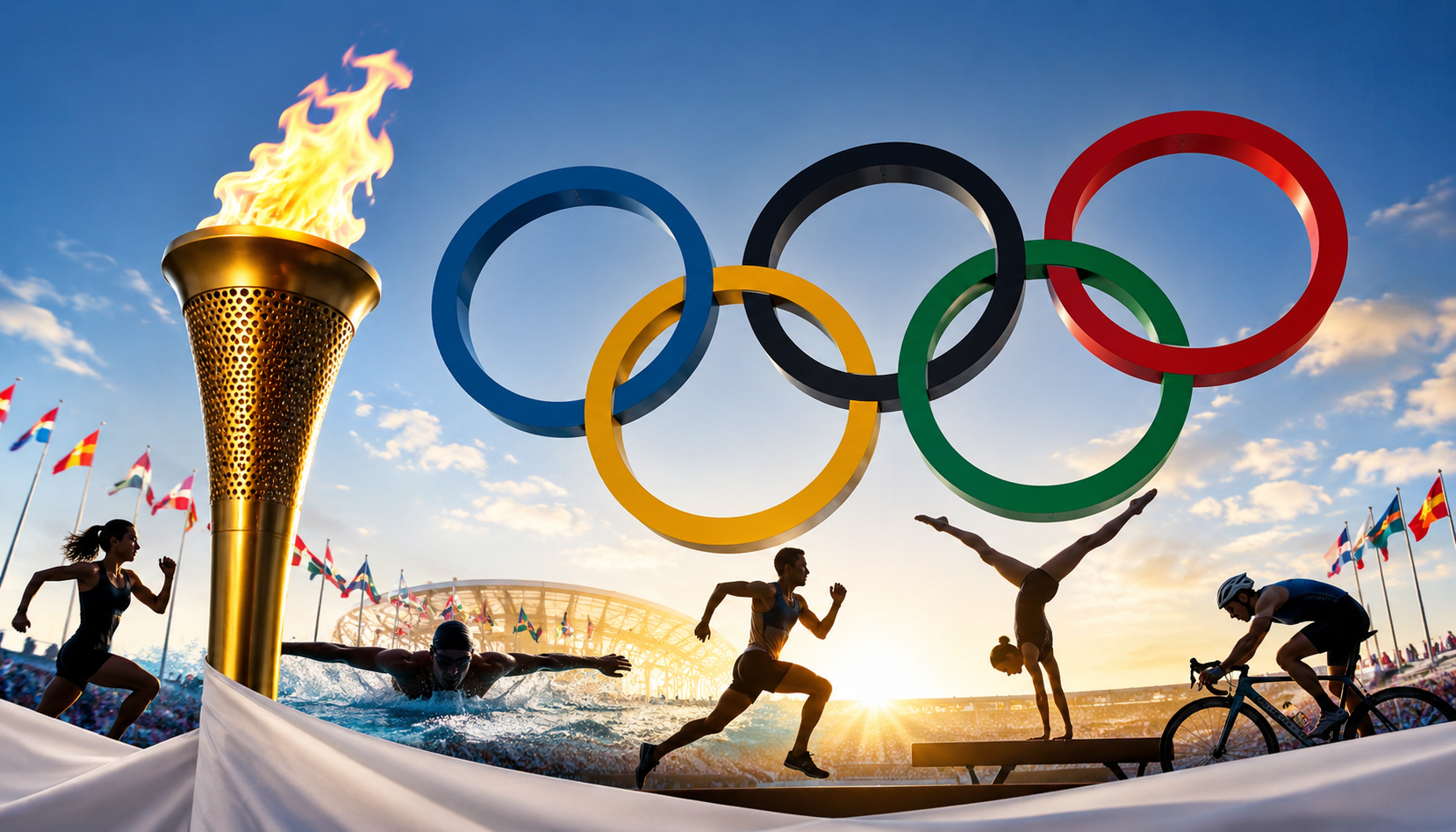
The five Olympic rings are among the world’s most recognizable symbols.
The rings represent:
- Unity
- Friendship
- International cooperation
Their interconnected design symbolizes the coming together of athletes from around the world.
The colors—blue, yellow, black, green, and red—combined with the white background, were chosen because every national flag contains at least one of these colors.
The Olympic Flame
The Olympic flame is lit in Olympia, Greece, using the Sun’s rays reflected by a parabolic mirror.
A torch relay then carries the flame to the host city.
The flame symbolizes:
- Peace
- Continuity
- Hope
- Human achievement
The relay has become one of the most anticipated traditions before every Olympic Games.
The Olympic Motto
The Olympic motto is:
“Citius, Altius, Fortius – Communiter.”
Translated from Latin:
- Faster
- Higher
- Stronger
- Together
The addition of “Together” emphasizes solidarity and cooperation among athletes and nations.
Why the Olympics Matter
The Olympic Games represent more than winning medals.
They promote:
- International friendship
- Cultural exchange
- Respect
- Inclusion
- Fair competition
- Peaceful cooperation
For many athletes, simply qualifying for the Olympics represents the achievement of a lifelong dream.
Economic Impact of the Olympics
Hosting the Olympics can bring significant benefits.
Potential advantages include:
- Infrastructure development
- Tourism
- Global visibility
- Job creation
- Urban renewal
- Increased investment
However, hosting also presents challenges such as:
- High construction costs
- Long-term maintenance
- Budget management
- Environmental impacts
Successful planning is essential to maximize long-term benefits.
Technology at the Olympics
Modern Olympics rely heavily on advanced technology.
Examples include:
- Electronic timing systems
- High-speed cameras
- Instant replay
- Athlete performance analytics
- Biomechanics
- Broadcasting technology
- Artificial intelligence for scheduling and logistics
- Wearable performance monitoring
Technology helps ensure fairness while enhancing the viewing experience.
Memorable Olympic Traditions
Several traditions have become synonymous with the Games.
These include:
- Opening Ceremony
- Parade of Nations
- Olympic Oath
- Medal Ceremonies
- Closing Ceremony
- Torch Relay
- Olympic Village
- Cultural performances
These traditions celebrate not only athletic excellence but also cultural diversity.
Olympic Values
The Olympic Movement promotes three core values:
Excellence
Giving one’s best through dedication and effort.
Friendship
Building understanding across cultures through sport.
Respect
Respecting opponents, rules, diversity, and fair play.
These values extend beyond competition into everyday life.
Challenges Facing the Olympics
Despite its popularity, the Olympic Movement faces several ongoing challenges.
These include:
- Doping
- Athlete welfare
- Rising hosting costs
- Environmental sustainability
- Political tensions
- Gender equality
- Commercial pressures
- Scheduling complexities
The IOC continues working with athletes, federations, and host cities to address these issues.
The Future of the Olympic Games
The Olympics continue evolving.
Future trends may include:
- Greater sustainability
- More gender-balanced participation
- Digital fan experiences
- Artificial intelligence in event management
- Esports discussions
- Enhanced athlete support
- Carbon reduction initiatives
- Smarter venues
The goal remains preserving Olympic traditions while adapting to modern expectations.
Common Myths About the Olympics
| Myth | Reality |
|---|---|
| Athletes are paid for competing in the Olympics. | Participation itself does not guarantee payment; support varies by country and sport. |
| The Olympic rings represent five continents individually. | The rings symbolize the unity of the Olympic Movement and the coming together of athletes worldwide. |
| Every sport is permanent. | The Olympic program changes over time as sports are added or removed. |
| Winning gold always makes athletes wealthy. | Financial outcomes vary depending on sponsorships, endorsements, and national support. |
| The Olympics are only about competition. | They also celebrate culture, friendship, education, and international cooperation. |
Frequently Asked Questions
Who can compete in the Olympics?
Athletes who meet qualification standards established by their sport’s international federation and are selected by their National Olympic Committee.
Why are the Olympic rings different colors?
The colors were chosen so that every national flag includes at least one of them.
What is the Olympic Village?
The Olympic Village is a residential complex where athletes and officials live during the Games, encouraging interaction among participants from around the world.
How are host cities selected?
Cities submit bids, which are evaluated by the International Olympic Committee based on factors such as infrastructure, sustainability, legacy plans, and organizational capability.
What is the difference between the Olympics and the Paralympics?
The Paralympic Games are elite international competitions for athletes with eligible physical, visual, or intellectual impairments. They are held shortly after the Olympic Games in the same host city.
Why do the Olympics continue to be so popular?
The Games combine elite athletic competition with inspiring personal stories, cultural celebration, international participation, and traditions that appeal to audiences worldwide.
Conclusion
For more than two millennia, the Olympic Games have symbolized the pursuit of excellence, perseverance, and international unity. From their origins in Ancient Greece to the modern global spectacle watched by billions, the Olympics continue to inspire athletes and spectators alike with extraordinary performances and unforgettable moments.
Beyond medals and records, the true legacy of the Olympic Games lies in their ability to bring people together across cultures, languages, and borders through a shared appreciation for sport and human achievement. As the Games evolve to embrace new technologies, greater inclusivity, and sustainable practices, they remain a powerful reminder that competition can unite rather than divide—and that the pursuit of excellence is a journey shared by people around the world.




2 Comments
Micle harison
June 7, 2019Lorem ipsum dolor sit amet, usu ut perfecto postulant deterruisset, libris causae volutpat at est, ius id modus laoreet urbanitas. Mel ei delenit dolores.
John Doe
June 7, 2019Some consultants are employed indirectly by the client via a consultancy staffing company.