
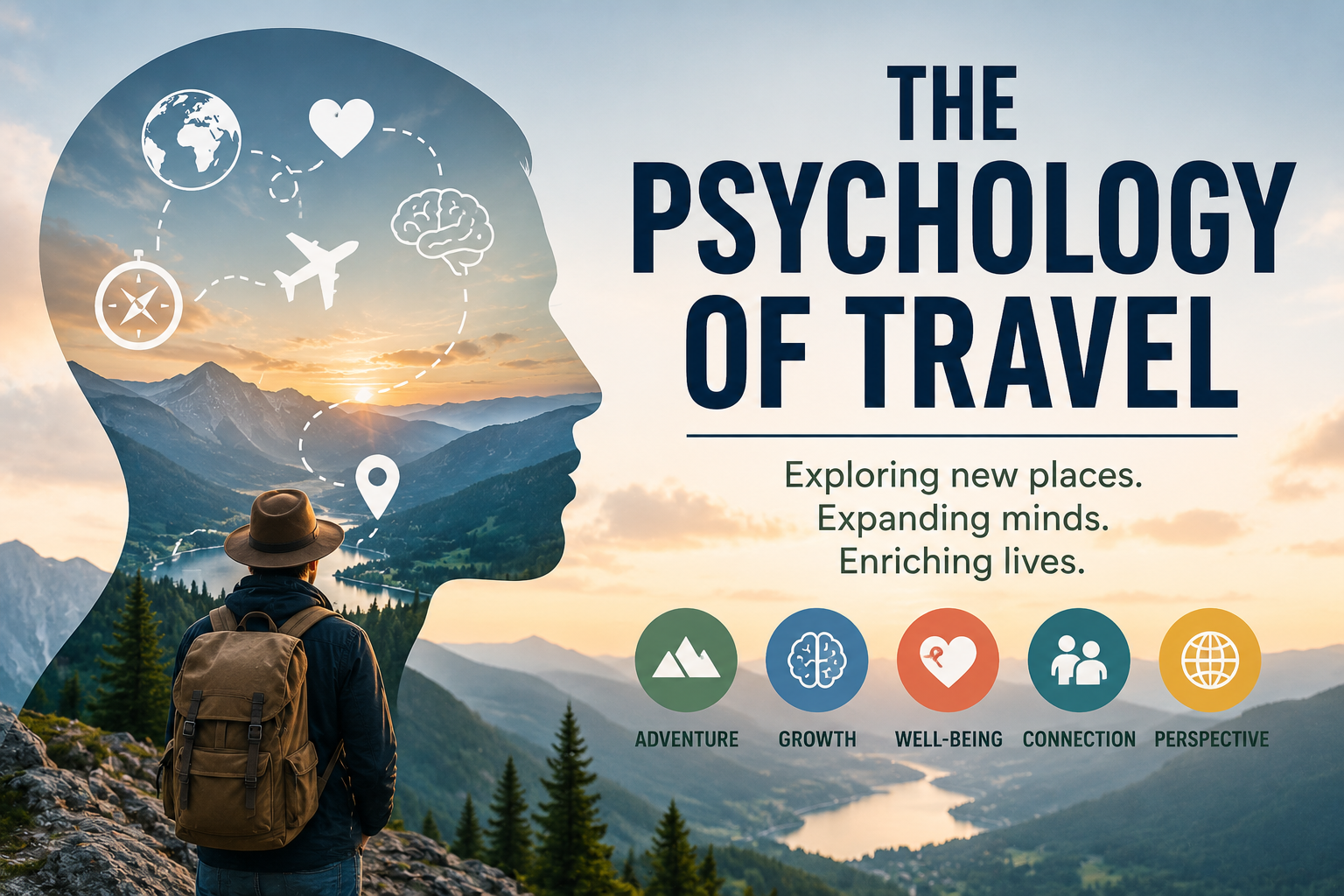
The Psychology of Travel: Why Exploring New Places Changes the Way We Think, Feel, and Grow
Travel is often described as one of life’s greatest teachers. Beyond the excitement of discovering new destinations, tasting unfamiliar cuisines, or capturing breathtaking landscapes, travel has a profound effect on the human mind. It challenges our assumptions, broadens our perspectives, strengthens resilience, and creates memories that can last a lifetime. While vacations are commonly associated with relaxation, psychologists increasingly recognize travel as a powerful tool for personal growth, emotional well-being, and cognitive development.
Whether it’s a weekend road trip or a journey across continents, stepping outside our familiar surroundings can reshape the way we see ourselves and the world. This guide explores the psychology of travel, the science behind its benefits, and why meaningful travel experiences can enrich our lives long after we’ve returned home.
What Is the Psychology of Travel?
The psychology of travel examines how traveling influences our thoughts, emotions, behaviors, and overall mental well-being.
Unlike simply taking time off work, travel exposes us to:
- New cultures
- Different languages
- Unfamiliar environments
- Diverse perspectives
- Unexpected challenges
- Novel experiences
These experiences stimulate the brain in ways that everyday routines rarely do, encouraging learning, adaptability, and emotional growth.
Why Humans Are Drawn to Travel
Curiosity is deeply rooted in human nature.
Throughout history, exploration has helped humans:
- Discover resources
- Build civilizations
- Exchange knowledge
- Develop trade
- Understand different cultures
Today, that same curiosity motivates millions of people to explore the world for leisure, education, adventure, or personal fulfillment.
Travel satisfies our natural desire for novelty while offering opportunities for discovery and connection.
The Brain Loves New Experiences
Our brains are designed to respond to novelty.
When we encounter unfamiliar environments, the brain becomes more alert, processing new sights, sounds, smells, and experiences.
This heightened engagement may:
- Improve attention
- Stimulate learning
- Strengthen memory formation
- Encourage creativity
- Build cognitive flexibility
Routine helps us function efficiently, but occasional novelty challenges the brain to adapt and grow.
Travel and Mental Well-Being
One of the most immediate benefits of travel is its impact on emotional health.
Many people report feeling:
- Happier
- More relaxed
- More optimistic
- Less stressed
- More energized
Travel often creates psychological distance from daily responsibilities, allowing the mind to recover from ongoing pressures.
Even anticipating a trip can boost mood and increase positive emotions.
How Travel Reduces Stress
Daily life often involves:
- Deadlines
- Commuting
- Financial concerns
- Household responsibilities
- Digital overload
Travel temporarily changes these routines.
By spending time in new environments—especially natural settings—many people experience reduced stress and improved relaxation.
Activities such as walking through forests, exploring coastal areas, or visiting quiet countryside destinations may further support mental well-being.
Building Confidence Through Travel
Travel often requires solving unfamiliar problems.
Examples include:
- Navigating public transportation
- Communicating across language barriers
- Managing unexpected delays
- Trying unfamiliar foods
- Adapting to different customs
Successfully handling these situations builds confidence and reinforces the belief that we can overcome uncertainty.
Each challenge becomes an opportunity to develop resilience.
Travel Expands Perspective
Experiencing different cultures helps us recognize that there are many ways of living, working, and thinking.
Travel encourages:
- Empathy
- Open-mindedness
- Cultural understanding
- Tolerance
- Appreciation for diversity
Meeting people with different backgrounds often challenges stereotypes and broadens our worldview.
Creativity and Travel
Many artists, writers, entrepreneurs, and scientists have credited travel with inspiring new ideas.
Exposure to unfamiliar environments encourages the brain to make new connections between ideas.
Research suggests that diverse experiences can enhance:
- Creative thinking
- Problem-solving
- Innovation
- Adaptability
Stepping outside familiar routines often allows fresh perspectives to emerge.
The Role of Nature in Travel
Natural environments have unique psychological benefits.
Visiting places such as:
- Mountains
- Beaches
- Forests
- National parks
- Lakes
- Deserts
may promote relaxation, improve mood, and reduce mental fatigue.
Time spent outdoors also encourages physical activity, which further supports mental and physical health.
Social Connections and Shared Experiences
Travel strengthens relationships by creating shared memories.
Whether traveling with family, friends, or a partner, shared experiences often become meaningful stories that are remembered for years.
Travel also creates opportunities to meet new people from different cultures, fostering friendships and cross-cultural understanding.
Travel Helps Us Live in the Present
During everyday life, people often focus on future tasks or past concerns.
Travel naturally encourages mindfulness.
Exploring a new city, hiking a scenic trail, or watching a sunset invites us to pay closer attention to the present moment.
This heightened awareness can improve appreciation and reduce mental distractions.
Why Memories of Travel Last
Travel experiences often stand out because they involve novelty and emotion.
The brain is more likely to retain memories that are:
- Unique
- Emotionally meaningful
- Personally significant
- Unexpected
This explains why people often remember vacations years later while forgetting many ordinary days.
Solo Travel and Personal Growth
Traveling alone offers unique psychological benefits.
Solo travelers often develop:
- Independence
- Self-confidence
- Decision-making skills
- Adaptability
- Self-awareness
Without relying on familiar companions, individuals often discover strengths they didn’t realize they possessed.
Family Travel and Childhood Development
Travel provides valuable learning experiences for children.
Benefits may include:
- Exposure to different cultures
- Improved communication skills
- Greater curiosity
- Historical understanding
- Environmental awareness
- Stronger family bonds
Educational travel can complement classroom learning by making history, geography, and science more tangible.
Challenges of Travel
While travel offers many rewards, it also presents challenges.
Common difficulties include:
- Jet lag
- Language barriers
- Unexpected expenses
- Transportation delays
- Culture shock
- Homesickness
- Travel fatigue
Approaching these challenges with flexibility often turns them into valuable learning experiences.
Responsible and Meaningful Travel
Modern travelers increasingly consider the impact of their journeys.
Responsible travel includes:
- Respecting local cultures
- Supporting local businesses
- Reducing waste
- Conserving natural environments
- Following local customs
- Protecting wildlife
- Choosing sustainable accommodations where possible
Thoughtful travel helps preserve destinations for future generations.
The Rise of Wellness Travel
Many people now travel specifically to improve their health and well-being.
Popular wellness experiences include:
- Yoga retreats
- Spa resorts
- Meditation retreats
- Nature escapes
- Hiking adventures
- Digital detox vacations
These trips combine relaxation with personal development and self-care.
Travel in the Digital Age
Technology has transformed how people explore the world.
Travelers now use smartphones for:
- Navigation
- Translation
- Booking accommodations
- Finding restaurants
- Sharing experiences
- Digital payments
While technology increases convenience, balancing screen time with genuine experiences can help travelers remain fully engaged with their surroundings.
Common Myths About Travel
| Myth | Reality |
|---|---|
| Travel is only about sightseeing. | It also supports learning, personal growth, and emotional well-being. |
| Expensive trips are always better. | Meaningful experiences can be found close to home or on modest budgets. |
| Solo travel is only for experienced travelers. | With preparation, many people enjoy safe and rewarding solo trips. |
| Travel is an escape from reality. | It often helps people return home with fresh perspectives and renewed motivation. |
| You must travel far to benefit. | Even short local trips can reduce stress and provide new experiences. |
Practical Tips for Meaningful Travel
- Research local customs before you go.
- Leave room for spontaneous experiences.
- Spend time outdoors whenever possible.
- Try local food respectfully.
- Keep a travel journal.
- Take photos, but don’t experience everything through a screen.
- Support local businesses and artisans.
- Travel at a pace that allows you to enjoy the destination.
Frequently Asked Questions
Why does travel make people happy?
Travel introduces novelty, provides a break from routine, creates meaningful memories, and often encourages relaxation and social connection.
Can travel improve mental health?
For many people, travel can reduce stress, improve mood, and support emotional well-being. However, it is not a substitute for professional mental health care when needed.
Is solo travel beneficial?
Yes. Solo travel can strengthen confidence, independence, adaptability, and self-awareness while encouraging personal growth.
Why do travel memories feel so vivid?
Novel, emotionally significant experiences are more likely to be stored as long-term memories than routine daily events.
Does travel make people more open-minded?
Experiencing different cultures and perspectives often encourages empathy, cultural understanding, and greater openness to new ideas.
Is international travel necessary to experience these benefits?
No. Exploring nearby towns, national parks, historical sites, or unfamiliar neighborhoods can also provide many psychological benefits associated with travel.
Conclusion
Travel is much more than moving from one place to another—it is an opportunity to expand our minds, strengthen our resilience, and reconnect with the world around us. By exposing us to new environments, cultures, and experiences, travel encourages curiosity, creativity, empathy, and personal growth in ways that few other activities can.
Whether your next journey takes you across the globe or simply to a nearby destination you’ve never explored, the psychological rewards can be profound. Every trip has the potential to challenge assumptions, create lasting memories, and remind us that the world is both larger and more connected than we often imagine. In the end, the greatest souvenir travel offers may not be something we bring home in a suitcase, but the new perspective we carry with us for the rest of our lives.




2 Comments
Micle harison
June 7, 2019Lorem ipsum dolor sit amet, usu ut perfecto postulant deterruisset, libris causae volutpat at est, ius id modus laoreet urbanitas. Mel ei delenit dolores.
John Doe
June 7, 2019Some consultants are employed indirectly by the client via a consultancy staffing company.