

Understanding Athletic Performance Principles
Athletic performance is often associated with speed, strength, endurance, and technical ability. But successful performance is rarely the result of one physical quality alone. It comes from the interaction of training, recovery, nutrition, movement skills, mental preparation, and the ability to adapt to different demands.
Whether someone is a recreational athlete, a competitive player, or simply interested in improving physical performance, understanding the principles behind athletic development provides a useful foundation for making better training decisions.
What Is Athletic Performance?
Athletic performance refers to an individual’s ability to execute physical and sport-specific tasks effectively.
Depending on the sport, performance can involve different combinations of:
- Strength
- Speed
- Power
- Endurance
- Agility
- Balance
- Coordination
- Mobility
- Reaction time
- Technical skill
- Mental focus
A distance runner may depend heavily on aerobic endurance, while a sprinter relies more heavily on acceleration, maximum speed, and power. A basketball player may need to combine speed, jumping ability, agility, coordination, and repeated high-intensity efforts.
This means there is no single formula for athletic performance. Training should reflect the demands of the activity.
The Principle of Specificity
One of the most important concepts in athletic development is specificity.
The body adapts to the types of demands placed on it. Training that resembles the movements, energy requirements, intensity, and skills of a particular sport is therefore generally more relevant to performance in that sport.
For example, a cyclist and a soccer player may both need strong legs, but their training requirements are different.
A cyclist may spend substantial time developing sustained endurance, while a soccer player needs to repeatedly accelerate, decelerate, change direction, and perform short bursts of high-intensity activity.
Specificity does not mean athletes should perform only their exact competitive movements. General strength, mobility, conditioning, and movement training can provide an important foundation before more sport-specific work is introduced.
Progressive Overload Drives Adaptation
Another fundamental principle is progressive overload.
The body needs an appropriate challenge to adapt. If training remains exactly the same indefinitely, improvements may eventually slow because the body becomes accustomed to the workload.
Progression can involve gradually changing factors such as:
- Training volume
- Resistance
- Exercise complexity
- Intensity
- Distance
- Duration
- Training frequency
- Recovery demands
Progression should be controlled rather than excessive.
Increasing training demands too quickly can lead to excessive fatigue, poor technique, reduced performance, or injury. Effective athletic development generally requires a balance between providing enough stimulus and allowing enough recovery.
Strength and Power Matter
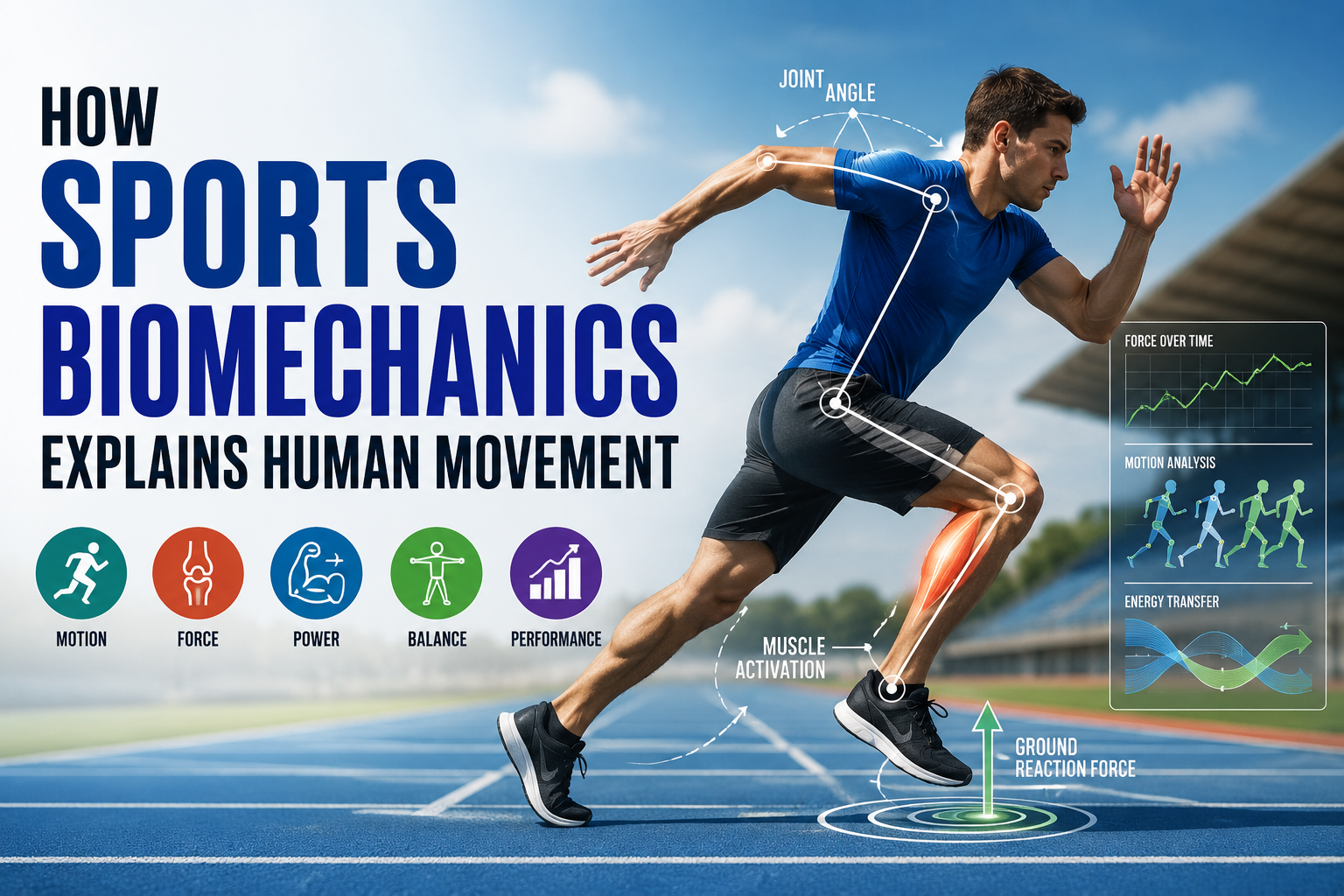
Strength is the ability to produce force, while power involves producing force quickly.
Both qualities can contribute to athletic performance.
Strength can help athletes produce force against resistance, maintain body control, and perform demanding movements. Power becomes particularly important in activities involving explosive actions such as jumping, sprinting, throwing, and rapid changes of direction.
Training programs often develop these qualities through resistance exercises and progressively challenging movements.
However, stronger does not automatically mean faster or more skilled. Strength needs to be integrated with movement technique and sport-specific performance.
Speed Is More Than Running Fast
Speed is often treated as a single athletic quality, but it involves several components.
These can include:
- Reaction speed
- Acceleration
- Maximum velocity
- Deceleration
- Change-of-direction ability
- Movement efficiency
An athlete may have a high top speed but struggle to accelerate quickly. Another athlete may react quickly but lack the strength required to maintain speed.
Developing speed therefore requires more than simply running as fast as possible. Technique, strength, coordination, mobility, and appropriate recovery can all influence how effectively an athlete moves.
Endurance Supports Repeated Performance
Endurance is the ability to continue performing physical activity over time while resisting fatigue.
Different sports require different forms of endurance.
Long-distance events may place substantial demands on aerobic endurance, while team sports often require athletes to recover repeatedly between short bursts of intense activity.
Endurance development can therefore include both longer-duration training and appropriately structured high-intensity intervals, depending on the athlete’s goals.
The key is matching conditioning to the actual demands of competition.
Mobility and Movement Quality
Athletic performance is not only about producing more force. Athletes also need to move effectively.
Mobility refers broadly to the ability to move joints through the ranges of motion required for a particular activity. Good movement quality can help athletes perform technical skills efficiently and maintain appropriate body positions.
Mobility needs vary between individuals and sports.
An athlete does not necessarily need maximum flexibility in every joint. Instead, the goal is generally to have sufficient movement capacity for the activities being performed.
Movement quality can also be affected by fatigue, previous injuries, training load, and technique.
Coordination and Skill Development
Physical abilities are only part of athletic performance.
An athlete may possess excellent strength and endurance but still struggle to perform if technical skills are poorly developed.
Coordination allows the nervous system and muscles to work together efficiently. Sport-specific skills then build on that foundation.
Depending on the sport, skills may include:
- Throwing
- Catching
- Shooting
- Dribbling
- Striking
- Jumping
- Kicking
- Turning
- Landing
- Maintaining balance
Repeated practice helps athletes develop movement patterns and improve their ability to perform skills under increasingly challenging conditions.
Recovery Is Part of Training
Training creates stress. Recovery provides an opportunity for the body to adapt to that stress.
Without adequate recovery, athletes may experience accumulating fatigue that interferes with performance.
Important recovery factors include:
- Sleep
- Nutrition
- Hydration
- Rest days
- Appropriate training intensity
- Stress management
- Managing overall workload
Sleep is particularly important because physical and mental recovery continue outside the training environment.
An athlete who consistently trains hard while sleeping poorly may not receive the full benefit of the training stimulus.
Nutrition Provides the Building Blocks
Food provides the energy and nutrients needed to train, recover, and maintain normal physiological functions.
Athletes generally need an adequate intake of energy, protein, carbohydrates, fats, vitamins, minerals, and fluids, although individual requirements vary considerably.
Carbohydrates can provide an important source of energy for many forms of exercise. Protein contributes to tissue maintenance and repair, while dietary fats play important roles in normal body functions and energy metabolism.
Hydration also matters because fluid losses during exercise can affect physical and cognitive performance.
Athletes with demanding training schedules may benefit from working with qualified sports nutrition professionals to develop individualized nutrition strategies.
The Importance of Training Periodization
Athletes rarely need to be at maximum fitness every day of the year.
Periodization involves organizing training into different phases so that training emphasis changes over time.
A program might progress through periods focused on:
- Building a general physical foundation
- Developing specific physical qualities
- Increasing sport-specific intensity
- Preparing for competition
- Maintaining performance
- Recovering after demanding competition
The exact structure depends on the sport, competitive calendar, athlete, and training objectives.
Periodization can help prevent training from becoming unnecessarily repetitive while allowing different qualities to be developed at appropriate times.
Mental Performance Matters
Physical preparation alone does not guarantee successful performance.
Athletes also need to manage concentration, confidence, pressure, motivation, and decision-making.
Mental skills can include:
- Goal setting
- Visualization
- Pre-performance routines
- Concentration strategies
- Emotional regulation
- Positive self-talk
- Managing competitive pressure
These skills can become particularly important when athletes compete in environments where small mistakes have significant consequences.
Mental preparation should not be viewed as separate from physical training. The two often interact during competition.
Measuring Athletic Progress
Athletes need meaningful ways to determine whether training is producing results.
Measurements may include:
- Sprint times
- Jump performance
- Strength tests
- Endurance tests
- Heart-rate data
- Training volume
- Competition statistics
- Technical performance
- Recovery indicators
Not every athlete needs sophisticated technology.
Simple records of training sessions, performance results, perceived exertion, sleep, and recovery can reveal useful patterns over time.
The most useful measurements are those that relate directly to the athlete’s goals.
Why Individualization Matters
Two athletes can participate in the same sport and still require very different training programs.
Differences may include:
- Age
- Training experience
- Fitness level
- Injury history
- Position
- Competition schedule
- Lifestyle
- Recovery capacity
- Personal goals
A professional athlete may tolerate training volumes that would be inappropriate for a beginner.
Similarly, an experienced strength athlete may need a very different program from someone who is learning basic movement patterns.
Individualization helps ensure that training is appropriate for the person performing it.
Common Athletic Training Mistakes
Some approaches can undermine progress even when an athlete is highly motivated.
Doing Too Much Too Soon
Rapidly increasing training volume or intensity can create excessive fatigue and reduce the ability to recover.
Ignoring Recovery
More training is not always better. Adaptation requires adequate recovery.
Training Without a Clear Goal
A collection of exercises is not necessarily a complete training program. Effective training should have a purpose and progression.
Neglecting Technique
Adding resistance or intensity while technique deteriorates can reduce training quality and potentially increase injury risk.
Focusing on One Physical Quality
Developing strength while ignoring endurance, mobility, coordination, or sport-specific skills can create an unbalanced approach.
Copying Another Athlete’s Program
A program designed for another athlete may not match an individual’s abilities, schedule, or objectives.
How Beginners Can Build Athletic Performance
Beginners generally benefit from establishing a broad physical foundation before pursuing highly specialized training.
A basic approach may include:
- Learning fundamental movement patterns
- Developing general strength
- Improving cardiovascular fitness
- Practicing sport-specific skills
- Building mobility where needed
- Establishing consistent sleep habits
- Learning appropriate recovery practices
- Increasing training gradually
Consistency is often more valuable than constantly searching for increasingly complicated training methods.
How Experienced Athletes Can Continue Improving
Advanced athletes often face a different challenge: progress becomes harder to achieve.
Once basic adaptations have occurred, improvements may require more precise training.
Advanced programs may place greater emphasis on:
- Sport-specific conditioning
- Strength and power development
- Technical refinement
- Competition demands
- Recovery management
- Training-load monitoring
- Individual weaknesses
- Tactical decision-making
At this stage, coaches, sports scientists, physiotherapists, strength professionals, and other qualified specialists may work together to address different aspects of performance.
The Role of Technology in Athletic Performance
Technology has become increasingly useful for monitoring and analyzing athletic performance.
Depending on the sport, athletes may use tools to track:
- Training volume
- Speed
- Distance
- Heart rate
- Movement patterns
- Sleep
- Workload
- Competition statistics
Technology can provide valuable information, but data should support decision-making rather than replace professional judgment.
Collecting more information does not automatically produce better training. The most useful systems are those that provide actionable information without overwhelming the athlete or coaching staff.
Building a Sustainable Performance System
Long-term athletic development is rarely about finding one perfect workout.
It is about creating a system in which training, nutrition, recovery, skill development, mental preparation, and competition preparation work together.
The most important principles are straightforward:
- Train according to the demands of the sport.
- Increase challenges gradually.
- Develop multiple physical qualities.
- Practice technical skills consistently.
- Prioritize recovery.
- Eat and hydrate appropriately.
- Monitor meaningful performance indicators.
- Adjust training according to individual needs.
- Allow sufficient time for adaptation.
Athletic performance is ultimately a long-term process. The athletes who continue improving are often those who can consistently apply sound principles while adapting their approach as their abilities, goals, and competitive demands change.
Turning Training Into Better Performance
Understanding athletic performance principles gives athletes a framework for making smarter decisions about preparation. Strength, speed, endurance, mobility, technique, nutrition, recovery, and mental skills are not isolated pieces; they form an interconnected performance system.
The goal is not simply to train harder. It is to train with a clear purpose, recover well, measure meaningful progress, and continually adjust the process to meet the demands of the sport.



2 Comments
Micle harison
June 7, 2019Lorem ipsum dolor sit amet, usu ut perfecto postulant deterruisset, libris causae volutpat at est, ius id modus laoreet urbanitas. Mel ei delenit dolores.
John Doe
June 7, 2019Some consultants are employed indirectly by the client via a consultancy staffing company.