
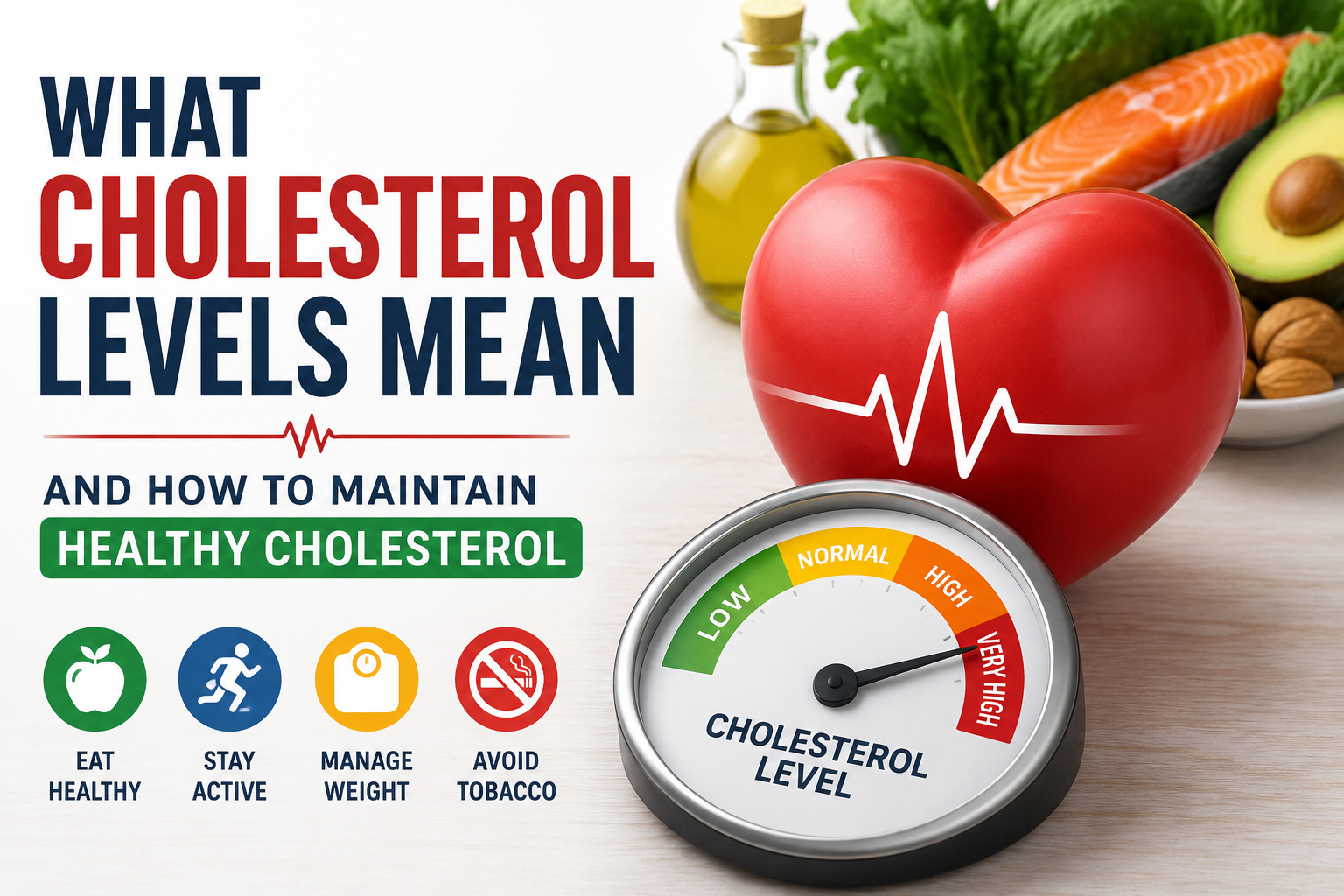
What Cholesterol Levels Mean and How to Maintain Healthy Cholesterol
Cholesterol often gets described as something people should avoid, but the reality is more complicated. The body needs cholesterol to build cells, produce certain hormones and perform other essential functions. The problem arises when certain cholesterol and blood-fat levels remain too high, increasing the risk of plaque buildup in the arteries and cardiovascular disease.
Because high cholesterol usually causes no noticeable symptoms, a person can feel completely healthy while having levels that deserve attention. A simple blood test called a lipid panel can provide a clearer picture of what is happening. (www.heart.org)
Understanding what those numbers mean—and what can influence them—can make it easier to protect long-term heart health.
What Is Cholesterol?
Cholesterol is a waxy, fat-like substance that the body needs. The liver produces cholesterol, while additional cholesterol can come from foods of animal origin.
Because cholesterol does not dissolve in blood, it travels through the bloodstream with proteins called lipoproteins. Two of the most familiar are low-density lipoprotein (LDL) and high-density lipoprotein (HDL). (www.heart.org)
Cholesterol itself is not inherently harmful. The concern is maintaining a healthy balance, particularly when LDL cholesterol remains elevated over time.
Excess LDL can contribute to the formation of fatty deposits inside artery walls. This process, known as atherosclerosis, can narrow arteries and increase the risk of heart attack and stroke. (www.heart.org)
Understanding the Main Numbers on a Cholesterol Test
A cholesterol test usually provides several measurements rather than a single number.
LDL cholesterol
LDL, or low-density lipoprotein cholesterol, is commonly called “bad” cholesterol.
When LDL levels are too high, cholesterol can accumulate in artery walls and contribute to plaque formation. Over time, this can interfere with blood flow and increase cardiovascular risk. (www.heart.org)
There is not one LDL target that applies to everyone.
For some people, a healthcare professional may aim for an LDL level below 100 mg/dL. People at higher cardiovascular risk may have lower targets, such as below 70 mg/dL, while people at very high risk may have a goal below 55 mg/dL. (www.heart.org)
That is why simply comparing your LDL result with a generic chart may not tell the whole story. Your age, medical history, diabetes status, family history and previous cardiovascular events can all affect the appropriate target.
HDL cholesterol
HDL, or high-density lipoprotein cholesterol, is often called “good” cholesterol.
HDL helps transport cholesterol away from the arteries and back toward the liver, where it can be processed and removed from the body. Higher HDL levels are generally associated with lower cardiovascular risk. (www.heart.org)
However, HDL should not be viewed in isolation.
The American Heart Association notes that HDL is not a treatment target by itself for preventing heart attack or stroke. A high HDL number does not automatically cancel out a high LDL level or other cardiovascular risk factors. (www.heart.org)
Triglycerides
Triglycerides are not technically cholesterol. They are another type of fat found in the blood and are the body’s most common form of stored fat.
The body uses triglycerides to store excess energy. When levels become elevated, particularly alongside high LDL or low HDL, cardiovascular risk can increase. (www.heart.org)
A triglyceride level below 150 mg/dL is generally considered normal for adults, although interpretation depends on the individual’s overall health and risk profile. (www.heart.org)
High triglycerides can be influenced by factors including excess weight, physical inactivity, smoking, alcohol consumption and diets high in refined carbohydrates.
Total cholesterol
Total cholesterol combines several components of the lipid profile.
A total cholesterol level below 200 mg/dL has traditionally been considered desirable, but modern cholesterol management places greater emphasis on LDL and the person’s overall cardiovascular risk rather than treating total cholesterol as a standalone treatment target. (www.heart.org)
In other words, a seemingly acceptable total cholesterol number does not necessarily mean that every part of the lipid profile is healthy.
Why High Cholesterol Can Be Difficult to Detect
One of the biggest challenges with high cholesterol is that it generally does not produce obvious symptoms.
Someone can have elevated LDL cholesterol for years without experiencing pain, fatigue or other warning signs. A blood test may be the only practical way to identify the problem before cardiovascular complications occur. (www.heart.org)
That makes routine screening important.
The American Heart Association says cholesterol screening every five years can be a reasonable starting point for many adults beginning at age 19, although people with certain risk factors may need testing more frequently. (www.heart.org)
What Causes Cholesterol Levels to Rise?
Lifestyle is an important influence, but it is not the only one.
Eating patterns high in saturated fat can raise LDL cholesterol. Physical inactivity, smoking and excess weight can also contribute to an unhealthy cholesterol profile. (NHLBI, NIH)
Genetics can play a major role as well.
Some people inherit conditions such as familial hypercholesterolemia, which can cause very high LDL cholesterol from a young age. Certain medical conditions and medications can also affect cholesterol levels. (NHLBI, NIH)
This is important because high cholesterol is not always a reflection of someone’s diet or lifestyle. A person who exercises regularly and eats carefully can still have elevated cholesterol because of genetics or another underlying factor.
How to Maintain Healthier Cholesterol Levels
Improving cholesterol usually involves several habits working together rather than one dramatic change.
Focus on heart-healthy foods
Diet can have a significant influence on cholesterol, particularly LDL.
A heart-supportive eating pattern emphasizes:
- Vegetables and fruits
- Beans, peas and lentils
- Whole grains
- Nuts and seeds
- Fish and other lean protein sources
- Foods rich in unsaturated fats
- High-fiber foods
At the same time, it helps to limit foods that contain large amounts of saturated fat, trans fat, added sugars and highly processed ingredients. (www.heart.org)
Foods such as fatty cuts of meat, some full-fat dairy products, butter and certain processed foods can contribute substantial amounts of saturated fat.
The goal does not have to be an extreme diet. Replacing some high-saturated-fat foods with sources of unsaturated fats, vegetables, legumes and whole grains can be a practical starting point.
Eat more soluble fiber
Soluble fiber can help reduce LDL cholesterol by interfering with cholesterol absorption in the digestive system.
Good sources include oats, beans, lentils, fruits and some other plant foods. The National Heart, Lung, and Blood Institute includes increasing soluble fiber among its lifestyle strategies for lowering LDL cholesterol. (NHLBI, NIH)
Adding oatmeal at breakfast, beans to meals or more vegetables and fruit throughout the day can therefore support a healthier eating pattern without requiring a complicated diet.
Stay physically active
Regular physical activity can improve several parts of the cholesterol profile.
Exercise can help lower LDL and triglycerides while supporting healthier HDL levels. The American Heart Association recommends aiming for around 150 minutes of moderate-intensity physical activity each week as one practical target for adults. (www.heart.org)
That does not necessarily mean spending hours in a gym.
Brisk walking, cycling, swimming, dancing and other activities can count. The most useful activity is often the type a person can perform consistently.
Maintain a healthy weight
For people who are overweight or have obesity, even modest weight loss can improve cholesterol levels and other cardiovascular risk factors.
The NHLBI notes that losing around 3% to 5% of body weight can help lower LDL and raise HDL in adults with overweight or obesity. (NHLBI, NIH)
Weight management should focus on sustainable habits rather than rapid, restrictive dieting.
Avoid tobacco
Smoking can lower HDL cholesterol and substantially increase cardiovascular risk.
Quitting smoking can improve the overall cardiovascular picture and may also help improve triglyceride and HDL levels. Avoiding secondhand smoke is also beneficial. (www.heart.org)
Pay attention to sleep and stress
Cholesterol management is not only about food and exercise.
The American Heart Association notes that poor or irregular sleep has been associated with lower HDL and higher LDL and triglycerides. Getting around 7 to 9 hours of sleep per night is one part of a broader healthy lifestyle. (www.heart.org)
Managing stress can also make healthy habits easier to maintain, particularly when stress contributes to poor eating, inactivity or disrupted sleep.
Do You Always Need Medication for High Cholesterol?
Not necessarily—but lifestyle changes are not always enough.
For some people, improving diet, increasing physical activity and managing weight can substantially improve cholesterol. Others may continue to have elevated LDL because of genetics, existing cardiovascular disease or other risk factors.
In those situations, healthcare professionals may recommend cholesterol-lowering medication.
Statins are among the medications commonly used to reduce LDL cholesterol, but the appropriate treatment depends on a person’s individual risk and medical history. (www.heart.org)
Medication should not be stopped or changed without discussing it with a healthcare professional.
Likewise, someone with very high cholesterol should not assume that lifestyle changes alone are sufficient. For some people, medication is an important part of preventing heart attack and stroke.
Why Your Cholesterol Number Is Only Part of the Picture
A cholesterol result should be interpreted alongside the rest of your cardiovascular health.
Healthcare professionals may consider factors such as:
- Age
- Blood pressure
- Diabetes
- Smoking
- Family history
- Previous heart attack or stroke
- Other medical conditions
- Current medications
- Overall cardiovascular risk
This explains why two people with the same LDL number can receive different recommendations.
The objective is not simply to achieve a particular number on a laboratory report. It is to reduce the individual’s overall risk of cardiovascular disease. (www.heart.org)
When to Talk With a Healthcare Professional
If a cholesterol test shows elevated LDL, high triglycerides or another abnormal result, discussing it with a healthcare professional is worthwhile.
Medical advice is particularly important when cholesterol is extremely high, when there is a strong family history of high cholesterol or early heart disease, or when someone already has diabetes, cardiovascular disease or other significant risk factors.
A healthcare professional can determine whether lifestyle changes, additional testing or medication may be appropriate.
Building Better Cholesterol Habits Over Time
Healthy cholesterol is less about finding one perfect food or following a short-term diet and more about building habits that can be maintained for years.
A diet rich in vegetables, fruits, whole grains, beans, nuts and other minimally processed foods can provide a strong foundation. Regular physical activity, maintaining a healthy weight, avoiding tobacco and getting adequate sleep can add further protection. (www.heart.org)
Most importantly, cholesterol numbers should be viewed in context. Lower LDL is generally better for cardiovascular health, but the right target depends on the individual. HDL and triglycerides matter too, but no single number tells the entire story.
Knowing your numbers is therefore only the first step. Understanding what they mean—and working with a healthcare professional when necessary—can turn a routine cholesterol test into a useful opportunity to protect heart health for the long term.
This article is for general educational purposes and is not a substitute for individualized medical advice, diagnosis or treatment.


2 Comments
Micle harison
June 7, 2019Lorem ipsum dolor sit amet, usu ut perfecto postulant deterruisset, libris causae volutpat at est, ius id modus laoreet urbanitas. Mel ei delenit dolores.
John Doe
June 7, 2019Some consultants are employed indirectly by the client via a consultancy staffing company.