
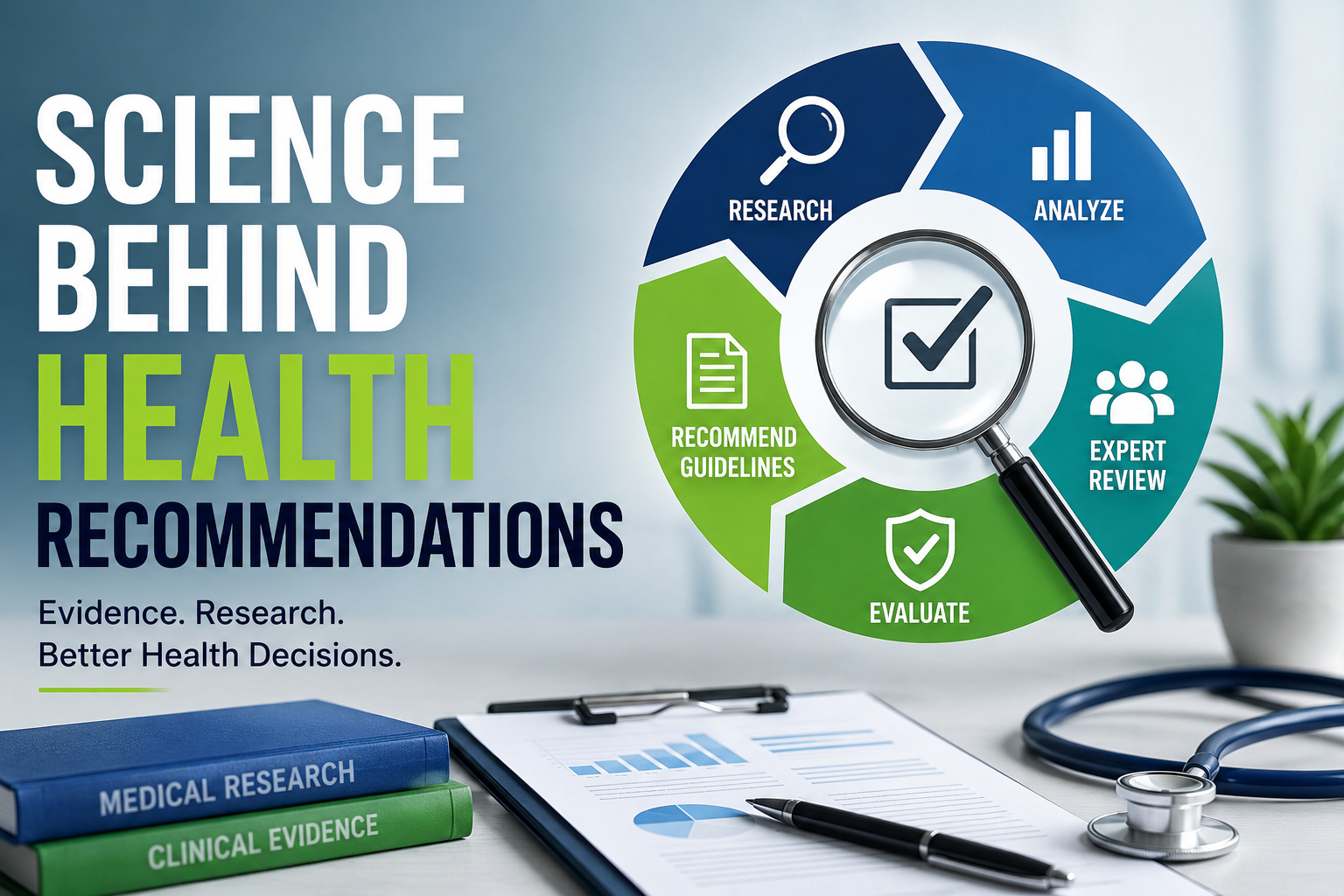
How Scientific Evidence Is Used to Develop Reliable Health Recommendations
Health recommendations often appear simple. Eat more vegetables. Exercise regularly. Get enough sleep. Take a particular screening test at a certain age. But behind many of these familiar recommendations is a long process of scientific investigation, evidence assessment and expert review.
Reliable health advice is rarely based on a single study or a dramatic new finding. Instead, researchers and health organizations examine evidence from multiple sources, consider how consistent the findings are, weigh potential benefits against risks and determine how confidently the results can be applied to the wider population.
Understanding that process can help people distinguish evidence-based health guidance from advice based mainly on anecdotes, marketing claims or preliminary research.
What Counts as Scientific Evidence in Health?
Scientific evidence can come from several types of research, each answering different questions.
Randomized controlled trials are commonly used to investigate whether an intervention causes a particular outcome. Participants may be randomly assigned to receive a treatment or intervention or to serve as a comparison group. Randomization helps reduce the influence of factors that could otherwise distort the results.
Observational studies follow or compare groups of people without assigning an intervention. These studies can be particularly useful when researchers want to investigate long-term health patterns, potential risk factors or questions that would be difficult or unethical to study through experiments.
Systematic reviews and meta-analyses bring together findings from multiple studies. Rather than relying on one experiment, researchers examine the available evidence as a whole and assess whether the results point in a consistent direction.
Other evidence can include laboratory research, studies involving biological mechanisms, diagnostic research and long-term population data.
No single type of study is automatically sufficient for every health question. The appropriate evidence depends on what researchers are trying to determine.
Why One Study Rarely Settles a Health Question
A single scientific study can attract enormous attention, particularly when its findings appear surprising. But researchers generally avoid treating one result as definitive evidence.
Studies have limitations. A research project may involve a relatively small number of participants, follow people for only a short period or examine a population that differs from the general public.
Researchers may also obtain different results when they repeat an experiment or conduct a similar study in another population.
This is why replication and consistency are important.
If several well-designed studies independently produce similar findings, confidence in the underlying relationship generally increases. If studies produce conflicting results, researchers need to investigate why.
Differences may arise from the participants studied, the methods used, the length of follow-up, the way an exposure or outcome was measured or simple statistical variation.
The goal is not to find one perfect study. It is to understand the entire body of evidence.
The Difference Between Association and Cause
One of the most important principles in interpreting health research is the difference between correlation and causation.
Suppose researchers discover that people who regularly consume a particular food have lower rates of a disease. That finding establishes an association, but it does not automatically prove that the food itself prevents the disease.
Other factors could be involved.
People who eat that food frequently might also exercise more, have higher incomes, smoke less or follow other health-conscious behaviors. These factors can influence health outcomes and make it difficult to determine what caused the observed difference.
Researchers use study design, statistical methods and, when appropriate, randomized experiments to investigate whether an apparent association is likely to represent a causal relationship.
This distinction is especially important when health headlines simplify complex research into statements such as “X causes Y” or “X prevents Y.”
How Researchers Judge the Quality of a Study
Evidence is not evaluated solely by looking at the headline result.
Researchers and evidence reviewers consider questions such as:
- How was the study designed?
- How many people participated?
- Who participated?
- How long were participants followed?
- Was there an appropriate comparison group?
- Were participants randomly assigned when appropriate?
- How were outcomes measured?
- Were important sources of bias addressed?
- Were the statistical methods appropriate?
- Are the findings consistent with other research?
- Can the results reasonably be applied to other populations?
These questions help determine how much confidence should be placed in a study.
A statistically significant result, for example, does not necessarily mean that an intervention produces a large or meaningful health benefit. Researchers also need to consider the size of the effect and whether the difference matters to patients in real life.
Relative Risk Does Not Tell the Whole Story
Health information can become misleading when statistics are presented without context.
Imagine that a study reports that a particular intervention reduces the risk of a disease by 50 percent. That sounds dramatic. But the actual benefit depends on the starting level of risk.
If the underlying risk falls from 2 percent to 1 percent, the relative reduction is 50 percent, but the absolute reduction is one percentage point.
Both figures describe the same result, but they communicate different information.
Health recommendations therefore need to consider measures such as absolute risk, relative risk and, where appropriate, the number of people who would need to receive an intervention for one additional beneficial outcome to occur.
This helps decision-makers and the public understand the practical significance of the evidence.
From Individual Studies to the Bigger Evidence Picture
Health organizations rarely develop major recommendations by examining isolated research papers. Instead, they typically review a broad body of evidence.
Evidence reviews can identify patterns across studies and highlight areas where uncertainty remains.
A systematic review, for example, may examine dozens or even hundreds of studies addressing a particular question. Researchers assess the quality of those studies and determine whether their results can reasonably be combined.
Meta-analysis can sometimes provide a more precise estimate of an effect by statistically combining compatible studies. However, combining studies does not automatically eliminate weaknesses in the underlying research.
If the included studies are poorly designed or substantially different from one another, the resulting estimate may still have important limitations.
That is why evidence assessment involves both statistical analysis and scientific judgment.
How Experts Account for Benefits and Risks
Health recommendations are not based solely on whether something works.
Experts also need to consider potential harms, side effects, costs, inconvenience and the consequences of doing nothing.
For example, an intervention may provide a modest benefit while carrying a significant risk for certain groups. Another intervention might provide substantial benefits with relatively few harms.
A recommendation must account for that balance.
This is particularly important for medical treatments and preventive interventions, where decisions can affect large numbers of people.
Experts may therefore ask:
- How large is the expected benefit?
- How likely are adverse effects?
- Which groups are most likely to benefit?
- Which groups face greater risks?
- How certain is the evidence?
- Are there safer alternatives?
- How practical is the recommendation?
- Does the balance of benefits and harms change for different populations?
The answers help transform scientific findings into practical guidance.
Evidence Quality and Certainty Matter
Not every recommendation can be supported by equally strong evidence.
Some health questions have been investigated through numerous large, high-quality studies. Others involve relatively limited research, making it difficult to reach firm conclusions.
Evidence-review systems therefore often distinguish between high-certainty and lower-certainty evidence.
High-certainty evidence means researchers have relatively strong confidence that the estimated effect is close to the true effect.
Lower-certainty evidence does not necessarily mean that a recommendation is wrong. It means there is greater uncertainty about the size or direction of the effect, and future research could change the current understanding.
Good health guidance communicates that uncertainty rather than pretending that science can provide absolute answers to every question.
Why Recommendations Can Change
People sometimes interpret changing health recommendations as evidence that scientists do not know what they are doing.
In reality, changing guidance can be a normal consequence of scientific progress.
New studies may provide better information about benefits or risks. Larger datasets may reveal effects that earlier research could not detect. Improved methods may change how evidence is interpreted.
For example, a health organization might initially recommend an intervention for a broad population and later narrow the recommendation after additional evidence shows that the benefits are concentrated in particular groups.
Updating recommendations allows health policy to reflect the best available evidence rather than remaining permanently tied to older conclusions.
Science is designed to revise conclusions when better evidence becomes available.
How Peer Review Fits Into the Process
Before many scientific studies are published in academic journals, they undergo peer review. Researchers with relevant expertise evaluate aspects of the work, including its methods, analysis and interpretation.
Peer review can identify weaknesses, inconsistencies or unsupported conclusions before publication.
However, peer review is not a guarantee that a study is correct.
Published research can later be challenged, replicated, refined or contradicted by additional evidence. Peer review is one quality-control mechanism within science, not a final certification of truth.
This is another reason why evidence-based recommendations usually depend on the totality of research rather than simply whether a particular study appeared in a respected journal.
Turning Research Into Practical Health Advice
Scientific evidence is only one part of developing a health recommendation.
Experts must also consider how the evidence applies to real people.
A research study may demonstrate that an intervention can produce a measurable benefit under controlled conditions, but implementing it across an entire population can raise additional questions.
Will people be able to follow the recommendation? Is the intervention affordable? Does it work similarly across different age groups? Could it unintentionally widen health inequalities? Are there cultural or practical barriers?
These considerations can influence how recommendations are written and targeted.
This is why health guidance may distinguish between recommendations for the general population and advice intended for specific groups.
Individual Decisions Still Matter
Population-level recommendations are designed to provide useful guidance for groups of people, but individual circumstances can be different.
Age, existing medical conditions, medications, family history, lifestyle, personal preferences and other factors can affect whether a particular intervention is appropriate.
For that reason, a general recommendation should not always be interpreted as personalized medical advice.
A person deciding whether to start a treatment, undergo a medical procedure or make a major change to their health routine may need to discuss the decision with a qualified healthcare professional.
The purpose of evidence-based recommendations is to improve decision-making, not eliminate the need for individual judgment.
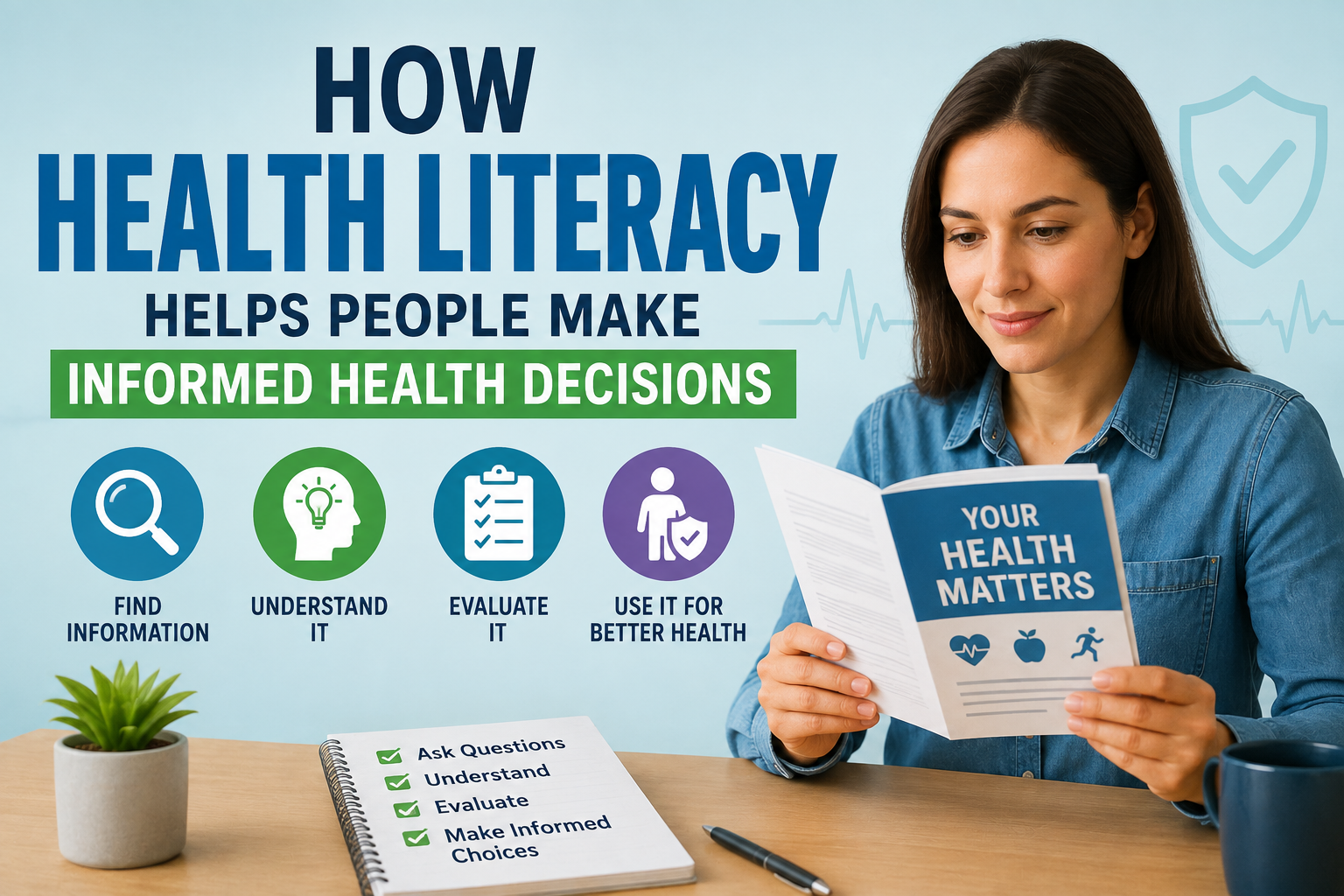
How to Recognize More Reliable Health Information
Consumers encounter health claims from researchers, healthcare organizations, news outlets, influencers, companies and social media accounts.
Several questions can help evaluate those claims:
Is the source clear about where the evidence comes from?
Reliable information should generally identify the research or evidence behind an important claim.
Does it distinguish preliminary findings from established evidence?
Early research can be interesting without being sufficient to support a broad recommendation.
Does it acknowledge uncertainty?
Trustworthy scientific communication rarely presents complicated health questions as completely settled when meaningful uncertainty remains.
Does it describe benefits and risks?
A claim that focuses entirely on benefits while ignoring possible harms deserves additional scrutiny.
Is the evidence based on one study or many?
A large body of consistent research generally provides a stronger foundation than an isolated finding.
Is the claim selling something?
Commercial incentives do not automatically make information false, but they can create reasons to examine marketing claims carefully.
These habits can make it easier to separate evidence-based guidance from sensational health content.
Why Scientific Recommendations Work Best as Living Guidance
The strongest health recommendations are not simply lists of instructions. They represent an ongoing process in which scientific evidence is collected, evaluated, challenged and updated.
Researchers generate new evidence. Reviewers assess its quality. Experts weigh benefits and risks. Health organizations translate the evidence into practical recommendations. Clinicians then apply those recommendations alongside individual circumstances.
That process is imperfect, but it provides a much stronger foundation than relying on anecdotes or isolated studies.
For the public, the most useful approach is not to expect science to provide an unchanging answer to every health question. Instead, it is to look for recommendations supported by a broad body of evidence, pay attention to the certainty of that evidence and remain open to updates as better research becomes available.
That combination—strong evidence, transparent uncertainty and regular review—is what allows health recommendations to become more reliable over time.


2 Comments
Micle harison
June 7, 2019Lorem ipsum dolor sit amet, usu ut perfecto postulant deterruisset, libris causae volutpat at est, ius id modus laoreet urbanitas. Mel ei delenit dolores.
John Doe
June 7, 2019Some consultants are employed indirectly by the client via a consultancy staffing company.