
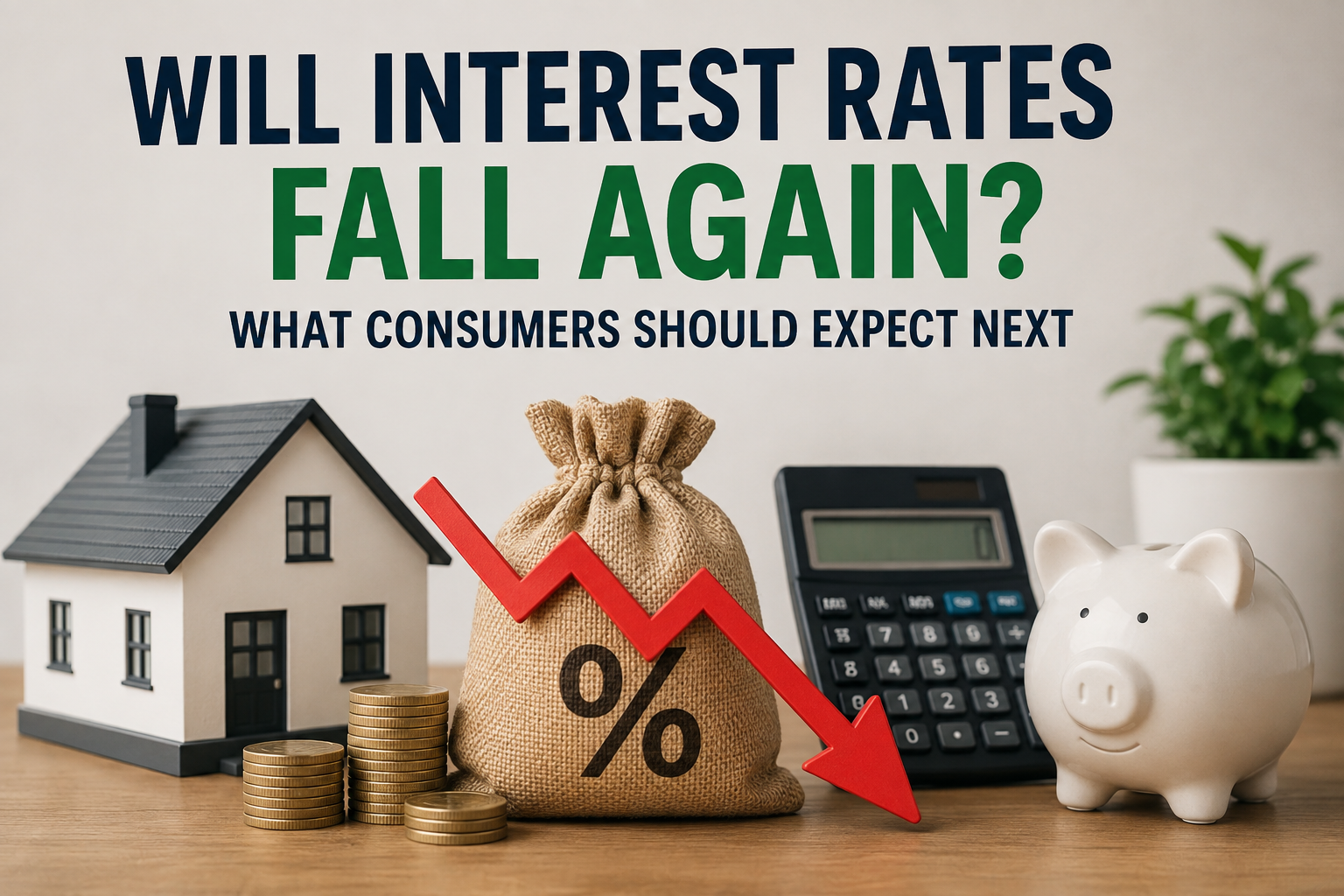
Will Interest Rates Fall Again? What Consumers Should Expect Next
Borrowing costs have shaped household budgets, home purchases, and savings decisions for several years. As inflation cools in many economies, one question is becoming increasingly common: Will interest rates fall again? While no one can predict the exact timing or pace of future rate cuts, economic trends offer clues about what consumers may expect over the coming months.
Why Interest Rates Matter
Interest rates influence nearly every part of personal finance. Central banks raise rates to slow inflation by making borrowing more expensive. When inflation begins to ease, policymakers may decide to lower rates to encourage spending, investment, and economic growth.
For consumers, interest rates affect:
- Mortgage payments
- Car loans
- Credit card interest
- Personal loans
- Savings accounts
- Certificates of deposit (CDs)
- Business financing
- Investment returns
Even small changes in benchmark interest rates can significantly affect household finances over time.
Why Rates Rose in Recent Years
Following a period of elevated inflation across many countries, central banks responded by increasing interest rates to levels not seen in years.
The objectives were to:
- Slow consumer spending
- Reduce demand
- Stabilize prices
- Prevent inflation from becoming entrenched
Higher borrowing costs successfully reduced inflation in many economies, but they also made mortgages, loans, and credit more expensive.
Could Interest Rates Fall Again?
Many economists believe that interest rates are more likely to decline gradually than return quickly to the historically low levels seen during the pandemic era.
Several factors will influence future decisions.
Inflation
The biggest driver remains inflation.
If inflation continues moving closer to central bank targets, policymakers may have room to reduce rates.
If prices begin rising rapidly again, expected rate cuts could be delayed.
Economic Growth
Weak economic growth often increases pressure for lower interest rates.
Central banks try to balance inflation control with maintaining employment and economic activity.
Labor Market
A strong labor market may encourage policymakers to keep rates higher.
Rising unemployment, however, could increase the likelihood of rate reductions.
Global Risks
Unexpected events—including geopolitical tensions, energy price shocks, or financial instability—can quickly change monetary policy expectations.
What Falling Interest Rates Could Mean for Consumers
Lower Mortgage Costs
Potential homebuyers may benefit from lower mortgage rates.
Homeowners with adjustable-rate mortgages could also see reduced monthly payments if rates decline.
However, lower borrowing costs can also increase housing demand, potentially pushing home prices higher.
Cheaper Personal Loans
Banks may gradually reduce interest rates on:
- Personal loans
- Auto loans
- Student loans (where applicable)
- Business financing
Lower borrowing costs make large purchases more affordable.
Credit Card Interest May Remain High
Credit card rates often respond more slowly than central bank decisions.
Even if benchmark rates decline, consumers may still face relatively expensive revolving credit.
Paying balances in full each month remains one of the best financial habits.
Savings Accounts May Earn Less
Higher interest rates benefited savers by increasing returns on:
- High-yield savings accounts
- Money market accounts
- Certificates of deposit (CDs)
If rates fall, these returns may gradually decline.
Consumers relying on interest income should monitor changing account yields.
Who Benefits Most From Lower Interest Rates?
First-Time Homebuyers
Lower mortgage costs improve affordability.
However, increased buyer demand may also make housing markets more competitive.
Existing Borrowers
People with variable-rate loans may experience reduced monthly payments.
Those with fixed-rate loans generally keep their existing interest rate unless they refinance.
Small Businesses
Lower financing costs can encourage:
- Expansion
- Hiring
- Equipment purchases
- New investments
Investors
Lower rates often improve conditions for:
- Stock markets
- Real estate
- Growth-oriented companies
Although market performance depends on many factors, falling rates frequently support investor confidence.
Who Could Be Disadvantaged?
Lower rates are not universally positive.
Savers
Savings accounts may generate less income.
Retirees who depend on interest earnings could experience lower returns.
People Waiting for Better Housing Prices
Lower borrowing costs sometimes increase buyer competition.
As demand rises, home prices may remain elevated despite cheaper mortgages.
Should You Wait Before Borrowing?
This depends on your financial situation.
Consider borrowing now if:
- You have a stable income.
- You found a favorable loan offer.
- The purchase is necessary rather than discretionary.
Waiting may make sense if:
- Interest rates appear likely to decline further.
- Your credit score could improve.
- You can increase your down payment.
- You’re not under time pressure.
Trying to perfectly time interest-rate movements is difficult. Long-term affordability often matters more than securing the absolute lowest rate.
How Consumers Can Prepare
Rather than guessing what central banks will do next, focus on strengthening your finances.
Improve Your Credit Score
Better credit often qualifies borrowers for lower interest rates regardless of broader market conditions.
Helpful habits include:
- Paying bills on time
- Reducing outstanding debt
- Avoiding unnecessary credit applications
- Monitoring credit reports
Reduce High-Interest Debt
Credit card balances often carry the highest borrowing costs.
Prioritizing repayment can provide a guaranteed financial benefit regardless of future rate decisions.
Build an Emergency Fund
Savings provide flexibility during periods of economic uncertainty.
Many financial planners recommend keeping three to six months of essential expenses in readily accessible accounts.
Compare Loan Offers
Different lenders may offer significantly different rates.
Shopping around before borrowing can save thousands of dollars over the life of a loan.
Review Variable-Rate Debt
Consumers with adjustable-rate mortgages or variable-rate loans should understand how changing benchmark rates affect future payments.
Common Misconceptions About Interest Rates
| Myth | Reality |
|---|---|
| Lower central bank rates immediately reduce every loan. | Many lending products adjust gradually. |
| Falling rates guarantee cheaper homes. | Lower rates often increase buyer demand. |
| Lower rates always boost the economy. | Economic outcomes depend on employment, inflation, and consumer confidence. |
| Savings accounts always keep high yields. | Savings rates often decline after benchmark rates fall. |
| Waiting guarantees a better mortgage. | Future housing prices and lending conditions remain uncertain. |
What Experts Are Watching
Financial analysts continue monitoring several indicators that could influence future rate decisions:
- Monthly inflation reports
- Employment data
- Consumer spending
- Wage growth
- Housing market activity
- Business investment
- Global energy prices
- Central bank policy meetings
These indicators collectively shape expectations for future monetary policy.
Frequently Asked Questions
Will mortgage rates fall immediately if central banks cut interest rates?
Not necessarily. Mortgage rates are influenced by multiple factors, including bond markets, lender competition, and broader economic expectations.
Will lower interest rates eliminate inflation?
No. Lower rates typically stimulate spending. Central banks aim to balance inflation control with economic growth rather than eliminate inflation entirely.
Should I refinance if rates decline?
Refinancing can reduce monthly payments for some borrowers, but whether it makes financial sense depends on the new rate, fees, and how long you plan to keep the loan.
Are lower rates good for investors?
They often support stock prices and business investment, although market performance depends on many additional economic factors.
Is now a good time to save money?
Yes. Building savings remains important regardless of interest rate levels, especially for emergency expenses and long-term financial security.
Can interest rates rise again after falling?
Yes. Central banks adjust rates based on changing economic conditions, particularly inflation and employment.
Looking Ahead
Most economists expect that any future interest-rate reductions will likely be gradual rather than dramatic. Policymakers continue balancing inflation, employment, and economic growth, meaning consumers should prepare for an environment where borrowing costs may ease over time but remain higher than the ultra-low rates seen several years ago.
Rather than trying to predict every central bank decision, individuals are often better served by strengthening their financial foundation—reducing expensive debt, improving credit, maintaining an emergency fund, and making borrowing decisions based on long-term affordability instead of short-term market expectations.
In an uncertain economic environment, financial flexibility remains one of the most valuable assets a household can have.


2 Comments
Micle harison
June 7, 2019Lorem ipsum dolor sit amet, usu ut perfecto postulant deterruisset, libris causae volutpat at est, ius id modus laoreet urbanitas. Mel ei delenit dolores.
John Doe
June 7, 2019Some consultants are employed indirectly by the client via a consultancy staffing company.