
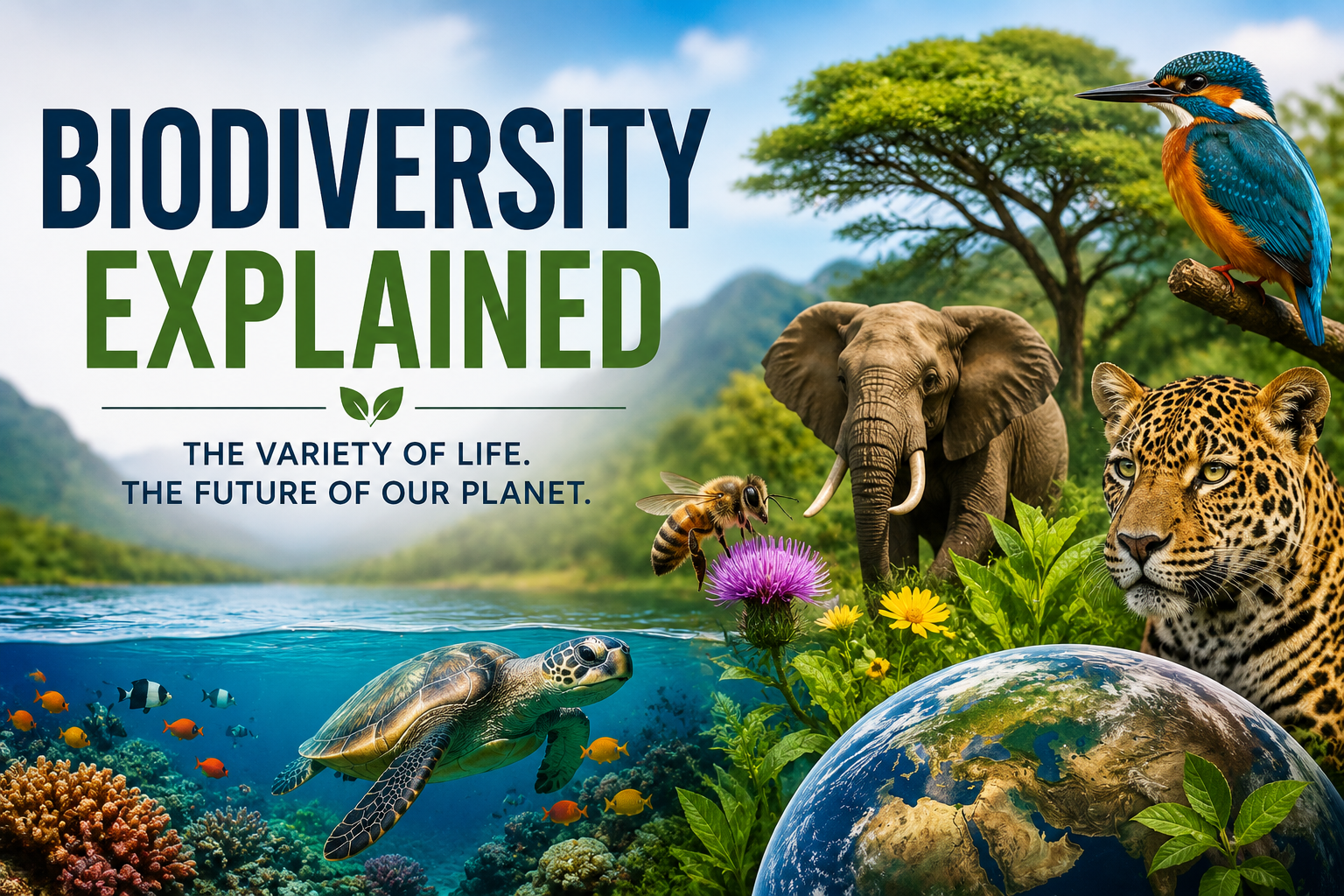
Biodiversity Explained
Biodiversity is the foundation of life on Earth. From towering forests and vibrant coral reefs to microscopic organisms living in the soil, the incredible variety of life supports healthy ecosystems that provide food, clean water, medicine, and countless other resources essential for human well-being.
As environmental challenges such as habitat loss, climate change, pollution, and invasive species continue to affect ecosystems worldwide, protecting biodiversity has become a global priority. Understanding what biodiversity is and why it matters helps individuals, communities, and governments make informed decisions that support a healthier and more sustainable planet.
This guide explains what biodiversity is, why it is important, the different levels of biodiversity, the threats it faces, conservation efforts, and how everyone can help protect Earth’s natural ecosystems.
What Is Biodiversity?
Biodiversity, short for biological diversity, refers to the variety of living organisms and the ecosystems they inhabit.
It includes:
- Animals
- Plants
- Fungi
- Bacteria
- Algae
- Insects
- Marine life
- Microorganisms
Biodiversity also includes the genetic differences within species and the variety of ecosystems across the planet.
The Three Levels of Biodiversity
Scientists generally describe biodiversity at three main levels.
Genetic Diversity
Genetic diversity refers to the variation of genes within a species.
High genetic diversity helps populations:
- Adapt to changing environments
- Resist diseases
- Improve survival
- Increase resilience to environmental stress
For example, different varieties of crops can better withstand pests, drought, or changing climates.
Species Diversity
Species diversity refers to the number and variety of different species living in a particular area.
Healthy ecosystems often contain:
- Mammals
- Birds
- Fish
- Amphibians
- Reptiles
- Insects
- Plants
- Microorganisms
Greater species diversity generally contributes to more stable and productive ecosystems.
Ecosystem Diversity
Ecosystem diversity refers to the variety of habitats and natural environments found across the Earth.
Examples include:
- Forests
- Grasslands
- Wetlands
- Deserts
- Mountains
- Rivers
- Lakes
- Oceans
- Coral reefs
- Arctic tundra
Each ecosystem supports unique communities of plants, animals, and microorganisms.
Why Biodiversity Matters
Biodiversity supports many of the natural systems that make life possible.
Healthy biodiversity helps:
- Produce oxygen
- Purify air and water
- Pollinate crops
- Maintain fertile soils
- Regulate climate
- Control pests naturally
- Support food production
- Provide medicines
- Protect against natural disasters
- Sustain wildlife populations
Without biodiversity, ecosystems become less resilient and more vulnerable to environmental changes.
Ecosystem Services
The benefits humans receive from nature are often called ecosystem services.
These services include:
Provisioning Services
Natural ecosystems provide:
- Food
- Fresh water
- Timber
- Medicines
- Fibers
- Fuel
Regulating Services
Nature helps regulate:
- Climate
- Floods
- Water quality
- Disease spread
- Air quality
- Carbon storage
Supporting Services
Healthy ecosystems support:
- Nutrient cycling
- Soil formation
- Photosynthesis
- Habitat creation
- Pollination
Cultural Services
Nature also contributes to:
- Recreation
- Tourism
- Education
- Scientific research
- Spiritual values
- Cultural traditions
Major Threats to Biodiversity
Despite its importance, biodiversity faces numerous challenges.
Habitat Loss
Urban development, agriculture, mining, and deforestation continue to reduce natural habitats.
Habitat destruction is one of the leading causes of species decline worldwide.
Climate Change
Changing temperatures, shifting rainfall patterns, rising sea levels, and extreme weather events are altering ecosystems and forcing many species to adapt or relocate.
Pollution
Pollution from plastics, chemicals, pesticides, oil spills, and industrial waste harms wildlife and degrades ecosystems.
Overexploitation
Unsustainable fishing, hunting, logging, and harvesting can reduce wildlife populations faster than they can recover.
Invasive Species
Plants and animals introduced outside their natural range may outcompete native species, disrupting ecosystems.
Disease
Emerging diseases can affect wildlife populations, especially when combined with habitat degradation and climate stress.
Biodiversity and Human Health
Human health is closely connected to biodiversity.
Healthy ecosystems contribute to:
- Clean drinking water
- Nutritious food supplies
- New medical discoveries
- Disease regulation
- Mental well-being
- Recreational opportunities
Many modern medicines are derived from compounds originally found in plants, fungi, and other organisms.
Biodiversity and Climate Change
Biodiversity and climate change influence one another.
Healthy ecosystems such as forests, wetlands, and oceans help absorb carbon dioxide, reducing greenhouse gas concentrations in the atmosphere.
At the same time, climate change threatens biodiversity by altering habitats and disrupting migration, breeding, and food availability.
Protecting biodiversity is therefore an important part of broader climate action efforts.
Conservation Efforts
Governments, scientists, conservation organizations, and local communities work together to protect biodiversity through a variety of approaches.
Common conservation strategies include:
- Protected national parks
- Wildlife reserves
- Marine protected areas
- Habitat restoration
- Sustainable forestry
- Sustainable agriculture
- Species recovery programs
- Anti-poaching initiatives
- Conservation research
- Environmental education
These efforts aim to preserve ecosystems while supporting both wildlife and human communities.
How Individuals Can Help
Everyone can contribute to protecting biodiversity through everyday choices.
Simple actions include:
- Plant native trees and flowers
- Reduce single-use plastics
- Recycle responsibly
- Support sustainable products
- Conserve water
- Reduce energy consumption
- Protect natural habitats
- Avoid disturbing wildlife
- Participate in community conservation projects
- Learn about local ecosystems
Small individual actions can collectively have a meaningful positive impact.
Common Biodiversity Myths
Several misconceptions surround biodiversity.
Myth: Biodiversity Only Matters in Rainforests
Every ecosystem, from urban parks to deserts and oceans, contributes to global biodiversity.
Myth: Humans Are Separate from Nature
People rely on healthy ecosystems for food, water, medicine, and economic stability.
Myth: Only Endangered Species Need Protection
Protecting common species and healthy ecosystems helps prevent future declines.
Myth: Conservation Stops Economic Growth
Sustainable resource management can support both economic development and environmental protection.
The Future of Biodiversity
Scientific research continues to improve understanding of how ecosystems function and how biodiversity can be protected.
Emerging areas of conservation include:
- Satellite ecosystem monitoring
- Artificial intelligence for wildlife tracking
- Environmental DNA (eDNA) monitoring
- Ecosystem restoration
- Sustainable land management
- Nature-based climate solutions
- Precision conservation
- Global biodiversity monitoring
These technologies provide new opportunities to better understand and protect ecosystems around the world.
Final Thoughts
Biodiversity is far more than the variety of plants and animals found across the planet—it is the foundation of healthy ecosystems that support life on Earth. Every species, from microscopic organisms to the largest mammals, plays a role in maintaining ecological balance and providing essential services that benefit humanity.
By protecting habitats, supporting sustainable practices, reducing pollution, and encouraging conservation efforts, individuals and communities can help preserve biodiversity for future generations. A rich and diverse natural world not only strengthens ecosystems but also contributes to a healthier, more resilient, and more sustainable future for people and wildlife alike.


2 Comments
Micle harison
June 7, 2019Lorem ipsum dolor sit amet, usu ut perfecto postulant deterruisset, libris causae volutpat at est, ius id modus laoreet urbanitas. Mel ei delenit dolores.
John Doe
June 7, 2019Some consultants are employed indirectly by the client via a consultancy staffing company.