
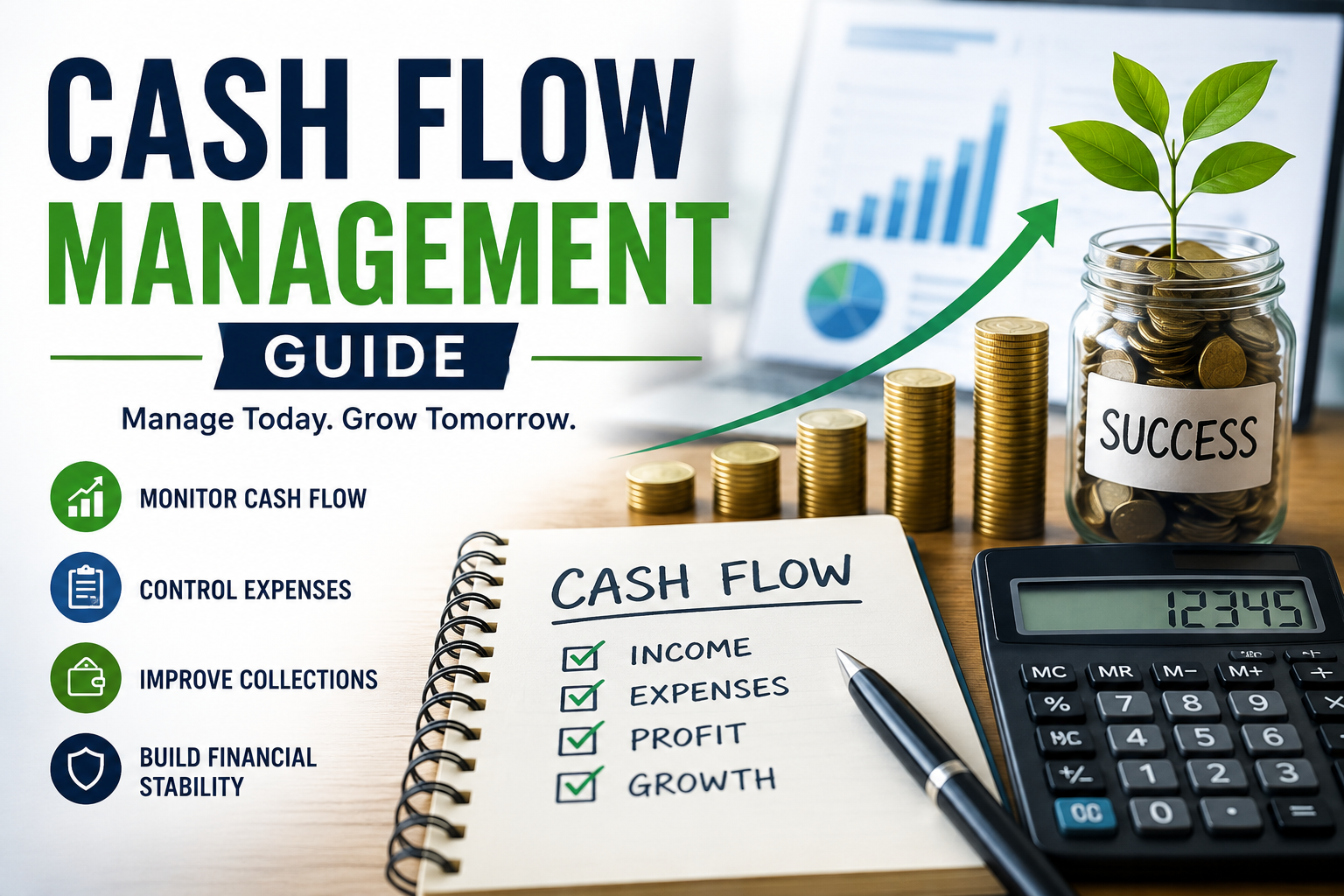
Cash Flow Management Guide
Cash flow is often described as the lifeblood of a business. Regardless of size or industry, every organization depends on a healthy flow of money to pay employees, purchase inventory, cover operating expenses, invest in growth, and remain financially stable. Even profitable businesses can experience financial difficulties if cash is not managed effectively.
As economic conditions fluctuate and operating costs continue to evolve, effective cash flow management has become one of the most important skills for business owners, entrepreneurs, and financial managers. Understanding how money moves through a business allows organizations to make informed decisions, prepare for uncertainty, and build long-term success.
This guide explains what cash flow management is, why it matters, the different types of cash flow, common challenges, and practical strategies for maintaining healthy business finances.
What Is Cash Flow Management?
Cash flow management is the process of tracking, analyzing, and optimizing the movement of money into and out of a business.
It involves monitoring:
- Customer payments
- Sales revenue
- Operating expenses
- Supplier payments
- Payroll
- Loan repayments
- Taxes
- Investments
The goal is to ensure sufficient cash is available to meet financial obligations while supporting business growth.
Why Cash Flow Matters
Positive cash flow allows a business to operate smoothly and respond to new opportunities.
Effective cash flow management helps businesses:
- Pay bills on time
- Meet payroll obligations
- Purchase inventory
- Invest in growth
- Build emergency reserves
- Improve financial stability
- Reduce borrowing needs
- Increase investor confidence
Healthy cash flow often provides greater flexibility during periods of economic uncertainty.
Understanding Cash Inflows
Cash inflows represent money entering the business.
Common sources include:
- Product sales
- Service revenue
- Customer deposits
- Loan proceeds
- Investment funding
- Asset sales
- Interest income
- Tax refunds
Increasing reliable cash inflows supports long-term financial health.
Understanding Cash Outflows
Cash outflows represent money leaving the business.
Typical expenses include:
- Employee salaries
- Rent
- Utilities
- Inventory purchases
- Equipment
- Loan repayments
- Marketing costs
- Insurance premiums
- Taxes
- Software subscriptions
Managing expenses carefully helps preserve working capital.
Types of Cash Flow
Businesses typically monitor three primary categories of cash flow.
Operating Cash Flow
Operating cash flow measures money generated from everyday business activities.
Examples include:
- Sales revenue
- Customer payments
- Supplier payments
- Payroll
- Operating expenses
Positive operating cash flow is generally considered a sign of a healthy business.
Investing Cash Flow
Investing cash flow reflects money spent on or earned from long-term investments.
Examples include:
- Purchasing equipment
- Buying property
- Selling assets
- Investing in technology
- Business acquisitions
These transactions often support future growth.
Financing Cash Flow
Financing cash flow involves raising or repaying capital.
Examples include:
- Business loans
- Investor funding
- Dividend payments
- Debt repayments
- Share issuance
This category reflects how businesses finance their operations and expansion.
Cash Flow vs Profit
Cash flow and profit are closely related but not identical.
Profit represents the amount of money remaining after expenses are deducted from revenue.
Cash flow measures the actual movement of cash into and out of the business.
A company may report a profit while experiencing cash shortages if customer payments are delayed or significant expenses occur before revenue is collected.
Understanding this distinction is essential for effective financial management.
Common Cash Flow Challenges
Many businesses experience cash flow difficulties at some point.
Common causes include:
- Late customer payments
- Seasonal sales fluctuations
- Unexpected expenses
- Excess inventory
- Rapid business growth
- High operating costs
- Poor budgeting
- Inefficient invoicing
Recognizing these challenges early allows businesses to take corrective action before problems become severe.
Forecasting Cash Flow
Cash flow forecasting helps businesses estimate future income and expenses.
A forecast typically includes:
- Expected sales
- Upcoming invoices
- Payroll schedules
- Rent payments
- Loan obligations
- Tax deadlines
- Planned investments
- Emergency expenses
Regular forecasting helps identify potential cash shortages before they occur.
Managing Accounts Receivable
Improving collections can strengthen cash flow.
Helpful strategies include:
- Sending invoices promptly
- Offering multiple payment options
- Setting clear payment terms
- Following up on overdue accounts
- Using automated reminders
- Reviewing customer credit policies
Faster collections improve liquidity and reduce financial pressure.
Controlling Business Expenses
Managing costs is an important part of cash flow management.
Businesses can reduce unnecessary spending by:
- Reviewing recurring subscriptions
- Negotiating supplier contracts
- Monitoring utility costs
- Reducing waste
- Improving operational efficiency
- Delaying non-essential purchases
Regular expense reviews help maintain healthy financial performance.
Building a Cash Reserve
Maintaining emergency cash reserves provides protection against unexpected events.
Reserve funds may help businesses:
- Cover temporary revenue declines
- Manage equipment repairs
- Respond to emergencies
- Handle seasonal fluctuations
- Invest in new opportunities
Many financial professionals recommend maintaining several months of operating expenses in reserve whenever possible.
Using Technology for Cash Flow Management
Modern financial software simplifies cash flow tracking and reporting.
Common features include:
- Real-time financial dashboards
- Automated invoicing
- Expense tracking
- Budget management
- Cash flow forecasting
- Bank account integration
- Financial reporting
- Payment reminders
Automation reduces manual work while improving financial visibility.
Best Practices for Healthy Cash Flow
Successful businesses often follow consistent financial habits.
These include:
- Monitor cash flow regularly
- Maintain accurate financial records
- Forecast future cash needs
- Invoice customers quickly
- Follow up on unpaid invoices
- Manage inventory efficiently
- Control operating expenses
- Build emergency reserves
- Review financial reports monthly
- Seek professional financial advice when needed
Consistency is often more valuable than reacting only when problems arise.
Common Cash Flow Mistakes
Avoid these common errors:
- Ignoring cash flow reports
- Confusing profit with available cash
- Overspending during strong sales periods
- Carrying excessive inventory
- Delaying customer invoicing
- Relying heavily on short-term debt
- Failing to forecast future expenses
- Neglecting emergency savings
Preventing these mistakes helps reduce financial risk.
The Future of Cash Flow Management
Technology continues transforming how businesses manage finances.
Emerging trends include:
- Artificial intelligence for forecasting
- Automated financial analysis
- Cloud accounting platforms
- Real-time payment systems
- Digital invoicing
- Predictive analytics
- Integrated financial dashboards
- Machine learning for risk assessment
These innovations are helping businesses make faster and more informed financial decisions.
Final Thoughts
Cash flow management is one of the most important foundations of long-term business success. By carefully monitoring income and expenses, forecasting future needs, controlling costs, and maintaining adequate cash reserves, businesses can improve financial stability while preparing for growth opportunities.
Whether operating a small startup or an established enterprise, effective cash flow management enables better decision-making, reduces financial stress, and strengthens resilience during changing economic conditions. Developing strong cash management habits today can help build a more profitable and sustainable business for the future.





2 Comments
Micle harison
June 7, 2019Lorem ipsum dolor sit amet, usu ut perfecto postulant deterruisset, libris causae volutpat at est, ius id modus laoreet urbanitas. Mel ei delenit dolores.
John Doe
June 7, 2019Some consultants are employed indirectly by the client via a consultancy staffing company.