
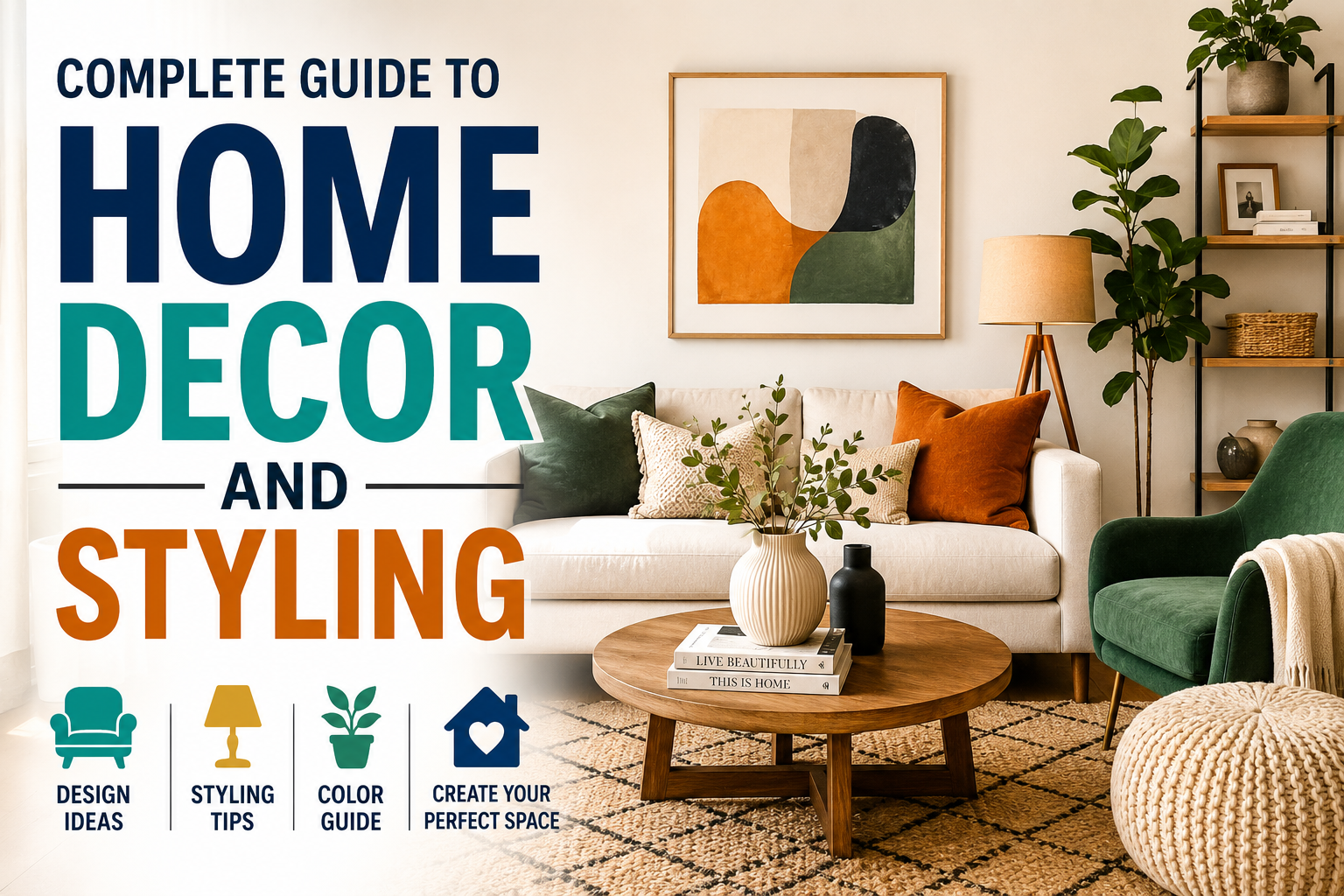
Complete Guide to Home Decor and Styling
Your home does not have to be expensive, enormous, or professionally designed to look beautiful. Good home decor is less about filling every corner with fashionable items and more about creating a space that feels comfortable, functional, balanced, and reflective of the people who live there.
Whether you are decorating a new home, refreshing a single room, or trying to make an existing space feel more polished, understanding the fundamentals of interior styling can make the process much easier.
This complete guide to home decor and styling explores everything from choosing a design style and color palette to arranging furniture, selecting lighting, decorating small spaces, and avoiding common mistakes.
What Is Home Decor?
Home decor refers to the objects, materials, colors, textures, and decorative elements used to make an interior space more attractive, comfortable, and personal.
Common home decor elements include:
- Furniture
- Curtains and blinds
- Rugs
- Artwork
- Mirrors
- Cushions
- Throws
- Lighting
- Plants
- Decorative objects
- Wall treatments
- Accessories
- Storage solutions
Home decor is different from interior architecture. Architecture determines the fundamental structure of a home, while decorating focuses largely on how that existing space looks and functions.
What Is Home Styling?
Home styling is the process of arranging and coordinating furniture, colors, accessories, lighting, textures, and other elements to create a cohesive visual environment.
The distinction between decorating and styling can be subtle.
Decorating often involves selecting and adding items to a space.
Styling focuses more heavily on how those items work together.
For example, buying a sofa is decorating. Choosing the sofa’s position, surrounding it with complementary furniture, adding a rug, selecting cushions and lighting, and creating visual balance is styling.
Why Good Home Decor Matters
A thoughtfully decorated home can influence how a space feels and how easily it functions.
Good design can help a room feel:
- More comfortable
- More organized
- Larger
- Brighter
- Warmer
- More relaxing
- More practical
- More personal
However, good design does not mean following every decorating trend.
The most successful interiors usually combine aesthetics with the needs of the people who actually use the space.
A beautiful living room that is uncomfortable to sit in is not necessarily a successful design.
Understanding Your Personal Design Style
Before buying furniture or accessories, it helps to determine what kind of environment you naturally prefer.
You do not have to choose one style and follow it rigidly. Many attractive homes combine elements from several design traditions.
Minimalist Style
Minimalist interiors emphasize simplicity, functionality, clean lines, and relatively uncluttered spaces.
Typical characteristics include:
- Simple furniture
- Neutral colors
- Limited decorative objects
- Clean surfaces
- Functional storage
- Open visual space
Minimalism does not necessarily mean having an empty home. The goal is to make every item feel intentional.
Modern Style
Modern interiors typically emphasize clean shapes, practical furniture, restrained decoration, and a contemporary appearance.
Materials may include:
- Glass
- Metal
- Wood
- Stone
- Concrete
- Leather
Modern design can range from warm and inviting to highly streamlined.
Contemporary Style
Contemporary design refers broadly to styles associated with the present.
Unlike a fixed historical style, contemporary interiors evolve as tastes, materials, and technology change.
They often feature:
- Clean lines
- Layered textures
- Modern lighting
- Flexible furniture
- Neutral foundations
- Carefully selected statement pieces
Traditional Style
Traditional interiors often draw inspiration from established decorating traditions.
They may feature:
- Classic furniture
- Decorative woodwork
- Patterned fabrics
- Symmetrical arrangements
- Richer colors
- Traditional artwork
Traditional design can be formal or adapted into a more relaxed modern interpretation.
Scandinavian Style
Scandinavian-inspired interiors are known for simplicity, natural materials, practical furniture, and bright interiors.
Common elements include:
- Light-colored wood
- Soft neutrals
- Natural fabrics
- Simple furniture
- Functional layouts
- Plenty of natural light
Industrial Style
Industrial interiors take inspiration from warehouses, workshops, and commercial spaces.
Common features include:
- Exposed materials
- Metal
- Brick
- Concrete
- Darker tones
- Functional lighting
- Reclaimed wood
Industrial elements can also be mixed with softer furniture to prevent the room from feeling cold.
Bohemian Style
Bohemian interiors generally embrace personality, layered textures, patterns, artwork, plants, and objects collected over time.
There is usually less emphasis on strict symmetry and more emphasis on creating an expressive, relaxed environment.
How to Choose a Home Decor Style
If you are unsure which style suits you, start with your existing preferences rather than a design label.
Look at rooms, furniture, hotels, restaurants, magazines, and photographs you naturally find appealing.
Then identify recurring characteristics.
Ask yourself:
- Do I prefer light or dark rooms?
- Do I like simple or highly decorated spaces?
- Do I prefer modern or traditional furniture?
- Which colors do I repeatedly choose?
- Do I prefer natural materials?
- How much visual clutter am I comfortable with?
- Do I prioritize comfort or appearance?
- What objects have sentimental value?
Your answers can reveal your underlying style.
How to Create a Home Color Palette
Color is one of the most powerful tools in interior design.
A good color palette can make unrelated pieces feel like part of the same room.
A simple approach is to create three levels:
Dominant Color
This is the main color of the room.
It may appear on:
- Walls
- Large furniture
- Flooring
- Curtains
Secondary Color
The secondary color adds contrast and visual interest.
It can appear through:
- Chairs
- Rugs
- Bedding
- Cabinets
- Accent furniture
Accent Color
Accent colors should generally be used more selectively.
They can appear in:
- Cushions
- Artwork
- Vases
- Decorative objects
- Small furniture
- Plants and flowers
The goal is not to make every object the same color. Instead, repeating related colors throughout the room creates cohesion.
Warm Colors Versus Cool Colors
Color temperature can significantly influence the atmosphere of a room.
Warm colors include shades associated with red, orange, yellow, and certain earthy tones.
They can make rooms feel:
- Cozy
- Energetic
- Intimate
- Welcoming
Cool colors include many blues, greens, and blue-based neutrals.
They can create a feeling of:
- Calm
- Freshness
- Spaciousness
- Relaxation
Neutral colors such as white, beige, gray, cream, and taupe can provide a flexible foundation.
How to Choose Furniture
Furniture is usually one of the largest investments in a room, so it is worth considering more than appearance.
Before buying furniture, evaluate:
- Size
- Proportion
- Comfort
- Durability
- Material
- Maintenance
- Function
- Room layout
- Available storage
A beautiful piece that is too large for the room can make the entire space feel cramped.
Measure Before Buying
Always measure:
- Room dimensions
- Doorways
- Hallways
- Staircases
- Elevator openings
- Window positions
- Existing furniture
- Available wall space
Also consider the path furniture will take from the entrance to its final location.
A sofa that fits perfectly in a living room may still be impossible to bring through a narrow doorway.
Understanding Furniture Proportion
Furniture should relate appropriately to the size of the room.
A large sectional sofa can overwhelm a small living room, while tiny furniture can make a large room feel strangely empty.
Think about relationships between:
- Sofa and coffee table
- Bed and bedside tables
- Dining table and chairs
- Rug and seating area
- Artwork and wall size
Good proportions make a room feel naturally balanced.
How to Arrange Living Room Furniture
A common mistake is pushing every piece of furniture against the walls.
In some rooms, bringing furniture slightly inward can create a more inviting arrangement.
Start by identifying the room’s focal point.
It might be:
- A fireplace
- Television
- Large window
- Artwork
- Architectural feature
- Statement furniture
Arrange the main seating around that focal point while preserving comfortable pathways.
Create Conversation Areas
In living rooms designed primarily for socializing, furniture should encourage conversation.
Instead of positioning every chair toward a television, consider creating a configuration where people can comfortably face one another.
This can make the room feel more welcoming.
Choosing the Right Rug
A rug can visually connect furniture and define a specific area within a room.
One common mistake is choosing a rug that is too small.
In many living-room layouts, at least the front legs of major seating pieces should sit on the rug.
For larger rooms, placing all major furniture completely on the rug can create an even stronger sense of unity.
The correct approach depends on the room’s size and furniture arrangement.
How Lighting Changes a Room
Lighting is one of the most overlooked aspects of home styling.
A room with beautiful furniture can still feel unpleasant if the lighting is harsh, insufficient, or poorly positioned.
A well-designed lighting scheme usually combines multiple sources.
Ambient Lighting
Ambient lighting provides general illumination.
Examples include:
- Ceiling fixtures
- Chandeliers
- Recessed lights
- Large pendant lights
Task Lighting
Task lighting provides focused illumination for specific activities.
Examples include:
- Desk lamps
- Reading lamps
- Kitchen work lights
- Vanity lighting
Accent Lighting
Accent lighting highlights specific objects or architectural features.
It can be used to draw attention to:
- Artwork
- Shelves
- Plants
- Architectural details
- Display cabinets
Layering these three forms of lighting can create a much more flexible environment.
Why Natural Light Matters
Natural light can dramatically affect how a room looks throughout the day.
Before choosing wall colors or major furniture pieces, observe how sunlight enters the room.
Consider:
- Morning versus afternoon light
- Window direction
- Nearby buildings
- Curtains
- Trees or exterior structures
- Seasonal changes
A color that looks bright in a showroom may appear completely different in your home.
Choosing Curtains and Window Treatments
Curtains serve both practical and decorative purposes.
They can provide:
- Privacy
- Light control
- Insulation
- Softness
- Visual height
- Color
- Texture
For a more spacious appearance, curtains can often be installed higher and wider than the actual window frame.
Floor-length curtains can also create a more finished appearance.
The fabric should match the room’s functional requirements. A bedroom may benefit from stronger light-blocking properties, while a living room may prioritize filtered natural light.
How to Decorate Walls
Bare walls can make a room feel unfinished, but covering every available surface can create visual clutter.
Good wall decor might include:
- Paint
- Artwork
- Mirrors
- Photographs
- Shelving
- Wall sculptures
- Textiles
- Architectural moldings
The key is creating intentional groupings rather than randomly filling empty spaces.
Creating a Gallery Wall
Gallery walls can add personality and visual interest.
Before hanging anything, arrange the artwork on the floor.
Experiment with:
- Different frame sizes
- Consistent frames
- Mixed frames
- Photographs
- Illustrations
- Prints
- Personal objects
A cohesive gallery wall does not require every piece to match. Repeating one or two visual characteristics can create unity.
Using Mirrors Effectively
Mirrors can reflect light and create the perception of additional visual space.
They work particularly well when positioned to reflect:
- Windows
- Attractive artwork
- Interesting architectural features
- Light sources
However, simply adding a large mirror does not automatically make a room look bigger. What the mirror reflects matters just as much.
Adding Texture to Your Home
Texture prevents a room from looking flat.
Consider combining materials such as:
- Wood
- Cotton
- Linen
- Wool
- Leather
- Glass
- Metal
- Stone
- Ceramic
- Woven fibers
For example, a smooth wooden table can be balanced with a textured rug, soft cushions, woven baskets, and natural fabrics.
Texture becomes particularly important in rooms that use mostly neutral colors.
The Importance of Plants
Indoor plants can introduce color, texture, and natural forms into a room.
Depending on the environment, you might use:
- Large floor plants
- Small tabletop plants
- Hanging plants
- Succulents
- Herbs
- Fresh flowers
Choose plants according to actual lighting, humidity, temperature, and maintenance conditions rather than choosing them solely for appearance.
Decorating Small Spaces
Small rooms require particularly careful planning.
The goal is not necessarily to make every object small. Instead, focus on maximizing function while preserving visual openness.
Useful strategies include:
- Choosing appropriately scaled furniture
- Using multifunctional pieces
- Taking advantage of vertical space
- Reducing unnecessary clutter
- Using mirrors strategically
- Maintaining clear pathways
- Selecting lighter visual elements
- Incorporating hidden storage
A small room can still feel sophisticated when every item has a clear purpose.
How to Make a Small Room Feel Larger
Several design choices can influence how spacious a room appears.
Use Consistent Flooring
Continuous flooring can make adjacent areas feel connected.
Keep Pathways Clear
Visible floor space can contribute to a stronger sense of openness.
Use Vertical Space
Tall shelving and curtains can draw the eye upward.
Avoid Excessive Furniture
Too many pieces can overwhelm a small room.
Use Reflective Surfaces Carefully
Glass, mirrors, and selected glossy surfaces can reflect light and add visual depth.
Decorating a Bedroom
A bedroom should prioritize comfort and relaxation.
Important considerations include:
- Bed size
- Mattress comfort
- Lighting
- Storage
- Window coverings
- Color
- Noise
- Temperature
- Bedding
The bed is naturally the focal point, so surrounding elements should support rather than compete with it.
Soft lighting and restrained colors can help create a calmer atmosphere, while personal objects can make the space feel less generic.
Decorating a Kitchen
Kitchen decor needs to balance appearance with practicality.
Useful decorative elements can include:
- Countertop accessories
- Open shelving
- Artwork
- Plants
- Baskets
- Decorative lighting
- Textiles
- Carefully selected cookware
Avoid filling work surfaces with unnecessary objects.
A kitchen should remain easy to clean and functional for cooking.
Decorating a Bathroom
Bathrooms can benefit from relatively simple styling.
Consider:
- Mirrors
- Lighting
- Towels
- Storage baskets
- Plants suitable for the environment
- Small decorative objects
- Coordinated containers
Because bathrooms are exposed to moisture, decorative materials should be selected with durability and maintenance in mind.
Home Decor on a Budget
Creating a stylish home does not require replacing everything.
Some of the most effective improvements can involve relatively small changes.
Try:
- Rearranging existing furniture
- Decluttering
- Changing lighting
- Adding textiles
- Repainting walls
- Reframing artwork
- Adding plants
- Updating hardware
- Introducing a large mirror
- Reorganizing shelves
Before buying anything, look at what you already own.
You may discover that moving furniture, removing unnecessary items, or grouping existing accessories differently produces a noticeable improvement.
How to Decorate Without Overspending
Set priorities.
Instead of buying ten inexpensive decorative objects, consider investing in one or two items that genuinely improve the room.
Prioritize items that have a major visual or functional impact:
- Furniture
- Lighting
- Rugs
- Window treatments
- Artwork
- Storage
- Decorative accessories
The exact order depends on the room and your existing furnishings.
Common Home Decorating Mistakes
Even well-intentioned decorating projects can go wrong.
Buying Everything From One Store
Matching furniture sets can make a room feel generic.
Mixing different materials, periods, and textures can create more personality.
Ignoring Scale
An oversized coffee table or undersized rug can disrupt an otherwise attractive room.
Choosing Paint Too Quickly
Test colors in the actual room before committing.
Creating Too Much Clutter
Decorative objects should enhance the room rather than compete for attention.
Poor Lighting
Relying entirely on one overhead light can make a room feel flat.
Following Trends Too Closely
A home should serve its occupants rather than function as a showroom for temporary trends.
Ignoring Function
Decor should never make everyday activities unnecessarily difficult.
How to Style Shelves
Shelving is an opportunity to combine storage and decoration.
Instead of lining objects up in a single row, create visual variation.
Combine:
- Books
- Plants
- Artwork
- Ceramics
- Baskets
- Photographs
- Sculptural objects
Vary height and shape while maintaining some repetition in color or material.
Leave some empty space between groups. Negative space gives the eye somewhere to rest.
The Role of Negative Space
Negative space refers to intentionally unoccupied areas around objects.
It is one of the most important but frequently overlooked design principles.
Without enough empty space, rooms can feel crowded even when the individual objects are attractive.
Empty space allows important pieces to stand out.
Creating Balance in Interior Design
Balance refers to how visual weight is distributed around a room.
There are several forms of balance.
Symmetrical Balance
Objects are arranged similarly on either side of a central point.
This can create a formal and orderly appearance.
Asymmetrical Balance
Different objects have different visual weights but are arranged so the overall composition still feels balanced.
This tends to create a more relaxed and contemporary appearance.
Radial Balance
Objects are arranged around a central point.
This can work particularly well with round dining tables or circular arrangements.
Repetition Creates Cohesion
Repeating certain elements throughout a home helps create visual consistency.
You might repeat:
- A particular wood tone
- Metal finish
- Accent color
- Fabric
- Shape
- Architectural detail
The repetition does not have to be identical.
Subtle relationships can be enough to make separate rooms feel connected.
How to Mix Different Styles
Combining styles can create a more personalized home.
The trick is finding something that connects the different pieces.
For example, modern furniture can work with traditional artwork if they share complementary colors.
A rustic wooden table can work in a contemporary room if other natural materials appear elsewhere.
A useful approach is to choose one dominant style and introduce another through smaller elements.
Making Your Home Feel More Personal
The most memorable homes usually contain evidence of the people who live there.
Consider displaying:
- Family photographs
- Travel memories
- Books
- Artwork
- Handmade objects
- Collections
- Heirlooms
- Favorite colors
- Meaningful souvenirs
Personalization does not require covering every surface with possessions.
A few meaningful objects can have more impact than a large collection of generic accessories.
A Practical Home Styling Checklist
Before considering a room finished, ask:
- Is the furniture appropriately sized?
- Are there clear pathways?
- Does the room have adequate lighting?
- Is there a clear focal point?
- Do the colors work together?
- Are different textures represented?
- Is there enough storage?
- Is there unnecessary clutter?
- Does the room function well?
- Does it reflect your personality?
- Can the space be maintained easily?
If the answer to most of these questions is yes, the room is probably working well.
Frequently Asked Questions About Home Decor
What is the most important rule of home decor?
There is no single rule that applies to every home, but functionality, proportion, balance, and personal comfort are strong foundations for successful decorating.
How do I choose a decorating style?
Look for recurring patterns in the interiors, colors, furniture, materials, and objects you naturally prefer. You can then combine those preferences into a style that suits your lifestyle.
How can I make my home look expensive?
Focus on proportion, good lighting, coordinated colors, quality-looking materials, decluttering, appropriate furniture placement, and thoughtful accessories. A sophisticated appearance does not necessarily require expensive furniture.
How many colors should a room have?
There is no universal limit, but establishing a dominant color, secondary color, and one or more accents can make it easier to create a cohesive palette.
Should all rooms in a home match?
No. Rooms can have different personalities while still feeling connected through repeated colors, materials, finishes, architectural details, or design principles.
How can I decorate my home cheaply?
Start by rearranging existing furniture, decluttering, improving lighting, adding textiles, repainting where appropriate, and displaying meaningful objects. Make purchases only after identifying what the room actually needs.
Building a Home That Feels Like Yours
The best home decor is not necessarily the most expensive, fashionable, or visually impressive. It is the design that successfully balances comfort, function, personality, and visual harmony.
Start with how you live rather than what is currently popular. Understand the proportions of your rooms, establish a practical color palette, layer different types of lighting, introduce texture, and give important objects enough space to stand out.
Most importantly, allow your home to evolve. A well-styled space does not have to be completed in a single weekend. Collect meaningful pieces over time, experiment with arrangements, and make changes as your needs change.
When those choices come together, home styling becomes more than decoration—it becomes a way of creating a living environment that genuinely feels like home.





2 Comments
Micle harison
June 7, 2019Lorem ipsum dolor sit amet, usu ut perfecto postulant deterruisset, libris causae volutpat at est, ius id modus laoreet urbanitas. Mel ei delenit dolores.
John Doe
June 7, 2019Some consultants are employed indirectly by the client via a consultancy staffing company.