
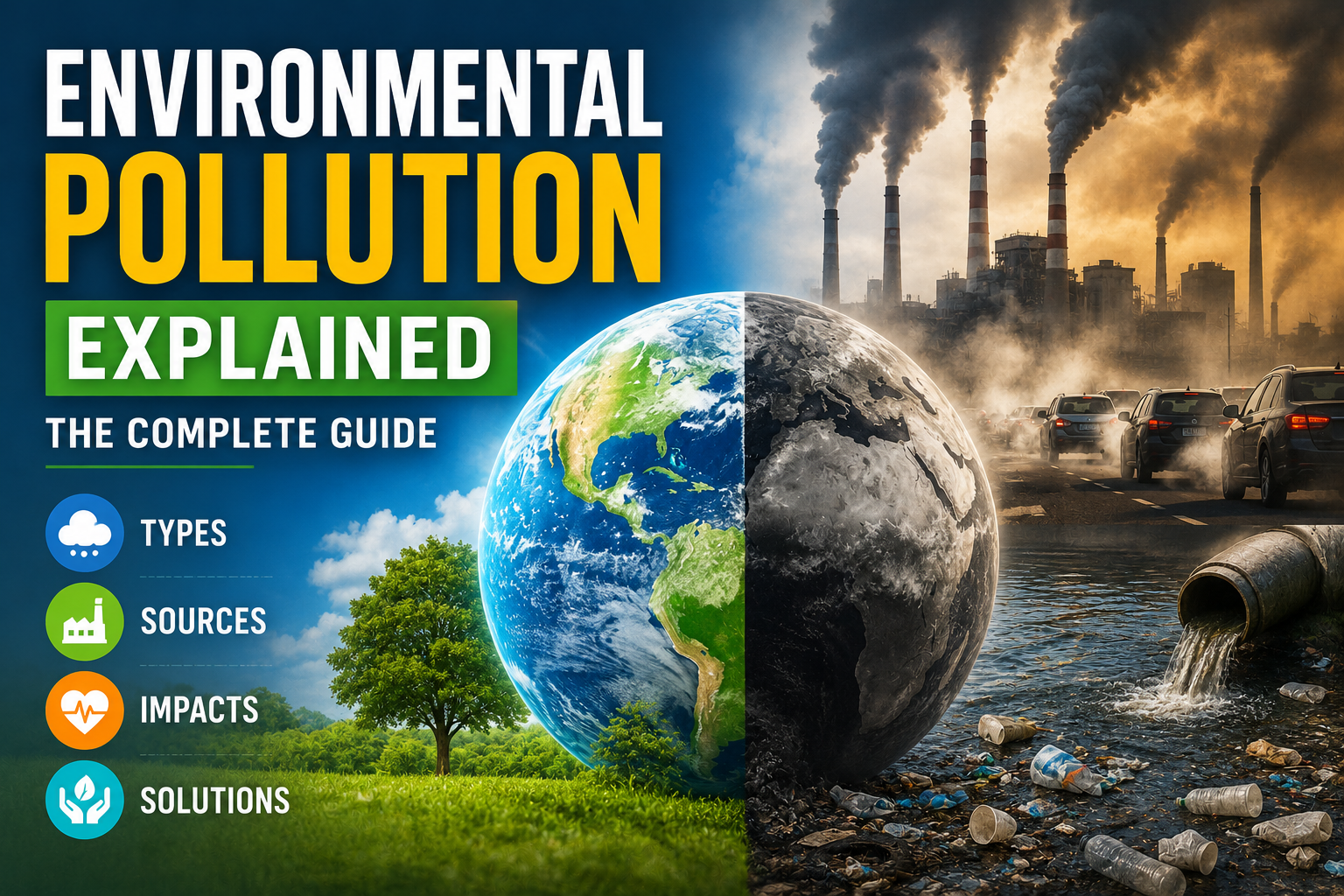
Environmental Pollution Explained: The Complete Guide
Environmental pollution is one of the biggest challenges facing modern societies. It affects the air people breathe, the water they drink, the food they depend on, and the ecosystems that support life.
Pollution is not limited to visible smoke, plastic waste, or dirty waterways. It can also involve microscopic particles in the air, chemicals in soil, excessive noise, artificial light, and other forms of contamination that can alter natural systems.
Understanding what pollution is, where it comes from, how it spreads, and what can be done about it is an important first step toward protecting human health and the environment.
What Is Environmental Pollution?
Environmental pollution is the introduction of harmful substances, organisms, energy, or other contaminants into the natural environment at levels that can cause damage.
These pollutants can enter the air, water, soil, and food chain, where they may affect humans, animals, plants, and entire ecosystems.
Pollution can come from natural processes, but many of the most persistent and widespread forms today are associated with human activities such as:
- Burning fossil fuels
- Manufacturing and industrial production
- Mining
- Agriculture
- Transportation
- Waste disposal
- Construction
- Deforestation
- Urban development
- Improper chemical disposal
The effects depend on the pollutant, its concentration, how long organisms are exposed to it, and how easily it can move through the environment.
The Major Types of Environmental Pollution
Environmental pollution can be divided into several major categories. Some forms are closely connected and can occur simultaneously.
1. Air Pollution
Air pollution occurs when harmful gases, particles, or biological materials accumulate in the atmosphere.
Common air pollutants include:
- Fine particulate matter
- Nitrogen oxides
- Sulfur dioxide
- Carbon monoxide
- Ground-level ozone
- Volatile organic compounds
- Smoke and soot
Major sources include vehicles, power plants, factories, construction, agricultural activities, and the burning of fuels and waste.
Fine particles are particularly concerning because some can penetrate deep into the respiratory system.
Air pollution can contribute to respiratory and cardiovascular problems and can also damage vegetation, buildings, and ecosystems.
2. Water Pollution
Water pollution occurs when harmful substances enter rivers, lakes, oceans, groundwater, or other water sources.
Pollutants can include:
- Industrial chemicals
- Sewage
- Agricultural runoff
- Oil
- Plastics
- Heavy metals
- Excess nutrients
- Microorganisms
Agricultural runoff is an important example. Fertilizers can introduce excess nutrients into waterways, contributing to algal blooms and oxygen depletion.
Water pollution can affect drinking-water supplies, fisheries, aquatic ecosystems, agriculture, and human health.
3. Soil Pollution
Soil pollution occurs when contaminants accumulate in soil at harmful concentrations.
Potential sources include:
- Pesticides
- Industrial chemicals
- Petroleum products
- Mining waste
- Heavy metals
- Improperly disposed waste
- Certain construction materials
Contaminated soil can affect plant growth and soil organisms. Some pollutants can also enter crops and eventually move through the food chain.
4. Plastic Pollution
Plastic pollution involves the accumulation of plastic products and plastic particles in the environment.
Plastic waste can reach:
- Rivers
- Beaches
- Oceans
- Agricultural land
- Urban environments
- Landfills
Large plastic items can injure wildlife or interfere with feeding and movement. Smaller particles, including microplastics, can spread through water, soil, air, and food webs.
Reducing unnecessary plastic consumption, improving waste collection, increasing reuse, and developing effective recycling and waste-management systems can all help reduce plastic pollution.
5. Noise Pollution
Noise pollution is excessive or unwanted sound that interferes with people, animals, or ecosystems.
Common sources include:
- Road traffic
- Aircraft
- Construction
- Industrial machinery
- Trains
- Urban activities
Long-term exposure to excessive noise can interfere with sleep, concentration, communication, and general well-being. Noise can also disrupt wildlife behavior.
6. Light Pollution
Light pollution occurs when artificial light is excessive, poorly directed, or used where it is not necessary.
Examples include:
- Excessively bright outdoor lighting
- Illuminated buildings
- Advertising signs
- Street lighting
- Light spilling from urban areas into surrounding environments
Artificial light at night can alter natural patterns of darkness and affect nocturnal wildlife. It can also interfere with human sleep cycles.
7. Thermal Pollution
Thermal pollution occurs when human activities significantly alter the temperature of a natural water body or ecosystem.
A common example involves industrial facilities using water for cooling and subsequently releasing warmer water.
Changes in water temperature can affect dissolved oxygen levels and aquatic organisms, particularly species that depend on specific temperature conditions.
8. Radioactive Pollution
Radioactive pollution involves the release or accumulation of radioactive materials in the environment.
Potential sources include:
- Nuclear accidents
- Improper handling of radioactive materials
- Certain industrial activities
- Mining and processing of radioactive ores
- Improper disposal of radioactive waste
Because radioactive substances can remain hazardous for extended periods, their handling, storage, transportation, and disposal require strict controls.
What Causes Environmental Pollution?
Pollution generally results from a combination of population growth, industrialization, resource consumption, inadequate infrastructure, and poor waste management.
Fossil Fuel Combustion
Coal, oil, and natural gas are used for electricity generation, transportation, heating, and industrial processes.
Their combustion can release pollutants into the atmosphere, including particulate matter and various gases.
Industrial Activity
Factories and industrial facilities can release air pollutants, wastewater, chemical waste, and other contaminants when processes are poorly controlled or waste is inadequately managed.
Agriculture
Agriculture can contribute to pollution through fertilizer runoff, pesticide use, livestock waste, soil erosion, and other activities.
Some agricultural pollutants can travel from fields into streams, rivers, lakes, and coastal waters.
Transportation
Cars, trucks, ships, and aircraft can contribute to air pollution through fuel combustion and other emissions.
Road transportation can also contribute indirectly through tire and brake wear, which produces particles that can enter the surrounding environment.
Mining
Mining can disturb soil and rock and may generate waste materials that contain potentially harmful substances.
Mining operations can also affect waterways and habitats when environmental controls are inadequate.
Waste Disposal
Improperly managed household, industrial, medical, and electronic waste can release pollutants into surrounding environments.
Landfills and waste sites can also generate contaminated liquid, known as leachate, if they are not properly designed and managed.
How Does Pollution Affect Human Health?
The health effects of pollution depend on the type of pollutant, exposure level, duration, and characteristics of the individual.
Some pollutants can affect the body after inhalation, ingestion, or skin contact.
Potential effects can include:
- Respiratory irritation
- Worsening of existing respiratory conditions
- Cardiovascular effects
- Neurological effects
- Skin irritation
- Gastrointestinal illness
- Developmental effects
- Increased risk associated with certain long-term exposures
Air pollution is particularly important because everyone needs to breathe, making exposure difficult to avoid in heavily polluted environments.
Water and soil contamination can also become health concerns when pollutants enter drinking water or the food supply.
How Pollution Affects Animals and Wildlife
Wildlife can be exposed to pollutants through contaminated air, water, soil, food, and habitats.
The consequences vary considerably by species and pollutant.
Pollution can:
- Damage habitats
- Reduce food availability
- Disrupt reproduction
- Alter animal behavior
- Cause physical injury
- Increase exposure to disease
- Affect growth and development
- Introduce toxic substances into food webs
Plastic pollution illustrates how different effects can occur simultaneously. Animals may become entangled in plastic debris or ingest it accidentally.
How Pollution Damages Ecosystems
An ecosystem is a network of organisms interacting with one another and with their physical environment.
Pollution can disrupt these relationships.
For example, excessive nutrients entering a lake may encourage rapid algae growth. When large amounts of algae die and decompose, oxygen can be consumed from the water. Low oxygen conditions can then stress or kill aquatic organisms.
This demonstrates why pollution is not always a single-species problem. A contaminant can trigger a chain of effects throughout an ecosystem.
Pollution and Climate Change Are Different
Pollution and climate change are closely connected, but they are not the same thing.
Pollution generally refers to harmful contamination or environmental disturbance caused by substances, energy, or other agents.
Climate change refers to long-term changes in Earth’s climate patterns, including changes in temperature and weather patterns.
The two can overlap.
For example, burning fossil fuels releases greenhouse gases that contribute to climate change while also producing conventional air pollutants.
This means some environmental policies can address multiple problems simultaneously, although the solutions are not always identical.
What Are Primary and Secondary Pollutants?
Pollutants can also be classified according to how they are formed.
Primary Pollutants
Primary pollutants are released directly from a source.
Examples include certain particles, carbon monoxide, and sulfur dioxide emitted from combustion processes.
Secondary Pollutants
Secondary pollutants form in the environment through chemical reactions involving other substances.
Ground-level ozone is an important example. It can form when certain pollutants react in sunlight.
This distinction matters because reducing a secondary pollutant may require controlling the substances that create it rather than simply removing the pollutant after it forms.
How Does Pollution Spread?
Pollution does not necessarily remain where it originates.
Wind can transport air pollutants across cities, regions, and even national borders.
Water can carry contaminants downstream from farms, factories, cities, and other sources.
Soil particles can be moved by wind and water erosion.
Some persistent chemicals can accumulate in organisms and become more concentrated at higher levels of a food chain.
The movement of pollutants makes environmental protection a shared responsibility rather than an issue that can always be solved at the location where contamination first occurs.
What Is Bioaccumulation?
Bioaccumulation occurs when a substance builds up inside an organism faster than the organism can eliminate it.
This can happen with certain persistent chemicals.
If a contaminant remains in an ecosystem and is repeatedly consumed, it can potentially become more concentrated in organisms higher up the food chain.
This process is particularly important when pollutants persist for long periods and are difficult for organisms to break down or eliminate.
How Can Environmental Pollution Be Reduced?
There is no single solution to pollution. Effective pollution control usually combines prevention, regulation, technology, infrastructure, responsible consumption, and environmental monitoring.
Reduce Pollution at the Source
Preventing pollution before it is created is often more effective than attempting to clean it up afterward.
Examples include:
- Using cleaner production methods
- Improving energy efficiency
- Reducing unnecessary material use
- Preventing chemical leaks
- Designing products for reuse and repair
- Improving industrial processes
Improve Waste Management
Effective collection, treatment, recycling, reuse, and disposal systems can prevent waste from entering the environment.
Waste reduction is especially important because recycling alone cannot address every environmental impact associated with producing and disposing of materials.
Use Cleaner Transportation
Transportation pollution can be reduced through a combination of:
- Public transportation
- Walking and cycling infrastructure
- More efficient vehicles
- Cleaner fuels
- Vehicle maintenance
- Electrification where appropriate
- Better urban planning
Improve Water and Sewage Treatment
Proper wastewater treatment can remove or reduce many contaminants before water is released into rivers, lakes, or coastal environments.
Access to effective sanitation is therefore an important part of environmental protection and public health.
Reduce Agricultural Runoff
Farmers can use practices designed to reduce nutrient and chemical losses from fields.
These may include:
- Applying fertilizers carefully
- Maintaining vegetation near waterways
- Reducing soil erosion
- Managing irrigation
- Using integrated pest-management approaches
The most appropriate practices depend on local soils, crops, climate, and farming systems.
Protect Natural Ecosystems
Forests, wetlands, grasslands, rivers, and coastal ecosystems can provide important environmental functions.
Protecting these systems can help preserve biodiversity and maintain processes such as water filtration, soil protection, and carbon storage.
What Can Individuals Do About Pollution?
Individuals cannot solve environmental pollution alone, because many major sources depend on industrial systems, infrastructure, government policy, and business practices.
However, personal decisions can still contribute to broader changes.
Practical actions include:
- Avoiding unnecessary consumption
- Reusing products where practical
- Repairing items instead of immediately replacing them
- Disposing of waste responsibly
- Reducing food waste
- Using energy efficiently
- Choosing lower-emission transportation when practical
- Avoiding littering
- Limiting unnecessary single-use products
- Supporting effective environmental policies and community initiatives
The most important principle is to focus on meaningful reductions rather than expecting individuals to carry the entire burden of environmental protection.
Why Environmental Monitoring Matters
Pollution cannot be managed effectively without reliable information.
Environmental monitoring helps scientists and authorities determine:
- Where pollution is occurring
- Which pollutants are present
- How concentrations change over time
- Which populations or ecosystems are exposed
- Whether pollution-control measures are working
- Where additional intervention may be necessary
Monitoring can involve air-quality sensors, water sampling, soil testing, satellite observations, biological surveys, and other scientific methods.
Reliable measurements also make it easier to distinguish short-term fluctuations from longer-term environmental changes.
Common Questions About Environmental Pollution
What Is the Main Cause of Environmental Pollution?
There is no single cause. Major contributors include energy production, transportation, industry, agriculture, mining, waste generation, and poorly managed urban development.
Which Type of Pollution Is Most Harmful?
There is no universal answer because different pollutants affect different populations and ecosystems in different ways. Air pollution, water contamination, toxic chemicals, plastic waste, and other forms of pollution can all create serious environmental concerns.
Can Pollution Be Completely Eliminated?
Complete elimination is generally unrealistic. The practical goal is to prevent unnecessary pollution, reduce harmful emissions and releases, manage unavoidable waste safely, and restore contaminated environments where possible.
Is Pollution Reversible?
Some environmental damage can be reversed or reduced, while other effects can persist for decades or longer. The outcome depends on the pollutant, concentration, ecosystem, exposure duration, and effectiveness of remediation.
Why Is Pollution an Environmental Problem?
Pollution can alter natural systems, harm organisms, degrade habitats, contaminate resources, and interfere with ecological processes. Its effects can extend from a local site to entire watersheds, regions, or food webs.
The Path From Pollution Prevention to Environmental Protection
Environmental pollution is ultimately a problem of how human activities interact with natural systems.
The most effective approach is not simply cleaning up pollution after it appears. It involves preventing contamination where possible, designing safer production systems, managing resources responsibly, monitoring environmental conditions, and responding quickly when contamination occurs.
For individuals, businesses, scientists, and governments, understanding the different forms of pollution provides a foundation for making better decisions. Cleaner technologies and stronger environmental infrastructure can reduce exposure, while informed communities can help ensure that environmental protections remain effective over the long term.
The challenge is substantial, but pollution is not an abstract problem. It is something that can be measured, studied, prevented, reduced, and, in many cases, remediated through sustained action.


2 Comments
Micle harison
June 7, 2019Lorem ipsum dolor sit amet, usu ut perfecto postulant deterruisset, libris causae volutpat at est, ius id modus laoreet urbanitas. Mel ei delenit dolores.
John Doe
June 7, 2019Some consultants are employed indirectly by the client via a consultancy staffing company.