
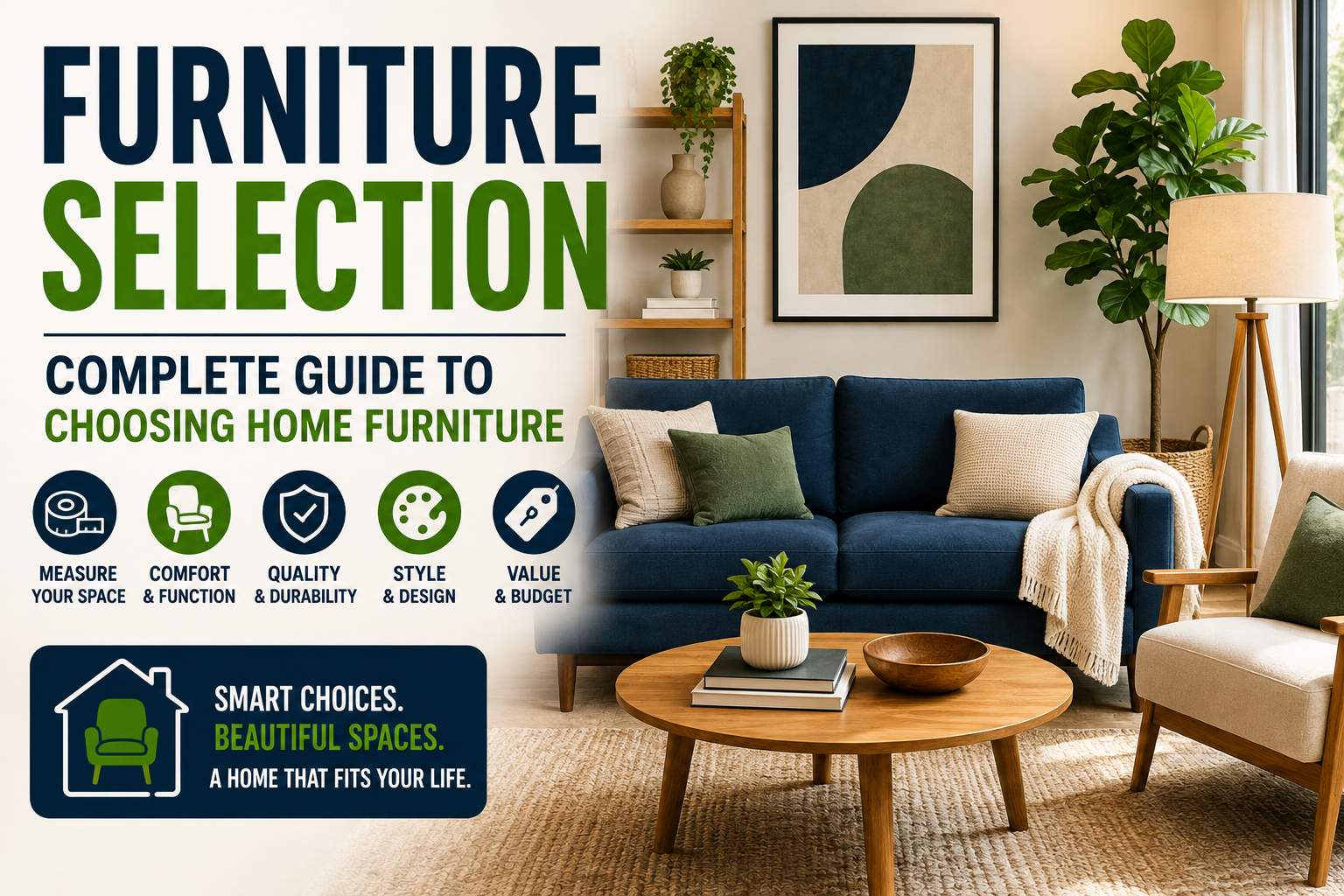
Furniture Selection: Complete Guide to Choosing Home Furniture
Furniture is one of the biggest investments people make in their homes. The right pieces can make a room more comfortable, functional and visually balanced, while poorly chosen furniture can leave a space feeling cramped, impractical or unfinished.
Choosing furniture, however, isn’t simply about finding something that looks good in a showroom or online listing. Good furniture selection requires thinking about size, function, materials, comfort, durability, style, maintenance and budget at the same time.
Whether you’re furnishing a new home, replacing an old sofa or gradually redesigning individual rooms, a thoughtful approach can help you avoid expensive mistakes.
This complete guide explains how to choose home furniture, how to measure rooms, which materials to consider, how to balance style and function, and what to look for before making a purchase.
What Is Furniture Selection?
Furniture selection is the process of choosing pieces that fit a home’s available space, functional requirements, aesthetic preferences and budget.
It involves more than matching colors.
A successful furniture choice should answer several questions:
- Does it fit the available space?
- Is it comfortable?
- Does it serve the intended purpose?
- Is it durable enough for the household?
- Does its style complement the room?
- Is it easy to maintain?
- Does the price reflect its quality?
- Can it be moved or rearranged if the room changes?
The best furniture decisions balance appearance with everyday usability.
Why Choosing the Right Furniture Matters
Furniture has a major influence on how a home feels and functions.
A large sectional can provide comfortable seating for a family, but it may overwhelm a small living room.
A beautiful dining table may look impressive, but if it leaves too little room for people to move around it, it can become frustrating to use.
Likewise, a cheap piece may seem like a bargain initially but become expensive if it needs frequent repairs or replacement.
Thoughtful furniture selection can help you:
- Maximize available space
- Improve comfort
- Create better movement through rooms
- Establish a consistent interior style
- Reduce clutter
- Improve storage
- Increase durability
- Make cleaning easier
- Avoid unnecessary replacement costs
Furniture should therefore be considered part of the home’s overall design and functionality rather than as isolated purchases.
Start With Function Before Style
One of the most common furniture-buying mistakes is starting with appearance.
Instead, start by asking:
What does this room need to accomplish?
For example, a living room might need to:
- Seat a family
- Accommodate guests
- Provide a place to watch television
- Support reading
- Create a conversation area
- Include storage
A bedroom may prioritize:
- Sleeping comfort
- Clothing storage
- Bedside storage
- Organization
- Relaxation
A home office might need:
- A desk
- Ergonomic seating
- Equipment storage
- Cable management
- Adequate lighting
Once the functional requirements are clear, style becomes much easier to evaluate.
Measure Your Room Before Buying
Measurements are among the most important pieces of information you can have before purchasing furniture.
Measure:
- Room length
- Room width
- Ceiling height
- Doorways
- Hallways
- Staircases
- Windows
- Radiators or vents
- Built-in cabinets
- Electrical outlets
- Other fixed features
Don’t measure only the space where you want the furniture to sit.
You also need to know whether the furniture can actually enter the home.
The Delivery Path Matters
A sofa may fit perfectly inside a living room but still be impossible to bring through a narrow doorway.
Before buying large furniture, consider the entire delivery route:
Street → Entrance → Doorway → Hallway → Staircase → Room
Check:
- Door width
- Door height
- Hallway width
- Staircase turns
- Elevator dimensions
- Ceiling clearance
- Balcony or window access where relevant
If the furniture comes assembled, check its full dimensions.
If it comes in sections or flat-packed components, check the package dimensions as well.
Use a Floor Plan
A simple floor plan can make furniture selection much easier.
You don’t necessarily need professional design software.
You can draw the room on paper and mark:
- Doors
- Windows
- Built-in features
- Walkways
- Furniture dimensions
Then create simple rectangles representing potential furniture pieces.
This can reveal problems before you spend money.
For example, you might discover that adding a large coffee table makes the distance between the sofa and television too narrow.
Leave Enough Walking Space
A room shouldn’t feel like an obstacle course.
Furniture should create natural pathways through the space.
Consider the routes people use most frequently:
- Door to sofa
- Sofa to kitchen
- Bed to bathroom
- Dining table to kitchen
- Desk to door
Avoid placing furniture where people must constantly squeeze around corners or walk between tightly packed objects.
The exact amount of clearance depends on the room and furniture, but the principle is simple:
Prioritize comfortable movement over filling every available space.
Understanding Furniture Scale and Proportion
Scale refers to the relationship between furniture and the room.
Proportion describes how different furniture pieces relate to one another.
A huge sofa paired with tiny side tables can look unbalanced.
Likewise, several small pieces in a large room can make the space feel empty.
When selecting furniture, consider:
- Room size
- Ceiling height
- Window size
- Existing furniture
- Architectural features
- Visual weight
Large rooms can generally accommodate larger pieces, while smaller rooms often benefit from furniture with a lighter visual footprint.
Don’t Automatically Choose the Largest Sofa
A common misconception is that bigger furniture automatically provides greater comfort.
A sofa should be large enough to meet your seating needs without dominating the room.
Consider:
- Number of people using it
- Seat depth
- Seat height
- Armrest design
- Back support
- Available floor space
- Relationship to other furniture
A smaller, well-proportioned sofa can sometimes make a room feel significantly more comfortable than an oversized sectional.
Choosing the Right Sofa
The sofa is often the visual and functional center of a living room.
Before purchasing one, consider several factors.
Size
Measure the available area and delivery route.
Seat Depth
Deeper seats can feel comfortable for lounging but may not suit everyone.
Seat Height
Consider how easily household members can sit down and stand up.
Cushion Construction
Different cushion materials provide different levels of firmness, support and maintenance requirements.
Frame Construction
The frame affects durability and stability.
Upholstery
Consider how the material will perform under everyday use.
Lifestyle
A household with children or pets may prioritize stain resistance and easy cleaning over delicate fabrics.
Choosing Dining Furniture
Dining furniture needs to balance comfort, durability and available space.
Before buying a dining table, consider:
- Number of regular users
- Number of occasional guests
- Available room size
- Chair clearance
- Table shape
- Cleaning requirements
- Material durability
Round Tables
Round tables can work well in certain smaller or conversational spaces because they eliminate sharp corners and encourage face-to-face interaction.
Rectangular Tables
Rectangular tables are versatile and can work well in longer rooms.
Square Tables
Square tables can suit compact dining areas where the room’s proportions support the shape.
The best shape depends on the room rather than a universal rule.
Choosing Bedroom Furniture
The bedroom should prioritize comfort and practical organization.
Essential pieces may include:
- Bed
- Mattress
- Bedside tables
- Wardrobe
- Chest of drawers
- Dressing table
- Seating where space allows
The bed is usually the dominant piece, so start there.
Then arrange the remaining furniture around the available floor space and movement patterns.
Choosing the Right Bed Size
Before selecting a bed, consider:
- Number of sleepers
- Room dimensions
- Sleeping preferences
- Available storage
- Door and window placement
- Clearance around the bed
A larger bed may provide greater sleeping comfort but can reduce usable space in a smaller bedroom.
Don’t choose a bed size without considering the entire room.
Choosing Home Office Furniture
A home office needs to support productivity and physical comfort.
A basic setup may include:
- Desk
- Office chair
- Storage
- Monitor stand
- Lighting
- Cable-management solutions
The desk should provide enough surface area for the equipment and tasks you actually perform.
The chair deserves particular attention because it may be used for several hours at a time.
Ergonomics and Furniture Selection
Ergonomics involves designing a workspace to support comfortable and efficient interaction between people and their environment.
For office furniture, consider:
- Seat height
- Back support
- Desk height
- Monitor position
- Keyboard and mouse placement
- Foot position
- Ability to change posture
Furniture alone cannot guarantee good posture or prevent discomfort, but an appropriate setup can make healthy working habits easier.
Furniture Materials Explained
Furniture can be constructed from many different materials.
The most common include:
- Solid wood
- Engineered wood
- Metal
- Glass
- Plastic
- Rattan
- Wicker
- Upholstered materials
- Stone
- Composite materials
Each has different characteristics.
Solid Wood Furniture
Solid wood remains popular because of its appearance, durability and ability to be repaired or refinished.
Common furniture woods include:
- Oak
- Pine
- Walnut
- Maple
- Ash
- Teak
- Mahogany
The performance of solid wood depends on the species, construction, finish and environmental conditions.
Wood furniture can also change slightly with humidity and temperature.
Engineered Wood Furniture
Engineered wood includes materials such as:
- Plywood
- Medium-density fiberboard (MDF)
- Particleboard
These materials can be useful for reducing cost and producing consistent shapes.
Quality varies considerably between products.
When evaluating engineered-wood furniture, examine:
- Panel thickness
- Edge finishing
- Hardware
- Joint construction
- Surface durability
- Weight capacity
Don’t assume all engineered wood is low quality—or that all solid wood furniture is automatically superior.
Construction matters.
Metal Furniture
Metal can provide strength and a modern or industrial appearance.
Common furniture metals include:
- Steel
- Aluminum
- Iron
Consider:
- Weight
- Corrosion resistance
- Surface treatment
- Weld quality
- Stability
Metal furniture can be particularly useful for certain outdoor or high-use applications when appropriately designed and protected.
Glass Furniture
Glass can make furniture appear visually lighter and can help smaller rooms feel less crowded.
However, glass surfaces may require more frequent cleaning and careful handling.
When purchasing glass furniture, consider the type and thickness of glass, construction quality and the manufacturer’s safety information.
Upholstery Materials
Upholstered furniture can use materials such as:
- Cotton
- Linen
- Wool
- Polyester
- Microfiber
- Leather
- Synthetic leather
Each material has different characteristics.
Natural Fabrics
Natural fabrics can provide a distinctive appearance and tactile quality.
Synthetic Fabrics
Synthetic materials can offer durability and stain resistance depending on construction and treatment.
Leather
Leather can be durable and develop a distinctive appearance over time, but it requires appropriate care and may be more expensive.
Furniture Durability: What to Look For
Durability isn’t determined by material alone.
Two pieces made from the same material can have dramatically different lifespans because of differences in construction.
Look for:
- Strong joints
- Stable frames
- Quality hardware
- Even surfaces
- Properly supported shelves
- Reinforced high-stress areas
- Appropriate weight capacity
- Quality finishes
For seating, sit on the furniture if possible.
Move slightly.
Check for wobbling, creaking or excessive movement.
Joinery Matters in Wooden Furniture
Furniture joints can reveal a lot about construction.
Common techniques include:
- Dovetail joints
- Mortise-and-tenon joints
- Dowels
- Screws
- Brackets
- Adhesive bonding
The best construction method depends on the furniture’s design and intended use.
Instead of judging furniture solely by one type of joint, look at the overall construction quality.
Furniture Quality vs. Furniture Price
Higher price does not automatically guarantee better quality.
Likewise, low price doesn’t automatically mean poor quality.
When comparing products, evaluate:
Price → Materials → Construction → Warranty → Expected use → Maintenance → Longevity
A more expensive piece may make sense if it is designed for intensive daily use and is likely to last considerably longer.
A less expensive option may make more sense for temporary or occasional use.
How to Choose Furniture on a Budget
A limited budget doesn’t mean you have to sacrifice good design.
Start by identifying pieces that deserve greater investment.
For many households, these might include:
- Mattress
- Sofa
- Dining chairs
- Office chair
- Frequently used storage
Other pieces may be purchased more economically.
You can also:
- Buy gradually
- Compare multiple retailers
- Look for floor models
- Consider secondhand furniture
- Choose timeless designs
- Avoid unnecessary matching sets
- Prioritize construction over decorative details
Why Buying Everything as a Matching Set Can Be a Mistake
Matching furniture sets can make shopping easy, but buying an entire collection isn’t always the best design choice.
A room containing identical furniture pieces can sometimes feel visually flat.
Mixing:
- Wood tones
- Textures
- Shapes
- Fabrics
- Finishes
can create more visual interest.
The pieces should still share some common characteristics so the room feels intentional rather than random.
Choosing Furniture Colors
Color should be considered alongside:
- Wall color
- Flooring
- Curtains
- Lighting
- Existing furniture
- Room size
- Natural light
Neutral furniture can provide flexibility.
Bolder colors can create visual impact.
Neither approach is universally better.
The important thing is understanding how the furniture will interact with everything else in the room.
Furniture and Interior Style
Furniture can reinforce an overall design style.
Common styles include:
Modern
Clean lines, simple forms and limited ornamentation.
Contemporary
Current design approaches that may change over time.
Traditional
Classic proportions, decorative details and established design elements.
Minimalist
Emphasis on simplicity, functionality and visual restraint.
Industrial
Materials and forms associated with industrial spaces, often including metal and exposed structural elements.
Scandinavian
Often associated with simplicity, functionality, natural materials and light visual palettes.
Mid-Century Modern
Recognizable for particular proportions, clean lines and design characteristics associated with the mid-20th century.
You don’t need to follow one style perfectly.
Many attractive homes combine elements from several design traditions.
How to Mix Furniture Styles Successfully
Mixing styles works best when there is a visual connection between pieces.
You might repeat:
- A color
- A material
- A shape
- A texture
- A finish
- A design detail
For example, a modern sofa can work alongside a traditional wooden coffee table if other elements connect the two.
The goal is cohesion, not uniformity.
Furniture for Small Spaces
Small rooms require especially careful furniture selection.
Useful strategies include:
- Choose appropriately scaled furniture
- Use furniture with built-in storage
- Consider multifunctional pieces
- Avoid unnecessary oversized items
- Use vertical storage
- Maintain clear pathways
- Consider visually lighter designs
Multifunctional furniture can be particularly useful.
Examples include:
- Storage ottomans
- Sofa beds
- Extendable dining tables
- Beds with drawers
- Nesting tables
- Foldable desks
However, multifunctionality should not come at the expense of durability or comfort.
Furniture for Large Rooms
Large rooms can present the opposite problem.
Too many small pieces can make a large room feel disconnected.
Instead, consider creating defined zones.
For example, a large living room could contain:
- A main conversation area
- A reading corner
- A small workspace
- A secondary seating area
Large rooms benefit from furniture arrangements that create structure without unnecessarily blocking movement.
Furniture for Homes With Children
Homes with children may require different priorities.
Consider:
- Durable upholstery
- Rounded edges where appropriate
- Stable furniture
- Washable surfaces
- Easy-clean materials
- Secure storage
- Furniture anchoring where necessary
Furniture should also be selected with child safety in mind.
Tall or unstable furniture can create serious hazards if it tips over, so appropriate anchoring and safety practices are important.
Furniture for Homes With Pets
Pet owners may want to consider:
- Scratch-resistant materials
- Washable covers
- Durable upholstery
- Easy-to-clean surfaces
- Hair-resistant fabrics
- Furniture that doesn’t easily trap fur
No material is completely pet-proof.
The best choice depends on the type of pet, behavior and level of use.
Outdoor Furniture Selection
Outdoor furniture faces conditions that indoor furniture generally doesn’t.
Consider exposure to:
- Rain
- Humidity
- Sunlight
- Wind
- Temperature changes
Common outdoor furniture materials include:
- Aluminum
- Teak
- Treated wood
- Synthetic wicker
- Outdoor-rated plastics
- Weather-resistant fabrics
Always check whether a product is specifically designed for outdoor use.
Indoor furniture shouldn’t automatically be assumed to be suitable outdoors.
How to Compare Furniture Before Buying
Create a simple comparison checklist.
| Factor | Questions to Ask |
|---|---|
| Size | Will it fit the room and delivery path? |
| Function | Does it solve the intended need? |
| Comfort | Is it comfortable for its expected use? |
| Material | Is the material appropriate for the environment? |
| Construction | Is it stable and well built? |
| Maintenance | How difficult is it to clean? |
| Style | Does it work with the existing room? |
| Durability | Can it handle expected use? |
| Warranty | What protection does the manufacturer provide? |
| Price | Does the overall value justify the cost? |
This prevents a visually attractive feature from overshadowing practical considerations.
Questions to Ask Before Buying Furniture
Before placing an order, ask:
Will it fit?
Measure both the furniture and the room.
Will it fit through the door?
Check the delivery route.
Who will use it?
Consider household size and lifestyle.
How often will it be used?
Daily-use furniture deserves greater attention to durability.
Is it comfortable?
Test it whenever possible.
How will it be cleaned?
Understand the manufacturer’s care requirements.
What happens if something breaks?
Check the warranty and return policy.
Is replacement parts availability important?
For some furniture, replaceable hardware or components can extend useful life.
Does it work with existing furniture?
Consider the entire room rather than the individual piece.
Buying Furniture Online
Online furniture shopping provides convenience but introduces additional uncertainty.
Before ordering, check:
- Exact dimensions
- Product photographs from multiple angles
- Material descriptions
- Assembly requirements
- Weight capacity
- Customer reviews
- Warranty information
- Return conditions
- Shipping costs
- Delivery requirements
Don’t rely on photographs to judge size.
A chair can appear large in a professionally photographed room but be surprisingly compact in reality.
How to Read Furniture Reviews
Reviews can provide useful information, but they should be evaluated critically.
Look for patterns rather than isolated comments.
Pay attention to repeated observations about:
- Assembly
- Comfort
- Durability
- Color accuracy
- Material quality
- Delivery
- Packaging
- Stability
- Customer service
Verified purchase information, where available, can provide additional context.
Be cautious about reviews that make extremely broad claims without explaining the actual experience.
Furniture Maintenance Basics
Good maintenance can extend the useful life of furniture.
Wood
Protect wooden furniture from excessive moisture and use appropriate cleaning products.
Upholstery
Vacuum regularly and follow manufacturer cleaning instructions.
Leather
Use products appropriate for the specific leather finish.
Metal
Keep surfaces clean and address corrosion promptly where applicable.
Glass
Use appropriate glass-cleaning methods and avoid abrasive materials that could damage surfaces.
Always prioritize the manufacturer’s care instructions because finishes and materials vary.
Common Furniture Buying Mistakes
Buying Without Measuring
This is one of the easiest mistakes to prevent.
Prioritizing Appearance Over Comfort
A beautiful chair you never want to sit in isn’t a successful purchase.
Ignoring Delivery Dimensions
Furniture needs to enter the house before it can be used.
Buying Everything at Once
Gradual purchasing can make it easier to determine what a room actually needs.
Choosing the Cheapest Option Automatically
Initial price isn’t the same as long-term value.
Ignoring Maintenance
Some materials require substantially more care than others.
Following Trends Too Closely
Highly fashionable furniture can become visually dated.
Buying Without Considering Lifestyle
A delicate coffee table may not be ideal for a household with young children.
Ignoring Return Policies
Especially when shopping online, understand what happens if the furniture doesn’t meet expectations.
How to Create a Timeless Furniture Collection
If you want furniture that remains useful and attractive for years, prioritize:
- Good proportions
- Quality construction
- Versatile colors
- Durable materials
- Comfortable designs
- Functional storage
- Simple forms
- Pieces that can work in different rooms
You can then introduce changing trends through inexpensive accessories such as:
- Cushions
- Throws
- Artwork
- Rugs
- Decorative objects
- Curtains
This makes it easier to update a room without replacing major furniture pieces.
Sustainable Furniture Choices
Furniture sustainability can involve several factors.
Consider:
- Material sourcing
- Manufacturing practices
- Durability
- Repairability
- Recyclability
- Product lifespan
- Packaging
- Secondhand availability
A durable piece that remains in use for many years may avoid the environmental costs associated with frequent replacement.
Buying secondhand furniture can also extend the useful life of existing products.
Should You Buy New or Secondhand Furniture?
Secondhand furniture can offer:
- Lower prices
- Unique designs
- Older construction techniques
- Reduced demand for new materials
- Opportunities to restore furniture
However, inspect used furniture carefully.
Check for:
- Structural damage
- Pests
- Mold
- Strong odors
- Water damage
- Loose joints
- Damaged upholstery
For upholstered items, inspect carefully for cleanliness and potential pest problems before bringing them into your home.
A Room-by-Room Furniture Planning Method
A practical approach is to furnish a home in stages.
Step 1: Measure
Record dimensions for every room.
Step 2: Identify Functions
Determine what each room needs to accomplish.
Step 3: Establish Priorities
Decide which pieces are essential.
Step 4: Set a Budget
Allocate more money to high-use pieces where appropriate.
Step 5: Choose the Largest Pieces First
For example, start with the sofa in a living room or bed in a bedroom.
Step 6: Add Supporting Pieces
Choose tables, storage and seating around the primary furniture.
Step 7: Check Proportion
Make sure pieces relate appropriately to one another.
Step 8: Add Accessories Last
Decorative items should complement the furniture rather than determine the entire layout.
A Practical Furniture Buying Checklist
Before buying any major furniture piece, run through this checklist:
- I measured the room.
- I measured the furniture.
- I checked the delivery path.
- I know where the furniture will go.
- The furniture serves a clear purpose.
- It is comfortable enough for its intended use.
- The material suits my household.
- I understand how it should be maintained.
- I checked the construction quality.
- I compared similar products.
- I checked the warranty.
- I understand the return policy.
- The price fits my budget.
- It works with my existing furniture.
- I am buying it because I need it—not simply because it is trending.
The Best Furniture Is the Furniture That Fits Your Life
Choosing furniture is ultimately a balance between function, comfort, durability, aesthetics and cost.
There is no universally perfect sofa, dining table, bed or wardrobe. The right choice depends on the people using it, the space available, the home’s design and the demands of everyday life.
Start with measurements and function. Evaluate construction and materials. Think carefully about maintenance. Consider how frequently the furniture will be used and whether it needs to withstand children, pets, guests or heavy daily use.
Most importantly, don’t rush the process.
A home doesn’t need to be furnished in a single weekend. Taking the time to choose pieces that genuinely fit the space and your lifestyle can result in a home that feels more comfortable, organized and personal—and furniture that remains useful long after the latest interior design trend has disappeared.





2 Comments
Micle harison
June 7, 2019Lorem ipsum dolor sit amet, usu ut perfecto postulant deterruisset, libris causae volutpat at est, ius id modus laoreet urbanitas. Mel ei delenit dolores.
John Doe
June 7, 2019Some consultants are employed indirectly by the client via a consultancy staffing company.