
How Businesses Build Strong, Productive Teams
Strong teams rarely happen by accident. Behind most productive businesses is a workforce that understands its goals, communicates effectively and trusts people to do their jobs well.
Building that kind of team requires more than hiring talented employees. Businesses also need to create the conditions in which people can collaborate, solve problems, learn from mistakes and stay focused on shared objectives.
As workplaces become more complex and employees increasingly work across departments, locations and time zones, effective teamwork has become an important competitive advantage.
Why Strong Teams Matter to Business Performance
A business can have an excellent product and a well-designed strategy, but execution ultimately depends on people.
Strong teams can help businesses:
- Complete projects more efficiently
- Solve problems faster
- Share knowledge across the organization
- Respond more effectively to changing priorities
- Reduce unnecessary workplace conflict
- Improve employee engagement
- Deliver more consistent customer experiences
- Adapt when challenges arise
Productivity is therefore not simply about asking employees to work harder. It is about helping people work together effectively and ensuring that their time and skills are being directed toward meaningful objectives.
Start With Clear Goals
One of the most important foundations of a productive team is clarity.
Employees need to understand what the organization is trying to accomplish, what their team is responsible for and how their individual work contributes to those objectives.
Vague instructions can create confusion even when everyone is working hard.
For example, telling a team to “improve customer satisfaction” provides a general direction, but it may not explain what success looks like. A more useful goal might involve reducing response times, improving a particular customer metric or addressing a specific source of complaints.
Clear goals help teams prioritize.
They also make it easier for managers and employees to determine whether their work is producing the desired results.
Hire for More Than Technical Skills
Technical expertise matters, but it is only one part of building an effective team.
Businesses also need people who can communicate, collaborate, adapt and take responsibility for their work.
Someone with exceptional technical skills may struggle in a team environment if they refuse to share information or cannot work effectively with colleagues. Conversely, an employee with strong communication and problem-solving abilities may become an important contributor even when they are still developing certain technical skills.
A balanced hiring process therefore considers both what a candidate can do and how they work with other people.
This does not mean every employee should have the same personality or working style. In fact, teams can benefit from having different perspectives and approaches.
The key is making sure those differences contribute to better decisions rather than creating unnecessary friction.
Define Roles and Responsibilities
Confusion about responsibility can quickly undermine productivity.
When multiple people assume someone else is handling an important task, work can be delayed or overlooked. At the other extreme, several employees may unknowingly spend time solving the same problem.
Clearly defined responsibilities reduce this type of inefficiency.
Team members should understand:
- What they own
- What decisions they can make independently
- Which tasks require collaboration
- Who is responsible for final decisions
- When they need to escalate an issue
- How their work connects with other roles
Responsibilities do not need to be rigid. Businesses often need employees to step outside their usual roles when circumstances change. But a clear baseline makes collaboration much easier.
Build a Culture of Trust
Trust is one of the most valuable resources a team can develop.
Employees who trust their colleagues are generally more comfortable sharing ideas, asking for assistance and acknowledging mistakes.
Without trust, people may spend more energy protecting themselves than solving problems.
Managers play a major role in establishing this environment. They can build trust by communicating honestly, following through on commitments, treating employees consistently and taking responsibility when things go wrong.
Trust also means giving capable employees room to make decisions.
Micromanagement can slow teams down because employees become dependent on managers for decisions they could otherwise make themselves. Appropriate autonomy, combined with clear accountability, can help people take greater ownership of their work.
Communication Should Be Clear and Useful
More communication does not necessarily mean better communication.
Teams can become less productive when employees are overwhelmed by meetings, emails, instant messages and notifications that provide little useful information.
Effective communication is about getting the right information to the right people at the right time.
Businesses can improve communication by establishing clear expectations around:
- Which communication channels should be used for different situations
- When meetings are necessary
- How quickly employees are expected to respond
- Where important documents and decisions are stored
- How urgent issues should be escalated
Written communication should also be clear enough that employees can understand what is expected without repeatedly asking for clarification.
Make Meetings Worth Attending
Meetings can be valuable when they help teams make decisions, solve problems or coordinate complex work.
They become a productivity problem when employees attend them simply because they appear on the calendar.
Before scheduling a meeting, businesses can ask whether the objective could be achieved through a concise message or shared document.
When a meeting is necessary, it helps to establish an agenda, identify the people who actually need to participate and finish with clear decisions or next steps.
This allows employees to spend more time on meaningful work and less time sitting in meetings that do not require their involvement.
Encourage Psychological Safety
Productive teams need people who are willing to speak up.
Employees should feel reasonably comfortable saying that they disagree with an idea, identifying a potential problem or admitting that they do not understand something.
This is sometimes described as psychological safety.
A team with psychological safety does not mean a workplace without criticism or accountability. Instead, it means employees can raise legitimate concerns without automatically fearing humiliation or retaliation.
That can be especially valuable when teams are making complex decisions.
A junior employee may notice a problem that an experienced manager overlooks. If the workplace culture discourages employees from speaking up, that information may never reach the people who need it.
Give Employees the Tools They Need
Even highly motivated employees can struggle when they lack appropriate tools and resources.
Outdated software, inefficient processes, poor documentation and unnecessary administrative work can consume large amounts of time.
Businesses should periodically examine how employees actually spend their working hours.
If people are repeatedly performing manual tasks that could be automated, searching for information that should be easy to access or entering the same data into several systems, there may be an opportunity to improve productivity by redesigning the process.
Technology should support employees rather than create additional complexity.
The best tool is not necessarily the one with the most features. It is the one that solves a real problem without creating unnecessary work.
Develop Employees Instead of Only Managing Them
Strong businesses invest in the development of their teams.
Training can help employees acquire technical knowledge, but development can also involve mentoring, coaching, cross-functional projects and opportunities to take on greater responsibility.
Employees who can see a path for growth may be more motivated to build long-term careers within an organization.
Professional development also benefits businesses by expanding the capabilities available internally.
Instead of relying exclusively on external hiring whenever a new skill is needed, companies can develop existing employees and prepare them for future responsibilities.
Recognize Good Work
Recognition does not have to mean expensive bonuses or elaborate employee awards.
Sometimes a specific acknowledgment of someone’s contribution can have a meaningful impact.
Effective recognition explains what the employee did and why it mattered.
For example, telling an employee that they “did a great job” is positive but vague. Explaining that their careful analysis identified a problem before it affected customers provides much more meaningful feedback.
Recognition should also be fair and consistent.
If employees believe that recognition is based primarily on favoritism or visibility rather than contribution, it can have the opposite effect.
Address Problems Before They Become Team-Wide Issues
Every team experiences disagreements, missed deadlines and performance problems.
Ignoring them rarely makes them disappear.
Managers should address recurring problems early and focus on the behavior or process that needs to change rather than turning every disagreement into a personal conflict.
For example, if two departments repeatedly blame each other for project delays, the underlying issue may be unclear responsibilities or an inefficient handoff process.
Solving the underlying problem is often more effective than simply telling employees to communicate better.
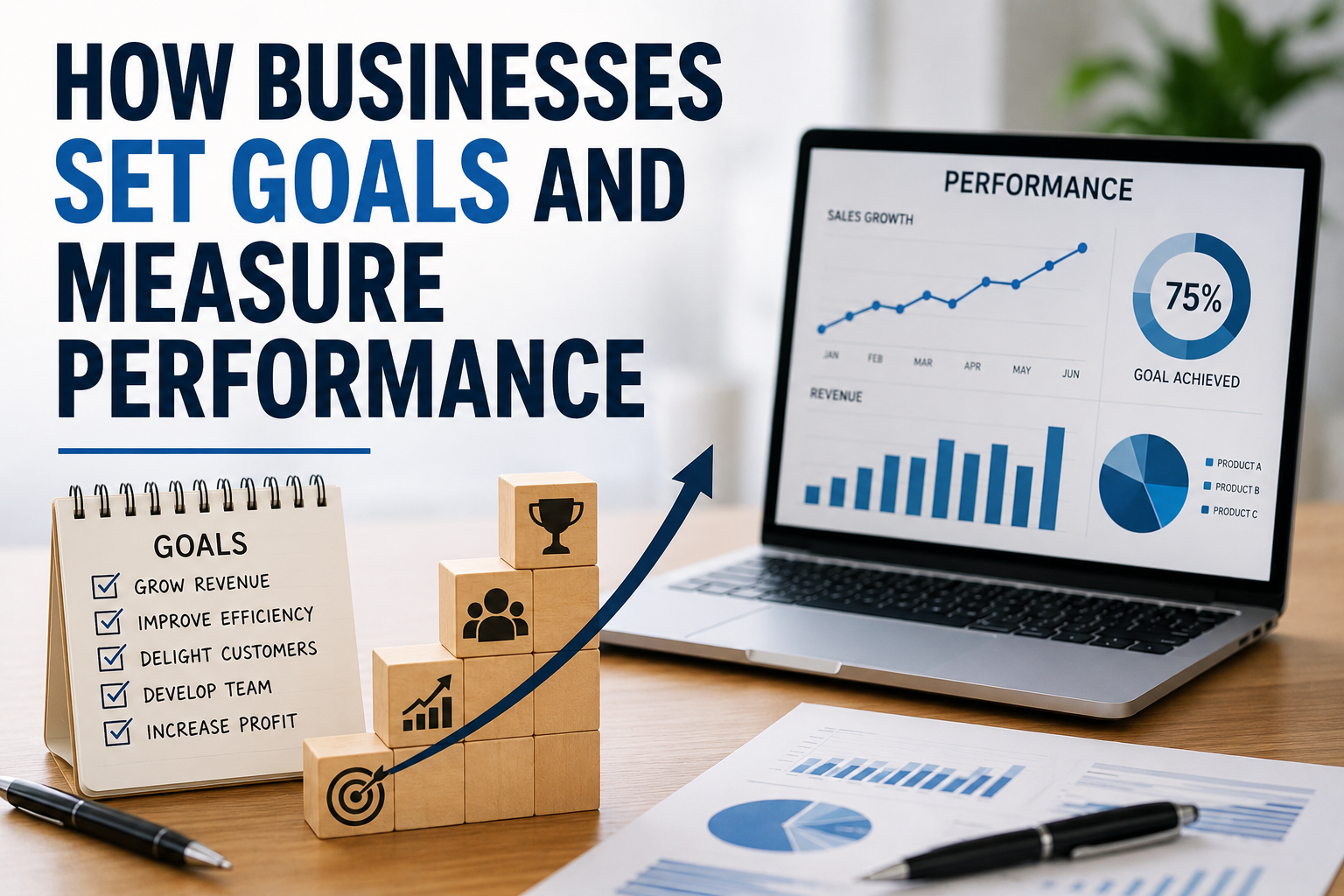
Measure Productivity Carefully
Businesses need metrics, but poorly chosen metrics can encourage the wrong behavior.
For some jobs, the number of tasks completed may be useful. For others, quantity tells only part of the story.
A customer-service team that handles more calls but produces lower-quality outcomes is not necessarily more productive. A sales team that closes more deals but generates a large number of unhappy customers may also be creating problems elsewhere in the organization.
Useful productivity measures should reflect meaningful business outcomes rather than activity for its own sake.
Managers should also combine quantitative data with qualitative feedback. Numbers can identify patterns, while conversations can help explain why those patterns exist.
Give Teams Time to Focus
Constant interruptions can make it difficult for employees to perform complex work.
Every notification, unnecessary meeting and unexpected request creates a potential interruption. For tasks requiring concentration, repeatedly switching between activities can make work take longer and increase the likelihood of mistakes.
Businesses can support focused work by establishing periods when employees can concentrate without unnecessary interruptions.
This is particularly important for roles involving writing, software development, analysis, design, research and strategic planning.
Productivity is not always about doing more things simultaneously. Often, it is about giving people enough uninterrupted time to do important things well.
Use Technology and AI Thoughtfully
Modern businesses have more tools for collaboration and automation than ever before.
Artificial intelligence can assist teams with tasks such as drafting documents, analyzing information, summarizing meetings, generating ideas and automating repetitive workflows.
But adding technology does not automatically make a team more productive.
Businesses need to determine whether a tool genuinely reduces work, improves quality or helps employees make better decisions.
AI-generated output should also be reviewed appropriately, particularly when the work involves sensitive information, important business decisions or content that requires factual accuracy.
The strongest teams tend to use technology as a complement to human judgment rather than treating it as a replacement for critical thinking.
Create Feedback Loops
Employees need to know how they are performing and where they can improve.
Annual performance reviews alone may not provide enough feedback, particularly in fast-changing organizations.
Regular one-on-one conversations can create opportunities to discuss progress, obstacles, priorities and professional development.
Feedback should work in both directions.
Managers can ask employees:
- What is slowing you down?
- Which processes are creating unnecessary work?
- What could the team do better?
- What support do you need?
- Which responsibilities would you like to develop further?
These conversations can reveal problems that may not be visible in performance metrics.
Adapt the Team as the Business Changes
A team that works well today may need to operate differently six months from now.
Businesses change as they grow, enter new markets, introduce products, adopt new technologies or respond to economic conditions.
Strong teams are therefore adaptable.
Leaders should periodically reconsider whether the team’s structure, responsibilities, tools and processes still match the organization’s needs.
Sometimes improving productivity does not require asking existing employees to do more. It may require removing outdated processes, changing responsibilities or restructuring how work moves through the organization.
Strong Teams Are Built Through Consistency
There is no single formula for creating a highly productive team.
The most effective organizations tend to combine several fundamentals: clear goals, capable people, defined responsibilities, strong communication, trust, useful technology, meaningful feedback and opportunities for development.
Perhaps most importantly, businesses need to understand that productivity is not simply an individual employee characteristic.
A talented employee can struggle in a poorly organized environment, while a well-designed team can help people perform at their best.
The businesses that consistently build strong teams are usually the ones that treat teamwork as an operating system rather than a one-time management initiative. They create clear expectations, remove unnecessary obstacles and give people the support and autonomy they need to do meaningful work.
Over time, those practices can turn a collection of employees into something much more valuable: a team capable of solving problems, adapting to change and delivering results together.


2 Comments
Micle harison
June 7, 2019Lorem ipsum dolor sit amet, usu ut perfecto postulant deterruisset, libris causae volutpat at est, ius id modus laoreet urbanitas. Mel ei delenit dolores.
John Doe
June 7, 2019Some consultants are employed indirectly by the client via a consultancy staffing company.